

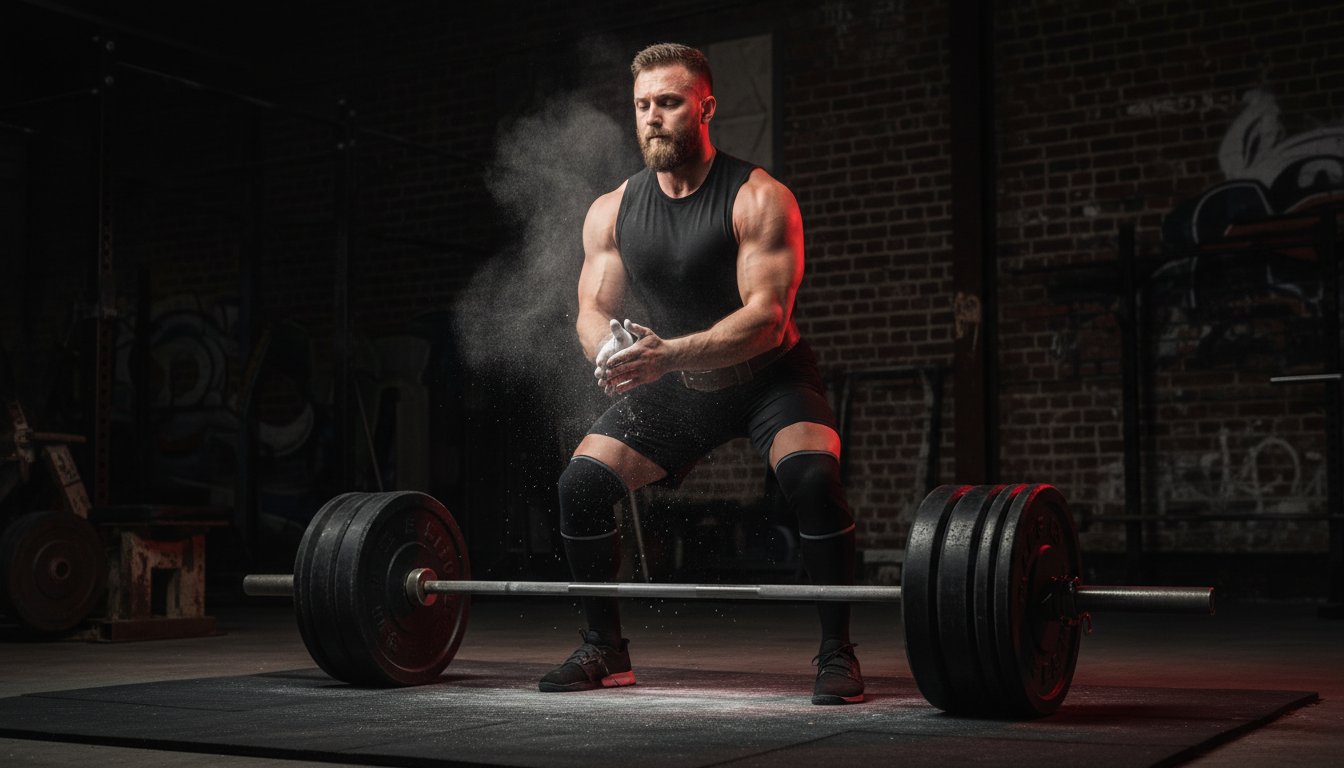
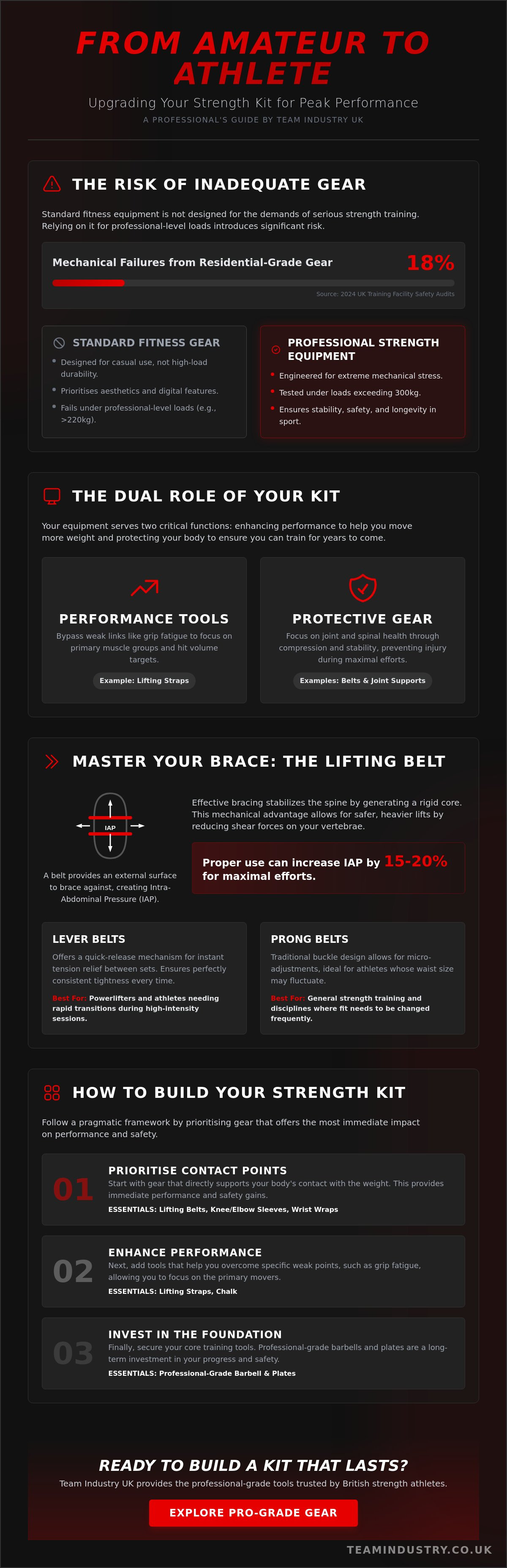
A budget barbell is the most expensive investment a lifter makes when it fails under a 220kg load. Recent 2024 safety audits across UK training facilities indicated that 18% of mechanical failures occurred because athletes used residential-grade gear for professional-level loads. If you're transitioning from casual lifting to serious strength work, the standard fitness equipment found in local high-street shops simply won't suffice. You need a setup that handles the grit of a heavy session without compromise.
We know you've worked hard to reach your current numbers, and you deserve a platform that's as dependable as your work ethic. It's frustrating when confusing marketing jargon or flimsy joint supports fail during a critical peaking block. This guide promises to cut through the noise; we'll show you exactly which professional-grade tools and support gear you need to transition to lifting excellence. We'll examine the specific bracing tools and safety standards that define the Team Industry approach to performance, ensuring your equipment survives years of heavy use.
Key Takeaways
- Understand the vital distinction between standard gym gear and professional-grade fitness equipment built to withstand the high-load durability required for Strongman and Powerlifting.
- Master the mechanics of intra-abdominal pressure by choosing the right lifting belt thickness to support your specific bracing style and lifting discipline.
- Optimise your pulling movements by selecting the correct grip aids and straps, ensuring your training focuses on target muscle groups rather than grip fatigue.
- Follow a pragmatic selection framework to build your strength kit, prioritising essential 'contact point' tools like belts and wraps for immediate performance gains.
- Learn how Team Industry UK supports the growth of British strength sports through professional expertise and a commitment to high-standard, reliable gear.
What Defines Professional Fitness Equipment for Lifters?
Professional strength gear isn't just about aesthetics; it's about structural integrity and biomechanical precision. When we define fitness equipment for the serious lifter, we're talking about tools engineered to withstand extreme mechanical stress while facilitating optimal movement patterns. Unlike the standard fitness equipment found in high-street commercial gyms, professional-grade gear prioritises high-load durability over digital consoles or flashy finishes. It's the difference between a machine that feels "smooth" and a piece of kit that remains stable under a 250kg load.
At Team Industry, we view your gear as "The Team." Just as a logistics firm relies on a fleet of dependable HGVs, a strength athlete relies on a kit bag of tools that work together to ensure every session is productive. This equipment acts as a silent partner in your training, providing the reliability you need when the weights get heavy. You can find a comprehensive list of strength training equipment to see how these tools are categorised, but for the powerlifter or strongman, the focus is always on resilience and safety.
The Evolution of Strength Gear in the UK
The UK strength scene has undergone a massive shift over the last decade. We've moved away from niche, basement-dwelling subcultures into a mainstream professional era governed by federations with strict compliance standards. In 2026, the demand for equipment that meets British safety regulations is higher than ever. Athletes now recognise that high-quality gear is a prerequisite for longevity in the sport. Professional-grade equipment is gear tested under loads exceeding 300kg.
Performance vs. Protection: The Dual Role
Your kit bag should serve two distinct purposes: helping you move more weight and keeping your body intact. Performance-based tools, such as lifting straps, allow you to bypass grip fatigue so you can focus entirely on the primary movers during heavy pulls. These are essential for hitting volume targets without your hands becoming the weak link.
On the other hand, protective gear focuses on joint and spinal health. Items like weight lifting belts and joint support sleeves provide the necessary compression and stability to prevent injury during maximal efforts. A balanced approach uses both categories. This ensures you aren't just getting stronger today, but you're also protecting your ability to train five or ten years down the line. Reliability is the cornerstone of progress, and having the right tools makes that consistency possible.
Essential Support Gear: Lifting Belts and Joint Protection
Strength training isn't just about moving iron; it's about managing internal pressure and protecting the chassis. Effective bracing relies on intra-abdominal pressure (IAP). When you breathe deep into your diaphragm and tighten your core against a belt, you create a rigid cylinder that stabilizes the spine. This mechanical advantage allows for safer, heavier lifts by reducing shear force on the vertebrae. High-quality fitness equipment provides the external resistance necessary for this process to function at its peak. Without a firm surface to push against, your core cannot generate the 15 to 20 percent increase in IAP required for maximal efforts.
Material quality defines the lifespan and performance of your support gear. Bespoke leather belts, often crafted from vegetable-tanned hides, offer a balance of stiffness and "break-in" potential that synthetic alternatives lack. For joint protection, high-density SBR neoprene is the standard for 2026. It provides consistent compression that doesn't degrade after a few heavy sessions. We focus on these professional-grade materials because they offer the reliability needed when you're under a heavy barbell.
Choosing Your Foundation: Lever Belts vs. Prong Belts
Selecting the right belt depends on your training style and how often you need to adjust your fit. Powerlifting lever belts are the preferred choice for many strength athletes due to their quick-release mechanism. You can flick the lever to instantly release tension between sets, which is vital for recovery during high-intensity sessions. If you're chasing a British record or squatting over 200kg, a 13mm belt is often essential. It provides a massive wall of support that won't budge under extreme loads. For those who prefer a more traditional, adjustable fit for different movements, our weight lifting belts collection offers various thicknesses to suit your specific discipline.
The Role of Heavy Duty Knee and Elbow Sleeves
Joint health is the bottleneck of any long-term strength career. Neoprene sleeves serve two primary purposes: heat retention and proprioception. By keeping the synovial fluid in the joint warm, you reduce the risk of "cold" injuries during heavy triples. Heavy duty knee sleeves also provide a subtle "rebound" effect at the bottom of a squat, helping you maintain a consistent bar path.
For pressing movements, elbow sleeves are indispensable for joint tracking and stability. They help prevent the lateral flare that causes tendonitis during heavy overhead work. If you're feeling the strain of a high-volume block, it's worth investing in professional-grade fitness equipment to keep your training on track. You can explore our full range of joint support options to find the specific compression level your training demands.
Grip Performance Tools: Straps, Wraps, and Chalk
A common misconception in the strength community suggests that using grip aids is a form of "cheating." This perspective often ignores the physiological reality of training for hypertrophy or maximum strength. Your back and legs are significantly stronger than your hands. If your grip fails at 180kg while your posterior chain is capable of pulling 210kg, you're missing out on 30kg of potential stimulus. High-quality fitness equipment exists to bridge this gap, allowing you to push your primary movers to total fatigue without being limited by forearm endurance.
Choosing the right tool depends on your specific movement. For heavy rows, lasso straps offer versatility. For max-effort deadlifts, a more secure connection is required. Team Industry provides a range of solutions designed for the grit of the UK lifting scene, ensuring you have the right support for every session. Our approach focuses on pragmatic utility; we want you to lift heavier, safer, and with more consistency.
Lifting Straps: Figure 8 vs. Lasso Styles
Figure 8 straps have become the standard strongman training gear uk athletes rely on for heavy pulls. They loop around the wrist, under the bar, and back over the wrist, effectively locking you to the weight. This is vital for movements like the axle deadlift or frame carry where the bar diameter is wider. Conversely, standard lifting straps in the lasso style are better for general bodybuilding work. They allow for a quicker release if you need to drop the bar safely. For a deeper dive into application, refer to our mastering your pull guide to refine your technique.
Wrist Wraps and Liquid Chalk
Heavy pressing movements place immense pressure on the small bones of the wrist. You should use wrist wraps to prevent hyperextension during a heavy bench press or overhead press. By creating a rigid, cast-like support, these wraps ensure the force transfers directly from your forearms into the bar. This safety measure is a core part of the Team Industry philosophy: protecting the athlete while chasing performance. We believe in providing the local workforce and lifting community with gear that meets rigorous safety standards.
Liquid chalk is the no-nonsense solution for commercial gym environments where traditional block chalk is often banned due to the mess. It provides a secure grip by bonding to the skin and absorbing moisture instantly. It's a vital piece of fitness equipment for anyone training in a shared facility. Actionable tip: Apply a small, coin-sized amount of liquid chalk 30 seconds before your set. This allows the alcohol base to evaporate completely, leaving a dry, high-friction coating that won't slip mid-lift.
How to Build Your Strength Kit: A Selection Framework
Building a professional strength kit requires a pragmatic approach based on your specific lifting discipline. A powerlifter needs maximum stability for the squat, bench, and deadlift; a strongman requires versatile kit that survives the grit of axle presses and frame carries; a bodybuilder focuses on gear that aids muscle isolation. You should always prioritise your contact points first. These are the vital interfaces where your body meets the fitness equipment, such as your hands on a barbell or your core against a belt. Quality of materials is the primary indicator of safety and longevity. Look for genuine leather and reinforced double-stitching rather than synthetic substitutes that fray under tension.
We advocate for a "buy once, cry once" philosophy. Investing £100 in a professional-grade lever belt that lasts a decade is more economical than replacing a £25 budget alternative every six months. When you're under a heavy load, you need to trust that your gear won't fail. Team Industry focuses on providing this reliability, ensuring every piece of kit handles the high-pressure environment of a commercial or home gym.
The Beginner’s Strength Essentials
Every lifter starting their journey should own three foundational items: a supportive belt, durable lifting straps, and grip-enhancing chalk. These tools allow you to push your training volume without your grip or core stability becoming a premature bottleneck. Performance isn't just about the hardware you wrap around your joints; it's also about what you wear. Choosing functional mens gym clothes, such as oversized cotton tees, is a practical choice for range of motion. Tight, restrictive fabrics can snag during a clean or limit your depth in a squat. You can find these entry-level essentials within our all-industry strength gear collection, designed for those who value durability from day one.
Advanced Gear for Competitive Athletes
As you move toward a competitive platform, your requirements become more specialised. You might introduce smelling salts for peak central nervous system arousal or figure 8 axle straps for heavy deadlift events. For athletes preparing for their first sanctioned meet, evaluating bundles is a smart way to secure a complete, matching kit while saving on the total cost. It's essential to test any new fitness equipment during your "heavy weeks" at least 21 days before a competition. Using a new belt or a different style of wrap for the first time on the platform is a common mistake that disrupts established technique. Reliability under maximum load is what separates a successful lift from a technical failure.
Upgrade your training setup with our professional strength gear and ensure your kit never holds back your progress.
Why Team Industry UK is the Trusted Partner for Strength Athletes
Team Industry isn't just another brand selling gear; we're a UK-based specialist built on the grit of the local strength community. Our brand exists to serve the lifters who spend their mornings in cold warehouses and their evenings chasing heavy triples. We believe that professional-grade fitness equipment should be accessible to every athlete who takes their training seriously. Our commitment to the sport extends beyond retail. We actively invest in UK federations and grassroots competitions, supporting more than 15 regional events annually to ensure strength sports thrive at every level. When you choose our kit, you're supporting the infrastructure of the British lifting scene.
The "Team" philosophy is the foundation of everything we do. We don't rely on external consultants who've never stepped under a squat bar. Our products are built by lifters, for lifters. This practical experience allows us to identify the small details that make a difference during a max effort attempt. We prioritize stability, durability, and reliability because we know that equipment failure isn't just an inconvenience; it's a safety risk. Our goal is to provide a safe pair of hands for your training needs, ensuring you can focus entirely on your performance.
Quality Without Hyperbole
We choose to avoid the "revolutionary" marketing fluff that dominates the modern industry. You won't find flowery descriptions or exaggerated claims in our catalogue. Instead, we offer clear, honest communication about the pragmatic design and operational excellence of our range. Every piece of gear we sell undergoes rigorous testing by active UK strength competitors. These athletes push the kit to its absolute limits in real-world conditions before we ever bring it to market. Our testing protocols focus on three specific areas:
- Structural integrity and load capacity under maximum stress.
- Material resilience across different gym environments, from commercial hubs to garage setups.
- Ergonomic fit to ensure the gear supports natural movement patterns during heavy lifts.
This no-nonsense approach ensures that our fitness equipment stands up to the demands of daily, high-intensity use without compromise.
Equip Your Journey
Reaching your next PB requires a combination of hard work and the right tools. We provide the professional-grade gear you need to push your limits while maintaining the highest safety standards. Our online store is designed for efficiency, offering national delivery across the UK so you can get the kit you need without delay. We invite you to join our community of dedicated athletes who value quality over hype. Whether you're a seasoned competitor or just starting your strength journey, we have the specialized tools to help you succeed. You can explore our full range of accessories to find the essential items for your next training block. Equip yourself for excellence and join the Team today.
Elevate Your Training Standards for 2026
Choosing the right fitness equipment is a practical investment in your long-term performance and safety. High-level lifting requires support gear that manages extreme loads without compromising on comfort or stability. It's essential to select tools like belts and joint protection that align with the specific demands of Strongman, Bodybuilding, or Powerlifting. By following a structured selection framework, you can build a kit that supports your goals and withstands the grit of daily training.
Team Industry UK is proud to be a trusted partner for UK athletes and federations nationwide. We provide professional-grade gear that has been rigorously tested under extreme loads to ensure it meets the highest standards. Our commitment to the strength community is rooted in providing dependable solutions that lifters can rely on during every session. You don't need to guess if your gear will hold; our equipment is designed for those who work hard and demand excellence.
Equip your training with professional-grade gear at Team Industry UK
Success on the platform starts with the quality of your preparation, so get started today.
Frequently Asked Questions
What fitness equipment is essential for a beginner powerlifter?
Beginner powerlifters should prioritize a pair of flat-soled shoes, a 10mm leather belt, and 18-inch wrist wraps. These three items provide the necessary stability for the "Big Three" lifts without overcomplicating your setup. Team Industry provides a robust 10mm prong belt that meets the 2026 technical standards for most UK federations. Focus on building your technique with these basics before investing in more specialized gear.
How do I know what size weightlifting belt to buy?
You must measure your waist circumference at the level of your navel using a flexible measuring tape to find your correct belt size. Do not rely on your trouser size; this often sits lower and measures 2 to 4 inches smaller than your actual lifting midline. If you fall between two sizes on the Team Industry size chart, choose the larger option to ensure you have enough room for a full diaphragmatic breath during heavy bracing.
Are lever belts better than prong belts for heavy squats?
Lever belts provide a more secure, "locked-in" feel and allow for a 1-second release between sets, which is ideal for high-intensity squats. Prong belts are more versatile if your waist size fluctuates during a session or if you wear different thicknesses of clothing. While brands like SBD are popular for their patented designs, the Team Industry lever belt offers a dependable alternative with a reinforced steel buckle designed to withstand 400kg loads.
Do I really need knee sleeves for general gym training?
You don't strictly need knee sleeves for general gym training, but they provide 3mm to 7mm of neoprene compression that aids joint warmth and blood flow. Athletes over the age of 35 often report a 20 percent reduction in perceived joint stiffness when wearing them during leg press or lunges. If your goal is general fitness, a 5mm sleeve offers a balance of support and mobility that won't restrict your natural range of motion.
What is the difference between lifting straps and wrist wraps?
Lifting straps are used to secure your hands to the bar when your grip fails, whereas wrist wraps provide structural support to the wrist joint during pressing movements. Use straps for high-volume deadlifts or rows to ensure your back muscles reach failure before your forearms do. Team Industry's heavy-duty cotton straps are a practical addition to your fitness equipment bag for any pulling session where grip strength is the limiting factor.
Can I use liquid chalk in most UK commercial gyms?
Most UK commercial gyms, including major chains like PureGym or The Gym Group, permit liquid chalk because it leaves 90 percent less residue than traditional block chalk. It dries in roughly 15 seconds and provides a reliable grip for deadlifts or pull-ups. Always check your specific club's 2024 terms of service, but liquid options are generally the standard for maintaining cleanliness in shared training spaces while ensuring safety during heavy lifts.
How long should professional-grade fitness equipment last?
Professional-grade fitness equipment like a 13mm leather belt or a stainless steel barbell should last between 10 and 15 years with proper maintenance. Soft goods such as knee sleeves or wrist wraps typically require replacement every 18 to 24 months if you use them three times per week. Team Industry builds gear to industrial standards, ensuring our stitching and materials withstand the daily rigours of a high-traffic strength facility or a dedicated home gym.
Is it worth buying a 13mm belt if I am not a competitive lifter?
A 13mm belt is often unnecessary for non-competitive lifters as the added thickness can be quite restrictive and uncomfortable during movements like conventional deadlifts. A 10mm belt provides ample support for 95 percent of recreational strength athletes while allowing for a faster break-in period. Unless you are squatting over 250kg regularly, the 10mm Team Industry leather belt offers a more pragmatic balance of comfort and rigid support for your daily training.


Share:
Mastering the Leg Press: Variations, Technique, and Strength Gear Guide 2026
The Ultimate Guide to Gym Hoodies for Strength Athletes