

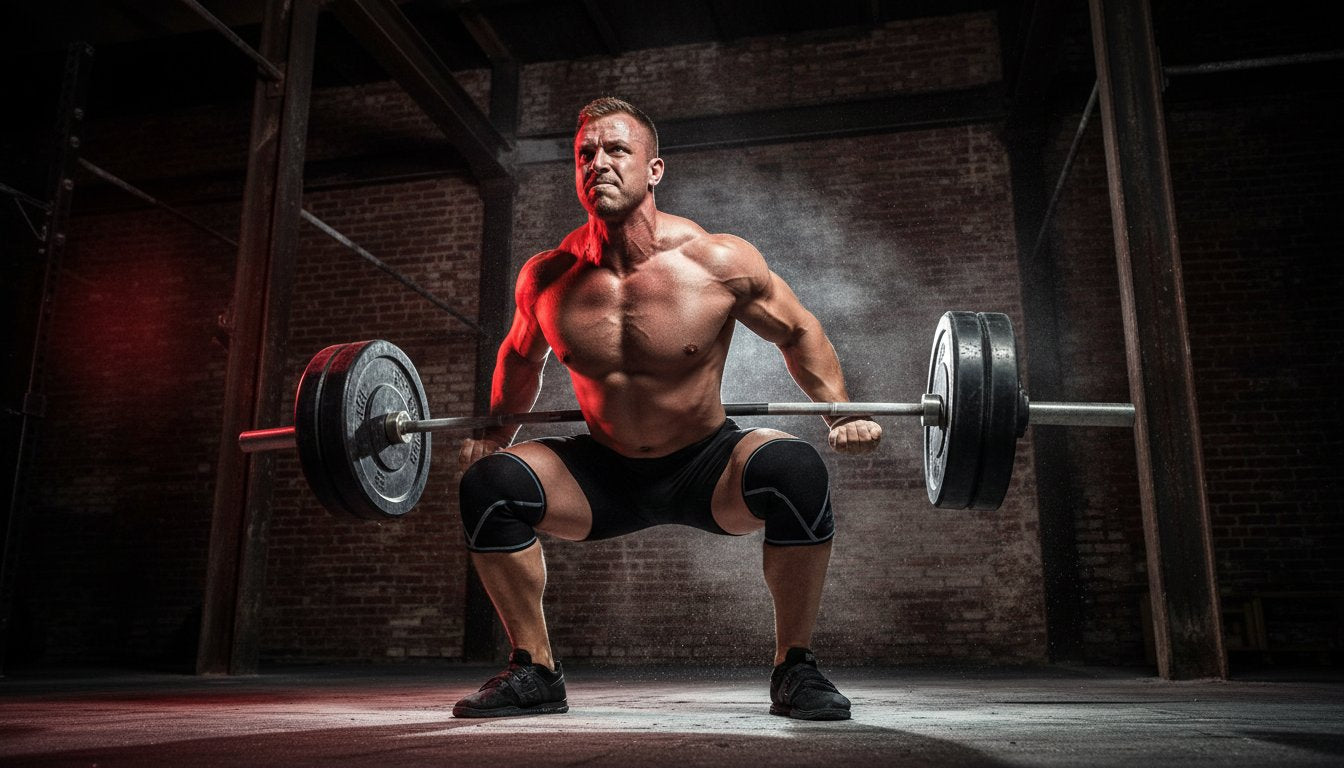
Your standard 7mm neoprene sleeves aren't failing because you're training too hard; they're failing because they weren't engineered for the 200kg eccentric load of a competitive squat. You likely recognize the frustration of investing in heavy duty knee sleeves only to have them slide down mid-set or lose their structural "pop" after just 90 days of heavy triples. It's a common issue that undermines your confidence when you're standing under a heavy barbell. At Team Industry, we believe your gear should be as dependable as your work ethic.
This guide explains how the right support transforms joint stability, improves force production, and protects your longevity in powerlifting and strongman. You'll discover the specific technical differences between a training fit and a competition fit to ensure your equipment doesn't need replacing every season. We'll provide the practical steps needed to secure a pain-free heavy session and help you select gear that maintains its compression through every rep of your program.
Key Takeaways
- Learn why high-density neoprene is essential for maintaining joint stability once your training loads exceed 1.5x bodyweight.
- Discover how the mechanical stretch reflex in heavy duty knee sleeves provides vital kinetic energy to drive you out of the bottom of a heavy squat.
- Evaluate the practical trade-offs between sleeves and wraps to ensure you choose the right support for raw or equipped sessions.
- Master professional sizing techniques for a secure fit, including when to opt for a 'Comp Fit' to maximise your performance on the platform.
- Understand why Team Industry gear is the dependable choice for athletes who require equipment tested in the grit of professional strength environments.
The Role of Heavy Duty Knee Sleeves in Modern Strength Sports
Heavy duty knee sleeves are engineered from high-density 7mm neoprene to provide maximal compression for athletes moving serious weight. While standard fitness sleeves offer mild warmth for general exercise, they often fail to provide adequate stability once a lifter reaches 1.5x to 2x their own bodyweight. At these loads, the lateral forces on the knee joint increase significantly. These sleeves act as a vital form of supportive equipment in powerlifting, providing the necessary tension to keep the joint tracking correctly during deep flexion. Beyond the physical support, the increased proprioception—the sensory feedback of where your joint is in space—boosts confidence under a heavy bar. Integrating heavy duty knee sleeves with other essential gear like weight lifting belts ensures a stable foundation for every lift, allowing you to focus on execution rather than joint discomfort.
From Bodybuilding to Strongman: Who Needs Heavy Support?
Powerlifters rely on the stiffness of heavy duty knee sleeves to gain 'pop' out of the hole during a squat. This mechanical advantage is vital when attempting a one-rep max or high-intensity triples. In Strongman, athletes face dynamic challenges. Protecting the knees during a 300kg Yoke walk or a heavy Frame Carry requires gear that handles both static and moving loads. Bodybuilders also benefit from this level of support. High-volume leg sessions involving 20-rep sets of hacks squats or leg presses create significant joint stress. Maintaining warmth and consistent blood flow helps manage this load effectively, ensuring the Team can stay consistent in the gym week after week.
The Difference Between Support and Medical Bracing
It's vital to understand that compression sleeves aren't a substitute for medical intervention. If you've sustained a Grade 2 ligament tear or a meniscus injury, you need a medical professional, not a piece of neoprene. We view these sleeves as a 'Safe Pair of Hands' for your joints. They're designed to prevent issues before they arise by providing external stability and warmth. Unlike the flimsy, breathable braces often found in local chemists, heavy duty sleeves use industrial-grade materials to withstand the rigours of a professional strength environment. They offer a proactive way to maintain your training consistency and protect your longevity in the sport. Choosing the right support is a pragmatic decision for any athlete who treats their training as a serious operational commitment.
The Mechanics of Compression: How Stiff Neoprene Improves Performance
Strength athletes rely on heavy duty knee sleeves for more than just a sense of security. The primary performance benefit stems from the storage of elastic energy. As you descend into the hole of a squat, the neoprene material compresses and resists deformation. This creates a stretch reflex, providing vital kinetic energy that assists the "drive" phase out of the bottom position. Unlike thin sleeves designed for general fitness, the stiff construction of a professional sleeve acts as a physical barrier against joint collapse.
Material density is the true differentiator in high-level gear. While many brands market a standard 7mm thickness, the actual density of the neoprene varies. High-grade SBR or SCR neoprene provides a tighter cell structure. This density ensures the sleeve doesn't "bottom out" or lose its shape under loads exceeding 200kg. Mechanical carry-over is the measurable weight added to a lift due to sleeve stiffness. In competitive environments, this carry-over can be the difference between a successful third attempt and a missed lift.
Beyond the rebound, compression plays a critical role in joint tracking. Heavy loads often cause the patella to shift or oscillate. Tight sleeves reduce this lateral deviation by providing 360-degree circumferential pressure. This stability is backed by research on knee sleeve performance, which indicates that the increased proprioception and stability allow athletes to move with greater confidence and speed during the eccentric phase. The Team at Industry focuses on these technical details to ensure every sleeve provides a reliable, safe platform for heavy training.
7mm vs 9mm Neoprene: Choosing Your Thickness
The 7mm sleeve remains the industry standard for powerlifting and functional strength. It offers a balance of extreme support and enough flexibility to hit depth in the squat without the material bunching behind the knee. For athletes with high muscle density or those focusing on static, maximal effort lifts like the log press or heavy squats, 9mm sleeves provide maximum stiffness. Consider your limb length; shorter athletes often find 9mm sleeves too restrictive, potentially hindering their range of motion. Longer limbs typically require the additional surface area and support of a denser 7mm or 9mm option to stabilize the entire joint complex.
Thermal Properties and Blood Flow
Neoprene is an exceptional insulator. During a long session in a cold warehouse or gym, maintaining joint temperature is vital for safety. The heat retained by the sleeve increases the temperature of the synovial fluid, reducing its viscosity. This makes the fluid "thinner" and more effective at lubricating the joint. This process effectively reduces the "creaky" sensation often felt during heavy eccentric loading. To prevent skin irritation, our designs balance this heat retention with high-quality inner linings. If you need consistent warmth and stability, explore the Team Industry joint support range to find a fit that suits your training environment.
Heavy Duty Sleeves vs Standard Sleeves vs Knee Wraps
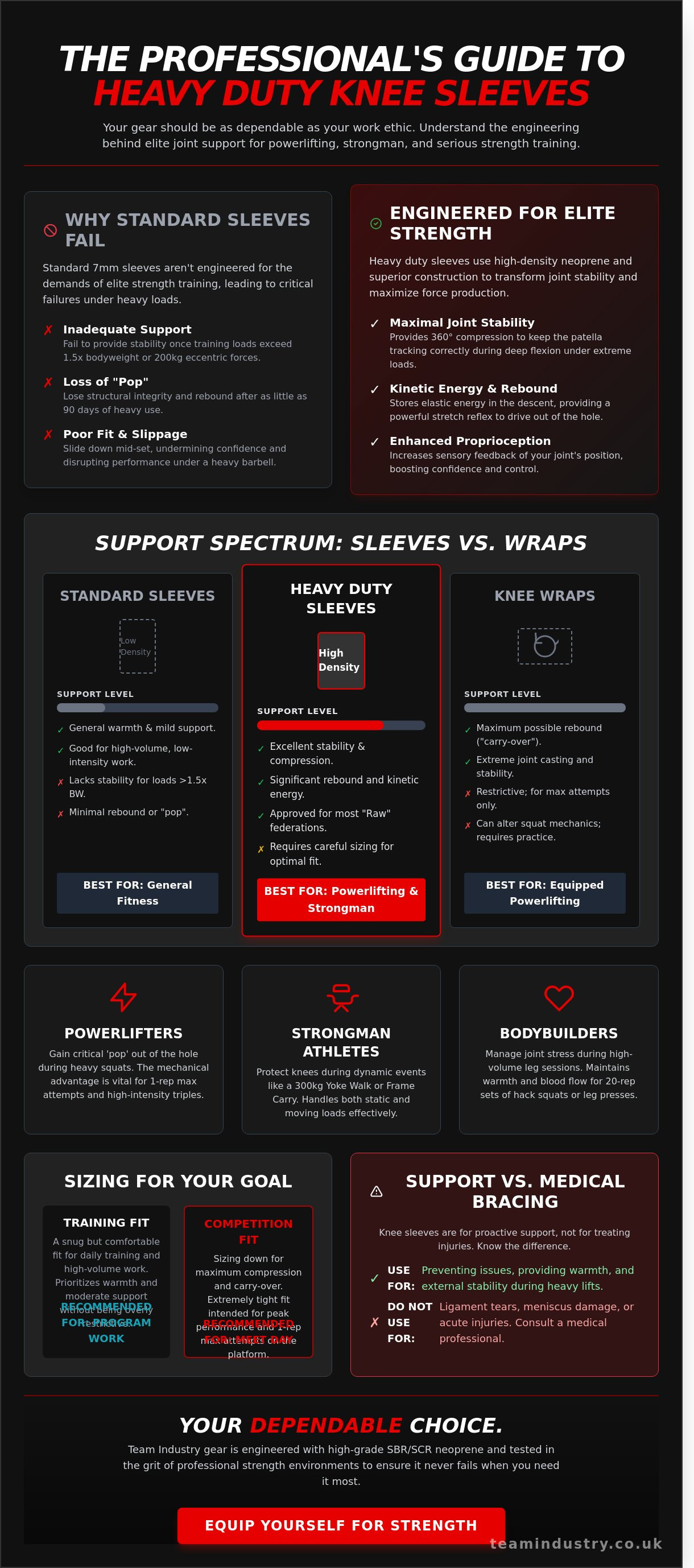
Choosing the right support depends on your specific goals and training phase. Standard 5mm sleeves offer basic warmth and compression for general fitness. However, competitive powerlifters and strongmen often find these insufficient as weights exceed 150kg or 200kg. Using heavy duty knee sleeves, typically 7mm thick and manufactured from high-density neoprene, provides the stiffness required to maintain joint integrity under extreme loads. While standard sleeves focus on blood flow, heavy duty versions prioritise structural support.
Research confirms these benefits. A biomechanical analysis of knee sleeves conducted at Old Dominion University suggests that while sleeves don't alter the fundamental squat pattern, they do improve the lifter's perception of stability. This psychological and physical reinforcement allows for higher training frequency. By reducing the minor inflammation caused by repetitive heavy loading, athletes can often return to the platform 24 hours sooner than they would without support. You can explore our full joint support range to find the exact level of compression your current programme requires.
The trade-off is often between ease of use and maximum poundage. Sleeves are the standard for 'raw' lifting because they are easy to pull on and stay in place for an entire session. Wraps are reserved for 'equipped' lifting or absolute maximal attempts. They provide a mechanical advantage but require significant time to apply between sets. Our Team Industry philosophy emphasizes consistency; we believe gear should support your training rhythm rather than disrupt it.
When to Make the Switch to Heavy Duty
You'll know it's time to upgrade when your 5mm sleeves start to bottom out or lose their shape during the descent. If the material feels like it's stretching thin at the bottom of a squat, it's no longer providing effective tension. Be prepared for a transition period. Stiff heavy duty knee sleeves feel restrictive at first and may require three to five sessions to break in properly. Don't rush into maximum thickness if you're still mastering your form. Over-equipping too early can mask technical errors, such as knee cave or poor depth, which often lead to setbacks once the gear is removed.
Sleeves vs Wraps: A Performance Breakdown
Knee wraps offer the highest potential for poundage due to the casting effect, where the tight material physically resists knee flexion. This can add 20kg to 30kg to a squat, but it requires a partner to apply correctly. Sleeves win for daily training because they offer a consistent level of support without the on-off hassle. For a complete support system, many lifters find success using lifting straps during accessory work to save their grip while the sleeves protect their joints. This balanced approach ensures you spend more time lifting and less time adjusting equipment.
Sizing, Fitting, and Maintenance: Getting the Most from Your Gear
Selecting the correct size for your heavy duty knee sleeves determines whether you gain a competitive edge or end up with gear that bunches behind the joint. To get an accurate measurement, use a flexible tape measure around the circumference of your knee joint and the thickest part of your calf while your leg is straight but relaxed. Team Industry recommends taking these measurements three times to ensure consistency. A secure, non-slip fit relies on the sleeve gripping the calf effectively to prevent it from sliding down during high-intensity sets. If your calf measurement is significantly larger than your knee, always size according to the calf to ensure the sleeve can actually pass over the muscle.
The choice between a 'Training Fit' and a 'Comp Fit' depends on your specific goals. A training fit follows the standard size guide, providing reliable warmth and compression for daily sessions. In contrast, approximately 65% of competitive powerlifters choose to size down for a competition fit to maximize the mechanical advantage out of the bottom of a squat. This tighter fit can add a measured 2kg to 5kg to a heavy lift by increasing the eccentric tension of the neoprene. Sizing down should never compromise blood flow to the point of numbness. If you experience tingling or a loss of sensation, the sleeve is too restrictive and requires an immediate size increase to maintain safety standards.
Step-by-Step Guide to Putting on Stiff Sleeves
Putting on high-grade 7mm or 9mm heavy duty knee sleeves requires a specific technique to avoid straining the seams or your fingers. Use the 'flip and pull' method for a seamless fit:
- The Flip: Turn the sleeve completely inside out and fold the bottom half up over the top half.
- The Positioning: Slide the folded sleeve up your leg until the bottom edge sits halfway up your calf.
- The Pull: Grasp the bottom edge and pull it upward over the knee joint in one firm, steady motion.
- The Alignment: Unfold the top section and adjust the centre point so the thickest part of the neoprene covers the patella, providing maximum support where the joint is most vulnerable.
Long-Term Care and Hygiene
High-grade neoprene is a durable material, but it requires specific handling to maintain its structural integrity. You should never machine wash or tumble dry your sleeves, as the high heat and agitation break down the synthetic rubber and cause it to lose its elastic memory. Instead, use the 'Freezer Method' to kill odour-causing bacteria by placing dry sleeves in a sealed bag in the freezer for 24 hours. For a deeper clean, hand wash them in a sink with cool water and a mild detergent. Always air dry your gear flat and away from direct sunlight to prevent the material from cracking or becoming brittle. Proper care ensures your Team Industry joint support remains a dependable part of your kit for years of heavy training.
Why Team Industry Heavy Duty Knee Sleeves are the Professional Choice
Selecting the right joint support is a matter of operational efficiency for your body. We don't build gear in a vacuum. We test our heavy duty knee sleeves in the coldest, most demanding UK industrial gyms where the equipment is as raw as the athletes. Our gear isn't designed for casual use; it's built for those who treat their training like a professional trade. We work directly with active strongmen and powerlifters to ensure every seam holds under the pressure of a 300kg squat.
The "Team" philosophy is about more than just a brand name. It's a commitment to equipment that mirrors the grit of the industries we serve. Budget alternatives often lose their elasticity or "pop" after 12 weeks of consistent heavy lifting. In contrast, Team Industry sleeves utilize 7mm high-grade neoprene that maintains its structural integrity for multiple seasons. This durability ensures you get a predictable rebound out of the hole every time you step under the bar. You can shop our complete strength gear collection to see the full range of equipment built for this level of professional reliability.
Built for the UK Strength Community
Our involvement in UK powerlifting and strongman federations keeps our standards high. This direct feedback loop allows us to refine our heavy duty knee sleeves based on real-world platform performance. We prioritize dependable, high-density materials over flashy marketing. Being a UK-based brand with a physical centre means we're a tangible part of the local infrastructure. We provide a safe pair of hands for athletes who need gear that works as hard as they do, day in and day out.
Maximise Your Output with the Right Bundle
Joint protection shouldn't be a piecemeal process. To achieve total stability during heavy compounds, we recommend pairing your sleeves with our professional wrist wraps. This combination secures the primary hinges of your kinetic chain, allowing you to focus entirely on the lift. For athletes looking to upgrade their entire kit, our strength bundles offer a pragmatic way to secure all essential gear in one go. These bundles often provide a 15% to 20% value increase compared to individual purchases. Join the Team today and elevate your standards with gear that's built for the long haul.
Elevate Your Performance with Professional-Grade Support
Investing in the right support changes how you approach the platform. You've seen how 7mm high-density neoprene provides the mechanical advantage needed for a superior 'pop' during heavy squats. We've also covered why reinforced stitching is the industrial standard for gear that survives high-volume training sessions. These aren't just accessories; they're essential tools for maintaining joint integrity under significant load. It's about having equipment that works as hard as you do.
Team Industry builds gear for the grit of the gym floor. Our equipment has been rigorously tested by UK Strongmen to ensure it meets the demands of elite competition. Whether you're moving away from standard sleeves or need a more stable alternative to wraps, choosing equipment built for durability is a pragmatic move. We provide a reliable safe pair of hands for your joints so you can stay focused on the weight. Accuracy in your kit leads to consistency in your results.
Secure your pair of Team Industry Heavy Duty Knee Sleeves today and experience the difference of professional-grade engineering. Keep training hard and stay protected.
Frequently Asked Questions
How tight should heavy duty knee sleeves be for powerlifting?
Your sleeves should be tight enough to require a 2 to 3 minute effort to pull into position but must not cut off your circulation. A 10% reduction from your standard knee joint measurement is a common benchmark for a competition fit. Team Industry sleeves feature a tapered design to ensure the compression remains consistent across the joint without slipping during a heavy set.
Can I wear heavy duty knee sleeves for every leg workout?
You can wear them for every session, though it's more effective to reserve heavy duty knee sleeves for working sets that exceed 70% of your one-rep max. Using them for every light warm-up can lead to a psychological dependency on the extra support. Save the Team Industry 7mm options for your heavy compound lifts to ensure your connective tissues still adapt to the load.
Is it better to get 7mm or 9mm knee sleeves for a first pair?
A 7mm sleeve is the standard choice for 85% of first-time buyers because it offers a practical balance of mobility and support. While 9mm sleeves provide maximum stiffness, they're often too restrictive for those not used to intense compression. Team Industry recommends starting with our 7mm SBR neoprene sleeves to build familiarity with the equipment during your standard training cycles.
How do I stop my knee sleeves from smelling after heavy sessions?
Hand wash your sleeves in cold water with a mild detergent every 10 to 14 days to prevent bacterial buildup. Always air dry them completely in a well-ventilated area instead of leaving them in a damp gym bag for 24 hours. Team Industry gear uses high-grade reinforced seams that withstand regular cleaning, ensuring your equipment stays fresh for every session at the gym.
Do heavy duty knee sleeves actually add weight to my squat?
Most athletes report a 5kg to 15kg increase in their squat performance due to the physical "pop" out of the hole and improved confidence. The compression from heavy duty knee sleeves creates a mechanical advantage by resisting flexion at the bottom of the movement. This extra stability allows you to focus purely on the drive, often resulting in more consistent personal bests.
Can I use knee sleeves if I have a pre-existing knee injury?
You should consult a medical professional before using compression gear for an injury, but sleeves are effective for managing minor tendonitis or old strains. The sleeves provide heat and compression which can reduce localized swelling by 15% to 20% during physical activity. Team Industry products provide reliable support for those returning to the platform, but they don't replace a structured rehabilitation program.
What is the difference between IPF approved and non-approved sleeves?
IPF approved sleeves meet specific technical criteria, such as a maximum 30cm length and 7mm thickness, for use in sanctioned powerlifting meets. Non-approved sleeves might use thicker materials or different lengths that provide an unfair advantage under certain federation rules. Team Industry manufactures sleeves to meet these rigorous standards, ensuring you won't face disqualification during the equipment check at your next event.
How long do professional-grade knee sleeves typically last?
A pair of high-quality sleeves should last 12 to 18 months with regular use three times per week. Lifespan depends on your application technique and how frequently you wash the material. Team Industry utilizes double-stitched edges to prevent the common delamination seen in budget brands, providing a dependable solution for long-term training cycles and heavy lifting sessions.


Share:
The Ultimate Guide to Elbow Sleeves: Maximising Joint Support and Pressing Power
The Ultimate Weight Lifting Belt Buying Guide for 2026: Maximise Your Bracing Power