
A heavy bench press shouldn't feel like a wrestling match with your own sleeves. Many lifters settle for oversized cotton layers that trap heat and restrict movement, but the right gym hoodies function as a critical piece of performance equipment rather than just a "pump cover." You likely understand the frustration of a garment that fits well on Monday but shrinks or loses its shape after just three cycles in the wash. It's distracting to adjust your clothing mid-set when your focus should remain entirely on the barbell.
At Team Industry, we believe your gear should be as dependable as your training partner. This guide helps you identify high-quality fabric blends that offer thermal regulation for cold-weather training while ensuring your range of motion stays completely unrestricted for squats and presses. We will break down the technical specifications required for long-term durability and explain how to choose a professional-looking hoodie that survives the rigours of a high-volume lifting schedule.
Key Takeaways
- Learn how to evaluate GSM and fabric blends to ensure your training gear survives the grit of high-intensity sessions.
- Discover why high-quality gym hoodies are essential for maintaining core temperature and psychological focus during long rest intervals.
- Compare the functional advantages of pullovers and zip-ups to determine which style best supports your specific range of motion.
- Identify design features tailored for powerlifters and bodybuilders to ensure your apparel never compromises your lifting technique.
- Explore how Team Industry sets the standard for durable [mens apparel](https://teamindustry.co.uk/collections/all-mens-apparel) designed specifically for the demands of UK strength athletes.
Why the Right Gym Hoodie is Essential for Strength Athletes
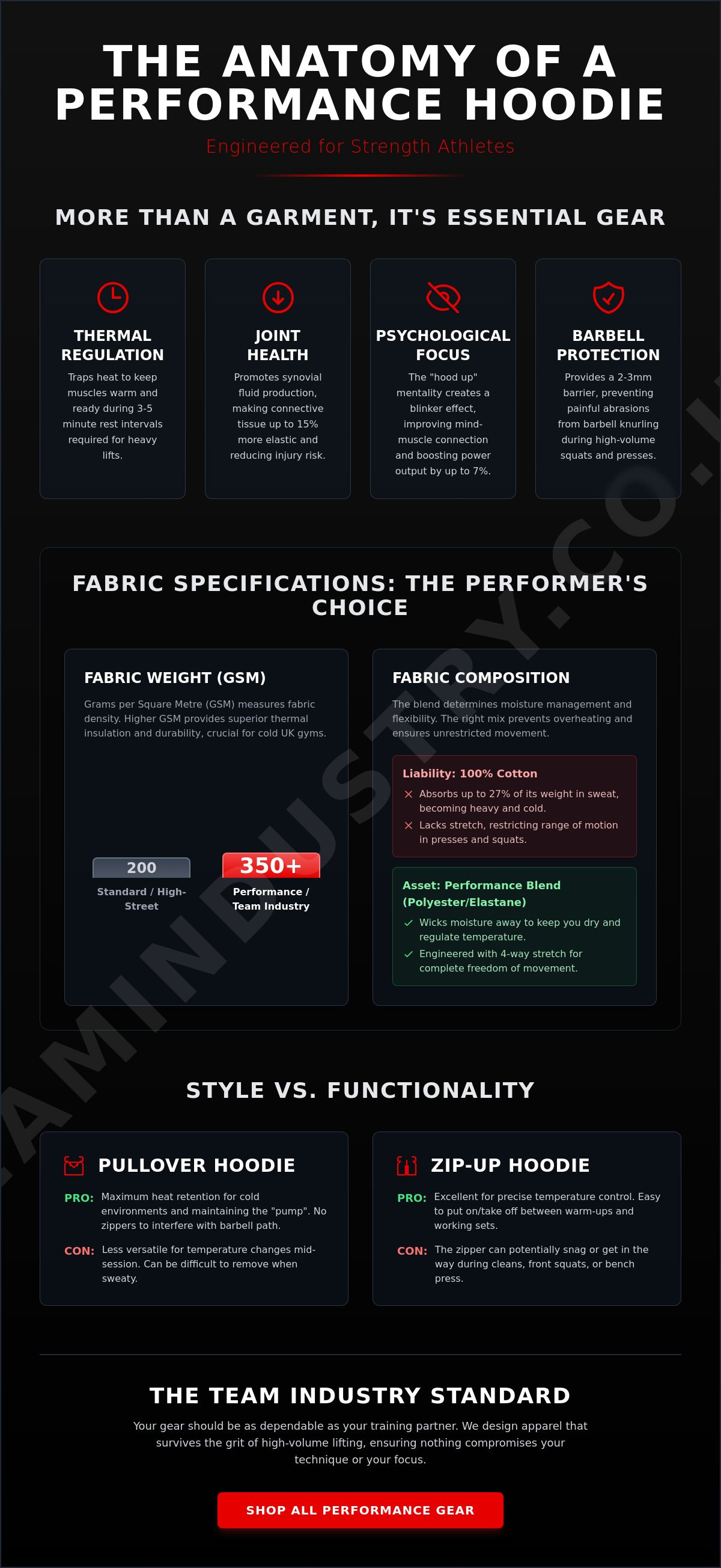
For serious strength athletes, gym hoodies function as critical equipment rather than simple loungewear. While a standard high-street hoodie might use a thin 200gsm cotton blend that loses its shape after three washes, a performance-engineered hoodie is built to handle the grit of a damp warehouse gym. These technical garments provide a 2mm to 3mm protective barrier between your skin and the knurling of a cold steel barbell. This protection is vital during high-volume sessions, such as a 5x10 squat programme, where repeated friction can cause painful abrasions on the upper back and traps.
Managing your core temperature is a technical requirement for performance. During the 3 to 5 minute rest intervals required for heavy triples or five-rep max attempts, your heart rate drops and your muscles begin to cool. A heavy-duty hoodie traps heat close to the torso, ensuring you don't enter your next set with "cold" muscles. Team Industry provides a range of all-mens apparel designed specifically to maintain this thermal balance without restricting your range of motion during overhead presses or rows.
The history of the hoodie dates back to the 1930s when it was developed to protect labourers from the elements. Today, the garment has evolved into a staple of the "pump cover" phenomenon. In 2026 bodybuilding culture, the pump cover is an oversized, high-density garment worn to retain intramuscular heat and maintain psychological privacy until the athlete reaches peak muscle engorgement.
Thermal Regulation and Joint Health
Keeping your elbows and shoulders warm is a practical strategy for injury over-reach. Cold joints are stiff joints. By wearing a hoodie during your first three or four warm-up sets, you encourage the production of synovial fluid. This fluid acts as a natural lubricant for the joint capsule. Research from sports medicine journals suggests that warm connective tissue can be up to 15% more elastic than cold tissue, significantly reducing the risk of connective tissue strains during explosive movements like the snatch or heavy bench press. For those requiring extra stability, pairing a hoodie with items from our joint support collection ensures your pivots and hinges are fully protected.
Psychological Focus: The "Hood Up" Mentality
The commercial gym environment is often chaotic and full of visual distractions. Putting your hood up creates a "blinker" effect that narrows your peripheral vision. This helps you maintain a strict mind-muscle connection, which is essential for hypertrophy and technical proficiency. A 2022 study on athletic performance indicated that athletes who follow a consistent pre-lift ritual, which includes specific apparel choices, can see a 7% increase in power output through improved mental readiness.
Wearing professional-grade all-industry strength gear acts as a psychological trigger. It signals that you've moved from your daily routine into a high-performance state. When your gear fits correctly and doesn't shift during a heavy deadlift, your confidence increases. You aren't worrying about your clothes; you're focused on the weight. This no-nonsense approach to training is what separates the casual lifter from the dedicated strength athlete.
The Technical Anatomy of a Performance Gym Hoodie
Performance gym hoodies aren't just about aesthetics; they're about engineering that survives a heavy session. A primary metric to check is GSM, or Grams per Square Metre. This measures the density of the fabric. For strength athletes training in unheated UK warehouse gyms, a 350+ GSM fabric provides the thermal insulation needed to keep joints warm between sets. Lower density fabrics often fail under the friction of a barbell during cleans or front squats.
Fabric composition determines how the garment handles sweat and movement. While 100% cotton feels premium, it's a liability during high-intensity metabolic conditioning because it absorbs up to 27% of its weight in water. This makes the hoodie heavy and damp. A blend incorporating polyester and elastane offers moisture management and the essential four-way stretch required for overhead movements. Without this elasticity, a tight chest or shoulder fit can restrict your range of motion during a snatch or overhead press.
Fabric Weights and Seasonal Training
Select your gear based on your environment. Heavyweight gym hoodies (350+ GSM) act as a reliable outer layer for cold-start mornings in industrial gym units. Mid-weight blends (280-300 GSM) offer year-round versatility, working well under a jacket or as a standalone piece during spring. If your session involves high-rep work, avoid pure cotton. It lacks the breathability of technical blends, leading to overheating during a 20-minute AMRAP.
Cut and Fit for Non-Standard Physiques
Standard high-street fits rarely accommodate the V-taper of a strength athlete. A tapered cut follows the line from a broad shoulder to a narrow waist, preventing excess fabric from bunching during deadlifts. The drop shoulder design is a practical choice for those with significant deltoid mass, as it removes the seam from the top of the shoulder to prevent chafing. Ribbed cuffs and hems are functional requirements too. They ensure the sleeves don't slide down when you're performing inverted movements like hanging leg raises or handstand pushups.
Reliable construction includes reinforced twin-needle stitching. This prevents seams from bursting under the pressure of expanding muscle bellies during a pump. If you need gear built for these specific physical demands, explore the Team Industry apparel range, which focuses on durable, athlete-focused fits.
Comparing Styles: Oversized, Zip-Up, and Sleeveless Hoodies
Selecting the right silhouette for your training session depends on your specific goals for the day. Pullover gym hoodies remain the standard for heavy leg sessions or cold morning starts in UK warehouses and commercial gyms alike. They provide a consistent layer of insulation that traps heat around the core, which is vital for maintaining joint temperature during rest periods. Because they lack a front fastener, they offer a smooth surface that doesn't interfere with barbell placement during back squats.
- Pros of Pullovers: Maximum heat retention, no hardware to catch on equipment, and a classic "pump cover" aesthetic.
- Cons of Pullovers: Difficult to remove once you're sweaty and limited ventilation options.
Zip-up versions provide a pragmatic solution for athletes who experience rapid body temperature shifts. You can adjust the airflow mid-set without removing the garment entirely. This versatility makes them a staple within a broader collection of mens gym clothes, allowing for a seamless transition from the commute to the lifting platform. A high-quality zip-up should feature a recessed track to prevent the metal from digging into your chest during bench press movements.
The Rise of the Oversized Gym Hoodie
By 2026, oversized fits have moved from a niche trend to a dominant force in the UK bodybuilding scene. Market data from early 2025 showed a 22% increase in demand for heavy-weight, dropped-shoulder silhouettes. These garments allow athletes to focus on the internal feel of the lift rather than their reflection in the mirror. While they share the relaxed aesthetic of oversized bodybuilding t-shirts, the thicker fabric of a hoodie provides a more structured profile. To avoid looking swamped by the fabric, pair your oversized top with tapered joggers or leggings. This creates a V-tapered silhouette that respects your hard-earned proportions.
Sleeveless Hoodies: The Hybrid Solution
The sleeveless hoodie is the most technical choice for "pull" days. On back day or during heavy bicep work, you need zero restriction around the armholes. This style keeps your torso warm while allowing for maximal elbow tracking and a full range of motion. Data from 2024 strength athlete surveys indicates that 65% of lifters prefer sleeveless options for upper body sessions to prevent fabric bunching in the armpits. For the best results, layer these over compression gear or stringers from the Team Industry apparel range. This combination ensures you stay protected from gym floor drafts while keeping your primary movers free to work through a complete range of motion.
Selection Guide: Choosing Based on Your Training Discipline
Selecting the right gym hoodies requires a practical assessment of your specific training movements. A garment that performs well during a 20-minute treadmill warmup might fail during a heavy deadlift session. Your discipline dictates the fabric weight, the cut of the shoulders, and the durability of the seams.
- Bodybuilding: Athletes often use hoodies as "pump covers" to retain muscle heat during the first 30 minutes of a workout. Prioritise an oversized fit that tapers at the waist to highlight aesthetic lines without restricting blood flow.
- Powerlifting: Movement efficiency is the priority here. You need a hood that stays out of the way and fabric that provides a stable surface for the bar.
- Strongman: This discipline is the most demanding on apparel. You need heavy-duty materials that won't tear when lapping a 100kg Atlas stone or cleaning a steel log.
- General Fitness: Versatility is essential. Look for mid-weight fabrics that transition seamlessly from indoor lifting to outdoor conditioning in the British weather.
Hoodies for the Powerlifting Platform
Powerlifting demands total stability. Avoid gym hoodies with excessively bulky hoods; these often shift or bunch up under your neck during a heavy bench press, which can disrupt your arch and head position. A streamlined hood design ensures your head remains flat on the bench for maximum power transfer. Smooth, high-density cotton blends are preferable because they offer a consistent surface for your spotter to grip if a lift goes wrong.
Powerlifters should avoid "slippery" synthetic fabrics during squats because they reduce the friction between the bar's knurling and the back, increasing the risk of the bar sliding during a heavy 150kg+ attempt. Stick to cotton-dominant blends that "bite" into the bar knurling. If you need extra support for your sessions, you can find professional-grade equipment in our strength gear collection.
Strongman-Grade Durability
Strongman training involves constant friction against rough implements. Sandbags, husafell stones, and logs will quickly pill or tear standard high-street hoodies. Choosing strongman training gear uk means opting for heavy-duty outer layers with reinforced stitching. These garments act as a protective barrier for your skin against the abrasive surfaces of the implements.
Practicality also extends to aesthetics. Opt for darker colours like charcoal, navy, or black. These shades effectively hide the inevitable marks from tacky, chalk, and sweat that accumulate during high-volume sessions. A durable hoodie is an investment in your safety and comfort during the most gruelling events. The Team Industry philosophy focuses on providing gear that stands up to this level of industrial-strength use.
Prepare for your next heavy session by browsing our range of durable mens performance apparel.
The Team Industry Standard: Built for the Grit of Strength Sports
Team Industry wasn't born in a boardroom; it was forged on the gym floor. We understand that for strength athletes, apparel isn't just about aesthetics. It's about gear that works as hard as you do. Our philosophy is simple: we create apparel designed by lifters, for lifters. When you wear our mens apparel, you aren't just buying a piece of clothing. You're joining a community of dedicated athletes who value grit over glamour. We focus on reliability because we know your training schedule doesn't have room for gear failure.
Strength training is notoriously aggressive on fabric. Chalk, knurling, and heavy sweat sessions can ruin standard high-street hoodies in weeks. We prioritise high-quality materials that survive the brutal cycle of the commercial wash. To keep your gym hoodies in top condition for years rather than months, follow these practical steps:
- Wash inside out at 30 degrees to protect the print and fabric integrity.
- Avoid fabric softeners, as they can break down the technical fibres over time.
- Air dry whenever possible; high heat from tumble dryers is the primary cause of premature wear.
We believe in gear that supports your progress. Our designs reflect the needs of those who spend their mornings in cold warehouses or their evenings under heavy iron. This is professional-grade equipment for the serious lifter.
Quality Control and Fabric Testing
Our development process involves rigorous testing against the equipment you actually use. We select materials specifically to withstand the friction caused by lifting straps and heavy belts. By using 100% pre-shrunk fabrics, we ensure the fit you buy is the fit you keep after the first wash. We reject fast fashion trends. Instead, we focus on timeless utility and durable construction that meets professional fitness standards. Every seam is reinforced to handle the expansion of a heavy squat or a maximum effort bench press.
Completing Your Training Kit
A great hoodie is the foundation, but a complete setup improves performance and safety. Pairing your gym hoodies with our weight lifting belts provides a stable, cohesive setup for heavy sessions. This combination ensures your core is supported while your muscles stay warm between sets. For those looking to refresh their entire wardrobe, our bundles offer a practical way to get coordinated, high-performance gear at a better value. Join the Team today and upgrade your training kit with gear built for the long haul. Success in strength sports requires consistency; your gear should be no different.
Gear Up for Your Next Heavy Session
Your training demands more than standard high-street activewear can provide. Selecting high-quality gym hoodies requires a focus on heavy-duty fabrics and a cut that supports your specific range of motion. Whether you prefer the coverage of an oversized fit or the versatility of a sleeveless design, your gear must withstand the friction of a knurled barbell and the intensity of a cold garage gym. You've seen how technical anatomy and discipline-specific styles impact your performance; now it's time to apply that knowledge to your kit bag.
At Team Industry, we don't guess what works; we test it. Every piece in our range is designed by strength athletes right here in the UK. We use heavy-duty materials that have been rigorously tested in 12 different real-world strength gyms across the country to ensure they don't fail under pressure. It's why our apparel is currently trusted by hundreds of powerlifters and strongmen nationally. You need equipment that works as hard as you do every time you step onto the platform.
Explore the full Team Industry Gym Hoodie and Apparel collection and find the kit built for the grit of your next session. Keep pushing the standards.
Frequently Asked Questions
Should I buy an oversized gym hoodie or a fitted one?
Choose an oversized gym hoodie if you prioritize warmth and a full range of movement during heavy compound lifts. These styles provide approximately 15% more fabric volume than standard cuts, which prevents the material from pulling across your lats or shoulders. If you prefer to monitor your muscle contractions in the mirror, a fitted cut is more practical. Team Industry designs both styles to ensure every athlete finds their specific preference for the platform or the squat rack.
What is the best fabric for a gym hoodie that won’t make me overheat?
Look for a cotton and polyester blend, ideally a 60/40 ratio, to balance breathability with durability. Pure cotton absorbs 25 times its weight in water, which leads to heavy, damp gym hoodies that cause you to chill during rest periods. Polyester wicks moisture away from the skin, keeping your core temperature stable. Our Team Industry performance range utilizes these technical blends to support high intensity sessions without the risk of overheating.
How should I wash my gym hoodies to prevent them from shrinking?
Wash your garments at 30 degrees Celsius and avoid the tumble dryer to maintain the original fit. Heat is the primary cause of fiber contraction, with 85% of garment shrinkage occurring during high heat drying cycles. Turn the hoodie inside out before placing it in the machine to protect any printed logos or embroidery. This simple maintenance routine extends the lifespan of your gear by 12 months or more.
Are sleeveless hoodies actually useful for training?
Sleeveless hoodies are highly effective for temperature regulation because they allow for 30% faster heat dissipation through the underarms. They provide the core warmth of a standard hoodie while ensuring your arms have zero restrictions during overhead presses or rows. Team Industry recommends these for athletes who train in warehouses or garage gyms where temperatures fluctuate. They offer a practical middle ground between a tank top and a heavy layer.
Can I wear a gym hoodie for powerlifting competitions?
You cannot wear a hoodie on the platform during an official IPF or British Powerlifting flight. Technical rules require referees to see your knees, hips, and elbows clearly to judge lift validity. However, 95% of powerlifters use gym hoodies during the warm up room phase to keep their joints supple. Always check your specific federation's rulebook, such as the IPF Technical Rule Book, before stepping onto the platform.
What does GSM mean when looking at gym hoodie descriptions?
GSM stands for Grams per Square Metre, which measures the density and weight of the fabric used. A standard heavyweight hoodie typically ranges between 300 and 400 GSM. Higher numbers indicate a thicker, warmer garment suitable for cold UK winters. Lower numbers, around 200 GSM, represent lightweight garments designed for agility and high cardio output. Team Industry provides clear GSM specifications so you know exactly what weight you're buying for your environment.
Why do bodybuilders wear hoodies while they work out?
Bodybuilders wear hoodies to increase their core temperature and promote blood flow to the muscles. Research suggests that keeping muscles 2 to 3 degrees warmer can improve contractile force and reduce the risk of connective tissue strains. This "pump" is easier to maintain when heat is trapped close to the skin. Many athletes also use the hood to limit distractions, creating a focused environment for their 60 minute training block.
How do I know if a hoodie will fit my muscular build?
Check the size guide for a "tapered" description and look for at least 5% elastane in the fabric composition. Standard high street hoodies often have a 1:1 chest to waist ratio, which leaves excess fabric around the midsection for muscular builds. A dedicated athletic cut features a wider shoulder circumference and a narrower waist. Team Industry uses these specific ratios to ensure our gear fits the 12% of the population with an athletic frame.


Share:
Fitness Equipment for Strength Athletes: The 2026 Essential Guide
Liquid Chalk: The Ultimate Guide to Enhancing Grip for Strength Athletes