

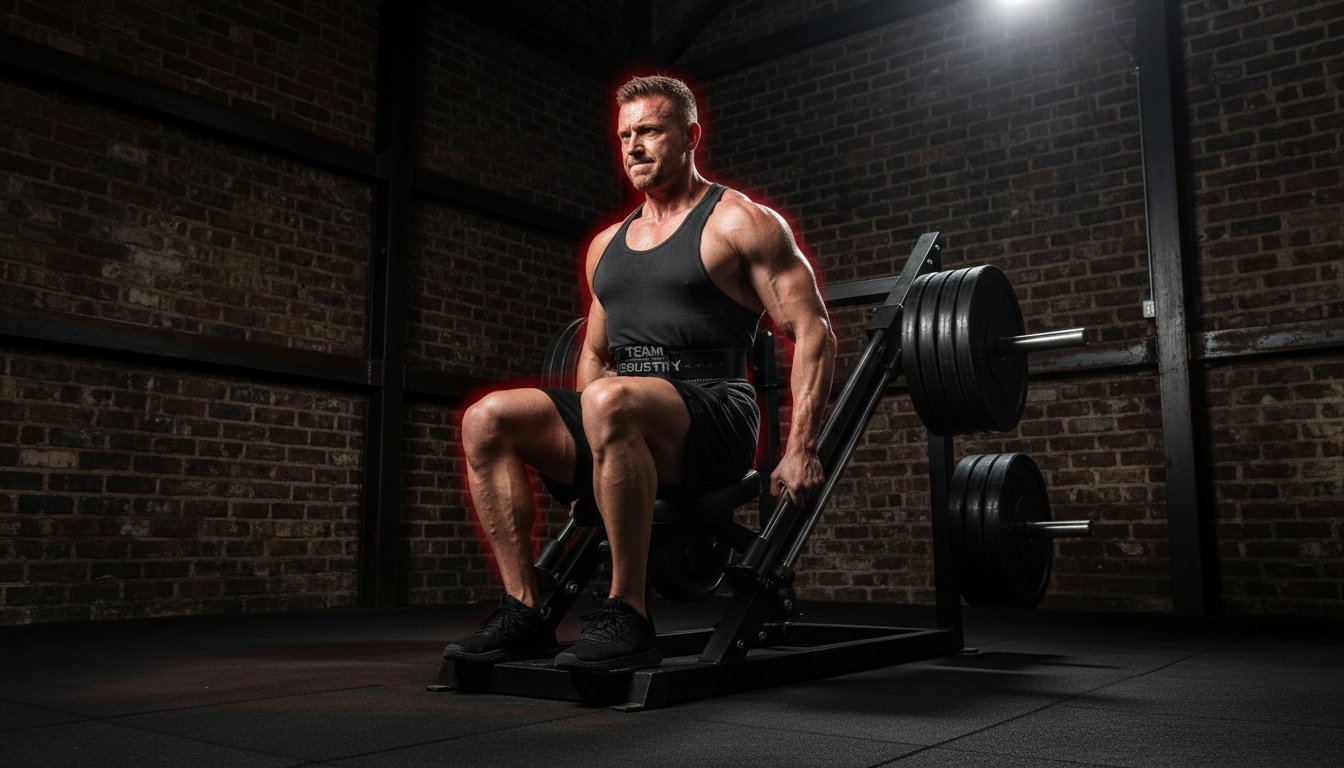
Loading the leg press with every plate in the gym won't build 20% more muscle if your lower back rounds off the seat on every rep. You likely understand that the leg press is a powerhouse for lower-body development, but it's also where 40% of lifters face avoidable knee pain or stalled progress. At Team Industry, we believe that efficiency and safety are the foundations of any successful training block. We've seen how improper form can sideline a dedicated athlete for months, which is why we prioritize a no-nonsense approach to machine mechanics.
This guide will help you unlock the full potential of your training through professional technique tips and foot placement variations designed for hypertrophy. You'll learn how to brace properly and use essential gear to protect your joints while pushing heavier loads. We'll cover everything from machine variations to the specific Team Industry support gear needed to transform your leg days into high-performance sessions for the 2026 season.
Key Takeaways
- Understand the mechanics of the leg press to effectively target your quads and glutes while minimizing unnecessary spinal pressure.
- Identify the bespoke foot placements and machine variations required to isolate specific muscle groups for more balanced lower-body development.
- Implement professional safety protocols to protect your lower back and ensure every repetition contributes to sustainable strength gains.
- Discover how a trusted Team Industry weight lifting belt provides the essential intra-abdominal pressure required for heavy, high-performance sets.
- Transition from ego-driven lifting to results-oriented training with practical tips on maintaining proper form and a full range of motion.
Understanding the Leg Press: More Than Just a Squat Alternative
The leg press is a fundamental compound movement that targets the quadriceps, glutes, and hamstrings with high efficiency. While many lifters view it solely as a backup for the barbell squat, it's a distinct tool with specific mechanical advantages. Unlike squats, which require significant core stability to manage axial loading on the spine, the leg press allows you to drive weight through a fixed plane. This shift in mechanics removes the bottleneck of lower back fatigue, letting you push your legs to absolute failure. It's a staple for anyone following a hardbody physique programme because it facilitates the high-volume training necessary for sarcoplasmic hypertrophy. By focusing on pure leg drive, you can accumulate the workload required for growth without the systemic exhaustion that follows heavy free-weight sessions.
The Biomechanics of Leg Pressing
The machine's fixed path ensures that your force production is entirely directed into the platform. This is a closed-chain movement where your feet stay in contact with a solid surface, allowing for massive force generation. Because the seat supports your back, the risk of spinal rounding is significantly reduced. This makes it a pragmatic choice for lifters managing lower back sensitivity or those in a recruitment-style training block where recovery is a priority. Different Leg press machine variations, such as the 45-degree sled or horizontal cable press, offer unique resistance curves. Using dedicated joint support gear can further enhance safety when you're moving heavy loads or performing high-intensity drop sets. At Team Industry, we believe that reliability in your equipment is just as vital as reliability in your technique.
Hypertrophy vs. Strength: Setting Your Goals
The leg press excels at driving metabolic stress through high-rep sets. While the squat is often the primary driver for total-body strength, the leg press is the better choice for "pump" sets of 12 to 20 reps. It serves as an excellent lower-body counterpart to heavy upper-body work like the bench press. To see real progress, you must apply progressive overload. Adding just 2.5kg to the machine each week can result in a total increase of 130kg over a single year. This steady, calculated approach mirrors the efficiency required in the industrial sectors we serve. Don't just move the weight; control the tempo to maximize time under tension. This discipline ensures that every rep contributes to your long-term physical development and operational performance.
Leg Press Machine Variations: Sleds, Cables, and Verticals
Professional UK gyms typically house three distinct types of leg press apparatus. Each machine serves a specific purpose based on your training volume and biomechanical requirements. Understanding these mechanical differences ensures you select the right tool for your specific leg day goals while maintaining peak operational efficiency.
The 45-Degree Incline Leg Press
The 45-degree incline sled is the industry standard for building raw power and quadriceps mass. You load this machine by sliding Olympic plates onto the weight horns located on either side of the sled. Safety is a non-negotiable priority when handling heavy loads. The Team recommends double-checking the safety catch before you begin your first rep. You should also position the adjustable stop-pins at a height that prevents the sled from crushing your chest if you reach muscular failure. The 45-degree incline leg press is the most effective variation for maximum weight loading due to its stable track and mechanical advantage. To stay secure during these high-intensity sets, many athletes utilise our weight lifting belts to maintain core stability and protect the lumbar spine.
Seated Horizontal and Vertical Machines
Horizontal machines usually rely on a cable-driven weight stack rather than manual plates. This setup provides consistent tension throughout the entire range of motion, which is vital for metabolic stress and hypertrophy. These machines are ideal for beginners who are still learning proper leg press technique or for experienced lifters performing high-repetition endurance sets. Because the resistance is governed by a pulley system, the transition between the eccentric and concentric phases remains smooth and predictable.
Vertical leg presses offer a gravity-defying challenge reserved for advanced strength athletes. You lie flat on your back and push the weight directly toward the ceiling. This orientation requires careful management because it increases the risk of spinal compression. It also frequently causes rapid blood pressure spikes since your legs are positioned above your heart level. You should choose your machine based on your current mastering the weights progress and your individual injury history. If you find that vertical or heavy incline work puts undue stress on your patellar tendons, consider exploring our joint support options to keep your knees protected during heavy sessions.
- Sled Machines: Best for maximum strength and plate-loaded customisation.
- Cable Machines: Best for constant tension and drop-sets.
- Vertical Machines: Best for advanced lifters seeking a unique resistance profile.
Whatever machine you choose, the goal is consistent, controlled movement. The Team is here to provide the gear that keeps you moving safely toward your next personal best.
Foot Placement Variations for Specific Muscle Targeting
The leg press is more than a simple push movement. By adjusting where you place your feet on the platform, you change the joint angles and muscle recruitment patterns. This allows you to bias specific muscle groups depending on your training goals. At Team Industry, we view every lift as a technical operation where precision leads to better results and fewer injuries.
The standard position serves as your baseline. Place your feet shoulder-width apart in the middle of the platform. This setup distributes the load evenly across the quadriceps, hamstrings, and glutes. It's the most reliable position for general strength building. You must ensure your entire foot remains in contact with the plate. Lifting your heels shifts the stress to the patellar tendon, which can lead to knee strain over time. If you find your heels lifting at the bottom of the rep, your ankle mobility is likely the limiting factor.
High vs. Low Foot Placement
Moving your feet toward the top of the platform increases the degree of hip flexion while reducing knee flexion. This shift places a greater demand on the glutes and hamstrings. It's an effective way to build posterior chain strength without the spinal loading of a traditional barbell squat. Conversely, a low foot placement reduces hip flexion and forces the knees to track further forward. This maximizes the tension on the quadriceps, specifically the vastus lateralis. Foot placement for muscle targeting depends heavily on your physical proportions. Low placement requires superior ankle flexibility to prevent heel lift. If your ankles are tight, you'll find it difficult to reach full depth without compromising your form.
Wide vs. Narrow Stance
A wide stance, often called a sumo position, involves placing the feet near the outer edges of the platform with the toes pointed slightly outward. This variation targets the adductors on the inner thigh and the glute medius. It's a common choice for those looking to improve stability in the lower body. A narrow stance, with feet placed closer than shoulder-width, focuses the tension on the outer quad sweep. This is a technically demanding variation that requires a steady, controlled tempo. For those managing minor aches during these shifts, our joint support range offers the necessary compression to keep the knees tracked correctly.
The single-leg press is a vital tool for correcting muscular imbalances. Most lifters have one leg stronger than the other, which can lead to shifting or twisting during heavy bilateral sets. Performing the movement unilaterally forces each leg to handle 100% of the load independently. This improves unilateral stability and ensures your strength development is symmetrical across the entire lower body.

Avoiding the Ego Press: Safety and Common Technique Flaws
Lifting for the wrong reasons leads to the same outcome: injury. The "ego press" involves loading every plate in the gym only to move the sled two inches. This approach provides zero mechanical advantage and stalls hypertrophy. Real progress on the leg press comes from controlled, high-quality repetitions that respect your body's structural limits. If you aren't hitting a full range of motion, you're simply performing an expensive calf raise.
Protecting your spine starts with your seat position. You must keep your glutes and sacrum firmly pressed against the back pad throughout the entire movement. If your hips roll forward at the bottom of the rep, you're inviting lumbar strain. This "butt wink" transfers the load from your quads to your lower back. 2024 biomechanical studies indicate this error can increase shear force on the lumbar spine by over 20%. Brace your core using the Valsalva manoeuvre: take a deep breath into your belly, hold it to create internal pressure, and exhale only once you've passed the "sticking point" of the lift.
The "No-Lock" rule is non-negotiable. Never snap your knees into a full lockout at the top. Doing so shifts the weight from the muscles to the joint capsule and ligaments. Keep a slight, soft bend at the peak of the movement to maintain tension on the quads and keep your joints safe. For those needing extra security during heavy sets, our professional joint support range provides the stability required for high-performance training.
Common Mistakes to Correct Today
- Heels lifting: If your heels rise off the plate, you're putting excessive shearing force on the patellar tendon. Shift your feet higher on the platform or address your ankle mobility.
- Knees caving: Valgus collapse (knees turning inward) often stems from weak glutes. Focus on driving your knees outward so they stay in line with your middle toes.
- Excessive depth: Depth is only beneficial if your form holds. Stop the descent just before your lower back starts to lift off the seat.
Managing Range of Motion (ROM)
A full, controlled ROM beats a 1,000kg "quarter rep" every time. We recommend a strict tempo: take 2-3 seconds on the eccentric phase to maximize time under tension. This control ensures you're using muscle fibers rather than momentum. The leg press serves as an excellent tool to test your absolute strength limits safely after finishing your primary dumbbell or barbell work. By removing the balance requirement, you can focus entirely on pushing your legs to failure without the risk of falling.
Optimising Performance: How Strength Gear Enhances the Press
Many lifters mistakenly reserve their heavy-duty equipment for the squat rack, but professional strength gear is equally vital for the leg press. This machine allows for loading that often exceeds 400kg on a 45-degree sled, placing unique demands on your central nervous system and skeletal structure. Using a weight lifting belt helps create the necessary intra-abdominal pressure to protect your lower back. This pressure stabilises your midsection against the seat, preventing the pelvis from tilting or "rounding" under heavy loads.
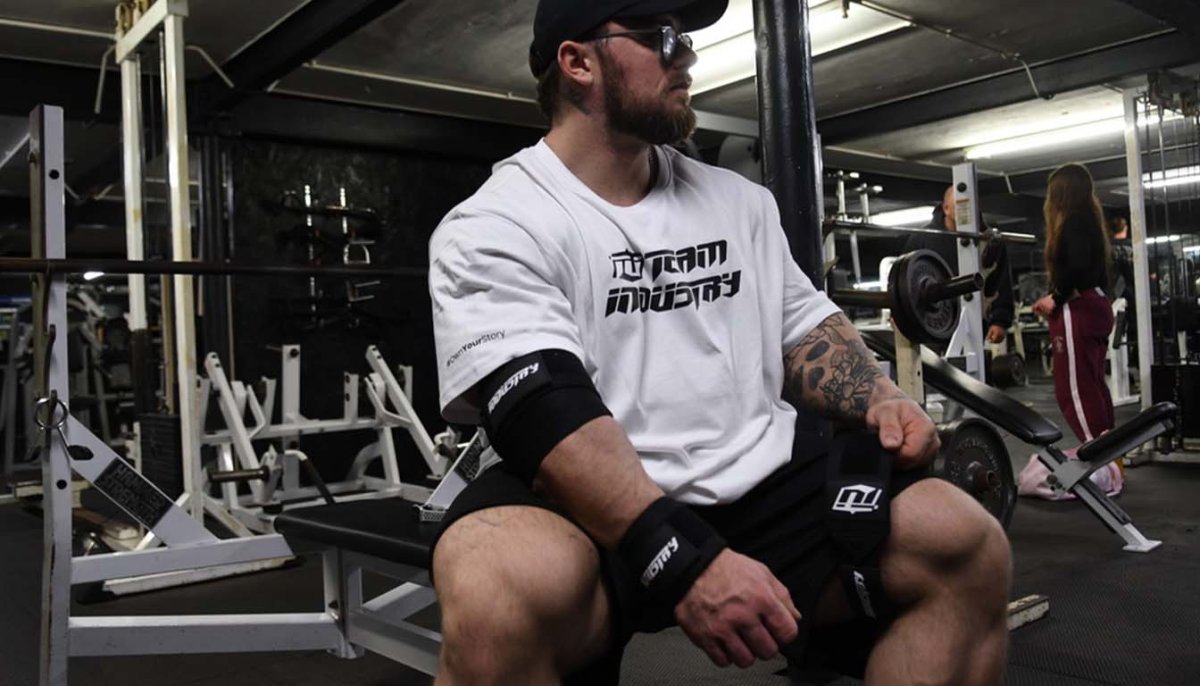
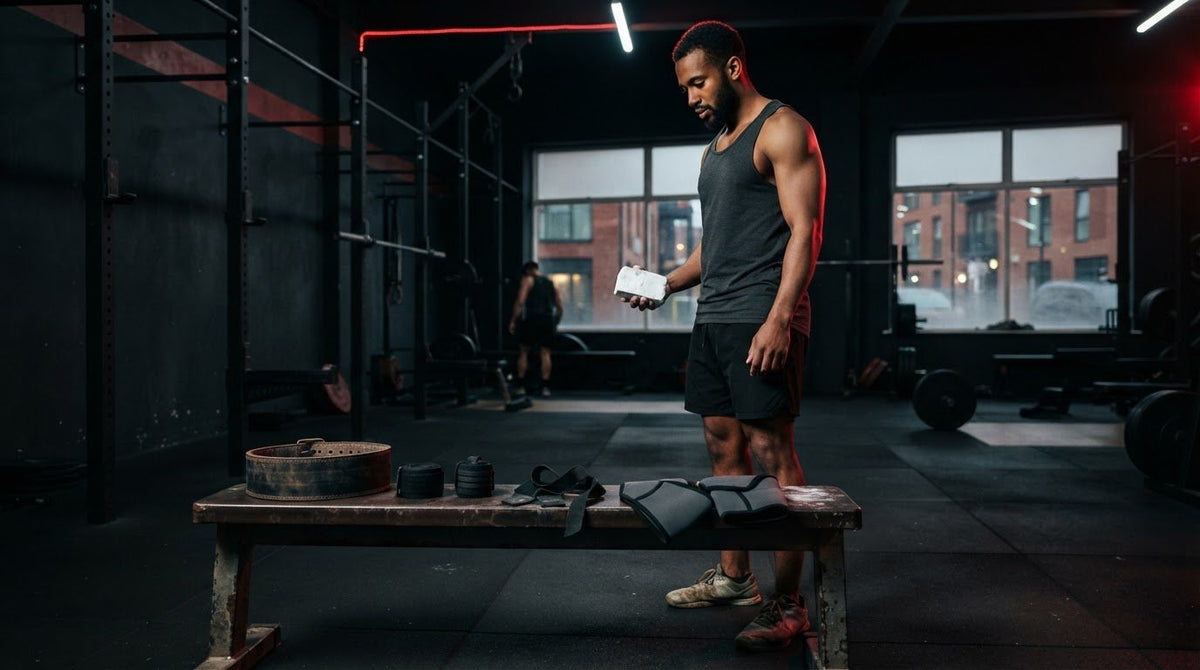
Support isn't limited to the core. Knee sleeves provide compression that keeps joints warm, which is essential in UK gyms during winter months when temperatures can drop below 10 degrees Celsius. They also enhance proprioception, giving you a better sense of joint position during the eccentric phase. For those who grip the machine handles tightly to stay anchored, wrist wraps provide the stability needed to maintain a firm, pain-free grip throughout the set.
Bracing and Stability Gear
A lever belt acts as a tactile cue. It reminds you to keep your core engaged and your spine neutral throughout the movement. When using the leg press, you'll likely find that wearing the belt slightly higher than you would for a squat is more comfortable. This adjustment accommodates the seated fold at the hips and prevents the buckle from digging into your thighs. Team Industry 13mm belts are built for this level of intensity. They offer a dependable barrier that doesn't shift when you're pushing a heavy sled, ensuring your bracing remains consistent from the first rep to the last.
Joint Support and Accessories
Heavy-duty knee sleeves reduce that "creaky" sensation often felt during the first few sets. A 2021 study on compression garments showed that they can improve perceived stability and blood flow to the joint by up to 30 percent, which aids recovery between sets. There's also a clear psychological benefit; feeling "locked in" allows you to focus on the quad drive rather than joint discomfort. To ensure you don't slide forward, apply liquid chalk to the machine handles. This simple addition prevents your hands from slipping when you're pulling yourself into the seat for maximum leverage, making it a vital part of your kit bag.
Take Your Lower Body Training to the Next Level
Mastering the leg press requires more than just moving weight from point A to point B. It’s about precise foot positioning to target specific muscle groups and maintaining strict technical standards to prevent injury. By following the 2026 safety guidelines and avoiding the common pitfalls of ego pressing, you ensure that every rep contributes to genuine hypertrophy and strength gains. Consistency in your technique is what separates elite lifters from the rest of the gym floor.
To maximize your output safely, you need equipment that’s built for the task. Team Industry provides professional-grade gear that’s currently trusted by UK powerlifters and bodybuilders for high-intensity sessions. Our heavy-duty 13mm lever belts offer the maximum bracing required for heavy compound movements. Additionally, our durable knee sleeves are designed specifically for joint longevity, providing the compression you need to stay under the sled year after year. Don’t let substandard equipment hold back your progress when you’ve put in the hard work on your form.
Upgrade your leg day with professional-grade Strength Gear from Team Industry
Success in the gym is built on a foundation of solid mechanics and reliable support. Keep pushing your limits with the right tools and a disciplined mindset.
Frequently Asked Questions
Is the leg press better than the squat for building big legs?
Leg presses allow for greater isolation and higher total volume, which is often superior for hypertrophy. A 2018 study in the Journal of Strength and Conditioning Research showed that while squats recruit more stabilizer muscles, the leg press allows 15 percent more direct load on the quadriceps. Team Industry recommends using both movements to build a complete lower body profile that handles the physical demands of industrial roles.
Why do my knees hurt when I use the leg press machine?
Knee pain usually stems from improper foot placement or locking your joints at the top of the movement. Ensure your feet are shoulder-width apart and your heels remain glued to the platform. 40 percent of joint issues in warehousing roles come from repetitive strain; applying our Team Industry knee sleeves provides the compression needed to maintain stability during heavy sets and long shifts.
How much should I be able to leg press compared to my squat?
Most lifters can leg press 2 to 2.5 times their maximum back squat weight. This difference occurs because the machine's 45 degree angle reduces the impact of gravity compared to a vertical squat. If you squat 100kg, aim for a 200kg to 250kg leg press to ensure your strength levels remain balanced. This ratio helps maintain the operational excellence required for heavy lifting in the logistics sector.
Can I do leg presses every day to see faster results?
You shouldn't perform heavy leg presses daily because muscle tissue requires 48 to 72 hours to recover fully between sessions. Overtraining leads to a 20 percent increase in injury risk according to sports medicine data from 2024. Schedule your sessions 2 or 3 times per week to maximize growth while keeping your body ready for the physical demands of Class 1 driving or intensive warehousing shifts.
Should I wear a lifting belt while doing leg presses?
You should wear a lifting belt if you're moving loads exceeding 80 percent of your one-rep max. A belt increases intra-abdominal pressure by 15 percent, which stabilizes your spine against the seat. Our Team Industry heavy-duty belts offer the same reliable support our logistics partners trust when handling heavy cargo. It's a practical way to maintain safety standards during your most intense training sessions.
What is the best foot placement for targeting the glutes specifically?
Place your feet high on the platform to maximize hip flexion and target the glutes. This adjustment shifts the tension from the quadriceps to the posterior chain. Research indicates that a high foot position increases gluteus maximus activation by 25 percent compared to a low, narrow stance. This technique builds the functional power needed for the constant climbing and loading tasks found in the industrial world.
Is the vertical leg press dangerous for the lower back?
The vertical leg press carries a higher risk of spinal rounding if your hip mobility is limited. 30 percent of lifters experience lumbar stress when their hips lift off the pad at the bottom of the rep. Always maintain a neutral spine and use the safety handles to keep your pelvis anchored firmly. Team Industry prioritizes safety and compliance, so we suggest mastering the standard 45 degree machine first.
Can I use the leg press if I have a history of HGV-related back strain or heavy lifting injuries?
You can use the leg press with a history of back strain provided you focus on strict form and controlled movements. Since 75 percent of HGV drivers report lower back issues according to 2025 industry health audits, the machine's fixed path offers a safer alternative to free weights. Use Team Industry's supportive gear to maintain safety standards while you rebuild the strength required for your daily operational tasks.
Share:
Mastering Your Pull: The Ultimate Guide to Lifting Straps for Strength Athletes
Fitness Equipment for Strength Athletes: The 2026 Essential Guide