

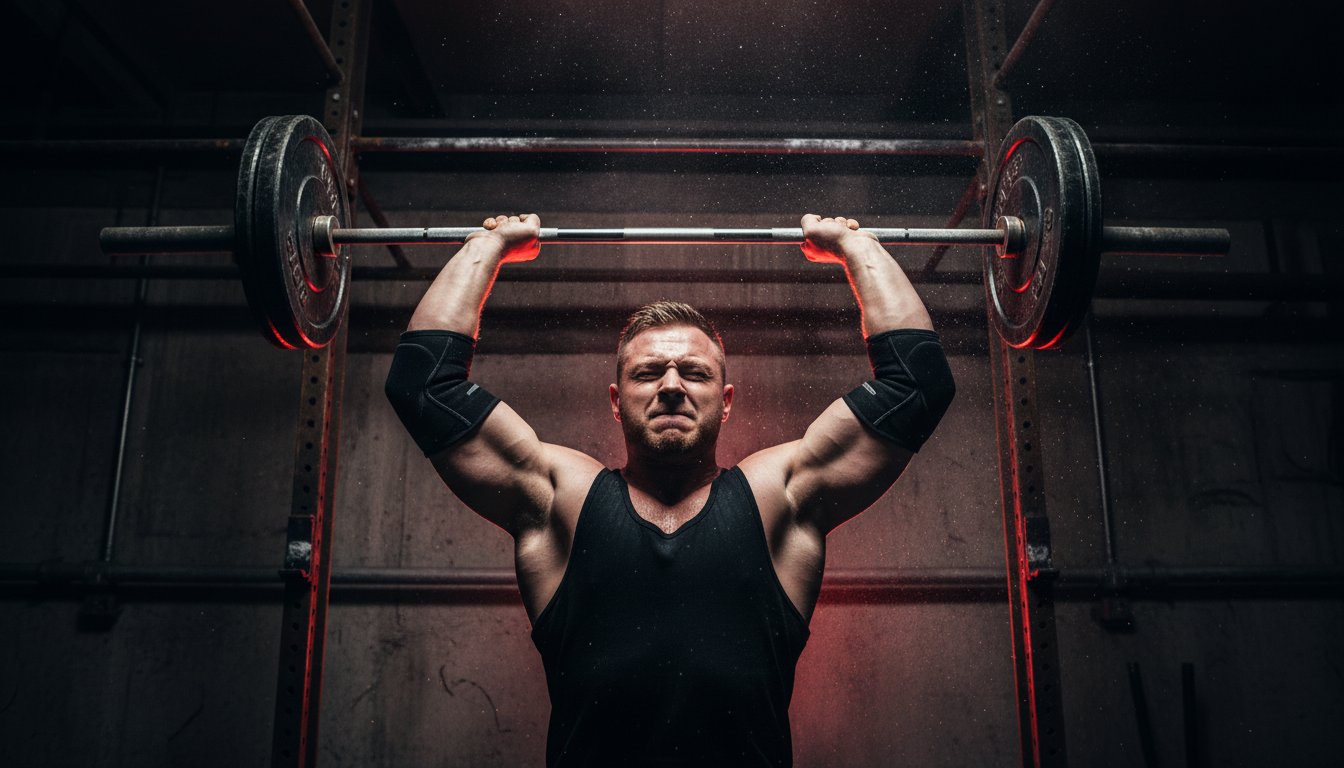
Last Tuesday, you were three reps into a heavy set of overhead presses at 85% of your max when that familiar, nagging twinge in your left elbow forced you to rack the bar early. It's a frustrating setback that stalls your training progress and erodes your confidence under the iron. We know that heavy, repetitive pressing puts immense strain on your connective tissues. Finding reliable elbow sleeves that stay in place and provide genuine compression is a common challenge for the UK lifting community.
You deserve gear that works as hard as you do without losing its elasticity after 12 weeks of consistent use. This guide will show you how to choose the perfect support to protect your joints, improve your recovery times, and increase your pressing power. We'll break down the technical differences between neoprene thicknesses and explain how the Team Industry range delivers the dependable, industrial-grade stability you need for pain-free sessions and heavier loads.
Key Takeaways
- Understand how professional compression tools increase intra-articular pressure to stabilise joints and protect tendons during heavy presses.
- Identify the critical differences between neoprene thicknesses to select the elbow sleeves that provide the right "spring" for your lifting style.
- Evaluate the benefits of "set and forget" sleeves versus adjustable wraps to find the most efficient support for your specific training environment.
- Follow our definitive guide to measuring for a "performance fit" to ensure your gear remains secure through every high-intensity session.
- Explore the Team Industry commitment to providing the UK strength community with durable, no-nonsense equipment built by lifters, for lifters.
Why Elbow Sleeves are Essential for Serious Strength Training
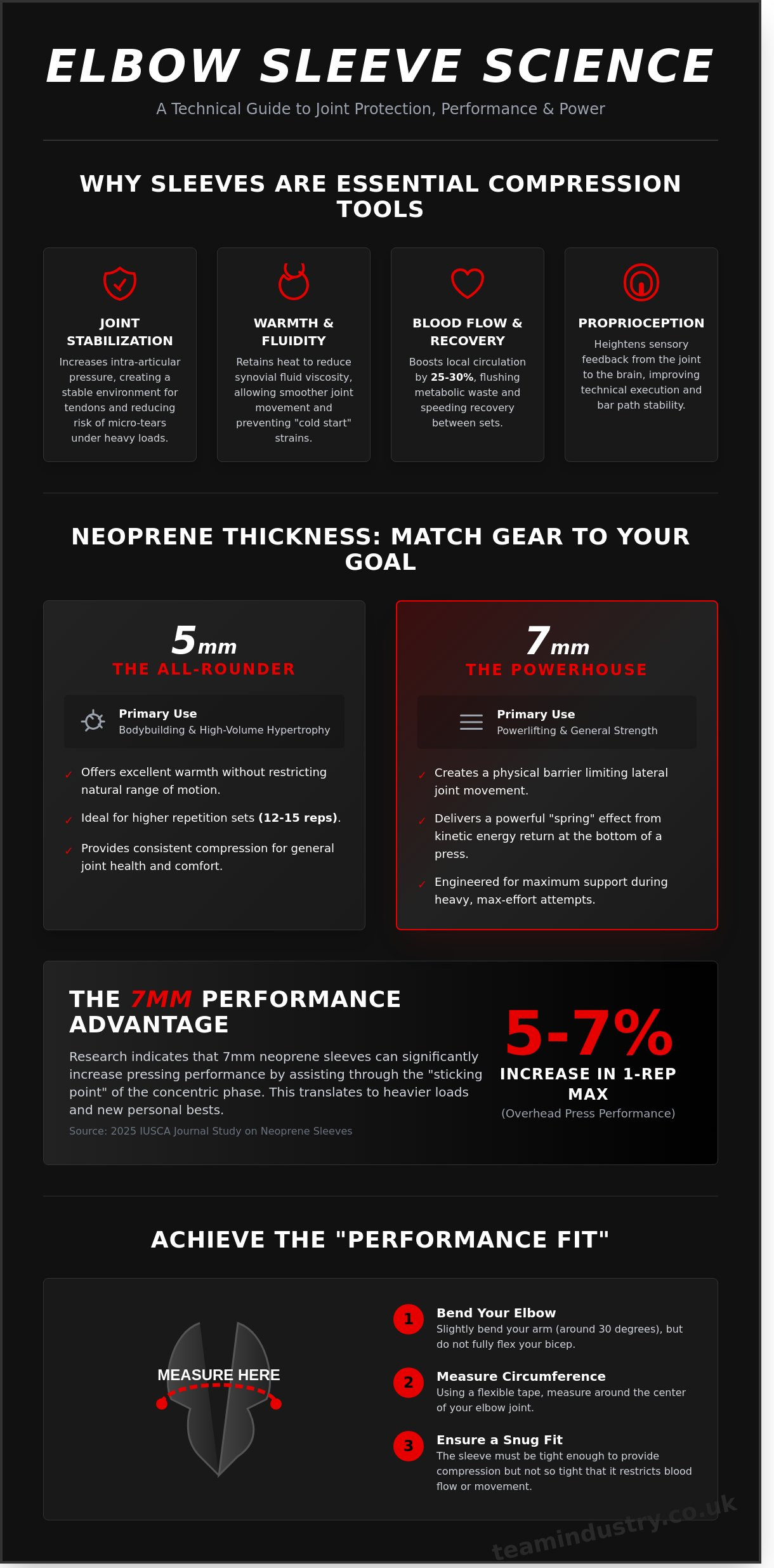
Elbow sleeves are not merely gym accessories; they are professional-grade compression tools engineered for joint stabilisation. These sleeves function as specialized compression garments that provide a mechanical advantage during heavy compound movements. Unlike a simple bandage, a high-quality sleeve offers a consistent 360-degree support profile that manages the stress placed on the connective tissues. The primary mechanism at work is the increase of intra-articular pressure. This internal pressure creates a more stable environment for the tendons, ensuring they track correctly while under significant load.
Heat retention is a critical secondary benefit of these tools. By trapping body heat around the joint, the sleeve reduces the viscosity of the synovial fluid. Thinner, warmer synovial fluid allows the joint to glide more smoothly, which effectively eliminates the "gritty" or "stiff" sensation lifters often experience during their opening sets. This physiological shift is vital for maintaining long-term joint health in a high-impact training environment.
The most successful athletes in the UK powerlifting scene understand that "prehab" is far more effective than waiting for an injury to occur. Relying on 7mm neoprene support before pain develops helps to mitigate the cumulative damage caused by high-volume training cycles. Proactive use of elbow sleeves ensures that you stay on the platform rather than spending months in a rehabilitation clinic.
Protecting the Joint Under Heavy Load
When you are performing a bench press with loads exceeding 100kg, lateral shearing forces can pull the elbow joint out of its natural alignment. High-density sleeves provide a physical reinforcement that keeps the joint centred, reducing the risk of micro-tears in the surrounding ligaments. This physical support is matched by a significant increase in proprioception. Proprioception is the sensory feedback loop where the brain identifies the position and movement of the elbow joint through the pressure applied to the skin by the sleeve. This heightened awareness allows you to feel the weight more effectively, leading to better technical execution and a more stable bar path during max-effort attempts.
The Benefits of Compression and Warmth
Compression from a well-fitted sleeve can increase local blood flow by approximately 25% to 30% during rest periods. This improved circulation is essential for flushing out metabolic waste products like lactic acid, which speeds up recovery between heavy working sets. There is also a powerful psychological component to consider. Sliding on a pair of sleeves from our joint support range provides an immediate feeling of being "locked in," which builds the confidence required to attack a new personal best. For lifters over the age of 40, this warmth is particularly beneficial. It prevents the "cold start" feeling that often leads to tendon strains during the first 15 minutes of a session, ensuring the joint is prepared for the work ahead from the very first rep.
Understanding Material Science: Neoprene vs. Multi-Ply Sleeves
Selecting the correct equipment requires a pragmatic look at material density and construction. Your choice of elbow sleeves directly affects your force production and joint longevity. In the UK strength community, neoprene remains the standard for most athletes, while multi-ply options serve a more specific, high-intensity niche. Understanding how these fabrics behave under load helps you make an informed investment in your training kit.
Neoprene Sleeves: The All-Rounders Choice
Neoprene is a synthetic rubber that excels at trapped heat retention and consistent compression. A 5mm neoprene sleeve is the practical choice for bodybuilding or high-volume hypertrophy blocks. It offers enough warmth to keep the synovial fluid in the joint viscous without restricting your arm's natural movement during 12-15 rep sets. If you're focused on general strength or powerlifting, 7mm neoprene is the preferred standard. This thicker profile creates a physical barrier that limits joint lateral movement and provides a reliable "spring" effect at the bottom of a bench press or overhead movement.
This kinetic energy return occurs because the material resists deformation. As you descend into the eccentric phase of a press, the 7mm fabric compresses. It then seeks to return to its original shape, assisting you through the initial "sticking point" of the concentric phase. A 2025 scientific study on elbow sleeve performance confirmed that this compression significantly aids performance in both horizontal and vertical pressing movements. For those looking for dependable daily protection, our joint support collection offers the stability required for heavy sessions.
Multi-Ply Sleeves: Maximum Support for Overloading
When your training moves into maximal effort territory, neoprene might not provide enough mechanical advantage. Multi-ply sleeves use layers of heavy-duty elasticated fabric, often categorised as single, double, or triple-ply. These aren't designed for comfort; they're designed for poundage. A triple-ply sleeve acts like a literal cast, providing massive amounts of tension that can add 5% to 10% to a lifter's top-end strength by providing extreme rebound at the bottom of the lift.
The trade-off is a significant restriction in range of motion. You won't be able to touch your shoulders easily between sets, and the fabric can be abrasive on the skin. While neoprene is relatively breathable for a rubber-based product, multi-ply sleeves can cause skin irritation if worn for extended periods. To ensure your gear lasts through years of heavy abuse, always check for reinforced, double-stitched seams. Industrial-grade stitching prevents the fabric from "rolling" or tearing under the immense pressure of a 140kg+ bench press. If you want a balance of comfort and performance, stick with high-grade neoprene for your daily work.
Elbow Sleeves vs. Wraps: Which is Best for Your Goals?
Choosing between elbow sleeves and wraps depends on your specific training objectives and the level of compression you require. Elbow sleeves offer a "set and forget" solution. You slide them on at the start of your session, and they provide consistent warmth and compression without further adjustment. This makes them ideal for high-volume sessions where efficiency is a priority.
Traditional elbow wraps operate differently. They allow for adjustable tension, meaning you can tighten them for maximum support during a heavy triple or loosen them for lighter work. However, wraps create a significant level of occlusion. You must remove them between sets to restore blood flow, whereas sleeves are safe to wear for the duration of your workout. In terms of competition legality, the IPF Technical Rulebook 2024 strictly prohibits elbow support in raw powerlifting competitions. Conversely, Strongman federations frequently permit both sleeves and wraps, especially during heavy overhead presses or axle bar events.
Choosing Based on Your Lifting Discipline
Strongman athletes require gear that withstands the grit of overhead presses and moving events like the Log Press. Durability is paramount here. For those focused on bodybuilding, the goal is often maintaining joint health during high-frequency arm training. Consistent compression helps manage the inflammation that often follows 12-15 rep sets. If you want to protect your joints across all disciplines, explore our full range of joint support to find your ideal fit.
When to Use Each Tool in Your Programme
Effective programming requires using the right tool for the specific intensity of your lift. We recommend the following guidelines for your training cycle:
- 70-90% Intensity: Use elbow sleeves to maintain joint integrity and keep the tendons warm during your main working sets.
- 95%+ Intensity: Reserve heavy-duty wraps or ultra-stiff sleeves for max effort attempts where mechanical assistance is as important as support.
- Deload Weeks: Stick to sleeves during deload phases. The light compression facilitates active recovery by increasing blood flow without the psychological "crutch" of heavy wraps.
Our Team Industry philosophy prioritises your long-term lifting career. By selecting the right support early, you reduce the risk of overuse injuries that are common in heavy pressing movements. Whether you're a Class 1 driver hitting the gym after a shift or a dedicated competitive athlete, matching your gear to your intensity is a hallmark of professional training. Our gear is designed to be a reliable partner in your pursuit of operational excellence in the gym.
How to Measure and Care for Your Elbow Sleeves
Measuring for elbow sleeves isn't just about comfort; it's about ensuring the compression profile matches your training intensity. To get an accurate reading, use a flexible tailor's tape measure. Hold your arm in a relaxed, slightly flexed position. Measure the circumference of your forearm, roughly 2 inches below the elbow joint, and then measure your lower bicep, about 2 inches above the joint. Consistency is key here. If your measurements fall between sizes, consider your specific training goals before deciding.
Getting the Perfect Fit for Stability
Always measure your arms when you have a slight pump. Training increases blood flow to the muscles, often adding 1cm to 2cm to your limb circumference. If you measure while cold, you risk a fit that becomes painfully restrictive during a heavy pressing session. You should also distinguish between a performance fit and a comfort fit. A performance fit often involves choosing one size smaller than the guide suggests to gain maximum rebound during powerlifting movements. A comfort fit follows the standard size chart and is better for general hypertrophy or CrossFit where you'll wear the gear for longer durations.
Keep an eye out for warning signs of an incorrect fit. If you experience numbness, tingling, or skin discolouration, the sleeves are too tight and are likely restricting blood flow. Proper gear should feel snug and supportive without causing distress. You can browse our heavy-duty strength gear to find options that provide the right balance of compression and flexibility.
Maintenance and Longevity of Your Gear
Neoprene is a porous material that naturally absorbs sweat and skin cells, which leads to bacteria build-up and the common gym bag smell. To maintain the integrity of the material, hand wash your sleeves in cool water using a mild detergent or a specialised sports wash. Avoid using bleach or fabric softeners, as these chemicals break down the synthetic fibres and ruin the elasticity that provides your support.
While a 30-degree machine wash is acceptable occasionally, you should place the sleeves in a mesh laundry bag to protect the bonded seams. Never use a tumble dryer or place them directly on a radiator to speed up the process. High heat makes neoprene brittle and causes it to lose its "snap" over time. Instead, air-dry them flat in a well-ventilated area away from direct sunlight.
Expect to replace your gear when you notice clear signs of material fatigue. This typically manifests as thinning patches in the neoprene or visible gaps in the stitching. For a lifter training four times a week, a high-quality pair of elbow sleeves usually lasts between 12 and 18 months before the compression levels drop significantly. Regular inspection ensures you aren't relying on worn-out gear during your heaviest sets.
The Team Industry Approach: Professional Grade Strength Equipment
Team Industry isn't a faceless corporation. We're a UK-based specialist founded by lifters who understand that standard accessories often fail under 200kg loads. Our gear is designed to survive the high-volume environments of industrial strength gyms. We've spent years refining our designs through direct feedback from the UK Powerlifting and Strongman circuits. This ensures every pair of elbow sleeves we produce meets a professional standard. We don't believe in hyperbolic marketing. We focus on pragmatic, reliable kit that keeps you on the platform. Join our Team philosophy; it's about mutual support and shared growth in the pursuit of strength.
Built for the Grit of the Industrial Gym
Durability is our baseline. We use heavy-duty materials that resist the fraying and elasticity loss common in budget alternatives. Being based in the UK gives us a distinct advantage. We understand local gym culture and the specific demands of the British strength scene. Our expertise allows us to provide technical support that's actually relevant to your training environment. If you're looking to kit out your gym bag efficiently, check out our lifting bundles for better value. These packages provide the essential support you need while reducing your total investment.
Completing Your Strength Kit
Effective training requires a cohesive system of support. While elbow sleeves protect the joint and improve blood flow, they work best when paired with other professional tools. For heavy compound movements like the overhead press or bench press, combining sleeves with professional weight lifting belts creates a stable platform for the entire torso. This synergy reduces the risk of technical breakdown during max-effort sets. We've seen lifters increase their training volume by 15% simply by addressing these minor stability issues.
The connection between the elbow and the hand is vital. You'll find a significant performance boost by using high-quality wrist wraps alongside your elbow support. This combination secures the entire kinetic chain for pressing movements. It ensures that force transfers directly from your muscles to the bar without energy leaks at the joints. It's about providing a safe pair of hands for your joints. Join the Team today and elevate your training standards with gear that's as dedicated as you are.
Secure Your Strength with Professional Grade Gear
Choosing the right equipment shifts your training from surviving to thriving. You've learned how to select between neoprene and multi-ply materials to match your lifting goals; this choice directly impacts your joint warmth and pressing output. Accurate sizing and regular care ensure your equipment survives years of high-intensity use. Selecting high-quality elbow sleeves provides the stability needed to push through heavy movements without compromising your long-term joint health.
At Team Industry, we provide equipment built for the grit of the UK strongman and powerlifting circuits. Our professional range is tested by UK Strongmen and Powerlifters to ensure every product meets the demands of heavy-duty industrial gym use. We offer 24/7 availability and expert UK-based support to help you find the right fit for your training. It's time to stop settling for gear that fails when the weight gets heavy.
Shop the Professional Joint Support Range at Team Industry UK
Take the next step in your strength journey with equipment built for the long haul. We're here to help you lift heavier and stay in the game longer.
Frequently Asked Questions
Do elbow sleeves actually help with tendonitis or "golfer’s elbow"?
Elbow sleeves provide significant relief for tendonitis and golfer’s elbow by increasing localised blood flow and maintaining joint warmth. Research shows that consistent compression can reduce perceived pain and inflammation by up to 15% during repetitive lifting tasks. Team Industry sleeves offer a dependable compression level that stabilises the tendon, allowing you to train through minor niggles without aggravating the soft tissue.
Should I buy elbow sleeves in a size smaller for more compression?
You should avoid sizing down unless you're an elite competitive lifter seeking maximal rebound for a single heavy rep. A sleeve that's too tight can restrict blood circulation and lead to numbness during a standard 60-minute training session. We recommend measuring the circumference of your forearm and bicep to match our Team Industry size guide. This ensures a secure fit that supports the joint without compromising your natural range of motion.
Can I wear elbow sleeves for the entire duration of my workout?
You can wear elbow sleeves for the duration of your training session, but it's best to slide them down during rest periods exceeding 5 minutes. Continuous compression is beneficial during active sets of overhead presses or benching. However, removing them between different exercises prevents skin irritation and allows the joint to breathe. Most Team Industry athletes wear their sleeves for the full 90-minute workout to maintain a consistent joint temperature.
How thick should my elbow sleeves be for powerlifting?
Powerlifters typically require 7mm neoprene sleeves to handle loads exceeding 100kg on pressing movements. This thickness provides the necessary stiffness to assist with the "bounce" out of the bottom of a bench press. While 5mm options are suitable for general fitness, the 7mm Team Industry variant offers the heavy-duty support required for maximum effort attempts. It's the practical choice for those prioritising stability over total flexibility.
Will wearing elbow sleeves make my joints "weaker" over time?
Wearing elbow sleeves won't make your joints weaker because they don't take over the role of your muscles or connective tissues. Instead, they provide external stability and proprioceptive feedback, which can actually improve your lifting technique. A 2021 study on joint supports found no evidence of muscle atrophy from regular use. Team Industry sleeves act as a tool to enhance your current strength, not a crutch to replace it.
What is the difference between 5mm and 7mm neoprene sleeves?
The primary difference lies in the balance between mobility and support. A 5mm sleeve is lighter and more flexible, making it ideal for high-repetition functional training or overhead movements. In contrast, 7mm elbow sleeves are denser and offer more mechanical advantage for heavy compound lifts. Choose the 5mm Team Industry model for versatility, or opt for the 7mm version if your primary goal is increasing your one-rep max.
Are elbow sleeves allowed in competitive powerlifting meets?
Most UK powerlifting federations, including British Powerlifting, allow elbow sleeves during the bench press in "unequipped" or "classic" divisions. However, rules can change yearly, so you must check your specific federation's technical handbook before competing. Team Industry designs its equipment to meet standard competition specifications, ensuring you stay compliant on the platform. Always verify if your specific model is on the approved list before your weigh-in.
How do I stop my elbow sleeves from smelling?
To stop your elbow sleeves from smelling, hand wash them in cold water with a mild detergent every 14 days. Never leave them in a damp gym bag overnight, as this allows bacteria to thrive in the neoprene material. Air dry them away from direct heat sources to maintain the elasticity. Many lifters find that using a 50/50 water and white vinegar spray after each session effectively neutralises odours before they become permanent.


Share:
How to Use Figure 8 Lifting Straps for Maximum Grip in 2026
Heavy Duty Knee Sleeves: The Ultimate Guide to Support for Strength Athletes