

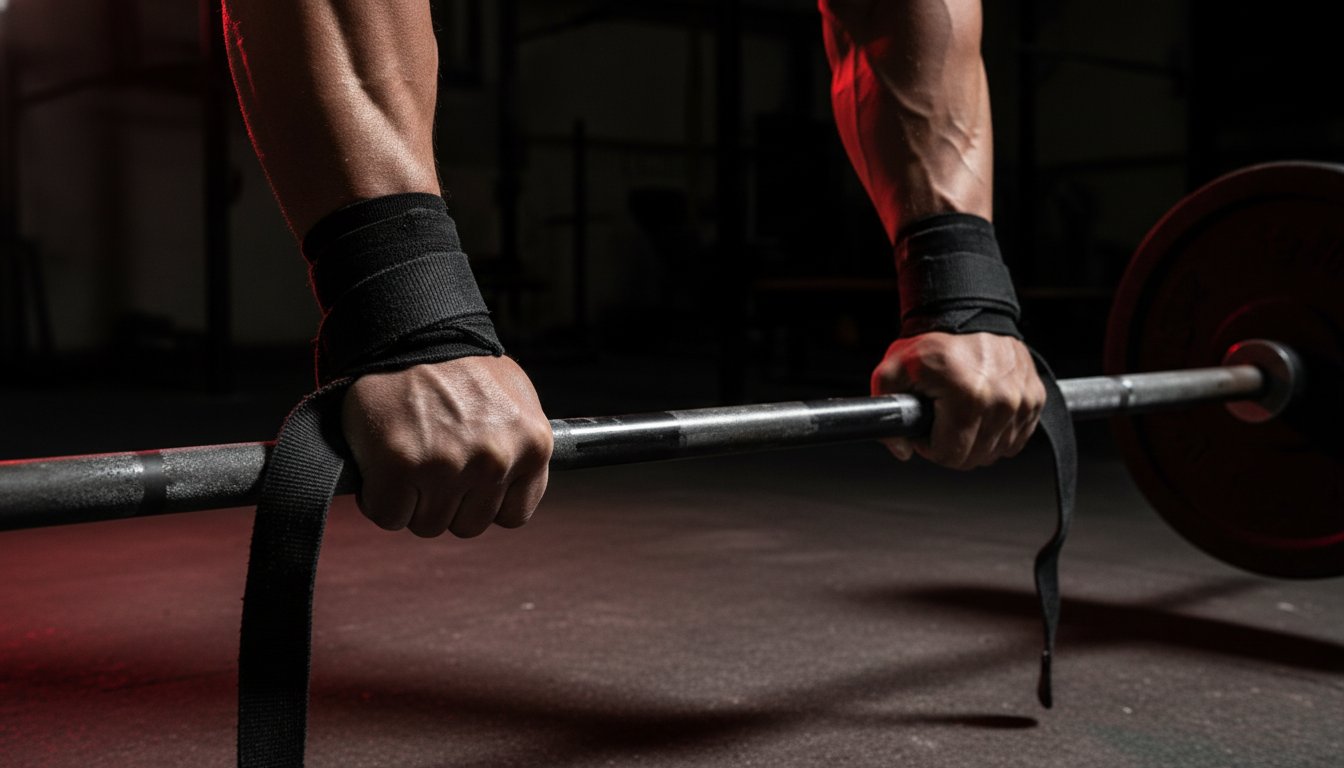
The 2-inch diameter of a standard axle bar is enough to make even the strongest grip fail, regardless of how much you've trained your crush strength. It's a common frustration in the strongman community; you have the power to pull the weight, but the lack of bar rotation and the sheer thickness of the 50mm steel make it feel impossible to hold. You've likely noticed that setting up figure 8 straps for axle bar deadlifts feels different than a standard barbell. The straps often feel too tight, or you struggle to loop the second hand while the first is already locked in.
We understand the grit required for these heavy sessions, and we're here to help you master the setup. By following a few technical adjustments, you can ensure a secure, fail-proof grip every time you step onto the platform. In this guide, you'll learn the precise steps to manage strap tension and prevent the bar from rolling away from you. We'll also highlight how using high-quality Team Industry Figure 8 Lifting Straps can provide the reliability you need for these specific 2-inch implements. From hand placement to the final cinch, you're about to gain the stability required for your next personal best.
Key Takeaways
- Identify the unique mechanical demands of the 50mm axle diameter and how a lack of rotation affects your grip stability.
- Master the professional technique for setting up figure 8 straps for axle bar deadlifts to ensure a secure, fail-proof connection.
- Learn to adjust strap tension for thicker implements and why standard twisting methods should be avoided on 2-inch bars.
- Practice the hip-hinge release method to safely bail from a lift while using Team Industry Figure 8 Lifting Straps.
The Mechanical Challenge: Axle Bars vs. Standard Barbells
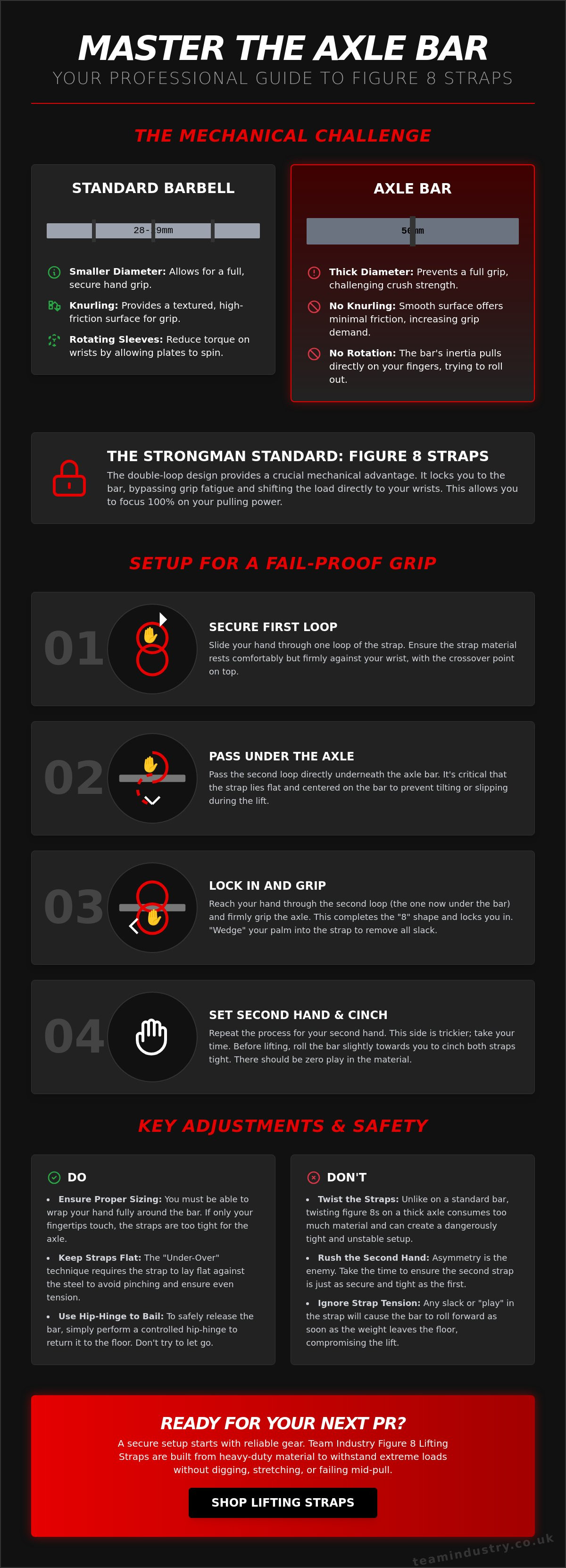
Transitioning from a standard barbell to an axle bar is a significant jump in technical difficulty. A standard power bar measures between 28mm and 29mm. In contrast, a competition axle is 2 inches (50mm) thick. This increased diameter prevents you from closing your hand fully around the steel. Most axles also lack rotating sleeves and knurling. Without rotation, the bar's inertia works against you, pulling directly on your fingertips as it rolls away from your body.
To better understand this concept, watch this helpful video:
Because the bar is a solid piece of steel, the friction and torque are much higher than during a standard deadlift. This makes setting up figure 8 straps for axle bar the most reliable way to secure your lift. Standard lasso straps can often feel unstable or slip on such a thick implement. Choosing heavy duty Industry Figure 8 Lifting Straps ensures the material is durable enough to withstand these forces without digging painfully into your skin or stretching mid-pull.
Why Figure 8s Are the Strongman Standard for Axles
The double-loop design offers a mechanical advantage that standard straps can't match. In strongman competitions, athletes prefer figure 8s because they lock the lifter to the bar. This setup bypasses grip fatigue by shifting the weight directly to your wrists. It allows you to focus on the hip hinge and the pull rather than the fear of the bar rolling out of your palms. It's a pragmatic, no-nonsense solution for the thickest bars in the gym.
Step-by-Step: Setting Up Your Figure 8 Straps for Axle Deadlifts
Properly setting up figure 8 straps for axle bar deadlifts requires a systematic approach to ensure safety and stability. Begin by sliding your hand through one loop of the strap so it rests firmly against your wrist. Next, pass the second loop directly under the axle. It's vital to ensure the strap is centered and flush against the steel surface. Because of the unique mechanics of Axle Bars vs. Standard Barbells, any misalignment here will cause the bar to tilt or the strap to slip during the pull.
Once the loop is under the bar, reach through that second loop with your hand and grip the axle. This creates the "8" shape that locks you in. You'll then need to repeat this for your second hand. This side is often more difficult because your first hand is already occupied. Take your time to ensure both sides are symmetrical before you begin your hip hinge.
The 'Under-Over' Technique for Maximum Security
The path the strap takes under the bar determines your comfort and safety. Guide the material so it sits flat against the axle to avoid skin pinching. Once your hand is through the second loop, "wedge" your palm into the strap. This action removes slack and creates a tight bond between your wrist and the bar. Using a high-quality pair of Industry Figure 8 Lifting Straps provides the necessary thickness to maintain this wedge without the material digging in excessively.
Setting the Second Hand Independently
Locking the second hand requires dexterity since your primary hand is already set. Use your free fingers to hook the second loop and pull it through from beneath the axle. Precision is more important than speed during this phase. Strap tension is the critical factor in a successful axle setup; if there's any play in the material, the bar will roll as soon as it leaves the floor. Ensure the strap is taut against your wrist before initiating the lift.
Sizing and Tension Adjustments for Thicker Axle Bars
The 50mm diameter of an axle bar consumes much more of the strap's circumference than a standard 28mm barbell. When setting up figure 8 straps for axle bar deadlifts, you must ensure your hand can still wrap fully around the steel. If you can only touch the bar with your fingertips because the strap is too short, the setup is dangerously tight. This restricts your ability to apply force and increases the risk of the strap material failing under high torque. A proper fit allows for a full palm-to-bar connection while the strap remains taut across the wrist.
To maximize available loop length, position the 'cross' of the figure 8 directly under the bar. This small adjustment provides a few extra millimeters of slack, which is often the difference between a secure grip and a failed setup. If you find yourself struggling with standard sizes, explore the Team Industry lifting gear collection for pro-grade options that accommodate larger wrists and thicker implements. These heavy-duty straps are built to handle the specific dimensions of strongman equipment.
The 'Axle Twist' vs. Standard Bar Setup
On a standard barbell, lifters often twist the strap once or twice to remove slack. You should avoid this when setting up figure 8 straps for axle bar pulls unless the strap is excessively long. Twisting reduces the effective length of the loop, making it nearly impossible to wedge your hand into a 2-inch bar setup. Before you pull, check for symmetrical tension between both hands. If one side feels looser, reset the 'cross' position rather than adding a twist. This ensures that the load is distributed evenly across your posterior chain and prevents the bar from tilting during the ascent.
Secure your grip for your next heavy session with Industry Figure 8 Lifting Straps designed for maximum durability on axle bars.
Safety, Bailing, and Gear Maintenance
Setting up figure 8 straps for axle bar pulls requires a commitment to the lift because the double-loop design physically connects your wrists to the steel. Unlike standard straps that unspool when you release your grip, figure 8s remain attached. If you lose your balance or feel a muscle strain, you can't simply let go of the bar mid-lift. You must execute a controlled bail to avoid being dragged down by the weight.
The hip-hinge release is the standard safety protocol for this equipment. Instead of trying to drop the bar, sit your hips back and follow the bar down to the floor while opening your palms. This allows the weight to descend in its natural path while your hands remain safely inside the loops. It's a pragmatic way to handle a failed heavy pull without risking a forward fall or a wrist injury caused by the 50mm axle's lack of rotation.
Gear integrity is paramount in strongman training. Regularly inspect your Industry Figure 8 Lifting Straps for any signs of fraying or stitching failure. Heavy axle sessions create intense friction against the strap material, so check the 'cross' section specifically for wear. For a broader look at different strap styles and their applications, read our Mastering Your Pull guide.
When to Bail: Axle-Specific Red Flags
Watch for the strap shifting toward your thumb during the initial setup. This indicates the loop isn't centered, which can cause the axle to tilt as soon as it leaves the floor. If you feel the bar start to rotate unevenly, don't attempt to "helicopter" or spin the bar to save the lift. This move is dangerous when you're locked in and can lead to significant shoulder damage. Abort the lift immediately if the strap tension feels asymmetrical or if the bar begins to drift away from your shins.
Master Your Axle Deadlift Technique
Success on the axle bar depends on more than just raw strength. It requires a technical understanding of how a 50mm diameter changes your leverage. By centering the cross of your strap directly under the bar and avoiding unnecessary twists, you create the space needed for a full, secure grip. Remember that safety is your primary responsibility when you're locked into the implement. Practicing the hip-hinge release ensures you can bail safely if a lift goes off-course.
Mastering the process of setting up figure 8 straps for axle bar sessions will allow you to focus entirely on the pull. You shouldn't have to worry about your equipment failing when you're moving maximum weight. Our straps are constructed from professional-grade heavy-duty cotton webbing and are specifically tested for the high-torque demands of Strongman axle deadlifts. This reliability is why we're trusted by UK strength athletes across the country.
Secure your grip with Team Industry Figure 8 Lifting Straps. You've done the hard work in training; now make sure your gear is up to the task. Keep pushing your limits and stay focused on the platform.
Frequently Asked Questions
Can I use standard figure 8 straps on an axle bar?
You can use standard figure 8 straps, but the 2-inch diameter of an axle bar often makes them fit much tighter than on a 28mm power bar. If the material is too short, you won't be able to wrap your hand fully around the steel. This leads to a compromised grip where you're only holding the bar with your fingertips. Ensure your straps have enough slack to accommodate the extra thickness of the 50mm implement.
What size figure 8 straps do I need for a 2-inch axle?
Most athletes require a larger size when setting up figure 8 straps for axle bar deadlifts. While a 15.5-inch (39 cm) strap is the standard industry benchmark, you might need an "Extra Large" or specific axle size if you have larger wrists. The goal is to have enough material to loop under the bar while still allowing your palm to make direct, firm contact with the steel.
Are figure 8 straps safer than lasso straps for axle deadlifts?
Figure 8 straps provide more security against bar roll, which is a major issue with non-rotating axle bars. Lasso straps can slip or unspool under the high torque of a heavy axle pull. However, the "locked-in" nature of figure 8s means you cannot simply let go of the bar. For maximum reliability, many lifters choose Team Industry Figure 8 Lifting Straps for their heavy-duty construction and durability.
How do I release the bar quickly if I lose my balance?
You cannot drop the bar instantly; instead, you must perform a controlled hip-hinge release. If you lose your balance, sit your hips back and guide the bar to the floor while opening your hands. This allows the bar to descend while your wrists remain safely in the loops. Never try to fight the weight or "helicopter" the bar if you feel the lift failing, as this leads to shoulder or wrist injuries.
Do figure 8 straps count as 'cheating' in Strongman competitions?
Whether figure 8 straps are allowed depends entirely on the specific federation and event rules. For example, the World Heavy Events Association (WHEA) and World Strongman often prohibit the use of straps for certain axle deadlift events. However, they're a staple in training and many regional shows. Always check your athlete handbook to confirm if setting up figure 8 straps for axle bar is permitted for your specific competition.


Share:
what are the best wrist wraps for wrist pain
what are the main benefits of wrist wraps