

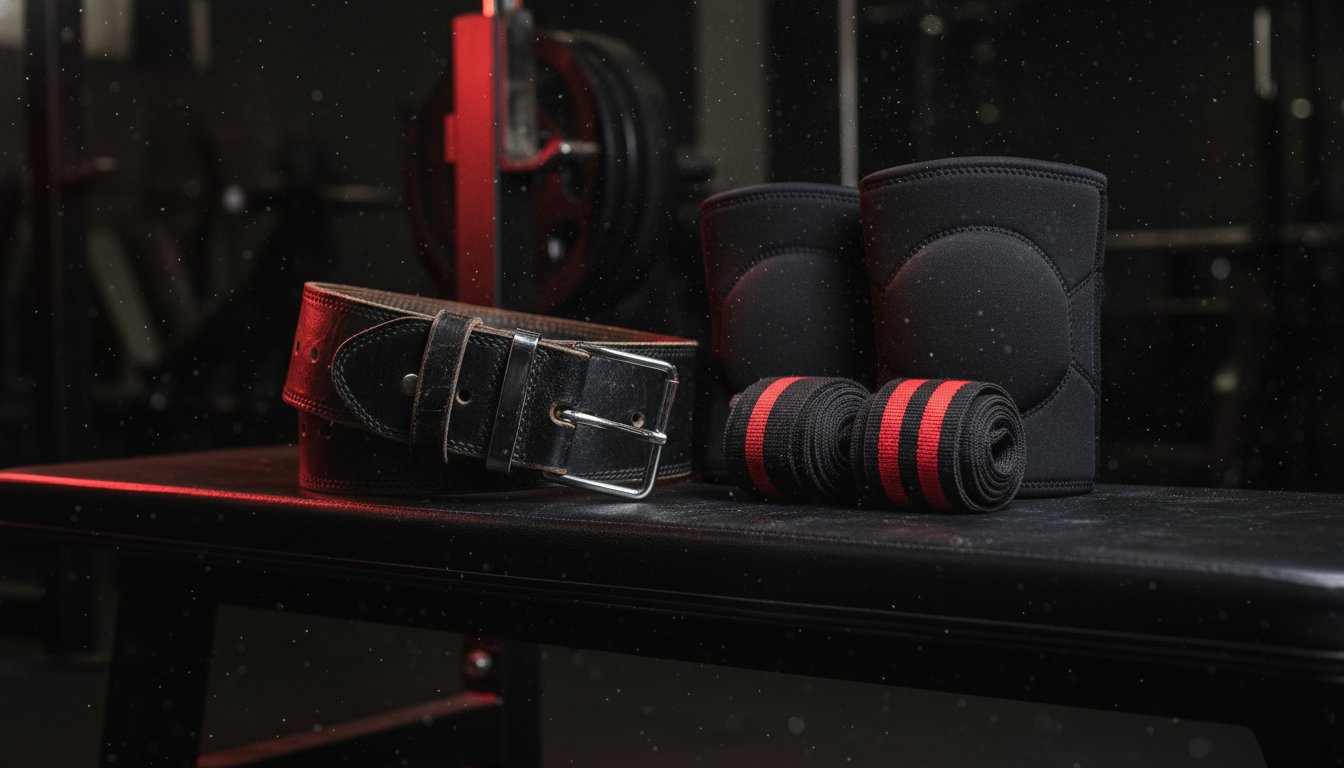
The difference between a failed attempt and a new personal record often comes down to the millimetres of support around your joints. You've likely seen the acronym sbd used to describe both a major brand and the core lifts of powerlifting: the Squat, Bench Press, and Deadlift. It's normal to feel uncertain about which equipment is essential for these compound movements and which is optional. You want gear that provides a genuine mechanical advantage while meeting the strict technical specifications required for competition.
This guide simplifies your selection process by providing a clear checklist for your kit bag. You'll discover how to choose professional grade tools, such as our 13mm Lever Belt or Heavy Duty Knee Sleeves, that align with your specific lifting style. We'll break down the functional differences between belt thicknesses and sleeve materials so you can invest in the right support for your frame. This overview ensures you have the knowledge to step onto the platform with reliable equipment that supports every heavy rep.
Key Takeaways
- Master the technical definition of the sbd acronym and understand why these three specific lifts dictate your primary training programming.
- Identify which equipment is mandatory for platform performance, ranging from foundational joint support to professional-grade bracing tools.
- Resolve the 13mm versus 10mm Lever Belt debate by learning which thickness suits your current lifting totals and bracing style.
- Learn how to select Heavy Duty Knee Sleeves that offer maximum compression without sacrificing the range of motion needed for a deep squat.
- Review a practical equipment checklist designed to help you transition safely from a casual gym-goer to a competitive powerlifting athlete.
What Does SBD Mean? Understanding the Foundation of Strength
For anyone stepping into a strength gym, the term sbd represents the three pillars of powerlifting: the Squat, Bench Press, and Deadlift. These movements define what powerlifting is and serve as the standard metric for total body force production. While many athletes immediately think of the UK-based brand when they hear these three letters, the acronym itself describes the fundamental "Big Three" lifts used to calculate a lifter's competitive total.
These lifts have a long history as benchmarks for athletic performance across various sports. They require a combination of technical skill and mental grit to execute safely. As your training volume increases, the physical toll on your body changes, making specialized equipment a pragmatic choice for safety and performance.
To better understand this concept, watch this helpful video:
The 'Big Three' Lifts Explained
- The Squat: This movement tests your lower body power and core stability. It forces the legs and hips to drive weight upward while the torso remains rigid under a heavy barbell.
- The Bench Press: This is the primary benchmark for upper body pushing strength. It requires significant shoulder health and triceps power to lock out heavy attempts.
- The Deadlift: A raw measurement of posterior chain force. It demands total body tension and a secure grip to pull the bar from the floor to a full lockout.
Why SBD Training Requires Specialist Gear
Heavy sets create substantial mechanical stress on the knees, lower back, and wrists. Using high-quality weight lifting belts helps increase intra-abdominal pressure, which protects the spine during maximum efforts. Compression gear also plays a vital role by improving proprioception and maintaining joint warmth. This sensory feedback allows you to feel the movement path more clearly, reducing the risk of technical breakdown under fatigue. Professional gear is a practical necessity for lifters targeting a high total because it bridges the gap between your anatomical limits and your strength potential.
The Essential SBD Gear Checklist for Serious Lifters
Transitioning from standard fitness accessories to professional strength equipment is a necessary step for anyone aiming to improve their sbd performance. Standard gym gear often lacks the structural integrity required to support the extreme loads seen in powerlifting. Professional gear prioritizes joint safety and mechanical efficiency, allowing you to focus on the technical execution of each lift in your sbd rotation.
Knee Support and Compression
A 7mm neoprene sleeve is the industry standard for heavy squatting. This specific thickness provides high-level compression that helps maintain joint warmth and improves proprioceptive feedback. A contoured, anatomical fit is essential; it prevents the sleeve from bunching or slipping during the descent, ensuring the compression remains consistent throughout the entire range of motion. For lifters seeking dependable protection, our joint support collections offer options that balance comfort with the rigidity needed for heavy attempts.
Wrist Stability for Pressing
Stability at the wrist is vital for both the bench press and low-bar squats. Choosing the right length and stiffness depends on your wrist circumference and the intensity of your session. Stiffer materials provide a cast-like feel that is excellent for max-effort benching, while more flexible wraps allow for a bit more movement during accessory work. You can find both blackout and heavy-duty versions in our collection of all wrist wraps. Consistent use of these supports contributes to safe and effective lifting by preventing unnecessary joint strain during heavy pushing movements.
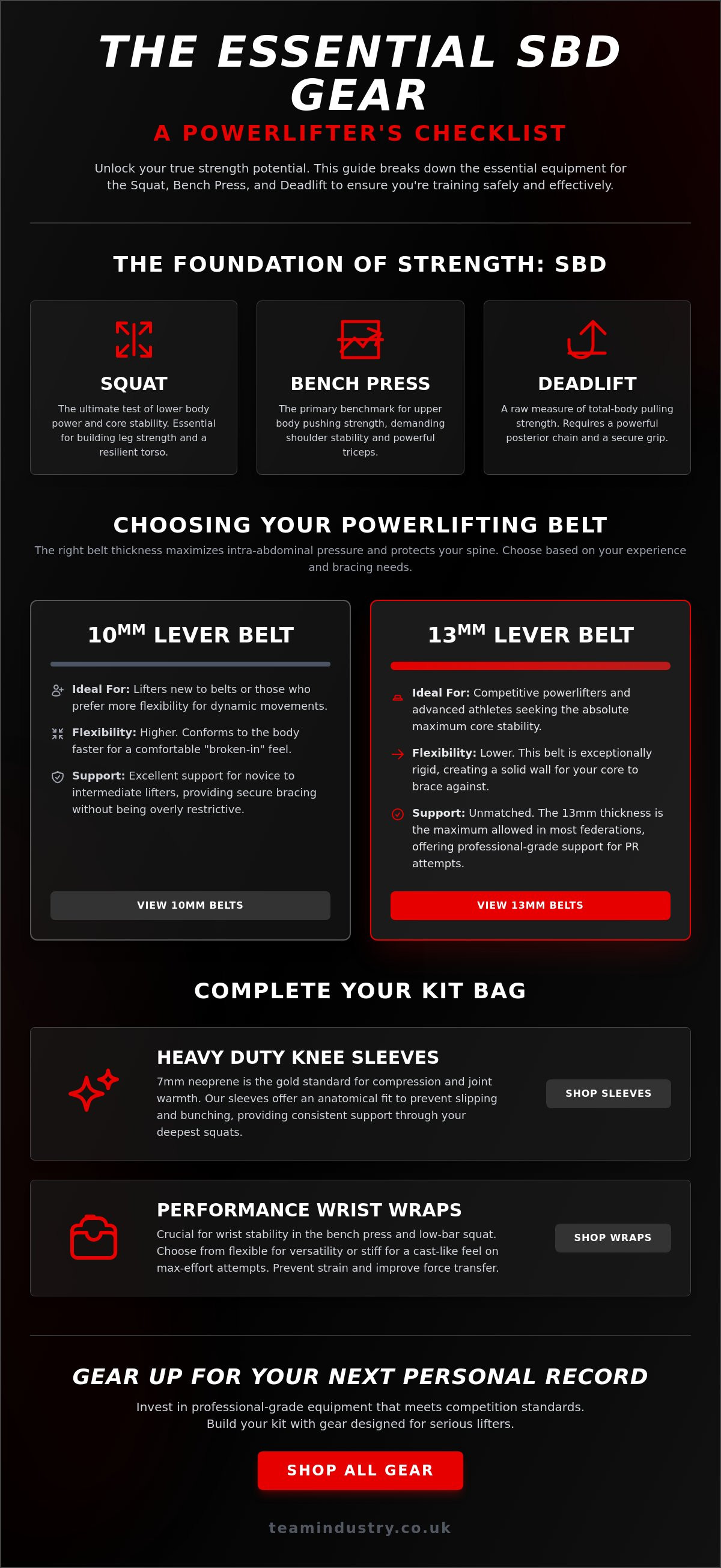
Powerlifting belts are perhaps the most critical piece of equipment for bracing. The difference between a 10mm and 13mm lever belt comes down to the trade-off between comfort and support. A 13mm belt offers the most rigid platform for your abdominals to push against, whereas a 10mm belt is often easier to break in and more comfortable for some body types. Finally, consider using Figure 8 Lifting Straps during high-volume deadlift sessions. These tools allow you to bypass grip fatigue so your back and legs can reach their full potential without the bar slipping. If you're ready to upgrade your kit, our full range of strength gear has everything you need to start lifting with confidence.
How to Choose the Right Support for Your SBD Totals
Selecting the right equipment requires an honest assessment of your current sbd totals and your long-term training goals. While a beginner might find a 13mm belt too restrictive for their first few months, a competitive athlete will appreciate the extra rigidity for maximum stability during a heavy attempt. Lever belts are the gold standard for consistency in a powerlifting meet because they lock to the exact same tension every time. Prong belts offer more flexibility if your waist size fluctuates significantly between training phases or if you prefer a different tightness for deadlifts than you do for squats.
Sizing Your Powerlifting Belt
Measurement accuracy is the most common mistake lifters make. Always measure around your navel while bracing your core, as this often differs from your standard trouser size. A 13mm lever belt provides the most rigid platform for creating intra-abdominal pressure. This rigidity is essential for maintaining a neutral spine during a heavy biomechanical analysis of powerlifting squats. You can view our full weight lifting belts collection to find the thickness that matches your frame and bracing style.
Figure 8 vs. Classic Lifting Straps
Your choice of strap depends on the specific demands of your pulling sessions. Figure 8 lifting straps are designed to loop twice around the wrist and under the bar, effectively locking you to the steel. This is a pragmatic choice for heavy deadlifts or axle bar work where grip strength might fail before your posterior chain does. Classic lasso straps are better for general pulling movements because they allow for a quick release if the lift goes wrong. For a detailed breakdown of which style fits your current program, explore our lifting straps collection.
Choosing professional gear is a calculated investment in your safety and performance. Don't settle for equipment that doesn't meet the standards of the sport. Build your professional kit bag by browsing our full strength gear range today.
Team Industry UK: Professional Gear for the Modern Lifter
At Team Industry, we understand the grit required to excel in strength sports. Our commitment to the UK community is built on providing dependable gear that survives the harshest training environments. Whether you're a powerlifter or a strongman, your equipment must withstand repeated maximum efforts without failure. Our Heavy Duty Knee Sleeves and Lever Belts are engineered to meet the same performance standards as global market leaders. We focus on providing professional tools that remain accessible to every athlete dedicated to their sbd progress.
Durability is the foundation of our product development. In a high-intensity environment, gear that wears out quickly isn't just a poor investment; it's a safety risk. We've designed our equipment to maintain its structural integrity through thousands of heavy reps. This reliability allows you to focus entirely on your technique rather than worrying about equipment failure during a max effort attempt.
Built by Lifters, for Lifters
Our design philosophy is pragmatic and results-oriented. We don't use flashy graphics to hide poor construction. Instead, we focus on no-nonsense aesthetics that reflect the reality of the lifting platform. This approach is evident in our Industry Oversized Tees, which provide the durability and fit needed for heavy sessions. We take pride in our role supporting national federations and grassroots strength events, fostering a community where operational excellence is the standard for everyone from local novices to national champions.
This commitment to operational excellence mirrors the professional standards that Align Quality helps organizations achieve through expert guidance on quality management and international certification requirements.
Next Steps for Your Strength Journey
Ready to push your limits? Start by securing the foundational items of your sbd kit. We recommend prioritizing a high-quality belt and 7mm knee sleeves as your first major investments. These two items provide the most significant impact on your bracing and joint stability. Once your foundation is set, you can integrate accessories like Wrist Wraps or Figure 8 Lifting Straps to address specific weak points in your training. Visit our full strength gear collection to select the tools that match your current training volume. The right equipment builds the mechanical confidence you need to secure a new sbd personal best on the platform.
Build Your Foundation for Strength Today
You now understand that sbd represents the core of your training journey. Selecting the right support is a pragmatic decision that protects your joints and maximizes your mechanical advantage during every heavy session. By choosing professional tools over standard gym accessories, you ensure your equipment meets the technical demands of the sport. You now have the knowledge to distinguish between essential bracing tools and optional accessories, allowing you to invest in gear that delivers a real return on your performance.
Our heavy duty 13mm lever belts provide the rigid bracing required for max-effort squats, while our 7mm neoprene knee sleeves offer the elite compression needed for joint warmth and stability. As a UK-based brand, we're committed to supporting the national strength community with gear that survives the grit of the platform. We focus on durability and functionality so you can focus on the technical execution of your lifts. Secure your future totals by investing in equipment that's built for the reality of heavy lifting.
Shop the full Team Industry Professional Strength Collection and upgrade your training kit today. Consistency and the right tools will lead you to your next personal best.
Frequently Asked Questions
What does SBD stand for in powerlifting?
SBD stands for the Squat, Bench Press, and Deadlift; these three specific movements constitute a powerlifting competition. Measuring total body strength relies on these lifts as the industry standard. While the term also refers to a prominent brand, the acronym represents the foundation of the sport. Find professional support for each lift in our strength gear collection.
Is SBD gear worth it for a beginner lifter?
Investing in professional gear is a practical choice for beginners because it establishes safe bracing habits early. Using a Team Industry Lifting Belt helps you understand intra-abdominal pressure during heavy sets. High-quality equipment provides the stability needed to focus on technique rather than joint discomfort. This early investment ensures you don't have to replace subpar gear as your strength increases over time.
Should I get a 10mm or a 13mm lever belt for SBD?
A 10mm belt offers a balance of support and flexibility, breaking in faster for immediate use. A 13mm belt is a specialized tool for competitive athletes who require maximum rigidity for the squat. You can find both options in our weight lifting belts collection. Consider your body proportions and comfort levels when choosing between these thicknesses for your sbd sessions.
Are knee sleeves or knee wraps better for squats?
Heavy Duty Knee Sleeves are the superior choice for most training programs because they provide consistent compression and joint warmth. Sleeves are the industry standard for raw powerlifting. Knee wraps are specialized tools used primarily by equipped lifters to provide a mechanical rebound at the bottom of a squat. For daily training, sleeves offer the most practical balance of protection and ease of use.
Can I use SBD gear for bodybuilding workouts?
You can use professional powerlifting gear for bodybuilding to increase the intensity of your sessions. Using Wrist Wraps during heavy pressing or Lifting Straps for high-volume rows helps isolate target muscles by removing grip or joint stability as a limiting factor. This allows you to push closer to failure safely while maintaining joint integrity during high-volume hypertrophy phases.
How do I know what size knee sleeves to buy?
To determine the correct size, measure the circumference of your knee joint and the thickest part of your calf while your leg is straight. Use a flexible tape measure and compare your results to the sizing chart for our Heavy Duty Knee Sleeves. If you're between sizes, choose the larger option for a comfortable fit or the smaller size for tighter, competition-style compression.


Share:
Are Lifting Belts Worth It for Beginners? The Essential Strength Guide (2026)
what are the best wrist wraps for wrist pain