

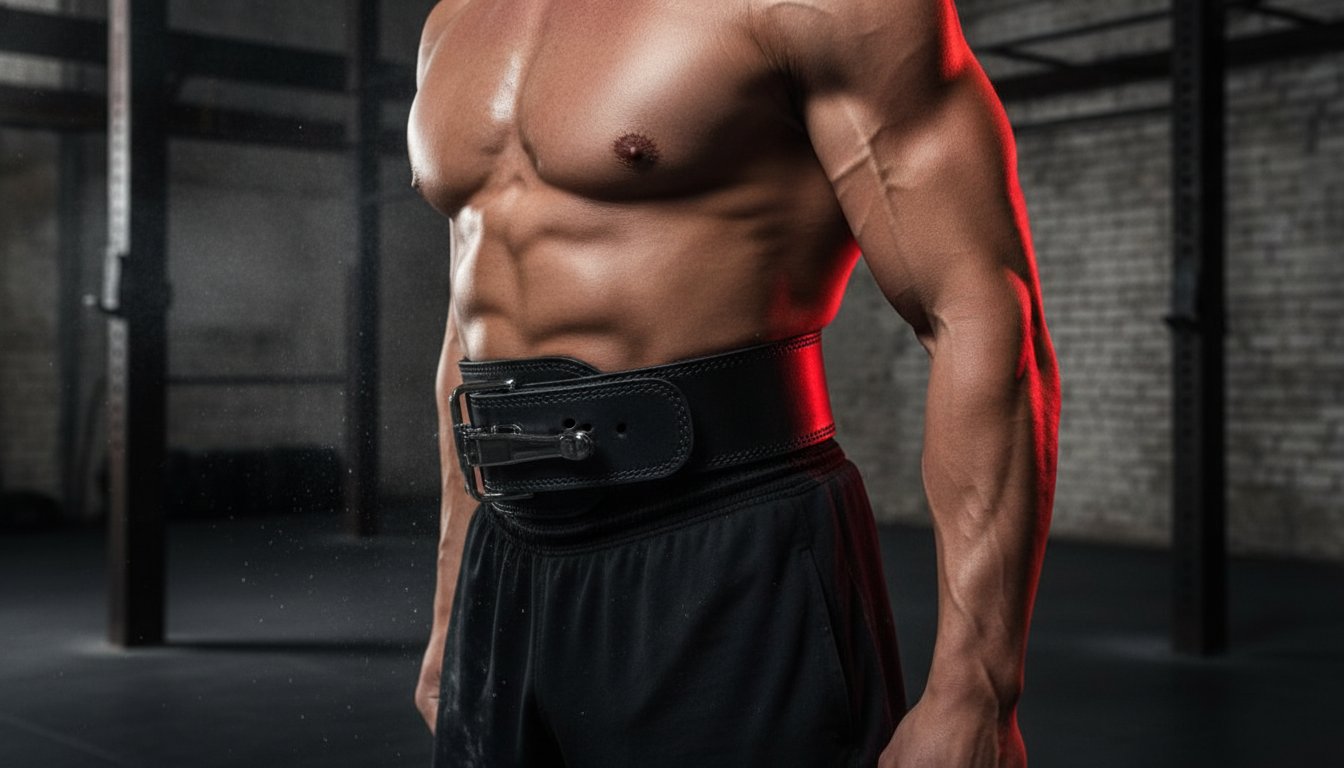
What if wearing a lifting belt actually makes your core stronger instead of weaker? It's a common concern for those starting their strength journey. You've likely asked yourself, are lifting belts worth it for beginners, or will they just turn into a crutch that hides poor form? It's natural to feel hesitant when you see conflicting myths online or hear different opinions from every regular at the gym. You want to protect your lower back and maintain a rigid torso during heavy sets, but you don't want to compromise your natural development.
We understand that building a solid foundation is your top priority. However, research suggests that using a belt can increase a lifter's capacity by 15% to 30% by enhancing intra-abdominal pressure. This guide will show you why a belt is a performance tool that teaches you how to brace effectively, helping you accelerate gains safely. You'll learn exactly when to invest in your first piece of gear and how to choose the right specifications, such as the Team Industry 10mm Lever Belt for versatility or a 13mm Lever Belt for maximum support. We'll also review 2026 IPF standards to ensure your equipment meets professional requirements. Our team is here to support your progress with reliable gear, ensuring you reach your strength goals with confidence.
Key Takeaways
- Master the concept of tactile feedback to understand how a belt serves as a rigid tool for your core to push against during heavy lifts.
- Debunk common myths about core weakness and discover why are lifting belts worth it for beginners who want to optimize intra-abdominal pressure safely.
- Compare the technical specifications of a 10mm Lever Belt versus a 13mm Lever Belt to determine which thickness suits your frame.
- Implement a structured warm-up rule to know precisely when to transition into your Team Industry Lifting Belt for maximum effectiveness.
- Identify the primary compound exercises that justify the use of a belt to ensure you use your equipment as a performance tool rather than a crutch.
Evaluating the Value: Why Beginners Benefit from a Lifting Belt
When starting a strength program, you might wonder if you've earned the right to wear professional gear. Many people ask, are lifting belts worth it for beginners, or should they wait until they reach a certain milestone? In reality, a lifting belt isn't a passive back brace designed to fix poor form. It's a rigid tool that provides a physical surface for your core muscles to contract against. Whether you've been training for two weeks or two years, if your intent is to move heavy loads with technical precision, the tool is relevant.
Investing in a quality Team Industry Lifting Belt early helps you establish high standards for your bracing technique. This prevents the development of soft core habits that often plague lifters who wait too long to integrate equipment. By increasing Intra-Abdominal Pressure, the belt reinforces the correct physical sensations required for heavy compound movements. It's about building a foundation of stability from day one.
To better understand this concept, watch this helpful video:
The Tactile Feedback Advantage
Beginners often struggle to feel their core during a squat or deadlift. Without an external cue, it's difficult to know if you're truly bracing or just holding your breath. The belt acts as a physical wall. When you perform the Valsalva manoeuvre, you're pushing your abdominal wall outward. Having a leather belt there gives you immediate feedback. If you don't feel the belt tightening against your stomach, you aren't braced. This sensory input helps you master complex breathing patterns much faster than training beltless alone.
Safety vs. Performance: The Dual Role
A common misconception is that belts are only for safety. While they do help stabilize the spine, their primary role is performance. By creating a rigid torso, you reduce energy leaks. This means the force your legs produce travels directly into the bar rather than being lost through a collapsing midsection. Because the question of are lifting belts worth it for beginners is often about long-term value, consider the longevity of the equipment.
- Increased force transfer from the lower body to the barbell.
- Improved awareness of spinal positioning during the descent.
- Faster mastery of the breathing techniques required for elite strength.
A professional-grade belt is a one-time purchase. It provides the stability needed for your first empty bar sets and remains just as effective when you're chasing heavy personal records years later. We recommend choosing gear that grows with your ambitions.
Intra-Abdominal Pressure and the "Weak Core" Myth
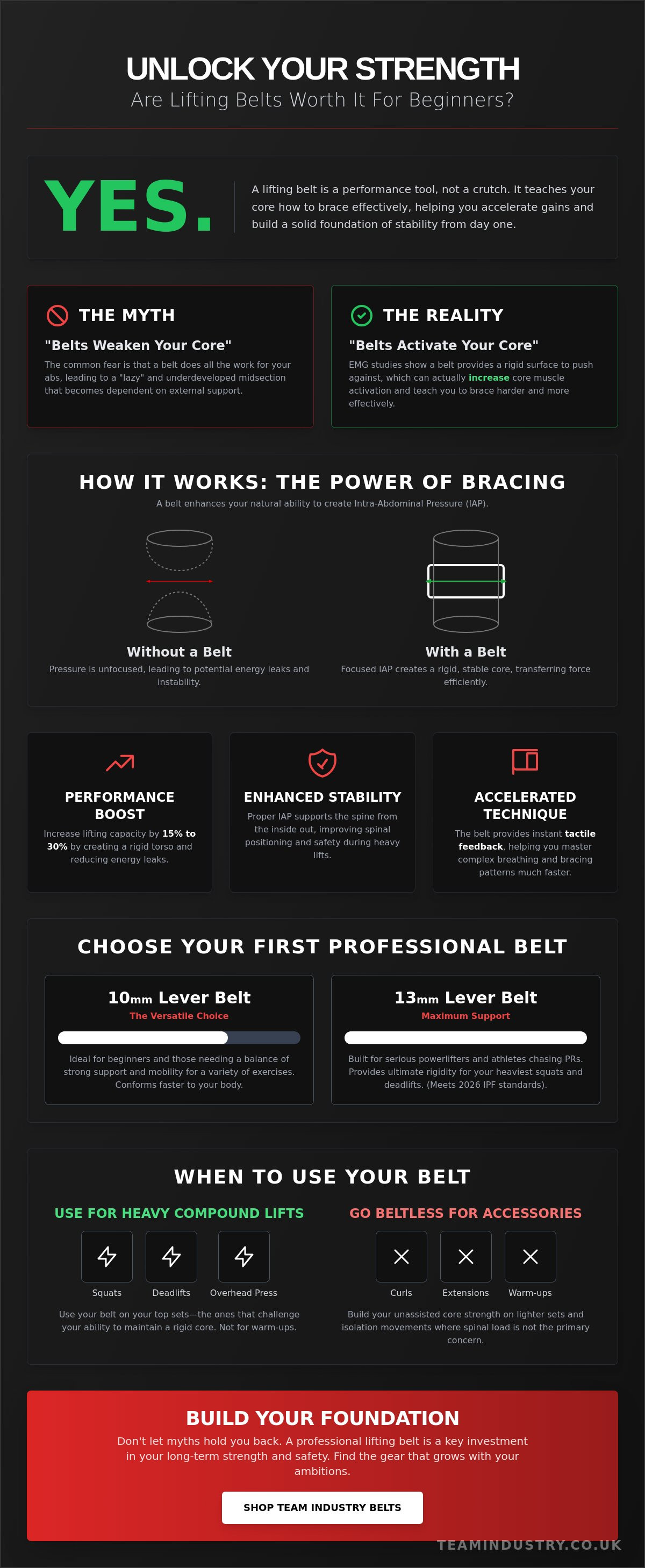
The most persistent argument against using a belt is the idea that it makes your core "lazy." Many novices worry that are lifting belts worth it for beginners if they end up with a weak midsection. This fear stems from a misunderstanding of how the body creates stability under load. Stability doesn't come from the belt itself, but from the internal pressure you create against it. Intra-abdominal pressure (IAP) is the force generated when you take a deep breath into your belly and contract your abdominal wall. This internal pressure supports the spine from the inside out, similar to how air pressure keeps a car tyre rigid.
Scientific research frequently challenges the notion that belts decrease muscle activity. In many cases, electromyography (EMG) studies show that wearing a belt actually increases the activation of the rectus abdominis and external obliques. This occurs because the belt provides a hard surface to contract against, allowing you to brace harder than you could in "open space." For a deeper dive into the data, The Weight Belt Controversy highlights how these tools function as a performance aid rather than a crutch.
The Physics of the Brace
Visualise your core as a pressurised cylinder. When you squat or deadlift, your diaphragm moves down and your abs push out. Without a belt, that pressure can dissipate. A Team Industry Lifting Belt acts as the cylinder wall, containing that pressure and making it more effective. It's vital to understand the difference between "sucking in" and "pushing out." Sucking in your stomach actually reduces your stability. You must actively drive your midsection outward into the leather to lock your spine into a neutral position.
Why Your Core Won’t Get Weak
You have to work harder to use a belt correctly, not less. Think of it like wearing high-performance lifting shoes. Shoes don't make your feet stop working; they provide a stable platform that allows you to move more weight safely. The same applies here. A belt allows you to handle heavier loads, which in turn places more total stress on your muscles, leading to greater strength gains. If you're still concerned, follow a balanced approach. We suggest performing 70% of your total volume beltless to maintain raw stability, while using your lever belt for the remaining 30% of your heaviest sets. This strategy ensures you reap the benefits of are lifting belts worth it for beginners without neglecting natural development.
Choosing Your First Professional Belt: 10mm vs. 13mm
When deciding if are lifting belts worth it for beginners, the conversation usually shifts from "why" to "what." Choosing the wrong specifications can lead to a belt that sits in your gym bag rather than on your waist. Professional Team Industry Lifting Belts are designed with high-grade leather to provide the rigidity required for effective bracing. Unlike cheap foam or nylon alternatives that compress under load, genuine leather maintains its shape. This ensures your core has a solid, unyielding surface to push against during a heavy set.
Thickness and Pliability
For most people starting out, a 10mm belt represents the ideal balance of support and comfort. It is typically more pliable and has a shorter break-in time, making it easier to position correctly during your first few sessions. In contrast, a 13mm belt offers maximum support for those focusing on serious powerlifting. Our 13mm models meet the maximum thickness permitted by the International Powerlifting Federation (IPF) 2026 standards. However, that extra thickness can feel restrictive if you have a shorter distance between your ribs and hips. We recommend measuring your torso height; if you have a smaller frame, the 10mm option usually provides a more functional fit without bruising the hips.
Lever vs. Single Prong Fastening
The fastening mechanism is a matter of both security and convenience. Lever belts are highly efficient. They allow for one-second tightening and loosening between sets, which is useful during focused strength sessions. This mechanism provides a consistent, "locked-in" feel that many beginners find reassuring when moving toward their first personal records. Prong belts are more traditional and offer easier adjustability if your waist size fluctuates frequently or if you wear different layers of clothing, such as an Industry Oversized Tee.
Research from 2026 indicates that over 70% of lifters consider comfort and support as the most crucial factors when selecting a belt. While nylon belts are more flexible, they often fail to provide the same 15% to 30% performance increase seen with rigid leather options. Investing in a Team Industry Lever Belt ensures you have a secure platform that will last for years of training. Selecting the right tool is the first step toward a safer, stronger training career. If you're ready to transition into professional gear, browse our full range of Team Industry Lifting Belts to find the perfect fit for your strength goals.
How to Incorporate a Belt into Your Programme
Owning professional gear is only half the battle; knowing how to use it is what determines your results. You may still be asking, are lifting belts worth it for beginners if they haven't mastered their routine? The answer depends on your application. A belt is a specialised tool for heavy compound movements like the squat, deadlift, and overhead press. These exercises require high levels of spinal stability. You don't need a belt for isolation movements like bicep curls, lat pulldowns, or seated rows. Using equipment for these exercises provides no performance benefit and can lead to a false sense of security.
Always listen to your body for warning signs. If you find that your technique collapses the moment you remove your gear, you're likely using the belt to mask poor form rather than enhance a solid brace. Prioritise technical excellence above all else. If you're pushing your limits on deadlifts and your grip becomes the bottleneck, consider using Figure 8 Lifting Straps alongside your belt to maintain focus on your core positioning.
The 70% Rule for Beginners
We suggest a practical "70% rule" to help you decide when to gear up. Perform all your warm-up sets beltless to ensure you're building foundational stability and natural bracing habits. Once the weight feels like a 7/10 in difficulty, it's time to put on your Team Industry Lifting Belt. This ensures you're training your core to work independently at lower intensities while benefiting from the belt's support during your most demanding sets. This balanced approach is why are lifting belts worth it for beginners who want to develop long-term strength without becoming over-reliant on equipment.
Positioning for Power
The correct position for your belt can vary depending on the lift you're performing. For squats, most lifters find success by wearing the belt lower, capturing the lower back and the abdominal wall. For deadlifts, you might prefer a slightly higher placement. This prevents the belt from pinching your hips or interfering with your ability to get into a flat-back starting position.
Achieving the right tension is critical. Follow the "two-finger" rule: you should be able to slide two fingers between your stomach and the belt before you brace. If it's tighter than this, you won't have enough room to take a full diaphragmatic breath. Without that breath, you can't create the internal pressure needed to push back against the leather. Use your lever belt to lock in this consistent tension every time you step onto the platform.
Take Control of Your Strength Journey
Success in the gym is built on technical precision and reliable equipment. You've seen that a belt isn't a shortcut; it's a feedback tool that helps you master the physics of a proper brace. By following the 70% rule and choosing a belt thickness that fits your frame, you ensure your training remains both safe and effective. So, are lifting belts worth it for beginners? The answer is clear for those committed to professional standards and long-term gains. It's an investment in your safety and your future personal records.
Our gear is tested by UK Strongman and Powerlifting athletes to ensure it stands up to the grit of real-world training. We offer premium 10mm and 13mm leather options featuring heavy-duty lever mechanisms for maximum security. Ready to level up your training? Shop our professional-grade Team Industry Lifting Belts here. We're proud to be a part of your progress. Keep pushing forward and stay focused on your goals.
Frequently Asked Questions
Do lifting belts prevent all back injuries?
No equipment can eliminate the risk of injury if your technique is flawed. A belt serves as a rigid surface to increase internal pressure, which helps stabilise the spine during heavy loads. While some industry experts report that 60% of athletes experience fewer injuries with modern belts, this only applies when you maintain proper form. Never use a belt to justify lifting weights that exceed your technical ability.
Can I wear a lifting belt if I have a small waist?
Yes, lifters with smaller waists can effectively use a belt by selecting the correct size and width. If you have a short torso, a standard 4-inch wide belt might feel restrictive or dig into your ribs. In these cases, a 10mm Lever Belt is often more manageable than a thicker 13mm version. Ensure you measure your waist at the navel rather than your trouser size to get an accurate fit.
How long does it take to break in a leather lever belt?
A high-quality leather belt typically takes two to four weeks of regular training to fully break in. During this period, the leather softens and conforms to your body’s specific shape. You can accelerate this process by manually rolling the leather or using it during your lighter warm-up sets. Our 10mm options generally reach a comfortable pliability faster than the more rigid 13mm models.
Should I use a belt for every exercise in the gym?
Reserve your belt for heavy compound movements like squats, deadlifts, and overhead presses. Using a belt for isolation exercises like curls or tricep extensions provides no performance benefit and can limit natural core development. Many people ask, are lifting belts worth it for beginners; the reality is that over-reliance on a belt for light work reduces the time your core spends bracing independently.
Is a 13mm belt too much for a beginner?
A 13mm belt isn't necessarily too much, but it is significantly more rigid and less forgiving than a 10mm option. When considering are lifting belts worth it for beginners, the 10mm thickness usually provides the best balance of support and comfort. If you plan to compete in powerlifting, a 13mm Lever Belt is a solid investment, but be prepared for a longer break-in period and a stiffer feel against your ribs.
What is the difference between a weightlifting belt and a powerlifting belt?
Powerlifting belts are typically 4 inches wide all the way around to provide a consistent surface for abdominal bracing. Weightlifting belts, often used for Olympic lifts, are usually tapered; they are wider in the back and narrower in the front. This taper allows for greater mobility during the deep catch positions of cleans and snatches. For general strength training, a non-tapered Team Industry Lifting Belt offers superior stability.


Share:
When to Start Using Knee Sleeves: A Guide for Strength Athletes (2026)
Master Your SBD: Ultimate Gear Guide for Powerlifting