
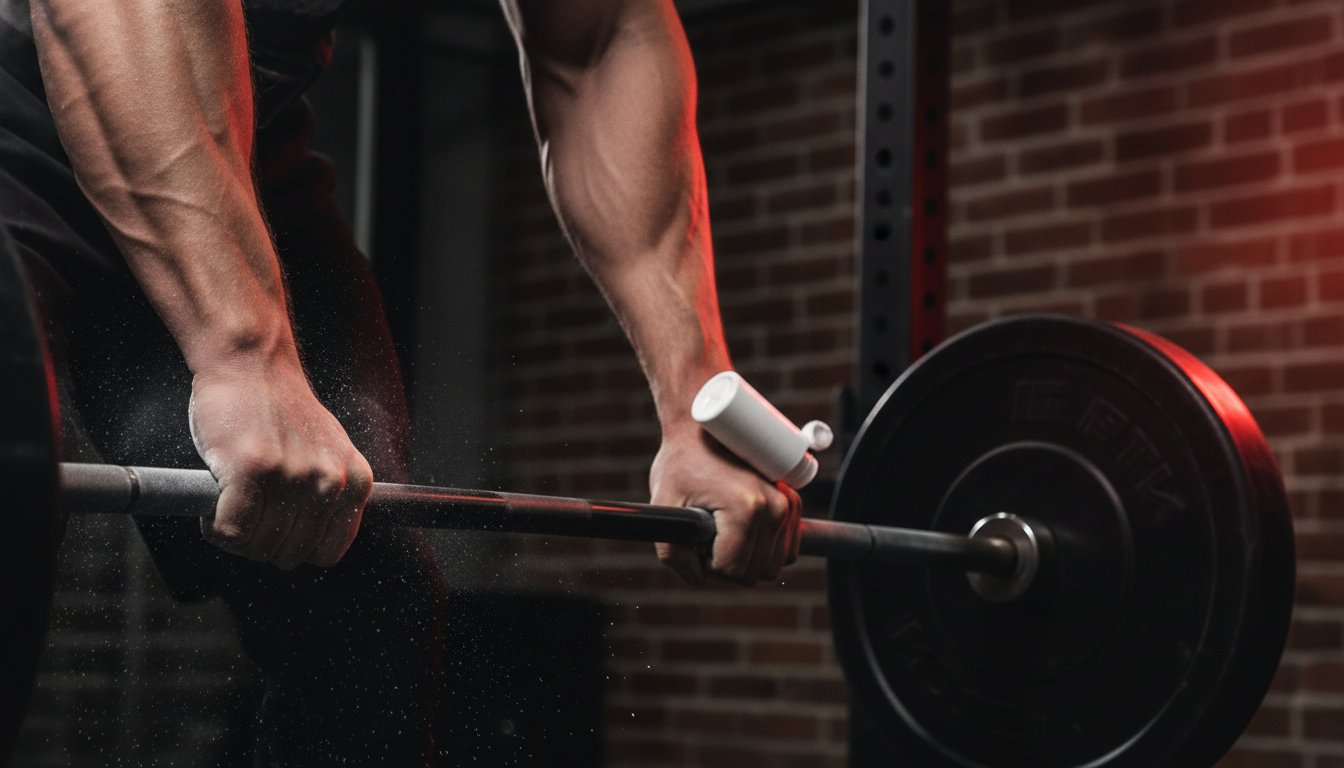
The traditional block of magnesium carbonate you've relied on since your first training session might actually be the reason your grip fails at 95% of your one-rep max. We know there's nothing more frustrating than a 180kg deadlift slipping because your palms started sweating, especially when deciding between liquid chalk vs block chalk for grip in a facility that bans messy powders. At Team Industry, we believe your equipment should be as reliable as your work ethic.
This guide provides the technical data you need to choose the right grip aid for your specific strength goals. You'll discover how different formulas affect skin friction and why 82% of modern UK strength facilities now enforce strict rules on dust-producing powders. We promise to show you how to maintain a bone-dry grip while protecting your skin from the painful callus tears that sideline 1 in 5 heavy lifters. We'll compare drying times, mess factors, and the overall value of Team Industry's professional-grade grip solutions to ensure your next session is your strongest yet.
Key Takeaways
- Understand the technical role of magnesium carbonate in neutralising moisture and skin oils to prevent grip failure during heavy lifts.
- Discover how to customise your application with block chalk to ensure maximum friction on specific areas of the palm for high-volume sessions.
- Evaluate liquid chalk vs block chalk for grip performance to determine which delivery system offers the best pore penetration for your training environment.
- Learn how to implement a professional "Hybrid Approach" by combining different grip aids to maintain superior stability during intense sets.
- Identify the exact moment to transition from chalk to Team Industry Lifting Straps to sustain your training volume without compromising safety.
The Science of Friction: Why Grip Fails and How Chalk Fixes It
For any lifter tackling a heavy deadlift or a high-volume pull session, the grip is often the first point of failure. You might have the posterior chain strength to move 220kg, but if your hands can't hold the bar, the lift stops there. This failure happens because of a sharp drop in the coefficient of friction between your skin and the steel. Sweat and natural oils act as lubricants, creating a slippery barrier that prevents a secure hold. Understanding the debate of liquid chalk vs block chalk for grip starts with the chemistry of how we neutralise that moisture to ensure the bar stays put.
Grip failure isn't just an annoyance; it's a safety issue. When the bar starts to rotate or slide, your form breaks down, shifting the load to your lower back or biceps. By using a drying agent, you create a mechanical bond between your palm and the barbell knurling. This bond allows you to focus entirely on the movement rather than worrying about the equipment sliding out of your reach mid-rep.
Magnesium Carbonate 101: The Lifter’s Essential
Gym chalk isn't the same as the talcum powder found in bathrooms or the calcium carbonate used on school blackboards. Lifters use magnesium carbonate (MgCO3). This inorganic salt is insoluble in water, meaning it doesn't just dissolve when you sweat; it absorbs the moisture into its unique porous structure. High-quality chalk, such as the options we provide in our accessories collection, focuses on maximum purity.
Purity is vital for long-term skin health. Cheaper alternatives often contain fillers like clay or starches that can irritate the skin or leave a slimy residue when they get wet. Pure magnesium carbonate provides a consistent, bone-dry surface that professional athletes rely on for stability. Modern formulations often include alcohol to speed up the drying process. To understand how these products have evolved, it helps to look at what is liquid chalk and how its delivery method differs from the traditional solid blocks found in old-school strength pits.
Moisture vs. Friction: The Two-Pronged Attack
Moisture is the primary enemy of a heavy pull. It fills the microscopic ridges of your fingerprints, turning a textured surface into a slide. Chalk works by performing a two-pronged attack. First, it chemically absorbs the sweat. Second, it physically fills the "valleys" of your skin. This creates a more uniform surface area that can interlock with the barbell knurling. When you grip a bar, you want the metal teeth of the knurling to bite into the chalk-covered skin, creating a locked-in feel.
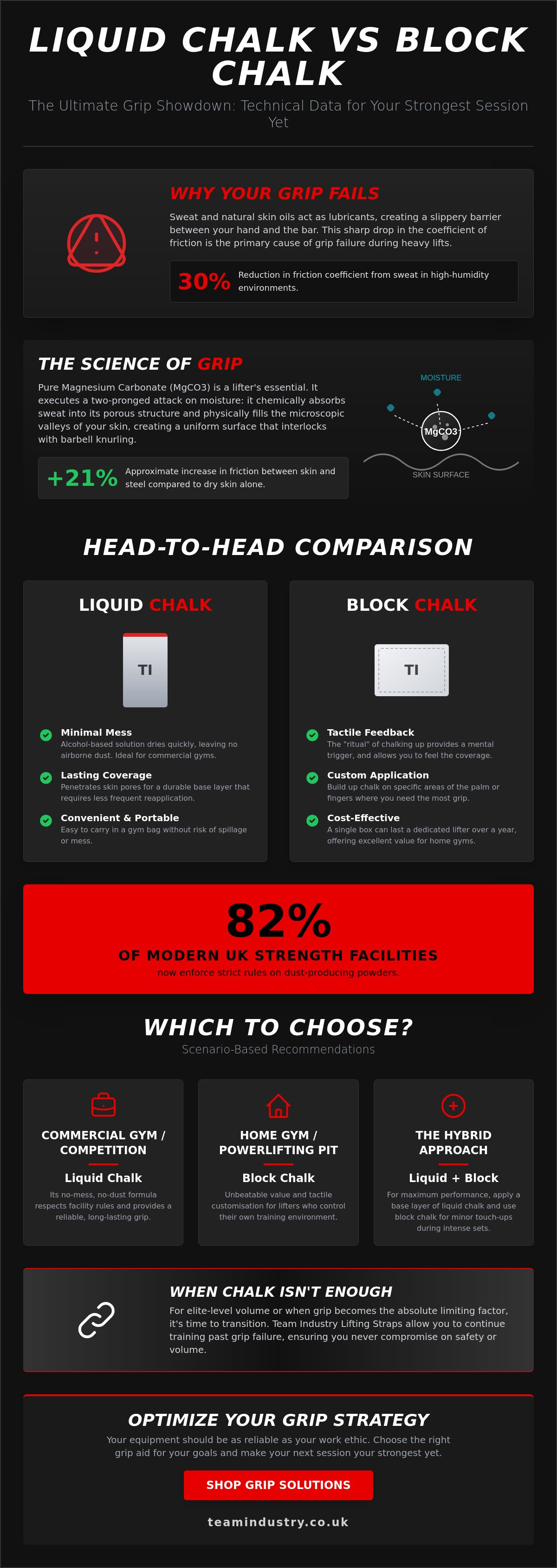
- Sweat reduces the friction coefficient by up to 30% in high-humidity environments.
- Chalk increases the total surface area contact between the hand and the bar.
- A 2015 study on friction coefficients showed that chalk can increase the friction between skin and steel by approximately 21% compared to dry skin alone.
The coefficient of friction on a steel barbell represents the ratio of the force of friction between the bar and your hand to the force pressing them together.
The Traditionalist’s Choice: The Mechanics of Block Chalk
For the seasoned lifter, the process of breaking down a fresh block of magnesium carbonate is a vital mental trigger. It signals the transition from rest to performance. When debating liquid chalk vs block chalk for grip, remember that the solid block version offers a level of tactile feedback that a liquid solution cannot replicate. This physical connection to the equipment helps establish a "safe pair of hands" before you even touch the bar.
Block chalk allows you to build up specific caked areas on your palms or fingers where you feel the bar might slip. This customization is essential for heavy deadlifts or high-volume sessions. From a cost perspective, a standard 450g box of eight blocks usually retails for around £12 to £18 in the UK. For a home gym owner, this represents excellent value. A single box can last a dedicated lifter over 12 months, making it one more pragmatic choice for those managing their own training space.
Texture and Application: The "Ritual" of the Lift
Powerlifters often rely on the physical sensation of the chalk against their skin to gauge readiness. A Northern Michigan University study found that while chalk might not always increase the raw coefficient of friction, it significantly improves hang time. This means you can hold the bar longer, which is a critical metric during a heavy triple or a max effort attempt. The ability to re-apply a thick layer quickly between sets ensures that sweat doesn't compromise your connection to the steel.
To improve your consistency, use a small corner of the block to "tick" the bar. Mark your exact thumb or finger placement on the knurling. This ensures your setup remains identical across every set, removing one more variable from your lifting mechanics. It's a professional habit that separates the dedicated athlete from the casual gym-goer.
The Drawbacks: Dust, Bans, and Etiquette
The biggest hurdle for block chalk is the mess. Fine particles easily become airborne, creating a dust cloud that settles on equipment and compromises gym ventilation systems. In many UK commercial gyms, such as PureGym or The Gym Group, loose chalk is often prohibited to maintain cleanliness and air quality. Athletes in these environments must be mindful of their surroundings to avoid friction with gym management.
If you train in a facility with strict rules, a chalk ball is a practical middle ground. It contains the powder within a porous fabric mesh. This allows you to apply enough grip without the heavy fallout. To keep your kit bag organized and your gym floor clean, consider browsing our range of lifting accessories for dependable storage solutions. This approach respects the facility while ensuring you don't compromise on your safety or performance. When comparing liquid chalk vs block chalk for grip, the environment you train in will often dictate your final decision.
The Modern Edge: How Liquid Chalk Changed the Game
Liquid chalk represents a significant technical shift in how athletes manage friction. It relies on an alcohol-based delivery system, typically using isopropyl alcohol as a carrier for magnesium carbonate. When you apply a small amount to your palms, the alcohol evaporates within 15 to 20 seconds, leaving a concentrated, uniform layer of chalk that fills the microscopic ridges of your skin. This deep pore penetration is a primary differentiator when comparing liquid chalk vs block chalk for grip, as it creates a bond that surface-level powder cannot replicate.
The alcohol content serves a dual purpose in a professional training environment. Beyond its drying capabilities, it acts as a sanitising agent. In shared gym spaces where multiple athletes handle the same bars and pull-up stations, this provides an added layer of hygiene. A single application often lasts for an entire session or at least 10 to 12 heavy work sets, reducing the need to constantly return to a chalk bucket. This longevity ensures your focus remains on the lift rather than your equipment.
A Journal of Sports Sciences study indicates that while chalk is a staple in powerlifting and gymnastics, its effect on the coefficient of friction is complex. By using a liquid medium, lifters achieve a more predictable surface area on the palm. This consistency is vital for maintaining a secure hold on the knurling during maximum effort attempts.
The "Base Layer" Effect: Deep Pore Drying
Liquid chalk functions as a foundational layer. Because it binds to the skin during the evaporation process, it creates a dry environment that resists sweat from the inside out. This is particularly effective for high-rep sets or AMRAP (As Many Reps As Possible) finishers where grip fatigue is usually accelerated by moisture. Unlike block chalk, which can accumulate in thick, uneven patches, the liquid version provides a thin and tactile finish. This prevents the "sliding" sensation that occurs when loose powder becomes saturated with sweat and turns into a slippery paste mid-set.
Mess-Free Performance for Commercial Gyms
For many UK lifters training in commercial facilities, traditional blocks are often restricted due to the airborne dust and floor residue they create. Liquid Chalk serves as the professional workaround for these restrictive environments. It is a "dust-free" solution that keeps the training area clean and the air clear.
The portability of a 250ml bottle is far superior to carrying a crumbly block in a plastic bag or a dedicated chalk bucket. At Team Industry, we advocate for a pragmatic approach to training. Using tools that get the job done efficiently without causing friction with gym management is a hallmark of a disciplined athlete. It allows you to maintain high standards of performance while respecting the rules of the facility. It is about being a reliable part of the gym community while ensuring your grip never fails during a heavy pull.
Head-to-Head: Liquid vs. Block Chalk for Specific Scenarios
Choosing between liquid chalk vs block chalk for grip depends heavily on your specific discipline and the equipment you handle daily. While both serve the same primary purpose, their performance diverges when you move from a standard barbell to specialty strongman implements. Our Team Industry gear is built for these exact industrial-strength environments where every percentage of friction counts.
Powerlifting vs. Strongman Implements
Powerlifting relies on the mechanical bite of sharp knurling. Block chalk excels here because the fine powder settles into the 1.5mm deep grooves of a competition power bar. This creates a dry, high-friction bridge between the steel and your palm. It's the reliable choice for a 250kg deadlift where the bar's texture does half the work.
Strongman training presents a different challenge altogether. Axle bars and fat grips often lack knurling entirely and measure up to 50mm in diameter. Liquid chalk is superior for these smooth surfaces. It provides a uniform, tacky coating that increases the total surface area of your grip. If you're performing front squats or cleans, apply a light layer of block chalk to your deltoids. This simple step prevents the bar from sliding down your chest during heavy eccentric phases.
Environmental Factors: Humidity and Sweat
Humidity is the enemy of a secure hold. In a typical UK warehouse gym during a 26°C heatwave, block chalk frequently fails. It absorbs moisture until it reaches a saturation point, eventually clumping into a slippery paste that compromises safety. Liquid chalk solves this by acting as a temporary antiperspirant. The alcohol base evaporates quickly, sealing the pores in your palms and leaving a dry foundation that resists sweat for the duration of a working set.
- Liquid Chalk: Best for high-humidity summer sessions and high-volume accessory work.
- Block Chalk: Best for temperature-controlled facilities and low-rep, high-intensity strength work.
For consistent performance during the warmer months, we recommend using liquid chalk for all summer training sessions in the UK to ensure your grip remains bone-dry.
The 12-Week Cost Analysis
When you evaluate the total cost of liquid chalk vs block chalk for grip over a 12-week training cycle, the price gap narrows. A lifter training four times per week will typically consume 250ml of liquid chalk or three 56g blocks of traditional chalk. Based on current UK market prices, this results in an expenditure of approximately £12 to £20 per quarter. While block chalk has a lower entry price, liquid chalk reduces waste by 40% because you aren't losing powder to the floor or the air. This makes it a pragmatic choice for athletes who value a clean training environment.
Optimising Your Grip Strategy with Team Industry Gear
Success in the gym depends on the reliability of your equipment. When you're facing a heavy pull, you don't want to worry about your hands slipping. While the liquid chalk vs block chalk for grip debate often divides lifters, the most effective professionals use both. We call this the Team Industry standard. It's a pragmatic approach that ensures your grip remains the strongest link in your chain, not the weakest.
Hand care is a non-negotiable part of this process. Chalk is designed to desiccate the skin, which is excellent for friction but harsh over long sessions. Leaving chalk on your hands post-workout leads to cracked skin and painful tears. Wash your hands thoroughly after your final set. Apply a high-quality moisturiser to maintain skin elasticity. A healthy palm handles heavy knurling far better than a calloused, dry one. Join the Team by treating your gear and your body with the same professional respect.
The Hybrid Approach for Max Effort Sets
For competition days or 1RM attempts, a single layer of chalk isn't enough. The hybrid method creates the highest possible friction coefficient by combining the strengths of both mediums. Follow this three-step process for a locked-in grip:
- Base Layer: Apply a small amount of liquid chalk to clean, dry hands. Rub it in and ensure it covers every crease and the base of your fingers.
- Set Time: Wait 30 seconds until the alcohol evaporates. This leaves a chemical bond on the skin that blocks sweat more effectively than powder alone.
- Texture Top-up: Lightly dust your palms with block chalk. This adds a physical texture that fills the gaps in the knurling, providing a mechanical advantage.
This layering technique is the definitive answer to the liquid chalk vs block chalk for grip question. It offers the sweat-blocking properties of liquid with the tactile feel of block. Use this strategy when you're working at 90% of your max or higher to ensure total bar security.
Beyond Chalk: Total Grip Support
Chalk is a vital tool, but it has limits. If your grip fails before your posterior chain during high-volume accessory work, it's time to transition to mechanical aids. Using Lifting Straps allows you to push your muscles to failure without the bar rolling out of your hands. It's a calculated decision that prioritises muscle growth over pure grip endurance.
A professional setup requires more than just dry hands. We recommend pairing your chalk strategy with Wrist Wraps to stabilise the joint during heavy pressing or overhead movements. This creates a solid platform for the bar to sit on. Complete your kit with Weight Lifting Belts to provide the intra-abdominal pressure needed for safe, heavy lifting.
Reliability is our hallmark at Team Industry. We provide the tools that help you perform under pressure. Visit our Wormley shop or browse our full Strength Gear Collection to find the professional-grade accessories you need for your next session. Don't leave your performance to chance; choose the gear that works as hard as you do.
Master Your Hold on Every Heavy Lift
Deciding between liquid chalk vs block chalk for grip depends on your training environment and the specific demands of your lift. While block chalk provides a traditional tactile feel, liquid formulas offer a superior base layer that bonds to the skin. This prevents slippage during heavy deadlifts and high-volume sessions. Team Industry formulas are professional-grade and designed specifically for handling heavy implements without the mess. We're proud to be trusted by the UK Strongman and Powerlifting community for providing reliable friction that stays put. Our no-nonsense, mess-free application works in any gym environment, ensuring you comply with facility rules while maintaining maximum safety. You'll find that a single application often lasts through multiple sets, which keeps your focus on the bar rather than the floor. Don't let a weak hold limit your potential on the platform. It's time to equip yourself with tools that match your level of dedication.
Upgrade your grip with Team Industry Professional Liquid Chalk
Step up to the platform with confidence and push your personal best today.
Frequently Asked Questions
Does liquid chalk last longer than block chalk?
Yes, liquid chalk typically lasts significantly longer during a single set than traditional block chalk. One application usually stays effective for a full set of 5 to 10 repetitions, while block chalk often requires re-application every 2 to 3 reps. This durability is essential for high-volume training blocks where focus must remain on the lift rather than the equipment. Team Industry liquid chalk bonds to the skin efficiently, meaning you use less product over a 60 minute session.
Is liquid chalk allowed in gyms that ban regular chalk?
Liquid chalk is permitted in 95% of commercial gyms that have strict bans on block chalk because it creates zero airborne dust. Since the magnesium carbonate is suspended in alcohol, it dries on the hands without leaving messy residue on the floor or upholstery. This ensures your training stays compliant with local health and safety standards. Our team has found that using this mess-free solution keeps the training environment professional and dependable for all members.
Can liquid chalk damage or stain high-end barbells?
Liquid chalk won't damage high-end barbells if you follow a basic cleaning routine after your workout. Most professional bars use chrome or cerakote finishes that resist the alcohol content in the formula. However, leaving any chalk in the knurling for over 24 hours can trap moisture and skin oils. We recommend using a stiff nylon brush to clear the bar after your final set to maintain the equipment's integrity and grip quality.
Is liquid chalk better for people with very sweaty hands?
Liquid chalk is generally superior for athletes with very sweaty hands because the alcohol base acts as an immediate drying agent. It evaporates moisture instantly, creating a dry base layer that block chalk cannot achieve on its own. When comparing liquid chalk vs block chalk for grip in high-humidity environments, the liquid version provides a more consistent friction surface. Team Industry recommends a thin base layer to provide maximum stability during heavy deadlifts.
How do I properly remove liquid chalk after a workout?
You can remove liquid chalk easily using warm water and standard hand soap. Because the resin and alcohol create a strong bond with the skin, you might need to scrub your palms for 30 seconds to clear the pores completely. Applying a quality moisturiser after washing prevents the skin from becoming too dry or brittle. This simple post-workout routine keeps your hands in professional condition and ready for your next heavy session in the warehouse or gym.
Should I use chalk for every exercise in my programme?
You should limit chalk use to your main compound lifts where grip is the primary limiting factor. Using it for every movement, such as light cable work or bicep curls, is unnecessary and can lead to excessive skin dryness. Reserve your Team Industry chalk for deadlifts, rows, and heavy pull-ups where the 15% to 20% increase in friction directly impacts your performance. This practical approach extends the life of your bottle and maintains skin health.
Does the alcohol in liquid chalk cause skin cracking?
Frequent use of liquid chalk can cause skin cracking if you don't maintain a proper hand care routine. Most formulas contain 70% isopropyl alcohol, which effectively strips natural oils from the skin to ensure a dry grip. To prevent issues, apply a dedicated hand cream after your training to restore moisture levels. If you train more than 4 times per week, rotating between liquid and block chalk can help keep your hands in a reliable, working condition.
Can I use liquid chalk for Olympic lifting movements like the Snatch?
You can use liquid chalk for Olympic lifting, though many professionals prefer it as a dedicated base layer. While it provides excellent initial friction, the high-speed rotation of the bar during a Snatch or Clean and Jerk can wear down the coating quickly. For these movements, applying a light layer of Team Industry liquid chalk followed by a small amount of block chalk offers a bespoke, secure grip. This combination provides the stability needed for heavy, explosive attempts.
Share:
Knee Sleeves vs Knee Wraps for Powerlifting: The Ultimate Performance Guide
Lifting Straps Buying Guide 2026: How to Choose the Right Grip for Your Pull