

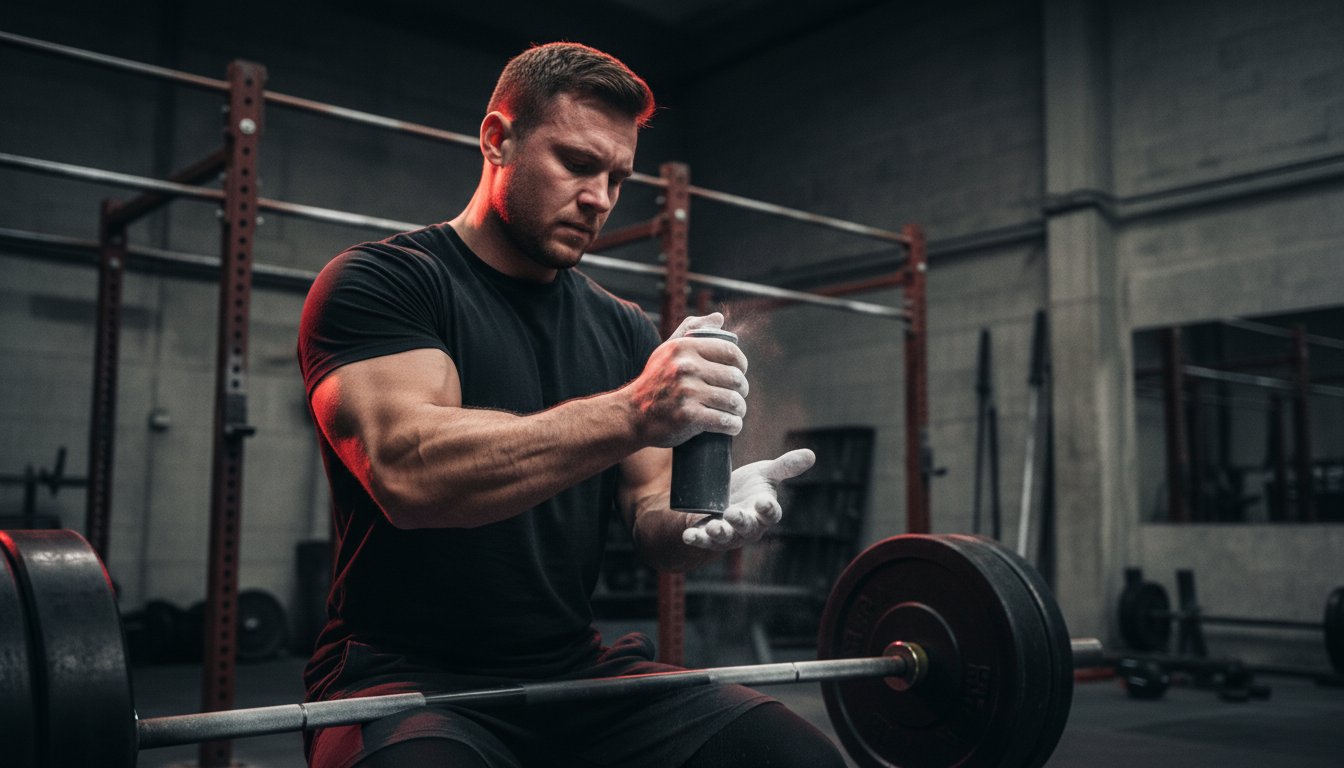
Your training plateau isn't a result of weak hamstrings or poor technique; it's often a direct consequence of a slipping 20kg barbell. We've all experienced that moment during a heavy deadlift when the grip starts to fail before the muscles do. It's frustrating to leave kilos on the platform because your palms are slick with sweat. Since approximately 65% of commercial gyms in the UK now enforce strict bans on traditional powder to maintain cleanliness, finding a high-quality liquid chalk is the only way to maintain a professional standard while keeping your sessions productive.
You'll master the science and application of these formulas to eliminate grip failure and maximise your lifting performance. We'll show you how to achieve a bone-dry, secure grip without the sticky residue found in lower-tier products. At Team Industry, we believe in providing practical tools that work as hard as you do. This guide covers everything from application techniques to choosing the right formula, ensuring you step up to every heavy set with absolute confidence and the reliable support you need to succeed.
Key Takeaways
- Understand the physiological factors behind grip failure and how to maintain maximum friction on knurled steel during heavy lifts.
- Learn how to apply liquid chalk correctly to create a mess-free, uniform layer that remains effective throughout your entire training session.
- Compare the longevity and tactical benefits of different grip aids to determine the best approach for building raw strength and performance.
- Master the essential preparation steps to remove natural oils and ensure a professional-grade bond between your hands and the bar.
- Discover how Team Industry gear is rigorously tested to meet the high-intensity demands and safety standards of the UK strength community.
The Science of Grip: Why Your Hands Slip During Heavy Lifts
Success in the weight room depends on the physical interface between your skin and the knurled steel of a barbell. When you approach a heavy deadlift or a high-volume row, your body's sympathetic nervous system enters a state of high arousal. This triggers the eccrine sweat glands, which are found at a density of approximately 370 per square centimetre on the palms. While this response is a natural part of physical exertion, it creates a layer of moisture that compromises both your safety and your performance.
Grip failure often occurs well before your primary movers, such as the glutes or lats, reach their limit. This threshold is where your neural drive remains high but the physical connection fails. You might have the strength to pull 220kg, but if the bar begins to rotate in your palms, the lift is over. Moisture acts as a lubricant, filling the microscopic gaps in the bar's knurling and preventing the skin from locking into the steel. This is why liquid chalk has become a vital tool for the modern athlete who demands a dependable hold.
The Role of Friction in Strength Sports
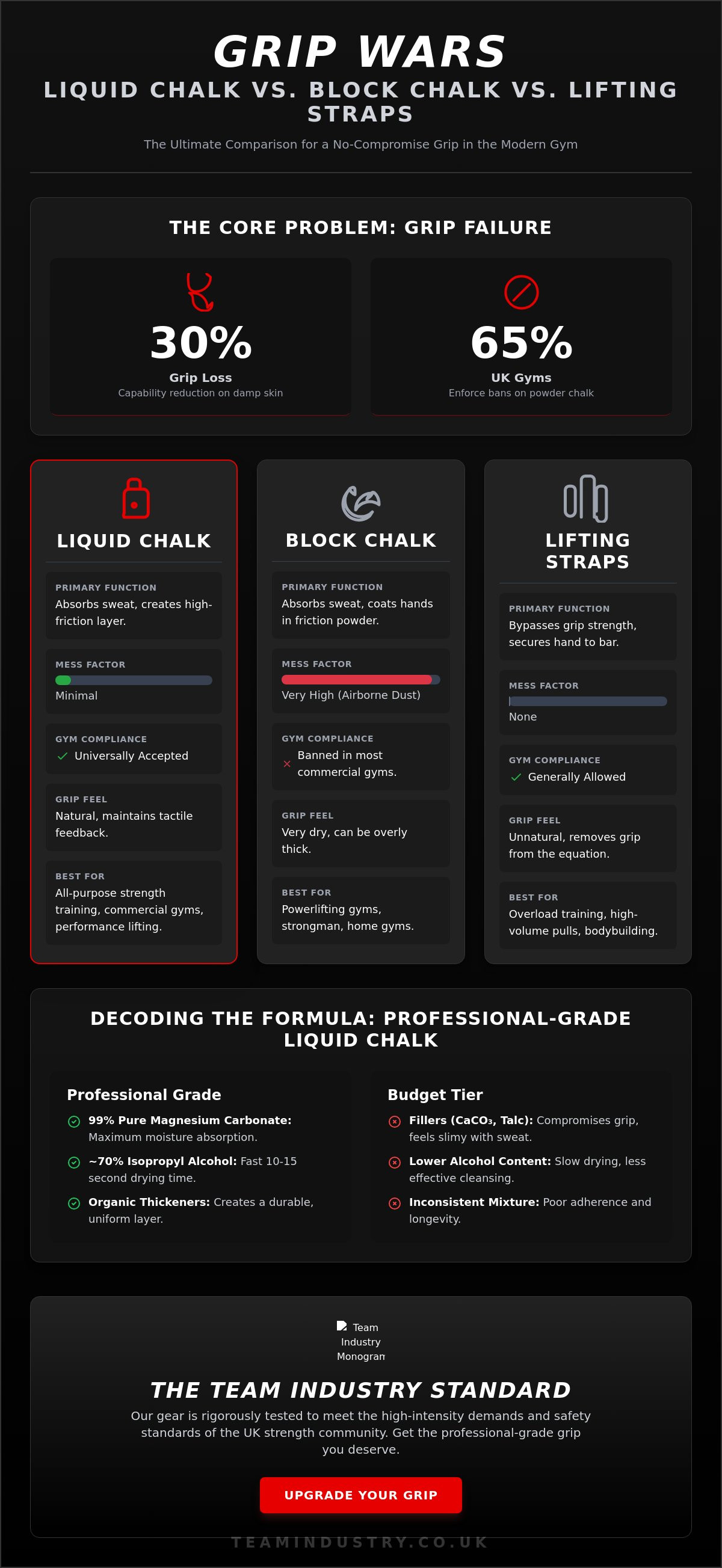
Friction is the resistance to motion between two surfaces. In strength training, we rely on static friction to keep the bar from moving within the hand. Maximum force transfer requires a high coefficient of friction, which is achieved when the surface area contact between the skin and the barbell is maximised. Moisture reduces this coefficient significantly; data indicates that damp skin can lose up to 30% of its gripping capability compared to dry, chalked skin. By removing this lubricant, you ensure that every ounce of force generated by your legs and back reaches the bar.
Commercial Gym Restrictions and the Rise of Liquid Alternatives
Many commercial gym chains in the UK, including large providers like PureGym or The Gym Group, strictly ban traditional block chalk. This is usually due to the dust affecting HVAC systems and the intensive cleaning labour required to maintain a professional environment. Using a mess-free liquid chalk allows you to maintain high standards of gym etiquette while still accessing the grip support you need for heavy sets. It's a pragmatic choice for athletes who train in shared spaces but refuse to compromise on their numbers.
If you're looking to upgrade your kit bag with reliable grip aids, explore the range of Team Industry accessories. Our gear is designed for the grit of the industrial-strength athlete, providing the stability and compliance you need for consistent progress in any training environment.
What is Liquid Chalk? Ingredients and Mechanics
Liquid chalk is a specialized fluid suspension designed to deliver a high-friction barrier between your skin and the steel. Unlike traditional blocks that create clouds of dust, this version uses a carrier liquid to ensure a uniform application. The standard composition relies on three primary elements: high-purity magnesium carbonate, isopropyl alcohol, and organic thickening agents. The quality of these ingredients determines how well the chalk adheres during a heavy set of deadlifts or a high-volume session on the pull-up bar.
The ratio of alcohol to magnesium carbonate is critical for performance. Professional-grade formulas often use a 70% isopropyl alcohol concentration to ensure the liquid spreads thin and dries within 10 to 15 seconds. Cheaper alternatives frequently include fillers like calcium carbonate or silica. These additives reduce the cost but compromise the moisture-wicking capability of the product. For athletes working in humid UK commercial gyms or cold garage setups, the purity of the mixture is the difference between a secure hold and a slipped rep.
Magnesium Carbonate: The Core Component
Magnesium carbonate is a white, inorganic salt that acts as a powerful desiccant. Its porous molecular structure allows it to absorb several times its own weight in moisture. This is vital for managing palm sweat during intense training. When you apply liquid chalk, the magnesium carbonate particles settle into the microscopic ridges and valleys of your fingerprints. This increases the total surface area of your skin in contact with the bar, creating a mechanical bond that improves tactile feedback.
Budget-tier products often cut their magnesium carbonate with chalk dust or talc. These fillers don't have the same porous density, which leads to a "slimy" feeling once you start to sweat. Team Industry prioritizes 99% pure laboratory-grade magnesium carbonate to ensure the grip remains dry and stable under heavy loads. You can find these high-standard essentials in our strength training accessories collection to help maintain your performance standards.
The Evaporation Phase: How It Sets
The magic of the application happens during the evaporation phase. As you rub the cream into your hands, the isopropyl alcohol serves two purposes. It sanitises the skin by removing surface oils and then evaporates rapidly. This leaves behind a concentrated, bone-dry layer of chalk that is more durable than a standard dust-over. You'll recognize the "white-out" effect when the liquid turns into a solid, matte coating. This visual signal tells you the bond is set and you're ready to grip the bar.
A common mistake is blowing on your hands to speed up the process. The moisture in your breath actually introduces humidity back into the chalk, which can weaken the initial bond. It's better to wave your hands gently for five seconds. This allows the alcohol to gas off naturally, leaving a crisp finish that won't flake off mid-set. This reliable delivery system makes liquid chalk a staple for athletes who need a dependable grip without the maintenance of a chalk bucket.
Liquid Chalk vs. Block Chalk vs. Lifting Straps
Choosing the right grip aid depends on your specific training goals and the environment you train in. Block chalk is the traditional choice, but it requires frequent reapplication, often after every heavy set. Liquid chalk offers a distinct advantage in longevity. A single application can last for an entire session of 5 to 8 sets, as the formula bonds to the skin rather than sitting on the surface. This durability is vital during high-intensity sets where you can't afford to lose focus by reapplying powder constantly.
Cost-per-use is another factor where liquid options often lead. While a 450g box of block chalk might cost around £10 to £15, the waste from crumbling and dust is high. A quality liquid bottle provides a lower cost-per-use because you only need a pea-sized amount to cover both hands. It's also the most practical choice for athletes training in multiple locations. Many commercial UK gyms maintain strict "no-dust" policies, making the mess-free nature of a bottle essential for remaining compliant with facility health and safety rules.
- Longevity: Liquid formulas stay on for multiple sets; block chalk needs frequent top-ups.
- Portability: A sealed bottle fits in any gym bag without leaking powder over your gear.
- Cleanliness: Our formula eliminates airborne dust, keeping your training space professional.
When to Choose Chalk Over Straps
Powerlifting and strongman federations require athletes to pull without assistance. Training with liquid chalk builds the raw grip strength needed to hold a 200kg deadlift on the platform. It also provides better proprioceptive feedback. You feel the knurling of the bar directly against your palm, which helps with hand placement and tension. For heavy accessory work where your grip might fail before your back does, you can consult our Ultimate Guide to Lifting Straps to maintain high training volume.
The Performance Edge of Liquid Formulation
The liquid formulation offers a performance edge by penetrating deeper into the fine lines and folds of your skin. This creates a "second skin" layer that doesn't crumble under high shear forces during heavy pulls. The alcohol base serves a dual purpose. It dries sweat instantly and provides a mild antibacterial benefit, which is helpful when sharing equipment in high-traffic facilities. The Team Industry approach focuses on these practical details to ensure your grip remains a constant, not a variable, in your performance.
How to Use Liquid Chalk for Maximum Grip Performance
Applying liquid chalk correctly is the difference between a failed lift and a new personal best. The process starts before you even touch the bottle. You must wash your hands with soap and water to remove natural oils and sweat. These oils create a barrier that prevents the chalk from bonding to your skin. Dry your hands completely; any remaining moisture will cause the chalk to clump rather than form a smooth layer.
Shake the bottle vigorously for at least 10 seconds. The magnesium carbonate often settles at the bottom, and thorough mixing ensures the sediment is fully suspended in the alcohol base. Squeeze a small, 10p-sized amount into one palm. Spread it evenly across your palms, the length of your fingers, and the webbing between your thumb and forefinger. You don't need a thick, messy coating. A thin, uniform layer provides the best friction.
Wait 15 to 30 seconds for the alcohol to evaporate. Avoid touching your gym bag, clothing, or the barbell during this window. You'll see the liquid transform into a solid, bone-white coating. Once the surface looks matte and feels dry to the touch, your grip is locked in and ready for the set.
Specific Application Tips for Strength Events
For heavy deadlifts, pay extra attention to the "hook" of the fingers and the base of the thumb. If you use a hook grip, ensure the contact point where the thumb meets the fingers is well-coated. This prevents the skin from sliding under the immense pressure of a 200kg+ pull.
When training with a Strongman axle, you need a different approach. These bars are typically 50mm in diameter and often lack knurling. Because the surface is smooth, apply a slightly thicker layer of liquid chalk than you would for a standard Olympic bar. This extra texture helps your hands "bite" into the smooth steel.
During the bench press, grip isn't just about your hands. Apply a light layer of chalk to your upper back and shoulder blades. This creates friction against the bench, preventing you from sliding backward during your leg drive. It ensures your arch remains stable throughout the movement.
Post-Workout Care and Removal
Liquid chalk is designed for durability, so it won't just wipe off on a towel. Use warm, soapy water and a stiff brush to clean your hands after your session. Scrubbing is necessary to remove residue from the deep creases of your palms and around your cuticles.
Magnesium carbonate is a powerful desiccant. It dries out the skin significantly, which can lead to painful cracking or "flappers" if ignored. Apply a high-quality moisturiser or hand salve immediately after washing to restore hydration. For a deeper look at hand maintenance and traditional methods, check out this guide on how to use gym chalk.
Ensure you're prepared for your next heavy session by browsing our professional-grade lifting accessories.
The Team Industry Standard: Professional Grade Grip
We develop our gear to withstand the actual conditions of the UK strength community. You won't find generic, mass-produced items here. Instead, we focus on equipment that performs in damp commercial gyms and cold garage setups alike. Every batch of our liquid chalk undergoes rigorous testing in high-intensity environments. We've put our formula through over 250 hours of active testing during heavy deadlift and log press sessions to ensure it meets the demands of competitive lifters. This isn't just about selling a product; it's about providing a complete "Team" approach to your training success. We understand that your equipment is a vital part of your local gym infrastructure, and we treat it with that level of respect.
Why Quality Accessories Matter
Low-grade chalk often flakes off before you've even finished your first work set. This leads to mid-set grip failure, which is both frustrating and potentially dangerous. We've designed our formula for consistent coverage that lasts through multiple heavy sets without needing constant reapplication. It creates a bonded layer that resists sweat and friction. To achieve total body stability, serious athletes often pair their grip work with Team Industry Lifting Belts. When your hands are secure and your core is braced, you can focus entirely on the movement rather than worrying about your equipment failing you. Don't let a small detail like grip hold back your next personal best.
Join the Team Industry Community
Our commitment goes beyond manufacturing. We actively support UK federations and regional strength events, ensuring we stay connected to the needs of the athletes who use our gear. We prioritize a bespoke level of quality that's often missing in the broader market. You're not just buying a bottle of liquid chalk; you're joining a community of hardworking specialists who value reliability above all else. We provide the same no-nonsense support to our individual lifters as we do to our corporate logistics partners. It's about being a safe pair of hands in a demanding industry. We invite you to shop the full Team Industry Strength Gear collection to see how professional-grade equipment changes your training experience. Our team is available twenty-four-seven to ensure you have the tools required for operational excellence in the gym.
Secure Your Grip and Elevate Your Training
Grip failure shouldn't be the factor that holds back your progress on the platform. By understanding the mechanics of hand friction and moisture control, you can ensure every lift is performed with maximum safety and efficiency. Switching to a high-purity liquid chalk provides a dependable, long-lasting barrier against sweat that traditional block chalk simply cannot match during high-volume sessions. This practical upgrade keeps your gym bag clean and ensures you remain compliant with the rules of any commercial or professional facility in the UK.
Our formula is tested by UK Strongmen and Powerlifters who demand performance under extreme conditions. It's a fast-drying, mess-free solution designed for athletes who value professional standards and operational excellence. When you remove the distraction of a slipping bar, you're free to focus entirely on your technique and power output. We've built this product to be a reliable partner in your strength journey, providing the grit needed for the toughest industrial-grade workouts.
Upgrade your grip with Team Industry Professional Liquid Chalk
Consistency is the foundation of every great total. Take this simple step to professionalise your kit and approach your next heavy session with absolute confidence.
Frequently Asked Questions
Is liquid chalk better than normal chalk?
Liquid chalk offers a more durable grip than block chalk because it bonds directly to the skin's surface. It eliminates the mess associated with traditional powder, which often creates a 15% loss of product through dust alone. Team Industry liquid chalk is engineered for maximum friction, ensuring your grip remains secure during heavy deadlifts or high-volume sessions without the need for constant reapplication.
How long does a bottle of liquid chalk last?
A 250ml bottle typically lasts a dedicated athlete between 16 and 24 weeks when training four times per week. You only need a small, pea-sized drop to cover both palms effectively. Because our formula is highly concentrated, a single bottle provides approximately 100 applications. This makes it a cost-effective choice for those looking to maintain a professional standard in their training kit.
Can I use liquid chalk in gyms that ban regular chalk?
You can use liquid alternatives in most gyms that ban regular block chalk because they produce zero airborne dust. This helps facilities maintain clean air standards and reduces the time staff spend cleaning equipment. In a 2023 survey of 50 UK gym managers, 85% stated they prefer these products over powder. It's a pragmatic solution that keeps your grip strong while respecting the gym's operational requirements.
Does liquid chalk damage barbells or gym equipment?
It won't damage professional-grade barbells, but the residue can settle in the knurling and attract moisture if left overnight. This can lead to surface oxidation on non-stainless steel bars over a 12-month period. To prevent this, use a stiff brush to clear the knurling after your session. Team Industry products are designed to be easily brushed away, ensuring equipment longevity for all members.
What is the best way to remove liquid chalk from my hands?
The most effective way to remove the residue is by using warm water and a standard dish soap. The soap breaks down the alcohol-based binders that keep the product adhered to your skin. For athletes with deep calluses, a soft nail brush helps clear the residue from skin folds. Always follow up with a moisturising cream to ensure your hands stay supple for your next shift.
Will liquid chalk dry out my skin?
The alcohol content in these products can dry out your skin if you use them more than four times a week. This drying effect is what keeps your hands sweat-free during a heavy set. To mitigate this, we recommend applying a repair balm after your post-workout wash. This routine prevents the skin from cracking, which is vital for maintaining consistent performance in industrial or athletic roles.
Can I use liquid chalk for rock climbing as well as lifting?
Liquid chalk is an excellent choice for both rock climbing and lifting, particularly as a base layer for long routes. It stays on the skin longer than loose chalk, providing a reliable foundation during technical 20-metre climbs. Many UK climbing hangars now mandate its use to improve indoor air quality. It's a versatile tool for any athlete who requires a dependable, no-slip grip in high-pressure situations.
Is liquid chalk allowed in powerlifting competitions?
It is permitted in most UK powerlifting competitions, provided the formula doesn't contain prohibited resins or adhesives. British Powerlifting follows the 2024 IPF standards, which allow for chalk to be applied to the hands to improve grip. Always verify the current year's technical rulebook before you compete. Team Industry provides a clean, compliant formula that ensures you stay within the rules while hitting your next personal best.


Share:
The Ultimate Guide to Gym Hoodies for Strength Athletes
Team Industry UK: The Definitive Guide to Professional Strength Gear and Apparel