

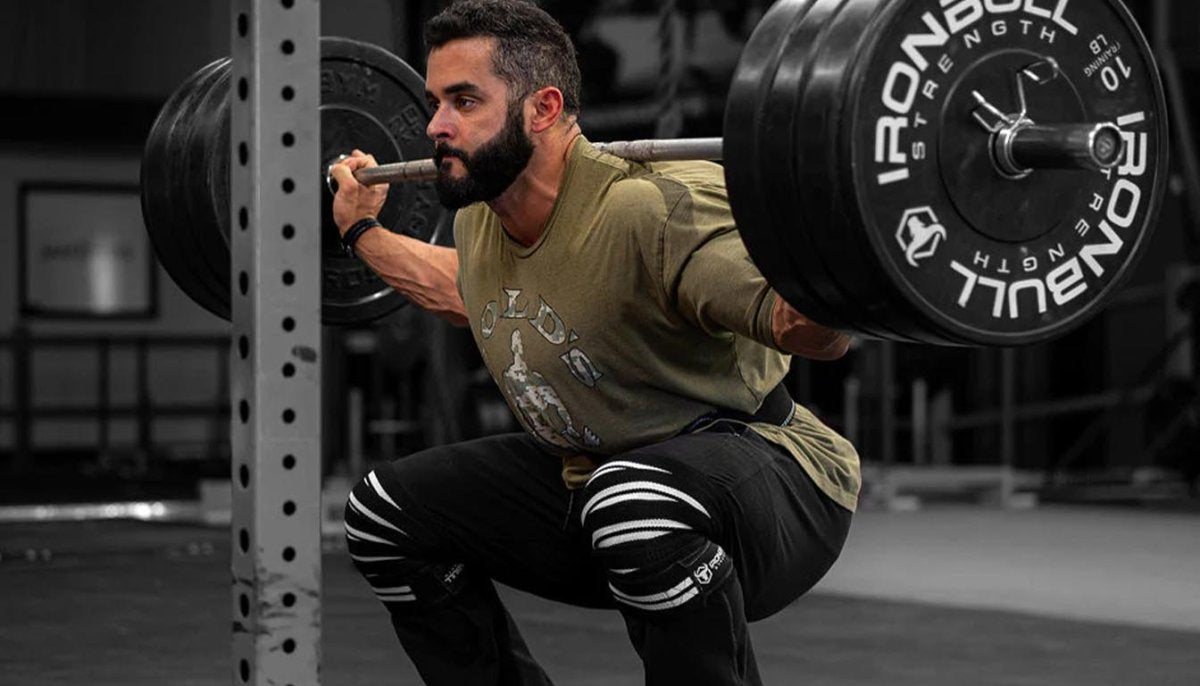
True squat depth is earned through mechanical stability, not just passive flexibility. If you've ever felt that sharp hesitation at the bottom of a heavy rep or watched a competition lift get red-lighted for being an inch too high, you know that "trying harder" isn't the solution. With over 70% of gym members prioritizing strength training in 2026, the demand for technical precision has never been higher. Achieving a deep, legal squat requires a calculated approach to your joints. By implementing specific mobility exercises for squat depth, you can transform persistent hip and ankle tightness into a reliable, powerful descent.
We understand the frustration of feeling physically blocked from the range of motion your program requires. It's a common hurdle for athletes navigating the March 2026 IPF rule updates; these changes now mandate specific bar placement no lower than the posterior deltoid level. This guide provides a results-driven framework to identify your personal mobility blockers and fix them with pragmatic drills. You'll learn how to build a simple warm-up routine that ensures joint comfort and consistent depth under heavy loads. From analyzing heel heights in professional footwear to mastering loaded stretches, we're here to help you secure your position in the hole with absolute confidence.
Key Takeaways
- Redefine squat depth and learn why persistent "tightness" is often a stability issue rather than a flexibility problem.
- Use simple self-assessment drills to pinpoint whether your mobility blockers originate in the ankles, hips, or thoracic spine.
- Implement five targeted mobility exercises for squat depth that utilize loaded stretching to safely expand your range of motion.
- Understand the role of professional gear in enhancing joint safety and improving your proprioception when descending into the hole.
- Build a pragmatic, time-efficient warm-up routine that translates directly to deeper, more powerful reps under the barbell.
Understanding Squat Depth: Why Your Current Range is Limited
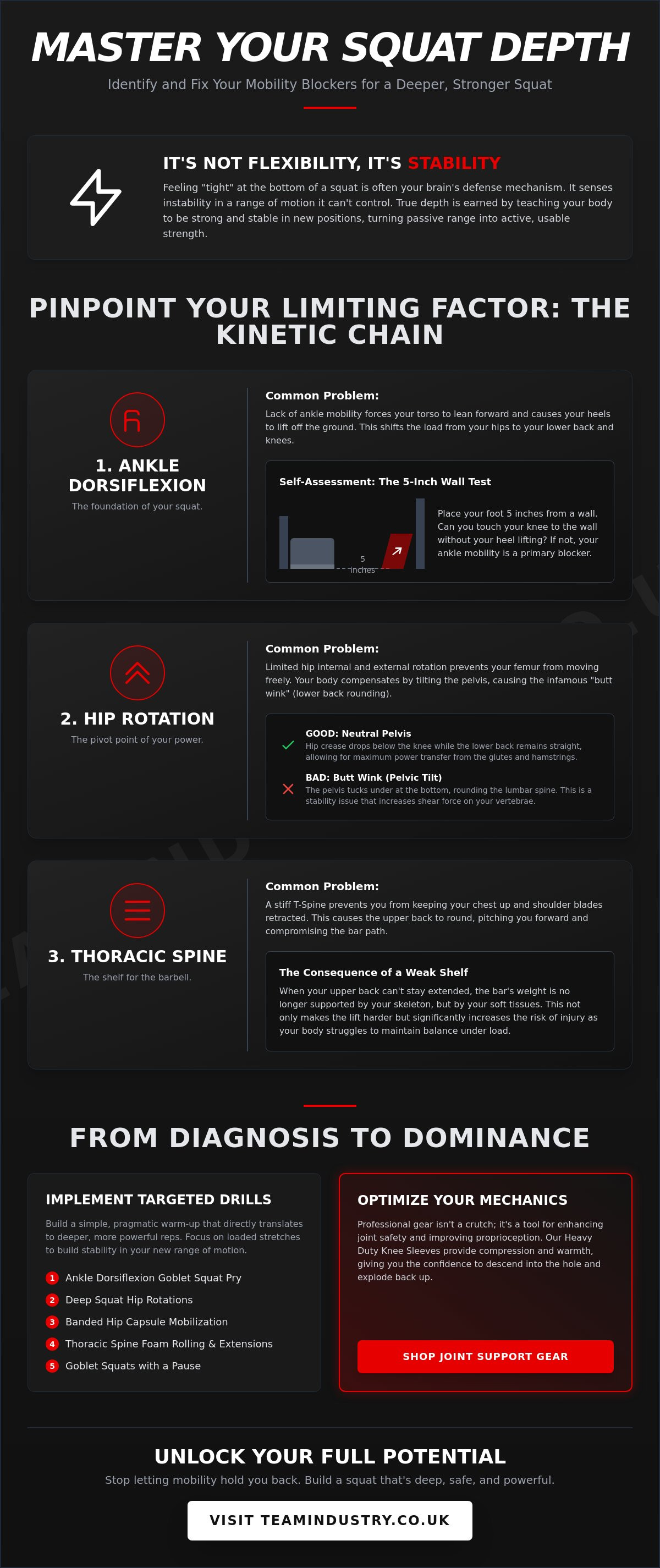
In strength sports, squat depth is strictly defined as the point where the hip crease passes below the top of the knee. Many athletes struggle to reach this standard, often blaming "tight muscles" for their lack of progress. However, feeling tight is frequently a neurological signal of instability rather than a physical lack of muscle length. Your brain creates a sensation of tightness to prevent you from entering a range of motion it doesn't feel safe controlling. This distinction is crucial when selecting mobility exercises for squat depth; the goal is usually to build stability within a new range. For a comprehensive overview of the squat exercise, including its biomechanical foundations, refer to established industry standards.
To better understand how hip mechanics influence your ability to reach depth, watch this helpful video:
Achieving depth isn't just about meeting competition standards; it's about maximizing muscle recruitment. Squatting to full depth significantly increases the workload on the glutes and adductors compared to partial reps. This transition relies on your "active range," which is the distance you can move under control, rather than "passive range," which is how far your joints can be pushed by external force. Effective training bridges this gap by turning passive flexibility into active, usable strength.
Anatomical Reality vs. Mobility Limitations
Your natural squat stance is largely dictated by the depth and orientation of your hip socket, known as the acetabulum. Some lifters naturally thrive with a wide stance, while others require a narrower foot position to avoid bone-on-bone contact. It's vital to differentiate between these structural hard stops and soft tissue restrictions that can be improved. Anatomical squat capacity is a fixed but optimisable trait.
The Consequences of Cutting Depth Short
Cutting depth doesn't just result in red lights; it shifts the mechanical load. Shallow squats often increase shear force on the knee joint by preventing the posterior chain from fully engaging. This creates a "plateau" effect where your strength gains don't translate to other movements. Consistent depth ensures a reliable carry-over to Strongman and Powerlifting events. To protect your joints during these deep descents, many athletes utilize Heavy Duty Knee Sleeves to improve proprioception and maintain joint warmth.
Identifying Your Blockers: The Ankle, Hip, and T-Spine Chain
To fix your squat, you must view the body as a linked system. A restriction at the ankle doesn't stay at the ankle; it travels up the chain, forcing the hips and spine to compensate. This often manifests as a "butt wink" or an asymmetrical hip shift that can derail your progress. Before selecting specific mobility exercises for squat depth, you need to identify where your specific chain is breaking down. You don't need a therapist for this. A few diagnostic tests will reveal the culprit and help you build a more efficient movement pattern.
Ankle Dorsiflexion: The Foundation of Depth
Ankle mobility is the most common bottleneck in strength training. You can test yours with the 5-inch wall test: place your foot five inches from a wall and try to touch your knee to the surface without your heel lifting. If you can't, your calves or joint capsules are restricted. This lack of range forces your torso to lean forward excessively to keep your center of mass over your midfoot. Restricted ankles are the primary cause of heels coming off the floor during the descent. Improving hip and ankle mobility together is essential for maintaining a vertical bar path.
Hip Rotation and Pelvic Alignment
The hips require both internal and external rotation to allow the femur to clear the pelvis. If you lack internal rotation, your pelvis will likely tilt prematurely, causing the lower back to round. This "butt wink" is often a protective mechanism by the nervous system to prevent impingement, rather than just a tight hamstring. The psoas also plays a critical role; if it's chronically tight, you'll struggle to "sit" into your hips effectively. Watch for a hip shift, where you favor one side in the hole. This usually indicates unilateral tightness that requires targeted, one-sided drills to resolve.
Thoracic Extension and Bar Path
A stiff upper back makes it nearly impossible to stay upright as you reach maximum depth. If your thoracic spine can't extend, your chest will collapse, pulling the bar forward and putting immense pressure on your lower back. This is especially vital for low-bar squatters who need significant t-spine mobility to maintain a shelf for the bar while protecting their shoulder health. When your mobility is dialed in, staying braced is the next step. A high-quality Team Industry Lifting Belt provides the necessary feedback to maintain pelvic alignment and spinal stability under heavy loads.
The 5 Best Mobility Exercises for Squat Depth
To see real progress, you must move beyond passive stretching. The most effective mobility exercises for squat depth utilize "loaded mobility," where you use external weight to safely drive the body into deeper ranges. This method teaches the nervous system that these new positions are stable and secure. Consistency is your primary lever for success; committing to five minutes of daily work is far more effective than a single hour-long session once a week. Incorporate these drills into your warm-up routine to prime your joints before you step onto the platform.
Lower Body Essentials: Ankles and Hips
- 1. The Weighted Ankle Stretch: Sit in a deep crouch and place a heavy kettlebell or dumbbell on top of one knee. Lean forward, using the weight to pin the knee past the toes while keeping the heel flat. This directly addresses the dorsiflexion restrictions that often cause your heels to lift.
- 2. 90/90 Hip Switches: Sit on the floor with both knees bent at 90 degrees, one in front and one to the side. Rotate your hips to switch the orientation of your legs without using your hands for support. This drill improves internal and external rotation simultaneously.
- 3. The Tactical Frog: Drop to your knees and elbows, spreading your knees as wide as possible with your feet turned out. Rock your hips back toward your heels to open the adductors. This creates the necessary space for a wider, more stable squat stance.
The Goblet Squat Hold: The Ultimate Depth Builder
4. The Prying Goblet Squat: Hold a dumbbell at chest height and descend into the deepest squat you can maintain. Use your elbows to "pry" your knees outward, driving into the hips. While in the hole, take three to five deep diaphragmatic breaths. This breathing technique helps relax the pelvic floor and adductors, allowing you to sink deeper without losing tension. Use this as a primer set immediately before your barbell work to grease the groove of your squat pattern.
Upper Body and Core Integration
5. Bench T-Spine Extensions: Kneel in front of a bench, placing your elbows on the surface while holding a PVC pipe or empty bar. Sink your head between your arms and drive your chest toward the floor to open the lats and upper back. Maintaining a "big chest" is a physical mobility requirement that ensures the bar stays over your mid-foot throughout the entire rep. For maximum comfort during these deep, loaded stretches, consider wearing Heavy Duty Knee Sleeves to provide warmth and compression to the joint.
Ready to upgrade your training kit? Shop our full range of professional strength gear to support your mobility journey.
Optimising Your Mechanics with Professional Strength Gear
Gear isn't a crutch; it's a tool to enhance proprioception and joint safety. While mobility exercises for squat depth address tissue and joint restrictions, professional gear provides the tactile feedback required to hit those ranges consistently under load. By using compression to reduce the perception of stiffness, you can descend into the hole with greater confidence and control. This stability allows the nervous system to stay relaxed, ensuring you don't cut reps short due to a perceived lack of safety.
Knee Sleeves and Joint Warmth
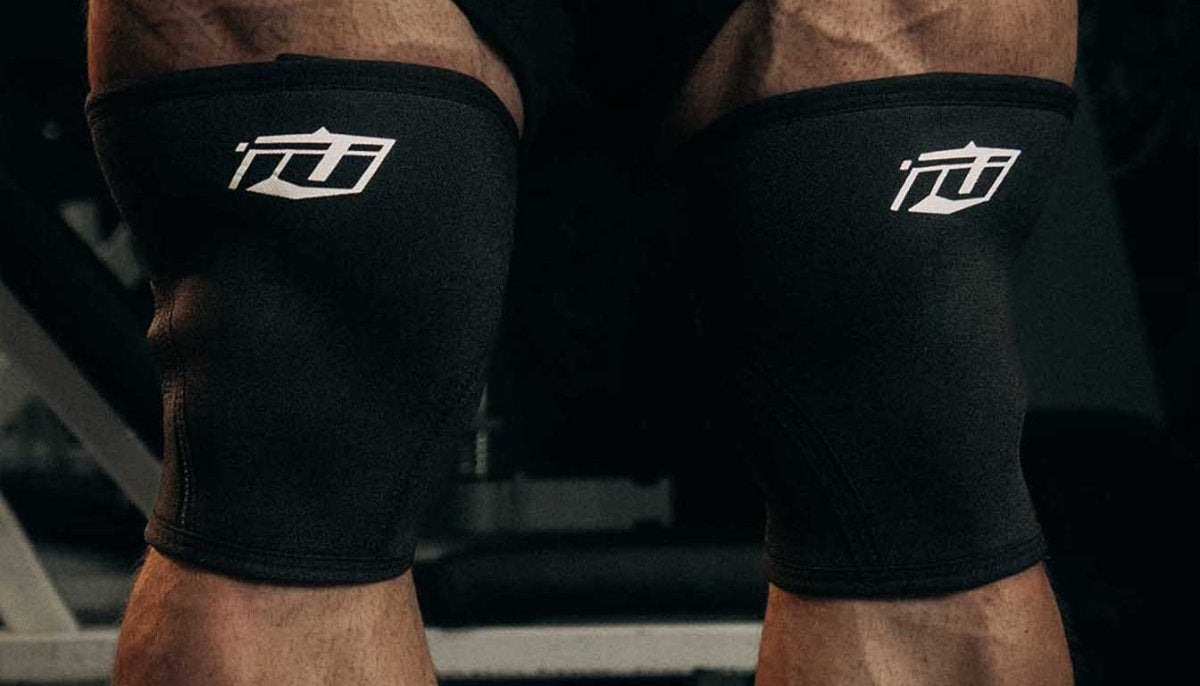
Heavy Duty Knee Sleeves are essential for maintaining the joint temperature required for synovial fluid to flow. This warmth reduces friction and makes the descent feel smoother during high-volume or heavy sessions. Beyond the thermal benefit, sleeves offer a significant proprioceptive advantage. Feeling the compression against your skin helps you track your knee position in space, making a deep, legal squat more repeatable. For heavy training, 7mm sleeves provide the necessary support to stay stable at the bottom of the rep.
The Role of the Lifting Belt in Depth Mechanics
A Team Industry Lifting Belt helps you maintain a vertical torso, which is critical for reaching depth without falling forward. The belt acts as a rigid wall for your abdominals to push against, creating the intra-abdominal pressure needed to stabilise the spine. This stability neurologically allows the hips to relax and sit deeper into the squat because the brain feels the spine is protected. Whether you choose a 10mm or 13mm belt, the goal is to secure your midline so your legs can do the work.
Apparel for Unrestricted Movement
Your clothing shouldn't fight your mechanics. Our Industry Oversized Tees are designed with a specific cut that won't bind at the shoulders or chest during high-bar or low-bar setups. Similarly, wearing performance leggings or shorts prevents the fabric from catching on your knee sleeves or bunching in the hip crease. Choosing apparel that moves with you ensures that your mobility isn't limited by your kit, allowing you to focus entirely on your technique and bar path as you descend.
Take Command of Your Squat Mechanics
Mastering the bottom of a squat isn't just about flexibility; it's about building a stable, repeatable system. By identifying whether your restrictions stem from the ankles, hips, or thoracic spine, you can stop guessing and start training with intent. Consistently performing targeted mobility exercises for squat depth will bridge the gap between passive range and active strength. Progress is the result of daily effort rather than occasional intensity. Each rep is an opportunity to reinforce better movement patterns.
Your equipment should match the standard of your training. We provide tools that are built for the grit of the platform and used by professional Strongman and Powerlifting athletes. Our gear offers professional-grade durability for the toughest sessions. This is backed by dependable UK-based support and expert knowledge. Upgrade your squat with professional-grade Heavy Duty Knee Sleeves and Lifting Belts at Team Industry UK. With a solid mobility routine and high-quality support, hitting depth becomes a natural part of your lifting mechanics. Stay focused on the process and trust your preparation.
Frequently Asked Questions
How long does it take to see improvements in squat depth?
You should expect to see neurological improvements in your range of motion within two to four weeks of consistent work. However, structural changes to soft tissue and joint capsules often take several months of dedicated practice. Focus on the quality of your movement during every session to ensure these gains become permanent and transferable to heavy loads.
Can I use weightlifting shoes to "cheat" my way to better depth?
Using weightlifting shoes is a tactical mechanical adjustment rather than a way to "cheat." Professional options like the Nike Romaleos 4 offer a 20mm heel height, while the Adidas Adipower 3 provides a 15mm lift. These tools compensate for limited ankle dorsiflexion, allowing a more upright torso. While shoes help, you should still perform mobility exercises for squat depth to address the underlying restrictions.
Is it dangerous to squat below parallel if I have "butt wink"?
Squatting below parallel with "butt wink" is only dangerous if the pelvic tilt leads to significant lumbar flexion under heavy loads. If you experience pain or feel your lower back rounding aggressively, limit your depth to your current controlled range. Work on hip internal rotation and core stability to gradually increase your safe depth without compromising your spinal integrity.
Should I do mobility exercises every day or just on leg day?
You will achieve the best results by performing mobility drills daily rather than only on leg days. Five to ten minutes of consistent movement every day helps maintain the neurological gains you've made. This frequency keeps the joint capsules adapted to deeper ranges and ensures your body remains primed for the specific demands of heavy strength training.
Why do my hips feel tight even after I spend 20 minutes stretching?
Your hips likely feel tight because your brain is prioritising joint stability over range of motion. Passive stretching doesn't teach the body how to control a new range, so the nervous system "locks" the joint back down for protection. Switch to loaded mobility exercises for squat depth to prove to your brain that you can safely handle weight in those deeper positions.
Do knee sleeves actually help you squat deeper or just keep you warm?
Knee sleeves assist with depth by providing both joint warmth and enhanced proprioception. The compression from Heavy Duty Knee Sleeves increases blood flow and encourages synovial fluid movement, which reduces the perception of stiffness. This physical feedback gives you the confidence to sit deeper into the hole, knowing your joints are supported and stable.
Share:
Top 3 Essential Weight Training Accessories for Strength
Single Prong vs Double Prong Lifting Belt: Which is Best for Your Training?