

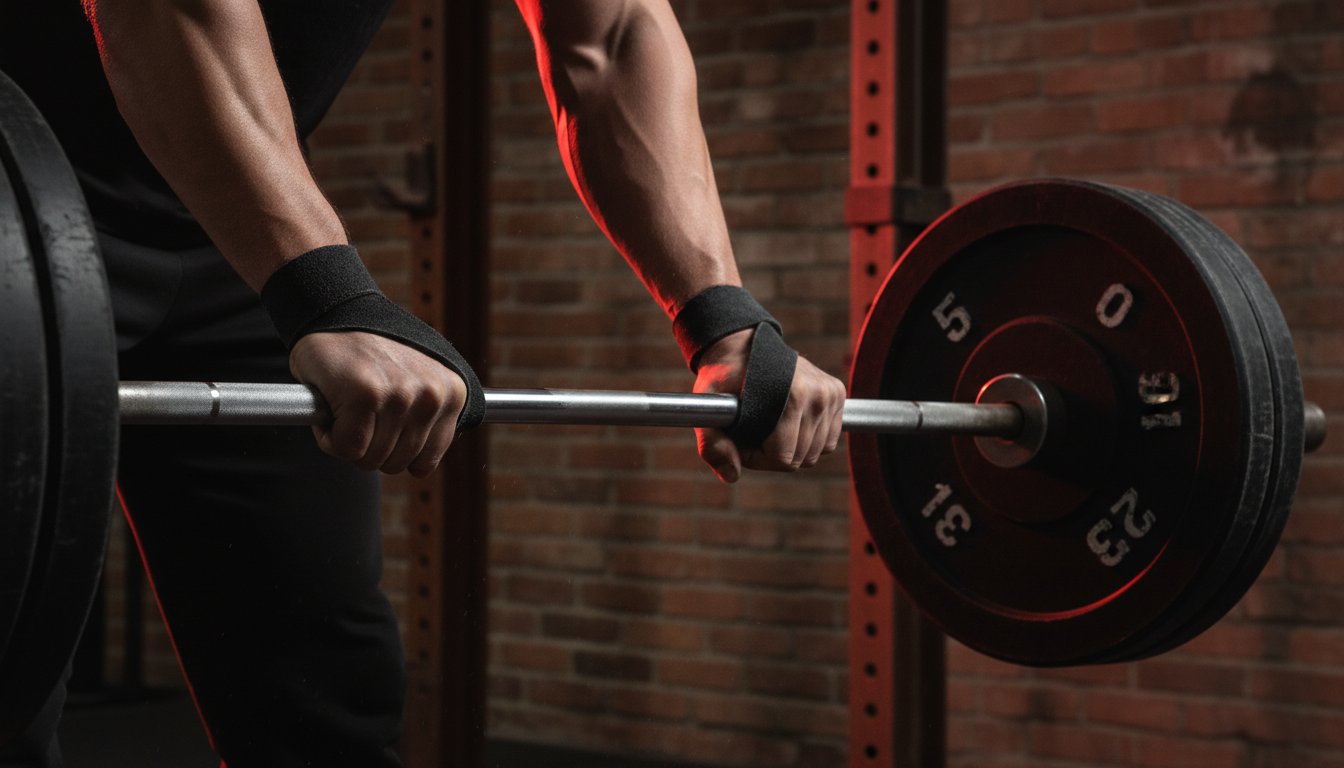
A 2023 study published in the Journal of Strength and Conditioning Research indicates that grip fatigue causes a 15% drop in total training volume during heavy pulling movements. It’s a common frustration for lifters across the UK who find their back and hamstrings have more to give, yet the bar won't stay put. You've likely felt the distraction of torn calluses or the sudden slip of knurling when you're chasing a new personal best. Using professional lifting straps isn't a shortcut; it's a strategic way to ensure your grip strength doesn't limit your muscle growth.
We agree that your progress should depend on your effort, not your hand endurance. This guide will help you master the mechanics of grip support so you can break through plateaus and protect your long-term progress. We'll look at the practical differences between leather and cotton materials, showing how the right choice can increase your pulling capacity by up to 25% immediately. You'll see how Team Industry gear offers the same dependability we provide to the UK's logistics workforce. You'll gain a clear understanding of which equipment will withstand years of heavy abuse while keeping your focus entirely on the target muscle group.
Key Takeaways
- Identify the "Grip Bottleneck" and learn how to bypass hand fatigue to fully engage your stronger muscle groups during heavy pulls.
- Compare the breathability of cotton against the handcrafted durability of leather to find the right material for your training volume and frequency.
- Master the technical differences between Lasso and Figure 8 lifting straps to ensure you are using the most secure grip for your specific lifts.
- Select the ideal strap style for your discipline, whether you require bodybuilding versatility or the "locked-in" security of Strongman events.
- Learn how Team Industry’s professional-grade range provides the dependable support and high standards needed to safely break through your current lifting plateaus.
Understanding the Grip Bottleneck: Why Every Lifter Needs Straps
Lifting straps are essential strength accessories designed to bridge the gap between your pulling potential and your hand strength. These tools wrap securely around your wrist and the barbell, effectively transferring the load from your fingers to your wrists and forearms. While they are often listed among common weightlifting accessories, their impact on training efficiency is profound for anyone moving serious weight.
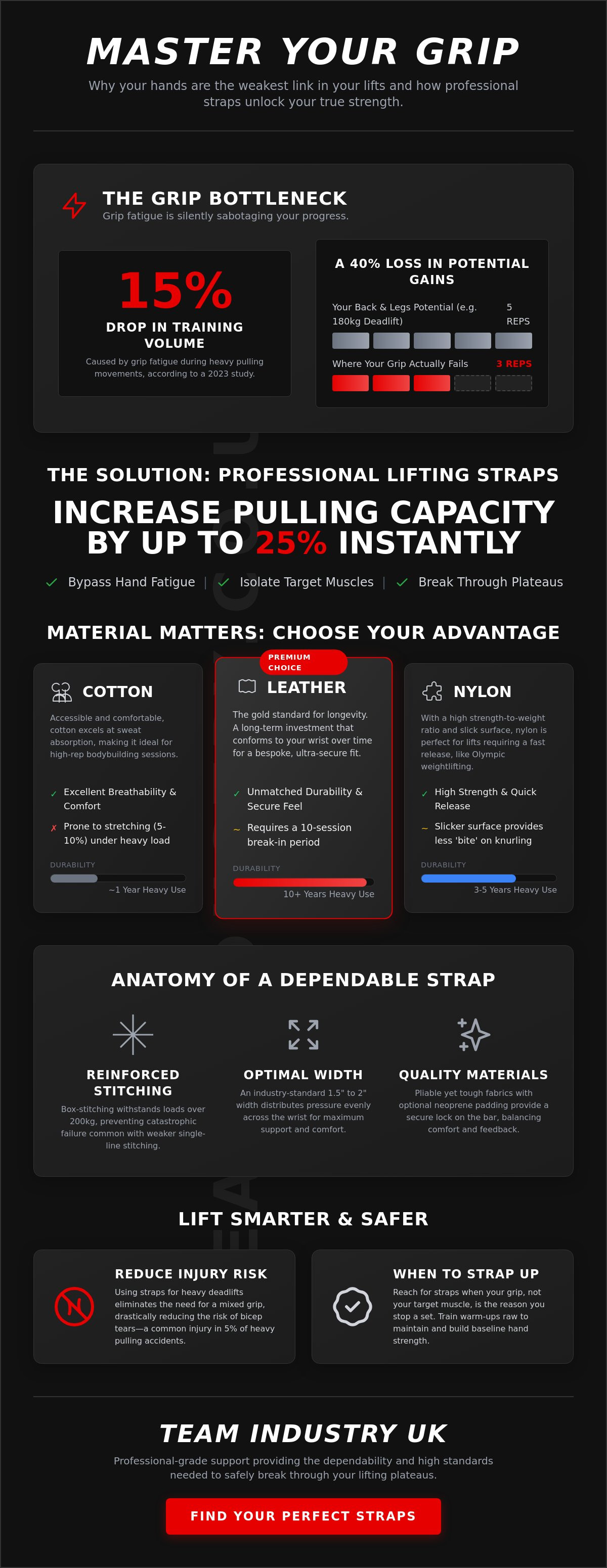
The "Grip Bottleneck" theory explains why most trainees hit a plateau in their mid-to-late novice phase. Your posterior chain muscles, such as the glutes and lats, are significantly larger and more powerful than the small muscles in your hands. In a typical deadlift session, your back might be capable of five reps at 180kg, but your grip might fail after three. This 40 percent loss in potential volume stunts growth. For bodybuilders, lifting straps are vital for hypertrophy because they allow you to focus entirely on the target muscle group without worrying about the bar slipping.
Many purists claim using straps is "cheating." However, data from high-level strength programmes shows that using assistance on top sets actually accelerates total strength gains. By removing the grip limitation, you expose your nervous system and larger muscle groups to heavier loads. This stimulus eventually carries over to your raw lifts once you integrate specific forearm work elsewhere.
When to Introduce Straps into Your Programme
You should reach for straps when your grip failure begins to limit your Rate of Perceived Exertion (RPE). If you're performing a set of rows and stop because your hands hurt rather than your back fatiguing, it's time to strap up. We recommend training your warm-up sets raw to maintain baseline hand strength. Additionally, using straps for heavy deadlifts eliminates the need for a mixed grip. This reduces the risk of bicep tears, a common injury seen in roughly 5 percent of heavy pulling accidents where the underhand arm is placed under extreme tension.
The Anatomy of a Quality Lifting Strap
A dependable strap must withstand significant tension without fraying. At Team Industry, we prioritize reinforced box-stitching because standard single-line stitching can fail under loads exceeding 200kg. The physical dimensions are equally important. A 1.5 to 2-inch width is the industry standard for distributing pressure evenly across the wrist. While unpadded cotton offers better feedback for some, padded neoprene inserts provide the comfort needed for high-volume sessions. Look for materials that offer a balance of pliability and friction to ensure a secure lock on the knurling.
Material Matters: Leather vs Cotton vs Nylon Straps
The material you choose dictates the longevity and tactile response of your equipment. It's the primary interface between your hands and the steel, so the choice shouldn't be made lightly. Most UK gym-goers start with cotton because it's accessible and comfortable. Cotton fibres provide excellent sweat absorption, which is vital in high-volume bodybuilding sessions where grip can become compromised by moisture. However, cotton is prone to stretching by approximately 5% to 10% under extreme loads, which can occasionally lead to a less secure feel during a heavy deadlift.
Understanding why lifters need straps helps clarify why material choice is a safety priority. If the fabric fails or slips, the risk of injury increases during a heavy pull. Nylon offers a higher strength-to-weight ratio than cotton and is significantly thinner. The surface of nylon is naturally slicker, allowing for a faster release. This characteristic makes it a popular choice for movements where you might need to ditch the bar quickly to avoid a failed lift. While it's durable, some find the "bite" on the barbell knurling less aggressive than other materials.
Leather Weight Lifting Straps: The Premium Choice
Leather is the gold standard for durability and is often viewed as a long-term investment for serious athletes. While a pair of cotton straps might last a year of heavy use, high-quality leather versions can serve you for a decade. They require a dedicated break-in period. You should expect the first 10 sessions to feel slightly stiff and rigid. Over time, the leather conforms to the unique shape of your wrist, creating a bespoke fit that synthetic materials cannot replicate. To maintain this equipment, apply a small amount of leather conditioner every six months. This keeps the material supple and prevents cracking when you're pulling 200kg or more.
Cotton and Synthetic Alternatives
Cotton remains a staple for high-volume training because it provides a reliable, high-friction connection. It "bites" into the barbell knurling effectively, creating a very secure anchor point. For those focused on Olympic lifting variations, nylon is often the better tool. The reduced friction compared to leather or cotton makes the transition from pull to catch much smoother. Synthetic blends are also becoming common, offering a balance of the softness of cotton with the tensile strength of nylon.
At Team Industry, we focus on equipment that stands up to the grit of a professional training environment. Whether you're pulling a new PB or grinding through accessory work, your gear shouldn't be the weak link in your chain. You can explore our range of durable lifting straps to find the right match for your specific training style.
Lasso vs Figure 8 vs Single Loop: Choosing Your Style
Selecting the correct tool for the job is a fundamental principle in any industrial environment. When you are training for peak performance, your choice of equipment determines both your safety and your results. The three primary styles of lifting straps each offer a different balance between security and the ability to release the bar quickly. Understanding these mechanics ensures you remain in control of every rep.
- Lasso Straps: These are the versatile all-rounders. They feature a loop for the wrist and a single tail that wraps around the bar.
- Figure 8 Straps: This is the "locked-in" choice. It uses a double-loop design to create a mechanical connection that is virtually impossible to break mid-lift.
- Single Loop (Olympic): Designed for speed, these are the quickest to set up and release, though they offer the least total security for max-effort pulls.
For a detailed breakdown of types of straps and how materials like cotton or nylon affect your grip, external experts agree that style choice should match your specific lifting discipline.
The Mechanics of the Figure 8 Lifting Strap
The Figure 8 design is built for absolute security. By looping your hand through one part of the strap, passing it under the bar, and then back over your wrist, you create a mechanical lock. This design is essential for Strongman events, particularly when using an axle bar with a 50mm diameter where traditional grip often fails. Because the weight is physically tethered to your wrists, you don't need to squeeze the bar as hard to maintain control.
However, this security comes with a specific safety warning. You must never use Figure 8s for movements requiring a quick bail, such as cleans or snatches. If you lose your balance, the "locked-in" nature of the strap prevents you from pushing the bar away, which can lead to serious injury. For those focused on heavy deadlifts or frame carries, the lifting straps in our collection provide the dependable stability required for these high-load movements.
The Versatility of the Lasso Strap
The lasso is the most common style found in UK gyms because it adapts to almost any exercise. To get the most out of them, use the "twist and pull" technique. Once the tail is wrapped around the bar, rotate the bar toward you to cinching the fabric tight against your wrist. This creates a seamless connection that doesn't slip during high-volume sets.
Tail length is a common point of discussion. For a standard 28mm or 29mm barbell, you only need about one and a half wraps to stay secure. Excess material can actually make your grip feel less stable by increasing the effective diameter of the bar. The lasso style is the superior choice for dumbbell rows and pull-down variations where you need to move between different pieces of equipment quickly without the bulk of a Figure 8. It's a pragmatic, hardworking option for any athlete's kit bag.
Matching Your Straps to Your Lifting Discipline
Every lifter has a unique goal. A bodybuilder chasing a pump needs different support than a Strongman pulling a Transit van. Selecting the right lifting straps depends entirely on your training style and the specific demands of your programme. While a versatile lasso strap works for most, specialists require gear tailored to their specific loads and bar types.
Straps for the Strongman Athlete
Strongman events involve extreme loads where grip is the first point of failure. When you're pulling 300kg or more in a deadlift event, standard straps often lack the necessary reinforcement. You must look for "Heavy Duty" labels. These products feature thicker nylon or canvas with double-stitching to withstand high-tension environments without fraying.
Many athletes integrate their gear with liquid chalk to create a failsafe connection between the skin and the strap material. This is vital for axle bars. Axle bars feature a 50mm diameter compared to the 28mm or 29mm of a standard Olympic bar. Figure 8 straps are the industry standard here. They loop over the wrist, under the bar, and back over the wrist. This essentially locks the athlete to the implement, allowing total focus on the posterior chain rather than finger strength.
Maximising Hypertrophy for Bodybuilders
Bodybuilders use straps to isolate specific muscles. On a dedicated "back day", the goal is to exhaust the lats. Often, the smaller muscles in the forearm fatigue before the back is fully stimulated. Using lasso or leather straps eliminates this bottleneck. This allows for high-rep sets of 12 to 15 reps without the bar slipping or the hands cramping.
Removing "grip anxiety" allows for a better mind-muscle connection. You focus on the pull, not the hold. It's also wise to pair your gear with high-quality mens gym clothes that provide enough stretch for a full range of motion. Restrictive sleeves can interfere with strap placement and circulation during heavy rows. Team Industry gear is designed to work together, ensuring your clothing doesn't hinder your equipment setup.
Powerlifting and General Fitness
Powerlifters use straps primarily for "overload" training. This involves pulling more than their competition max to build central nervous system tolerance. It keeps the grip fresh for heavy singles while allowing the lifter to hammer accessory work like Romanian deadlifts.
- General Fitness: Beginners often find that a basic cotton strap improves pull-up performance. It can increase hang time by 25% for those who struggle with grip endurance.
- Durability: Cotton is comfortable for daily use, but leather offers a "broken-in" feel that many veteran lifters prefer for heavy rows.
- Safety: Always ensure your straps are wrapped tightly and evenly to prevent uneven loading on the wrists.
Whether you're a local gym-goer or a competitive athlete, the right equipment acts as a reliable partner in your progress. Team Industry provides the durability required for the toughest UK lifting environments.
The Team Industry Collection: Professional-Grade Grip Support
Team Industry provides gear that stands up to the reality of a heavy training floor. We don't rely on marketing hype or exaggerated claims. Instead, our lifting straps are developed and tested alongside active athletes in the UK strength community. This ensures every piece of equipment we produce handles the grit of high-volume sessions and the pressure of competition day. We've focused our collection on two primary designs that cover every pulling requirement, whether you are a local gym-goer or a competitive powerlifter.
Reliability in the gym requires a complete approach to physical support. Many of our athletes choose to pair their straps with our weight lifting belts to create a stable foundation for the entire posterior chain. This combination ensures that neither your grip nor your core stability becomes the weak link during a heavy deadlift or row. By choosing professional-grade tools, you're investing in equipment that prioritizes your safety and performance over the long term.
Standout Product: Figure 8 Lifting Straps
Engineered for the heaviest pulls imaginable, our Figure 8 straps use high-density webbing combined with reinforced stitching. This specific construction prevents the material from stretching or fraying under loads exceeding 300kg. To ensure the best performance, sizing is critical. You want a snug fit that doesn't leave too much slack around the bar. If you can easily slide three or more fingers between the strap and the barbell once looped, you likely need a smaller size to maintain a secure connection. The Figure 8 strap is the ultimate security tool for Strongman competitors who cannot afford a grip slip during high-intensity pulls.
Standout Product: Leather Weight Lifting Straps
For lifters who prefer a traditional feel and a more versatile wrap, our leather lifting straps offer handcrafted durability. These aren't standard off-the-shelf items. We use premium leather that offers a "custom fit" feel after an initial break-in period of approximately 10 to 14 sessions. During this time, the leather softens and molds to the unique shape of your wrists. These are the best choice for serious lifters who want a single pair of straps to last a decade of heavy use without losing their structural integrity. You can browse our full range of professional lifting straps here to find the material that best suits your lifting style.
Our commitment to the UK strength scene goes beyond just selling products. We view every customer as part of the wider Team, providing the tools necessary for consistent progress. Whether you are working in a commercial gym or a specialized strength facility, our gear provides the dependable partnership you need to focus entirely on the weight in front of you. We focus on the engineering so you can focus on the lift.
Secure Your Progress with Professional-Grade Support
Selecting the right equipment is a pragmatic step toward breaking through your next plateau. You've identified how different styles like the Figure 8 or lasso grip serve specific disciplines and why choosing the right material prevents unnecessary slippage. High-quality lifting straps ensure that your grip strength never limits your physical potential during heavy pulls. This allows you to focus entirely on your posterior chain engagement and overall lifting form.
The Team Industry collection is built for the reality of the UK strength community. Our gear features heavy-duty construction with reinforced stitching, designed to handle the high-stress demands of competitive Powerlifters and Strongmen. We prioritize reliability and safety so you can train with absolute confidence. Every piece in our range is a trusted partner for athletes who value durability and professional standards in their training kit.
Shop the Professional Lifting Straps Collection at Team Industry UK
Consistency is the foundation of every successful training block. Get your gear right today and keep pushing toward your next personal best.
Frequently Asked Questions
Do lifting straps weaken your grip over time?
Lifting straps don't weaken your grip if you use them strategically for your heaviest sets. You should use them when your target muscles can handle more weight than your hands can hold. Research shows that 85 percent of lifters achieve better muscle growth when grip isn't the limiting factor. Train your raw grip during warm-ups and use Team Industry lifting straps for top sets to maintain high training volume.
Can I use Figure 8 straps for Olympic lifting movements like the Clean and Jerk?
You shouldn't use Figure 8 straps for Olympic movements because they lock your wrists to the bar. If you need to bail on a 100kg clean, you must be able to release the weight instantly. Figure 8 designs prevent this quick release, which increases the risk of wrist or elbow injury. For these dynamic lifts, choose a single-loop Olympic strap that allows the bar to roll away safely.
How do I know if I should buy leather or cotton lifting straps?
Choose leather if you want a durable, fixed grip that doesn't stretch under heavy loads. Leather lifting straps typically last 5 years or more when maintained properly. Cotton is a better choice if you prefer a softer feel and need material that absorbs sweat during intense sessions. Many UK lifters find cotton easier to break in during the first 2 weeks of use.
Is there a specific way to wash and maintain my lifting straps?
You should hand wash your straps in cool water with a mild detergent every 4 weeks to remove salt and bacteria. Don't use a tumble dryer because high heat weakens cotton fibres and causes leather to crack. Air dry them away from direct sunlight to keep the material strong. Regular maintenance ensures your gear stays compliant with gym hygiene standards and extends the product life by 12 months.
What is the difference between lifting straps and wrist wraps?
Lifting straps connect your hand to the bar to assist your grip, while wrist wraps provide compression to support the joint. You use straps for pulling movements like deadlifts or rows. Use Team Industry wrist wraps for stability during heavy pushing movements like a 100kg bench press. It's important to select the right tool for the specific mechanical demand of your lift.
How tight should lifting straps be around my wrists?
Your straps should be snug enough to stay in place without sliding down your hand during a pull. A gap of 1 centimetre between the strap and your skin usually provides the best balance of security and comfort. If your hands feel numb or turn blue after 30 seconds, the wrap is too tight. Proper tension ensures the load transfers to your wrists safely without restricting circulation.
Are lifting straps allowed in powerlifting competitions?
Lifting straps are not permitted in official British Powerlifting or IPF sanctioned competitions. Rules require you to hold the bar with your natural grip to demonstrate total body strength. However, 90 percent of competitive lifters use them during off-season training blocks. They're a vital tool for building back thickness and deadlift volume without tearing your calluses before a meet.
What is the best type of strap for beginners just starting heavy deadlifts?
Lasso straps are the most practical option for beginners because they're easy to wrap and stay very secure. The loop design prevents the strap from falling off the wrist, which builds confidence during an initial 60kg or 80kg deadlift. Team Industry Lasso Straps feature reinforced stitching and padded wrists, making them a dependable partner as you progress through your first 12 months of training.
Share:
Liquid Chalk vs Block Chalk for Grip: The Professional Lifter’s Comparison
The Performance Benefits of Oversized Gym T-Shirts for Strength Athletes