

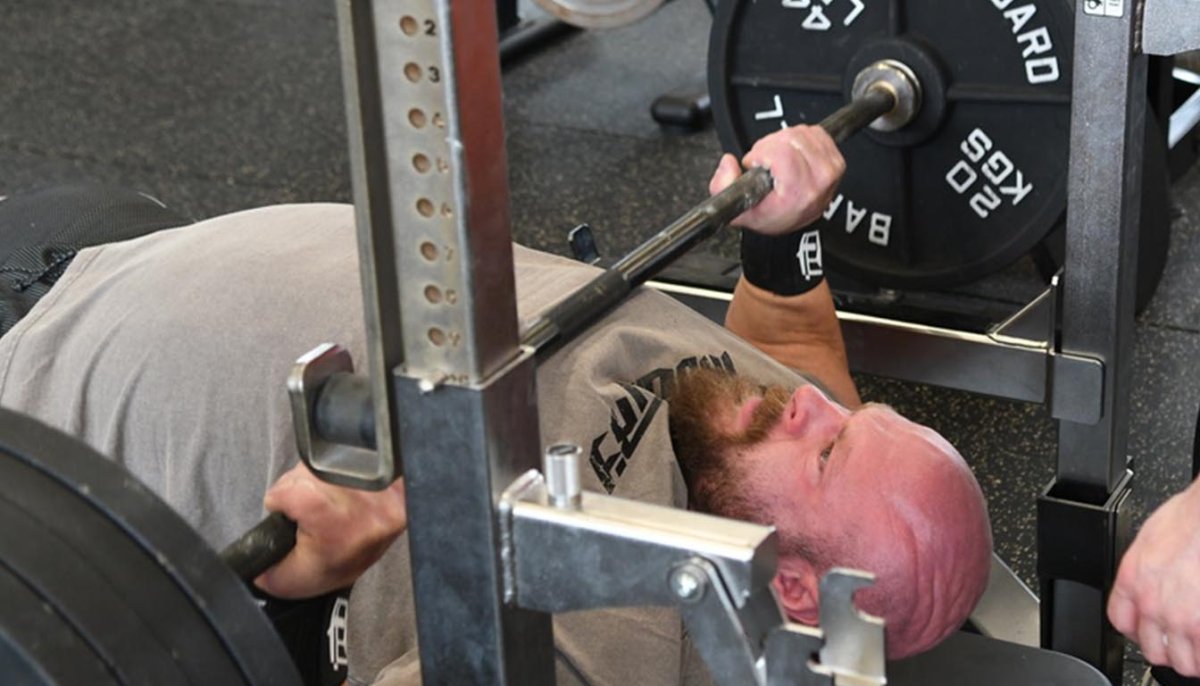
What if your back strength isn't actually the reason your deadlift has stalled? Many lifters find their progress halted not by their primary muscles, but by secondary failure points like grip fatigue or core instability. If you've ever wondered what are tthe top 3 accessories for weight training? to overcome these hurdles, you aren't alone. It's frustrating to feel your hands slip before your back is even tired, or to feel a lack of stability during a heavy squat set. We understand the grit required to move heavy iron and the importance of equipment that works as hard as you do.
This article identifies the three most impactful accessories designed to remove performance bottlenecks and help you reach your true strength potential safely. You'll learn the science of how specific gear improves performance and how to identify the most cost-effective tools for your goals. We'll break down the science behind performance gear, compare the benefits of using a Team Industry Lifting Belt against raw lifting, and identify the tools that provide the best return on your investment.
Key Takeaways
- Learn to pinpoint the exact performance bottlenecks that cause your secondary muscles to fail before your primary movers are fully taxed.
- Discover what are tthe top 3 accessories for weight training? to effectively bypass physical limitations like grip fatigue and joint instability.
- Understand how to integrate a Team Industry Lifting Belt into your training to maximize intra-abdominal pressure and spinal stability.
- Master the professional protocol for transitioning from raw lifting to using accessories to ensure your technique remains sharp as the load increases.
- Identify why it's vital to choose gear designed by active lifters to ensure your equipment meets the highest standards for durability and safety.
Why Weight Training Accessories are Essential for Progression
In the professional lifting community, accessories are not seen as shortcuts. They are precision tools engineered to enhance stability, secure your grip, and protect joint integrity during maximal efforts. You can find a comprehensive list of weight training accessories that serve various purposes, but for the serious lifter, the focus remains on gear that removes physical bottlenecks. The "bottleneck theory" suggests that your progress on a major lift, such as the deadlift, should not be dictated by a smaller, weaker link like your forearm grip strength. If your back can pull 180kg but your hands fail at 140kg, your back is being under-trained.
When athletes ask what are tthe top 3 accessories for weight training?, they are often searching for ways to bridge this gap between their primary movers and their technical limiters. Using gear isn't "cheating" the lift; it's a pragmatic method to ensure the target muscle reaches its true failure point safely. Our criteria for essential gear focus on three pillars: high versatility across different movements, a significant impact on joint safety, and the ability to raise your overall performance ceiling.
To better understand how these tools impact your lifts, watch this helpful video:
The Difference Between Support Gear and Gimmicks
High-street fitness brands often prioritise aesthetics over mechanical function. There is a clear distinction between passive accessories, like a shaker bottle, and active support gear that provides structural reinforcement. Professional athletes require gear that withstands the grit of high-intensity sessions. At Team Industry, we focus on professional-grade materials that offer genuine stability rather than superficial style. This commitment to quality ensures that our equipment functions as a reliable partner in your operational success within the gym.
When to Introduce Accessories into Your Programme
It's vital to build a foundational level of "raw" stability before relying on external support. Beginners should focus on technical proficiency and natural bracing to develop core strength and grip endurance. However, once you notice minor joint niggles or grip failure slowing your progression on compound lifts, it's time to integrate support. Accessories allow for higher training volume without excessive fatigue by providing mechanical assistance where the body is most vulnerable. Look for signs like a lack of confidence in your brace during heavy squats or your hands opening during lifting straps intensive rows as indicators that gear is necessary.
The Top 3 Essential Accessories for Every Lifter
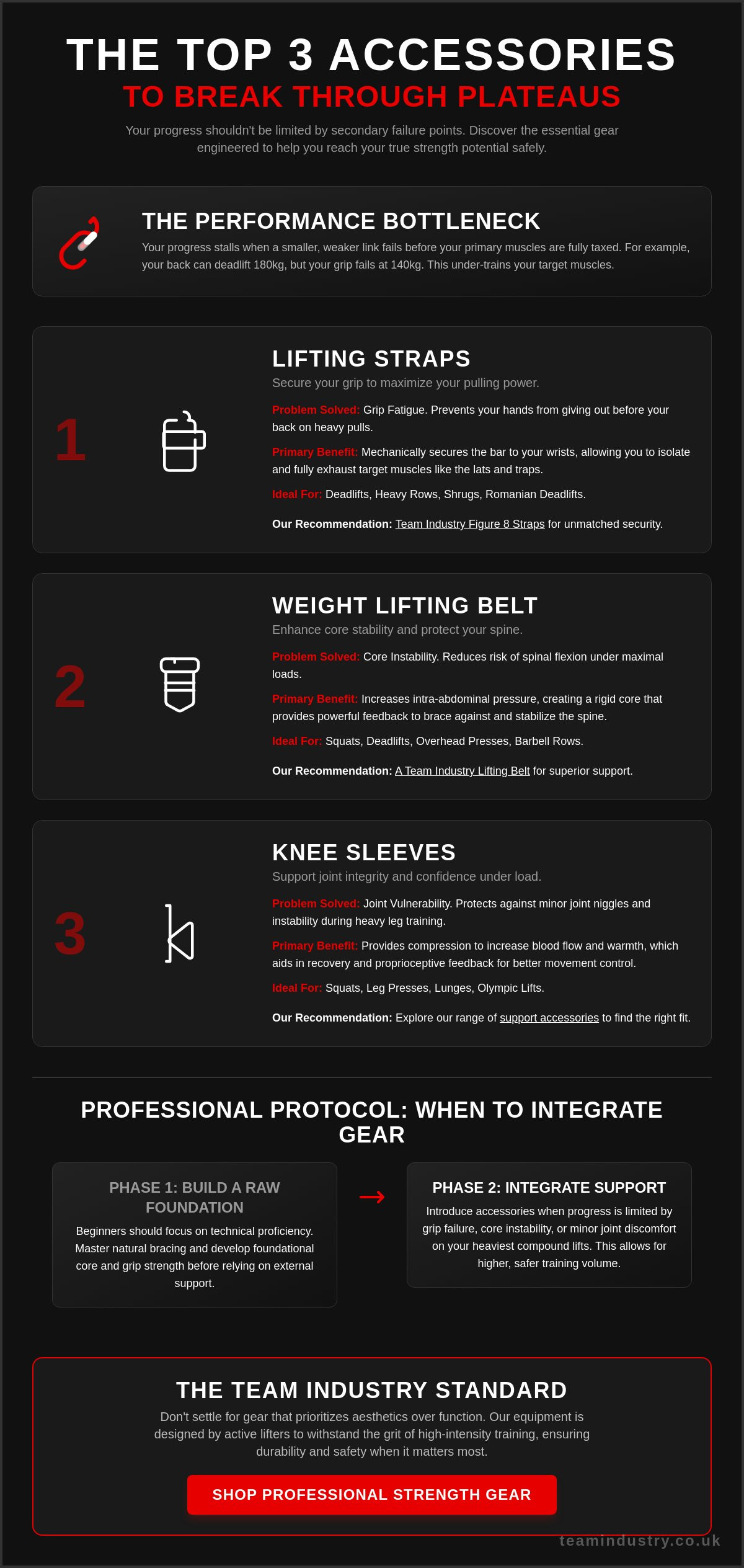
Identifying what are tthe top 3 accessories for weight training? requires looking at where the human body typically fails during heavy compound movements. Most athletes hit a wall when their grip gives out, their spine loses stability, or their joints feel vulnerable under load. To address these specific points, we recommend a definitive trio: Lifting Straps, Weight Lifting Belts, and Knee Sleeves. These tools work in tandem to support the "Big Three" lifts, allowing you to train closer to your muscular limit without being held back by secondary failure points. You can explore our full range of Team Industry accessories to find gear built for these heavy-duty requirements.
1. Lifting Straps: Maximising Your Pulling Power
Pulling movements like the deadlift or heavy row often end prematurely because your forearms burn out before your back muscles do. Lifting straps solve this by mechanically securing the bar to your wrists, effectively isolating the target muscle. While classic lasso styles are versatile, many powerlifters prefer Figure 8 lifting straps for their incredible security and ease of use. It's helpful to learn how to properly use lifting straps to ensure you don't become overly reliant on them during warm-ups. Use them only on your heaviest working sets to preserve your natural grip strength while pushing your pulling volume higher.
2. Weight Lifting Belts: Creating Midline Stability
A belt is more than just back support; it provides a rigid surface for your abdominal wall to "brace" against. This creates intra-abdominal pressure, which acts as an internal cushion for your spine. A 2019 systematic review confirmed that weightlifting belts increase this pressure and lumbar support, which enhances stability for heavier loads. We recommend using Lever Belts for those who want quick adjustments and a reliable lockout during maximal efforts. Don't believe the myth that belts weaken your core. They actually allow your core muscles to contract harder against the resistance, leading to a safer and more powerful lift.
3. Knee Sleeves: Joint Warmth and Proprioception
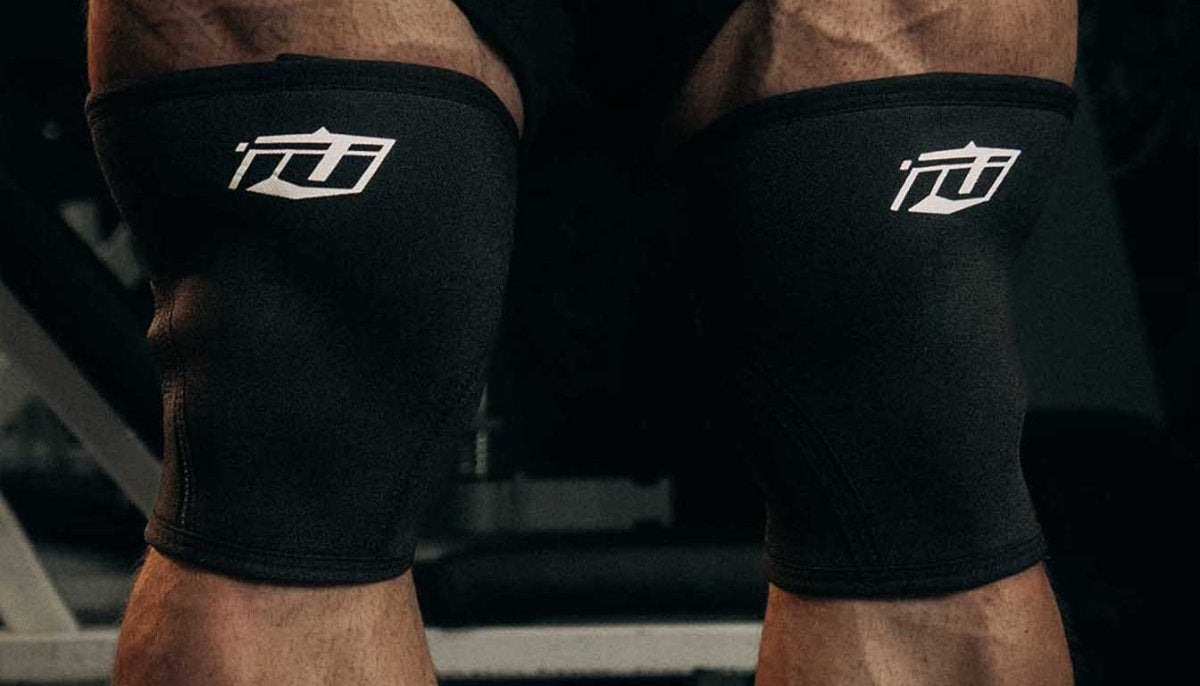
For squats and leg presses, Heavy Duty Knee Sleeves are indispensable for long-term progress. They provide compression that keeps the joint lubricated and warm, reducing the minor joint niggles that often slow down training. Beyond warmth, sleeves improve proprioception, which is your brain's awareness of your knee position in space. This leads to more consistent form and better depth on every rep. Unlike knee wraps, which are designed for maximal competition attempts, sleeves are better suited for general weight training and daily volume. If you're looking to upgrade your training kit, the latest strength gear from Team Industry offers the reliability you need for consistent gains.
How to Correctly Use Your Strength Gear for Maximum Results
Acquiring the right tools is only half the battle. To truly benefit from essential weight training accessories, you must integrate them into your routine with technical precision. Gear acts as a supplement to your existing skills, not a replacement for them. If your squat form is unstable without a belt, adding one will only mask the issue rather than solving it. Understanding what are tthe top 3 accessories for weight training? is the first step, but knowing how to deploy them is what drives consistent results. We recommend a "warm-up" approach where you perform your initial sets raw to maintain foundational stability, only adding accessories as the weight approaches your working sets.
Step-by-Step: Bracing with a Lifting Belt
Proper use of a Team Industry Lifting Belt requires more than just cinching it tight. You must practice "360-degree breathing." Instead of sucking your stomach in, take a deep breath into your diaphragm and push your abdominal wall out against the belt in all directions. Position the belt based on your specific anatomy; many lifters find a slightly higher placement helpful for deadlifts to allow for a better starting position, while a lower placement often suits heavy squats. A lifting belt is a biofeedback tool that teaches you how to brace your spine under load. It provides a physical cue to contract your core muscles harder than you could without the resistance of the leather.
Integrating Straps and Sleeves into Your Routine
Timing is everything when using Weight Lifting Straps. Identify the specific point in your session where your grip begins to hinder your form. If you're performing heavy rows and your hands open before your lats are fatigued, that's your cue to "strap up." For joint support, follow the "Sleeve Protocol." Put on your Heavy Duty Knee Sleeves before your first warm-up set. This traps heat early, keeping the synovial fluid in your joints warm and viscous throughout the entire workout. This is especially vital for those following a strongman training gear uk protocol where volume and intensity are consistently high.
To ensure your gear lasts as long as your training career, maintenance is required. Wipe down leather belts to prevent salt build-up from sweat and allow neoprene sleeves to air dry completely after every session to prevent bacteria growth. We always encourage lifters to visit a professional shop to test gear fit in person. This ensures your belt isn't too wide for your torso and your sleeves provide the correct level of compression without restricting blood flow. If you're ready to upgrade your kit with professional-grade equipment, shop the full Team Industry collection today for gear that stands up to the grit of real training.
The Team Industry Standard: Why Professional Gear Matters
Team Industry UK operates on a straightforward principle: strength gear must be designed by active lifters who understand the reality of the platform. When you're determining what are tthe top 3 accessories for weight training? to add to your gym bag, you need equipment that prioritises mechanical function over marketing hype. We use high-specification materials, such as 13mm leather for our belts, to ensure they provide the rigid support necessary for heavy compound lifting. Our commitment to the UK strength community is a core part of our identity. We support local federations and athletes because we believe in the collective growth of the sport. We provide the tools that allow you to focus on the work, knowing your gear is built to handle the load.
Built for the Grit: Strength Equipment vs. Fashion
Aesthetic-focused gym brands often fall short when subjected to the extreme loads found in powerlifting or strongman. A strap that looks good might snap under the tension of a maximal pull. Our Industry Figure 8 Lifting Straps are a prime example of function-led design, built to withstand the unique demands of axle deadlifts and heavy carries. These are tools for people who respect the grit of a difficult session. Beyond hardware, we apply the same durability standards to our apparel. You can browse our men’s gym clothes to find performance-driven gear that matches the quality of your lifting equipment.
Your Next Steps to a Stronger Total
Your journey to a stronger total is built on a foundation of hard work and technical consistency. Accessories are the tools that allow you to push past your current physical limits. We suggest introducing one new tool at a time. This allows you to master the nuances of bracing or gripping before adding more complexity to your sets. What are tthe top 3 accessories for weight training? if not the most reliable partners in your pursuit of a new personal best? Invest in professional-grade quality once and avoid the cycle of replacing inferior, cheap gear that fails when you need it most. Shop the full Team Industry Strength Collection here to secure the equipment your training deserves.
Elevate Your Performance with Precision Gear
Success in the gym is a result of consistent grit and the right tactical tools. You've learned that accessories like lifting straps, belts, and sleeves aren't just for show; they're essential for bypassing physical bottlenecks that stall your progress. When you identify what are tthe top 3 accessories for weight training?, you're choosing to invest in your safety and your performance ceiling. Proper bracing against a 13mm lever belt and using heavy-duty compression can be the difference between a plateau and a new personal best.
Team Industry UK provides professional-grade equipment that's trusted by UK strength athletes and supports national federations. If you're unsure about sizing or need expert advice, our physical UK shop is available for in-person fittings and guidance. Don't settle for gear that fails when the load gets heavy. Upgrade your training with professional-grade gear at Team Industry UK. Your commitment to the iron deserves equipment that works as hard as you do. Stay focused, stay consistent, and keep pushing the standard of your strength.
Frequently Asked Questions
Is using lifting straps considered cheating in weight training?
Using Weight Lifting Straps isn't cheating; it's a strategic way to ensure your target muscles reach failure before your grip does. While they aren't allowed in sanctioned powerlifting meets, they're essential for high-volume hypertrophy or strength training. If your goal is total back development, removing the grip bottleneck allows you to pull heavier loads safely. Balance their use by training your raw grip during your initial warm-up sets.
How tight should my weight lifting belt be for squats?
Your Team Industry Lifting Belt should be tight enough to provide a solid surface to brace against, but not so tight that it restricts your 360-degree breath. A common rule of thumb is to leave enough space to fit your hand between your stomach and the belt when relaxed. This gap allows your abdominal wall to expand and create maximum intra-abdominal pressure during the descent of your squat.
Do knee sleeves actually prevent injuries or just provide support?
Heavy Duty Knee Sleeves primarily provide compression and warmth, which improves joint lubrication and proprioception. While they don't mechanically prevent major ligament tears like a rigid medical brace might, they significantly reduce the minor joint niggles that lead to overuse injuries. By keeping the joint warm throughout a session, you maintain better technical consistency. This added awareness helps you stay in a safe and stable position during heavy squatting movements.
Can I use all three accessories—straps, belt, and sleeves—in the same workout?
You can absolutely use all three accessories in a single session, particularly on heavy compound days. When lifters ask what are tthe top 3 accessories for weight training?, it's because these items work together to support different failure points. For example, during a heavy deadlift session, you might use a Lever Belt for stability, sleeves for joint warmth, and straps to secure your grip on a final working set.
What is the difference between a lever belt and a prong belt?
The main difference lies in the fastening mechanism and ease of use. A Lever Belt allows you to "lock in" with a single flick, providing a consistent and extremely tight fit every time. A prong belt works like a standard trouser belt, offering more flexibility if your waist size fluctuates during a workout. Both provide excellent support, but the lever is generally preferred for its operational efficiency during heavy sets.
When should a beginner start buying weight training accessories?
Beginners should consider buying accessories once they've established basic technical proficiency and find that a specific bottleneck is stalling their progress. If your grip fails before your back on rows, or your knees feel cold during squats, it's time to invest. Identifying what are tthe top 3 accessories for weight training? early helps you build a kit that grows with your strength. Don't wait for an injury to occur before seeking professional support gear.
Share:
When to Use a Weight Lifting Belt: A Professional Guide
Mastering Squat Depth: The Ultimate Mobility Guide for Strength Athletes