
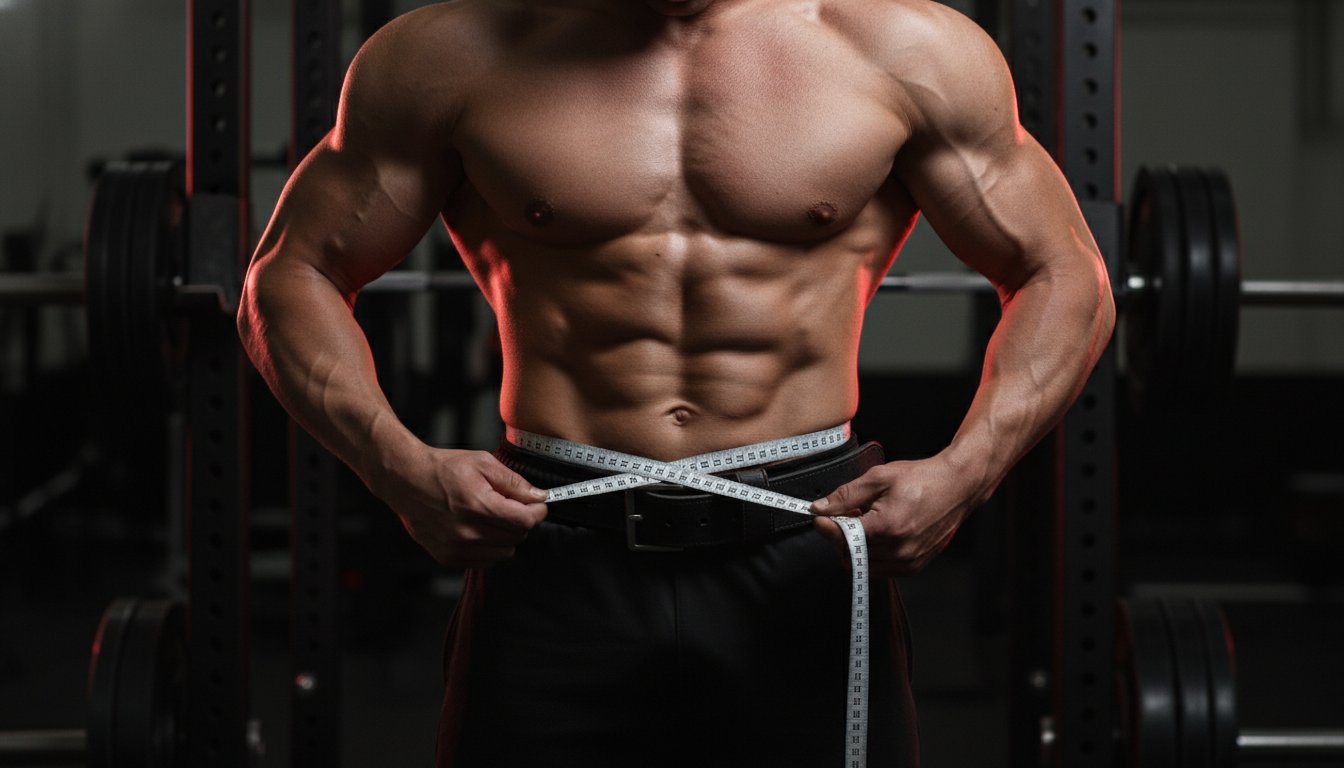
Your trouser size is almost certainly the wrong measurement for your training gear. With 19% of UK adults now participating in weight training, more lifters than ever are hitting the platform with equipment that doesn't actually fit. If you want to know how to measure for a lifting belt uk, you have to stop looking at your jeans and start looking at your midsection while it's under load.
It’s a common frustration to order a high-quality Team Industry Lifting Belt only to find the lever won't click into place because you measured while relaxed. We understand that finding the right balance between comfort and intra-abdominal pressure is vital for your safety during heavy squats or deadlifts. This guide provides the exact professional method to secure a perfect fit, whether you are eyeing a 10mm lever belt for versatility or a 13mm lever belt for maximum stability.
We will break down where the tape should sit, how to brace effectively during the measurement, and why your belly button is the only landmark that matters. You will gain the confidence to order your next piece of kit knowing it will support your performance from the very first session.
Key Takeaways
- Understand why trouser sizes are misleading and how vanity sizing can compromise your safety under the bar.
- Master the professional technique for how to measure for a lifting belt uk by using your navel as the central landmark.
- Learn the functional differences between a 10mm Lever Belt and a 13mm Lever Belt to suit your training style.
- Discover why you must brace your core during the measurement process to ensure maximum intra-abdominal pressure.
- Follow our final verification checklist to ensure your Team Industry Lifting Belt provides a perfect fit from day one.
Why Your Trouser Size is Not Your Lifting Belt Size
Many lifters make the mistake of ordering their training gear based on their jeans size. This is a primary reason why so many people struggle with how to measure for a lifting belt uk correctly. Clothing brands frequently use vanity sizing, which means a pair of trousers labelled as a 34-inch waist might actually measure 36 or 38 inches. This retail tactic makes customers feel better about their fit, but it's a disaster for strength athletes who need precision for their safety equipment.
The anatomical placement of a belt is also different from your daily wear. Most modern trousers sit on the hip line, whereas a Weightlifting belt must sit around your natural waist, typically across the belly button. Because a lifting belt is designed to sit higher on the torso than casual clothing, your trouser size is an unreliable metric that usually leads to buying a belt that's far too small.
To better understand why placement and accurate measurement are so critical, watch this helpful video:
A functional belt needs to compress the soft tissue of your midsection to create a rigid cylinder. This requires an accurate circumference measurement of your torso while you're in a neutral or slightly braced position. If you rely on clothing sizes, you're measuring a relaxed, lower point of your body rather than the specific area where you need maximum tension and support.
The Role of Intra-Abdominal Pressure
The primary purpose of a Team Industry Lifting Belt is to provide a solid wall for your abdominal muscles to push against. This action creates intra-abdominal pressure, which stabilises your spine during heavy squats or pulls. Just as you might use lifting straps to secure your grip, as discussed in our guide on Mastering Your Pull, a belt secures your internal bracing. Without a precise measurement, you won't achieve the tightness needed to generate this protective pressure.
How to Measure for a Lifting Belt: A 4-Step Guide
To get an accurate reading for your gear, you need the right tools. Avoid using a metal DIY tape measure; it doesn't contour to the body and will provide a false reading. Instead, use a flexible seamstress tape or a length of string and a standard ruler. Mastering how to measure for a lifting belt uk requires precision, as even a small error can place you between sizes on a professional lever belt.
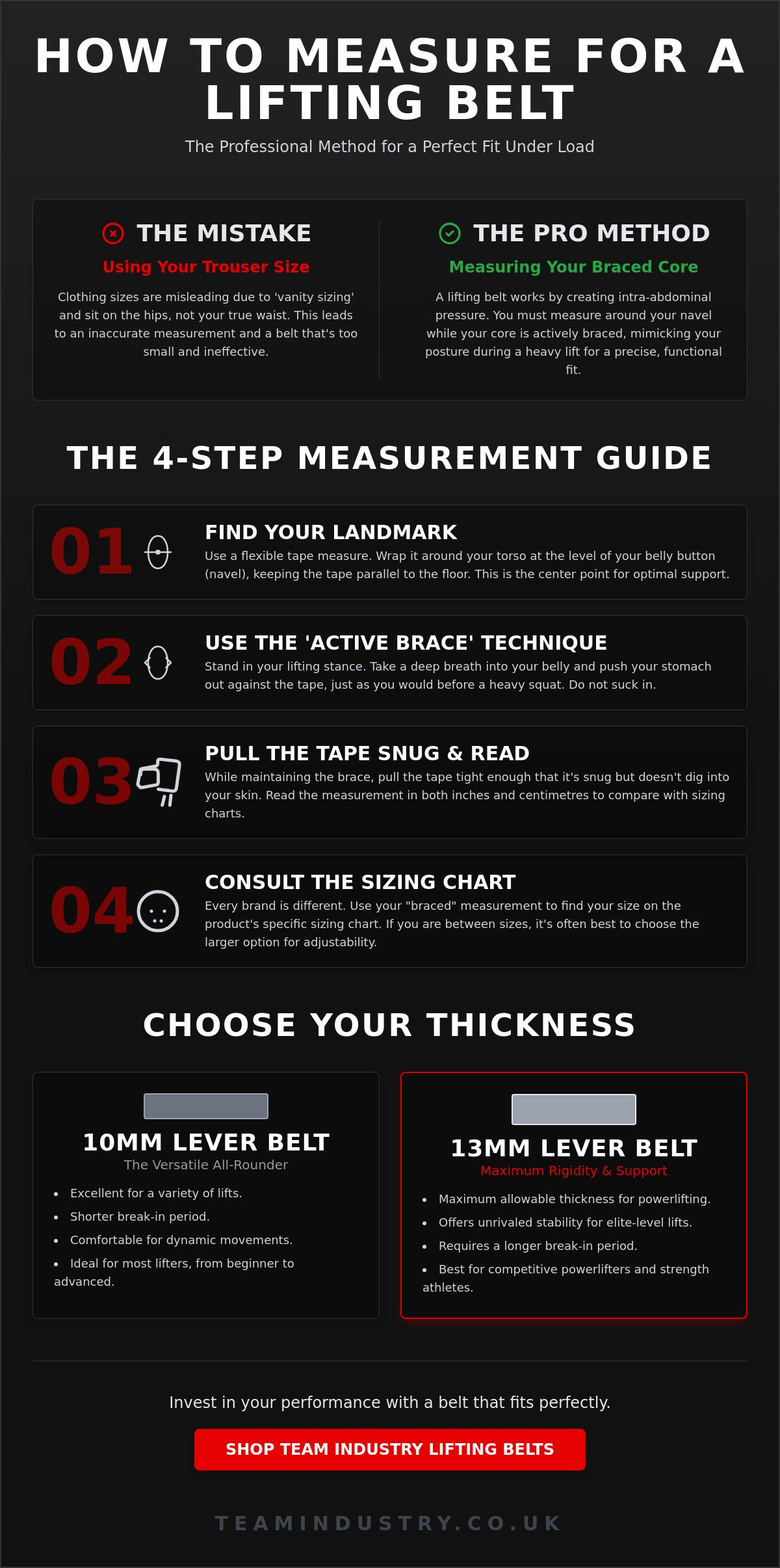
Step 1: Finding Your Midsection Landmark
Your navel is the most reliable landmark for a powerlifting belt. Wrap the tape around this point, ensuring it stays parallel to the floor. If the tape angles up towards your ribs or down toward your hips, the measurement will be skewed. Measuring too high interferes with the ribcage, while measuring too low on the hips prevents the belt from sitting where it can actually support your spine. This central placement ensures the Team Industry Lifting Belt covers the area of maximum expansion.
Step 2: The 'Active Brace' Technique
This is where most lifters fail. You don't lift with a relaxed stomach, so don't measure with one. A functional belt relies on the tension you create during a lift. If you measure while relaxed, you'll likely end up with a belt that is too loose to provide effective support. Use this protocol to find your active circumference:
- Stand in your normal lifting stance with your feet shoulder-width apart.
- Take a breath into your belly as if preparing for a heavy squat.
- Expand your midsection against the tape measure without sucking in or pushing out excessively.
- Pull the tape tight enough that it's snug against your skin but doesn't dig in.
Record this number in both inches and centimetres. Most UK manufacturers provide sizing charts in both units to help you avoid conversion errors. Once you have your braced measurement, you can confidently select a lever belt that matches your specific torso dimensions and training needs.
Choosing Between 10mm and 13mm Lever Belts
Once you have your measurements, you must decide on the thickness of your gear. A 10mm Lever Belt offers a balance of support and flexibility, making it ideal for general powerlifting and most gym sessions. In contrast, a 13mm Lever Belt provides maximum rigidity for elite-level loads. It's vital to understand that a 13mm belt often feels tighter than a 10mm belt at the same circumference. The thicker leather doesn't contour as easily to your body, which occupies more space and can make the fit feel more restrictive during the initial break-in period.
Professional grade leather requires time to soften. While a 10mm belt might feel ready after a few sessions, a 13mm professional belt can take weeks of consistent use to mold to your torso. If you are training for high-level strength events, check out our guide on Strongman Training Gear UK to see how heavy-duty equipment fits into a competitive program. For smaller lifters, consider the width of the belt too. While 4 inches is the standard, those with shorter torsos may find the belt digs into their ribs or hips. In these cases, a slightly thinner 10mm belt often provides a more manageable fit without sacrificing safety.
Lever Belts vs. Prong Belts Sizing
Lever systems offer unmatched security but require higher precision when you are figuring out how to measure for a lifting belt uk. Unlike a prong belt, which allows you to quickly adjust between holes if you're wearing a hoodie or a thin tee, a lever belt is set to a fixed position. You'll need a screwdriver to change the setting. This makes the Team Industry Lever Belt an excellent choice for those who want a consistent, repeatable brace every time they step onto the platform.
What to Do if You Are Between Sizes
If your measurement sits right on the edge of two sizes, consider your current physique goals. If you're planning a bulking phase to gain mass, sizing up is the safer bet. Conversely, if you're in a cutting phase, sizing down ensures the belt remains functional as you lose inches. A practical rule of thumb is to choose the size where your braced measurement falls directly in the middle of the range. This gives you the most room for adjustment in either direction.
Secure your performance by choosing the right thickness for your goals; explore the full range of Team Industry Lever Belts to find your perfect match.
Final Checklist Before You Buy Your Team Industry Belt
Before you finalise your order, perform a quick double-check of your data. Errors are frequent on the first attempt, so re-measure your waist twice to ensure consistency. If your numbers vary significantly, repeat the process until you get a stable reading. This is the most reliable way to confirm how to measure for a lifting belt uk for a piece of equipment designed to last years. Accuracy now prevents the frustration of a return later.
Always cross-reference your final measurement with the specific size chart on the Team Industry UK store. Every manufacturer has slight variations in their ranges; never assume a medium in one brand matches a medium in another. Our charts are calibrated to the specific dimensions of our leather stock to ensure the lever sits in a functional position.
Ensure you are wearing your standard training attire when taking these final measurements. A thick hoodie or multiple layers will add bulk that doesn't reflect your actual lifting conditions. Measure while wearing your usual gym tee or singlet to get the most functional fit. Finally, verify the return policy. While our guides aim for a perfect fit, your personal preference for belt tightness may vary. Knowing you can swap sizes provides the confidence needed when investing in professional gear.
Essential Accessories for Your New Belt
A belt is one part of a professional strength setup. For maximum stability during heavy squats, pair your belt with Heavy Duty Knee Sleeves. These provide compression and warmth to the joints, complementing the core support offered by the belt. This combination creates a more stable environment for your central nervous system to handle maximal loads.
Grip is another critical factor in your performance. Using Liquid Chalk ensures the bar stays secure in your hands while the belt keeps your torso rigid. This combination allows you to focus entirely on the movement rather than worrying about the bar slipping or your brace collapsing. Together, these tools form a reliable foundation for any serious strength athlete.
Secure Your Next Personal Best with a Perfect Fit
Precision is the difference between a belt that hinders your movement and one that provides a rock-solid foundation for your spine. You now understand that measuring at the navel while braced is the only way to ensure functional support. Choosing between 10mm and 13mm options allows you to tailor your equipment to your specific lifting style and experience level. Mastering how to measure for a lifting belt uk ensures you can focus entirely on your technique rather than adjusting shifting gear mid-set.
Shop the full range of Team Industry Professional Lifting Belts to find your ideal fit. Our equipment is trusted by UK Strongman and Powerlifting athletes for its reliability under maximal loads. We offer professional-grade 10mm and 13mm options backed by UK-based support and fast national shipping. This ensures you receive high-standard gear without the long wait times often associated with international orders.
Invest in equipment that works as hard as you do. Your training deserves the stability of a belt built for the grit of the UK strength community. Step onto the platform with the confidence that your gear is perfectly calibrated for your next heavy session.
Frequently Asked Questions
Should I measure my waist for a lifting belt while relaxed or tensed?
You must measure while braced as if you are preparing for a heavy lift. This ensures the belt accommodates the natural expansion of your midsection under load. If you measure while relaxed, you'll likely find your Team Industry Lifting Belt is too tight to latch once you actually start training. This "active brace" technique is the most reliable way to determine how to measure for a lifting belt uk correctly.
Where exactly should a lifting belt sit on my waist?
The belt should sit directly across your navel, which is the widest part of your midsection. Keep the tape measure parallel to the floor to avoid a skewed reading. While some lifters prefer a slightly higher or lower position based on their anatomy, the belly button serves as the standard landmark for almost all lever belts. Avoid measuring at the hip line where your trousers usually sit.
What if my lifting belt measurement is exactly between two sizes?
Choose the size where your measurement falls closest to the middle of the available range. If you are currently in a bulking phase or plan to gain weight, sizing up is usually the safer option. If you are cutting for a competition, sizing down ensures the belt remains functional as your waist thins. Precision is vital for a 13mm lever belt because the thick leather has less "give" than thinner alternatives.
Can I use my trouser size to buy a lifting belt in the UK?
No, you cannot rely on trouser size because of vanity sizing in the clothing industry. Most UK high street brands label trousers smaller than the actual physical measurement. Additionally, trousers sit on the hips, while a belt sits higher on the natural waist. To avoid ordering the wrong size, always use a flexible tape measure to confirm how to measure for a lifting belt uk before making a final purchase.
How tight should my lifting belt be when I'm actually lifting?
Your belt should be tight enough to provide a solid wall for your abs to push against, but not so tight that it restricts your breathing. A common rule is that you should be able to fit one or two fingers between the belt and your body while relaxed. Once you brace, that gap should disappear completely. This creates the intra-abdominal pressure needed to stabilise your spine during heavy sets without compromising your oxygen intake.


Share:
Common Deadlift Mistakes and How to Fix Them: The Professional Lifter’s Guide
What Thickness Knee Sleeves Are Best? The Ultimate 3mm, 5mm, and 7mm Guide