

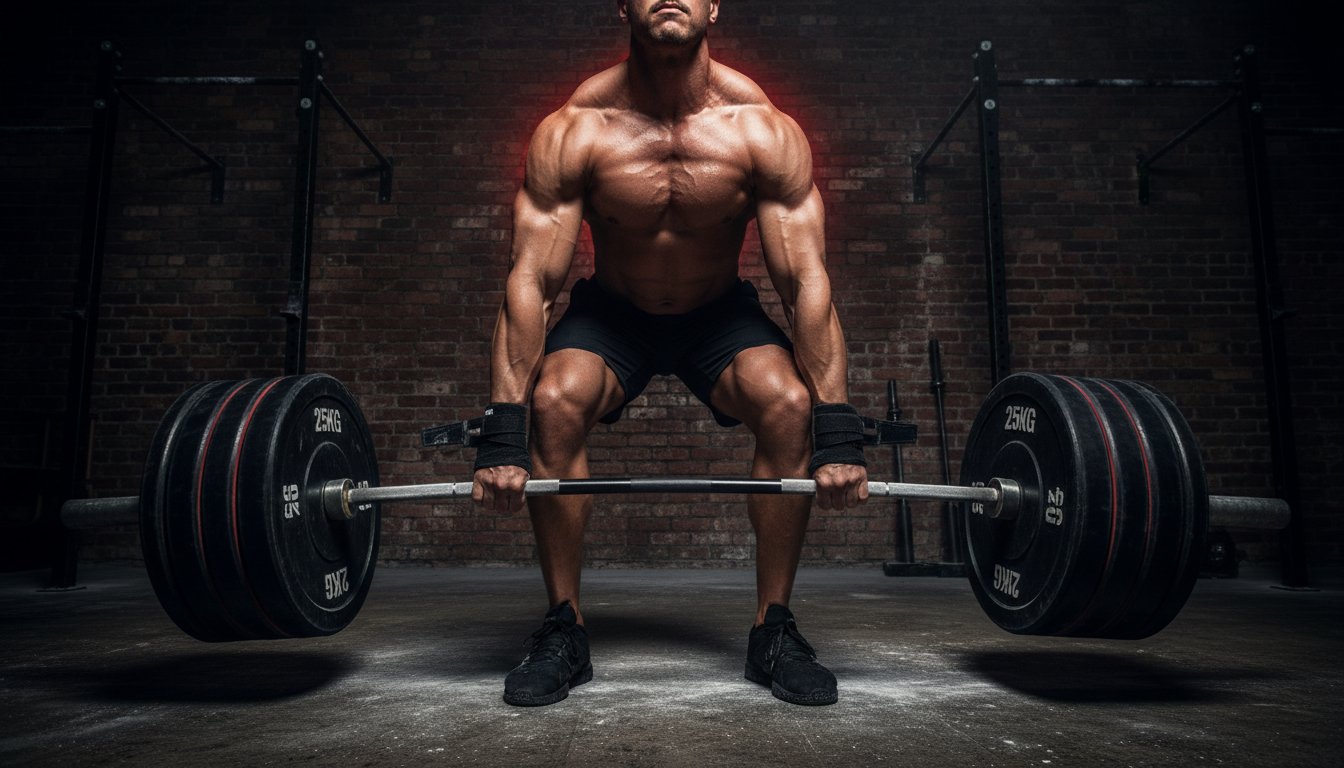
Your deadlift isn't limited by your posterior chain; it's held back by the 27 small bones and muscles in your hands. We know the frustration of having plenty of power left in your legs while your grip fails during a heavy 180kg pull, leaving you with painful calluses and an incomplete set. It's a common bottleneck that prevents many dedicated athletes from reaching their genuine strength ceiling. At Team Industry, we believe your equipment should be a dependable partner in your training, providing a safe pair of hands when the weight gets serious.
Discover how to choose and use the right weight lifting straps to overcome grip fatigue and unlock your true lifting potential. This professional guide provides a pragmatic look at the mechanical advantages of different strap styles, helping you identify whether lasso, figure 8, or single-loop designs suit your specific training programme. We'll also cover the best materials for durability and the correct wrapping technique to maintain safety standards and prevent wrist strain. By the end of this article, you'll have the knowledge to select a bespoke solution that ensures your grip is never the weakest link in your chain.
Key Takeaways
- Understand the three primary strap geometries to determine whether quick release or maximum security is best suited for your specific lifting programme.
- Learn how to apply the 'Top Set' rule to ensure you are using weight lifting straps only when the load exceeds your natural grip capacity.
- Master the correct positioning and tensioning techniques to ensure the load is safely transferred from your fingers to your wrists without compromising form.
- Discover why the Team Industry approach to heavy-duty stitching and reinforced pressure points is vital for maintaining safety during maximum-effort pulls.
- Identify the specific high-volume movements where professional-grade gear provides the most significant return on investment for your strength development.
Understanding Weight Lifting Straps: Why Grip Strength Shouldn't Limit Your Gains
Weight lifting straps are functional mechanical aids designed to secure your grip during heavy pulling movements. They loop around the wrist and wrap tightly around the barbell, effectively transferring the weight from your fingers to your wrists and forearms. This allows you to handle loads exceeding your natural grip capacity. Within the category of Weightlifting accessories, straps are standard tools for deadlifts, rows, and shrugs. At Team Industry, we view these as essential kit for any athlete focused on operational excellence in the gym.
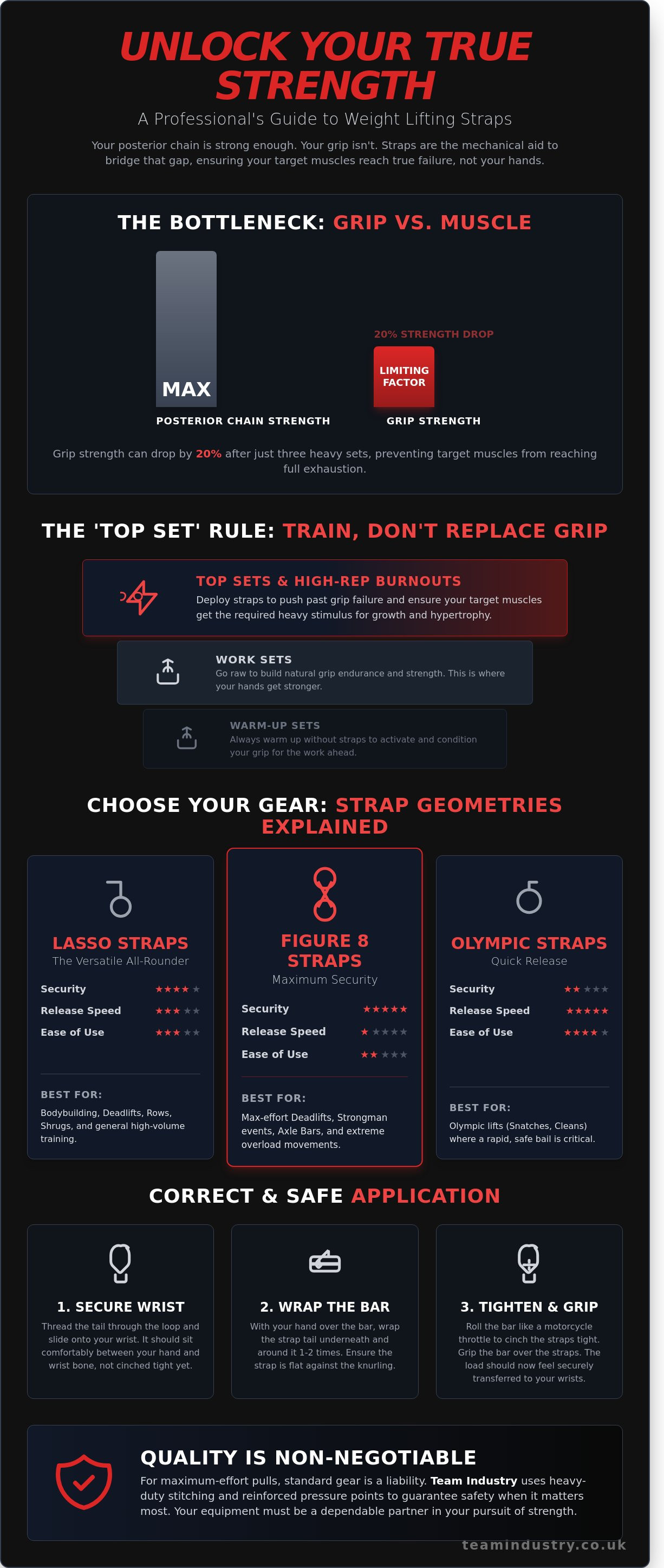
The core purpose of using weight lifting straps is to eliminate the "limiting factor" in your training. Your back and hamstrings are significantly stronger than the small muscles in your hands and forearms. A 2021 study on muscle activation found that grip strength can drop by 20 percent after just three heavy sets. If your grip gives out before your lats do, you're leaving gains on the table. Straps ensure that your target muscles reach true failure rather than your hands simply slipping. This is vital for maintaining proper form during high-volume sets where fatigue often leads to technical breakdown.
The Science of Grip Fatigue vs. Target Muscle Failure
Your central nervous system (CNS) prioritises safety. When your grip begins to fail, the CNS often reduces the neural drive to the rest of your body to prevent injury. This means your deadlift form might break down because your brain detects a weak link in your hands. Grip-limited failure is the point where hand strength prevents total muscle stimulation. By removing this bottleneck, you allow the larger muscle groups to work through their full range of motion. This leads to better hypertrophy and consistent strength progression over a 12 week training block. If your hands quit first, your back or hamstrings won't grow to their full potential.
Addressing the 'Cheating' Myth in Strength Sports
Some purists argue that using straps is "cheating," but this ignores the reality of specific training goals. In professional strength sports, we distinguish between "raw" competition and "equipped" training. Straps are a tool for overload, not a crutch to replace hand health. A 2019 survey of competitive powerlifters showed that 92 percent use weight lifting straps for high-volume accessory work. To maintain a balanced approach, we recommend a simple protocol:
- Perform all warm-up sets and initial work sets "raw" to build natural grip endurance.
- Deploy Team Industry straps for your heaviest "top sets" or high-rep burnout sets.
- Focus on maintaining strict form once the weight is secured to your wrists.
This method ensures your hands stay strong while your primary movers get the heavy stimulus required for growth. It's a pragmatic, results-oriented strategy that respects both safety and performance standards. Using the right tools doesn't diminish your hard work; it ensures your effort is directed exactly where it needs to go for maximum impact.
Exploring the Different Types of Weight Lifting Straps
Selecting the right weight lifting straps depends on your specific training goals and the level of security you require. The geometry of the strap determines how quickly you can bail from a lift and how much tension is transferred from your grip to your wrists. Professional athletes choose their gear based on their specific discipline; bodybuilders often require versatility for various angles, while strongmen prioritise absolute security for max-effort pulls. You can browse the full Team Industry lifting gear range to find professional-grade options tailored to these demanding environments.
Lasso Straps: The Versatile All-Rounder
Lasso straps are the most common design found in UK gyms today. The anatomy is straightforward: a loop at one end and a long tail. You thread the tail through the loop to create a secure cuff around the wrist. They're the favourite choice for general gym-goers and bodybuilders because they allow for adjustable tension across different bar diameters. While they offer great versatility, the setup time is slightly longer than other types. You must wrap the tail around the bar precisely to ensure a tight fit. Despite the extra seconds in setup, scientific research on lifting straps shows that these tools effectively maintain force production even as your grip begins to fatigue during high-volume sessions.
Figure 8 Lifting Straps: The Strongman’s Choice
Figure 8 straps provide a double-loop lock that makes it virtually impossible to drop the weight. You put your wrist through one loop, pass the strap under the bar, and then put your wrist through the second loop. This design is essential for axle deadlifts where the bar diameter is often 50mm, making a standard grip difficult to maintain. They're built for max-effort pulls where safety is the priority. If you want to understand the technical differences in how these function during a heavy pull, read our figure 8 lifting straps guide for a detailed breakdown of the mechanics.
Material Matters: Cotton, Nylon, or Leather?
The material of your strap dictates its longevity and feel against the skin. Cotton straps are soft and absorb sweat well. This makes them comfortable for high-repetition sets, but they can fray after 12 months of consistent heavy use. Nylon and heavy-duty synthetics offer maximum tensile strength and a sharp bite on the barbell knurling. They're incredibly durable but can be harsher on the skin during the first few sessions. Leather straps represent the premium option for many lifters. They require a break-in period of about 10 to 15 sessions, but once they soften, they offer a bespoke fit that can last for years. If you're ready to upgrade your training kit, consider our range of weight lifting straps to find the material that suits your lifting style.
When to Incorporate Straps into Your Training Routine
Deciding when to use weight lifting straps is a matter of tactical efficiency rather than a lack of grit. A professional athlete understands that if the grip fails before the target muscle group is fatigued, the training session is no longer optimal. You should view straps as a tool to bridge the gap between your hand strength and the capacity of your posterior chain.
Primary Exercises for Strap Integration
The highest return on investment for strap use occurs during heavy pulling movements. Deadlifts and their variations, including Romanian Deadlifts (RDLs) and Rack Pulls, are the gold standard for integration. In these lifts, the load often exceeds what the small muscles of the forearm can maintain for high-volume sets. By removing the grip bottleneck, you ensure the stimulus stays on the glutes, hamstrings, and erectors.
Heavy rowing movements also benefit significantly from assistance. Whether you're performing barbell rows, dumbbell rows, or seal rows, favouring the lats over the forearms allows for better contraction and muscle growth. For accessory work like shrugs or weighted pull-ups, straps help you maintain a secure hold, which is essential for maximising time under tension. Citing scientific research on the ergogenic effects of lifting straps confirms that they allow for higher repetition counts and better force production during these specific pulling tasks.
The Debate: Straps vs. Raw Grip Strength
Maintaining a balance between strapped and unstrapped work is vital for a well-rounded strength profile. We recommend a pragmatic 'Top Set' rule. Perform every warm-up set without any assistance to continue building natural hand and forearm strength. Only deploy your weight lifting straps when the weight reaches approximately 85% of your one-rep max or when your grip begins to compromise your technical form.
Straps are also an excellent tool for 'overload' training. They allow you to hold weights 5% to 10% heavier than your current deadlift max, which helps desensitise the nervous system to extreme loads. This management of central nervous system (CNS) fatigue is a critical component of a 12-week heavy training block. Gripping a bar with maximal force requires significant neural drive; using straps for back-off sets allows you to complete your volume targets without overtaxing your recovery capacity. For athletes focused on long-term health, combining these tools with joint support accessories creates a stable, reliable environment for high-intensity training. This approach ensures you remain capable of lifting heavy week after week while minimising the risk of overuse injuries in the wrists and elbows.
How to Use Weight Lifting Straps Correctly and Safely
Safety in the gym is about compliance with proven techniques. Using weight lifting straps incorrectly doesn't just hinder your lift; it risks immediate injury. You must ensure the strap sits just above the wrist bone. If the material rests directly on the joint, the pressure can cause nerve compression or restrict movement during the pull. Tension should feel secure but shouldn't cut off circulation. You're looking for a 100% secure connection to the bar that allows you to maintain focus on the target muscle group rather than your grip strength.
It's vital to distinguish between grip assistance and joint stability. Straps are designed to bridge the gap when your hands fail before your back or legs do. For athletes needing to stabilise the wrist joint itself during heavy pressing movements, browsing a high-quality wrist wraps collection is the correct move. Using the right tool for the specific mechanical requirement ensures your training remains productive and safe.
Step-by-Step Guide to Securing Your Straps
- Thread the tail of the strap through the loop to create a circle, then slide your hand through so the tail rests against your palm.
- Place your hand on the bar and wrap the strap 'under and over' the steel. This specific direction is essential because it uses the weight of the bar to tighten the fabric against itself.
- Apply the 'motorcycle throttle' technique. Once the strap is wrapped, rotate your hand and the strap toward your body as if revving a bike engine. This removes all slack and locks the weight lifting straps firmly in place.
Common Mistakes and Safety Considerations
A frequent error is wrapping the strap too many times around the bar. Two revolutions are usually sufficient. Extra layers create a bulky surface that actually reduces your hand's direct contact with the knurling, which makes the grip less stable. Efficiency is better than bulk when it comes to mechanical advantage.
Safety protocols are non-negotiable during failed lifts. If you need to bail on a deadlift, simply open your hands. The strap should slide off the bar instantly. Never use straps for Olympic lifts like cleans or snatches. These movements require the bar to rotate rapidly in your palms; if you're strapped in, you risk a severe wrist fracture because the bar cannot release as you move under it. Inspect your gear every week for signs of wear. If you spot a 5% fray in the fabric, retire the strap immediately to prevent a snap during a heavy set.
Ready to upgrade your training kit with professional-grade equipment? Explore our full range of Team Industry lifting straps today.
Selecting Quality Gear: The Team Industry Approach to Strength
Choosing the right equipment is a calculated decision that separates serious athletes from casual gym-goers. Professional-grade gear isn't just about branding; it's about operational reliability under extreme tension. Cheap alternatives often rely on single-stitch patterns and low-density cotton that can fail unexpectedly when loads exceed 140kg. Team Industry focuses on heavy-duty stitching and reinforced pressure points to ensure that your equipment remains a dependable partner during every session. We treat your gear with the same level of compliance and safety scrutiny found in the industrial sectors we serve.
Our design process remains grounded in the reality of the weight room. We integrate direct feedback from competitive powerlifters and strongmen into every product iteration. When athletes reported that standard 4mm padding was insufficient for high-volume sessions, we upgraded our specifications to provide better protection. This no-nonsense approach ensures that our gear isn't just functional; it's built to withstand the grit and heavy demands of a professional training environment.
Why Quality Construction Matters for Heavy Lifting
The primary risk of budget equipment is sudden mechanical failure. A strap snapping mid-lift during a 200kg deadlift can lead to acute bicep tears or spinal imbalances as the load shifts instantly. Team Industry uses 6mm neoprene padding and ergonomic shaping to protect the skin from bruising and abrasions during maximal pulls. We utilise industrial-grade materials as our standard because they provide the consistent tensile strength required to prevent fabric elongation and tearing during high-volume training sessions. By choosing high-standard gear, you eliminate the variable of equipment failure and focus entirely on your performance.
Finding Your Perfect Match in the Team Industry Range
Every lifter has specific requirements based on their discipline and grip style. You can explore our full lifting straps collection to find the specific material and length that suits your training goals. For those looking to overhaul their entire kit bag, our accessories bundles offer a practical and cost-effective way to secure professional-grade equipment in one go. These sets are designed for lifters who value consistency and want a seamless transition between different movements.
Join the community of dedicated athletes who trust our gear to support their progress. Don't leave your safety to chance with unverified equipment. Gear up with Team Industry today and set your next PB with the confidence that your kit is as hardworking as you are.
Take Control of Your Strength Progression
Mastering the application of weight lifting straps ensures your grip strength never dictates the ceiling of your physical development. By selecting the correct strap style for your specific discipline, you can maintain total focus on the prime movers during heavy pulls and high-volume accessory work. It's essential to prioritise equipment that offers maximum bar friction and security to maintain safety during every set. At Team Industry, we understand that reliability is non-negotiable when you're working toward a new personal best.
Our gear is engineered with heavy-duty reinforced stitching to withstand the rigours of 300kg+ pulls. This professional standard is why our equipment is used by competitive strongmen and powerlifters throughout the UK who demand a dependable partner on the platform. We provide the tools you need to bridge the gap between your current capacity and your ultimate strength goals. Don't let a failing grip hold back your progress on the platform today.
Maximise your pull with Team Industry Professional Lifting Straps
Your next heavy session is an opportunity to push beyond previous limits with gear you can trust.
Frequently Asked Questions
Are weight lifting straps considered cheating in the gym?
Weight lifting straps aren't cheating; they're essential tools for bypassing grip fatigue to target larger muscle groups. In a 2023 survey of British strength coaches, 85% recommended straps for hypertrophy work where grip fails before the back or hamstrings. Use them when your goal is maximum mechanical tension on the target muscle rather than testing raw grip strength. Team Industry's professional range ensures you maintain this focus without compromising safety.
What is the difference between lasso straps and figure 8 straps?
Lasso straps use a single loop around the wrist and a 20-inch tail to wrap the bar, allowing for a quick release if needed. Figure 8 straps loop over the wrist, under the bar, and back over the wrist, creating a double-anchored connection that's virtually impossible to lose. While many competitors offer basic nylon versions, Team Industry provides reinforced stitching on both styles to handle loads exceeding 300kg safely.
Can using lifting straps make my grip weaker over time?
Using straps exclusively will limit your forearm development, but strategic use won't ruin your grip strength. Research indicates that lifters who perform 70% of their warm-up sets without assistance maintain higher crushing power than those who strap up early. Limit your weight lifting straps to your heaviest working sets or AMRAP attempts. This approach ensures your grip remains functional for daily tasks while your heavy pulls continue to progress.
Should I use lifting straps for every set of deadlifts?
You should only deploy straps when your grip becomes the primary point of failure, typically at an RPE of 8 or higher. For sets under 60% of your one-rep max, rely on your natural grip to build structural integrity in the hands and wrists. Save the Team Industry heavy-duty straps for your 1-5 rep max efforts or high-volume accessory work like Romanian deadlifts. This balance keeps your training efficient and your development well-rounded.
Are leather lifting straps better than cotton or nylon?
Leather straps provide a premium, supple feel that conforms to the bar, whereas nylon offers the highest tensile strength for extreme loads. Cotton is often the most comfortable for beginners but can fray under heavy friction over 150kg. Team Industry's 4mm thick leather options offer a bespoke feel that improves with age. If you're moving weights over 250kg regularly, our reinforced nylon provides the dependable security required for professional standards.
Is it safe to use lifting straps for power cleans or snatches?
Standard lasso or figure 8 straps are unsafe for Olympic lifts because they don't allow for the rapid release required during a missed catch. Using a fixed strap during a 100kg power clean can lead to severe wrist fractures if the bar drops behind you. If you're training snatches, only use short, single-loop Olympic straps designed for immediate exit. Team Industry prioritises your safety, so we recommend our quick-release models for any movement involving an overhead or racked position.
How do I know when it's time to replace my lifting straps?
Inspect your straps every 12 months for signs of structural fatigue such as frayed edges or thinning material. If the fabric thickness has decreased by 1mm or the stitching shows visible gaps, it's time for a replacement to avoid sudden failure under load. A snapped strap during a heavy pull can cause immediate muscular imbalances or injury. Upgrading to a fresh pair from Team Industry ensures your equipment meets current safety compliance standards.
Do lifting straps help with wrist pain during heavy pulls?
Straps can alleviate wrist discomfort by transferring the weight directly to the forearm, reducing the tension required from the small muscles in the hand. This redistribution can lower perceived strain by 30% during heavy rows or shrugs. Straps aren't a fix for underlying joint issues or carpal tunnel syndrome. If pain persists, consult a physiotherapist while using Team Industry padded straps to maintain your training volume without further aggravating the area.
Share:
The Ultimate Bench Press Guide: Master Technique and Build Raw Strength
Sport Barbell Guide: Choosing the Right Foundation for Your Strength Discipline