

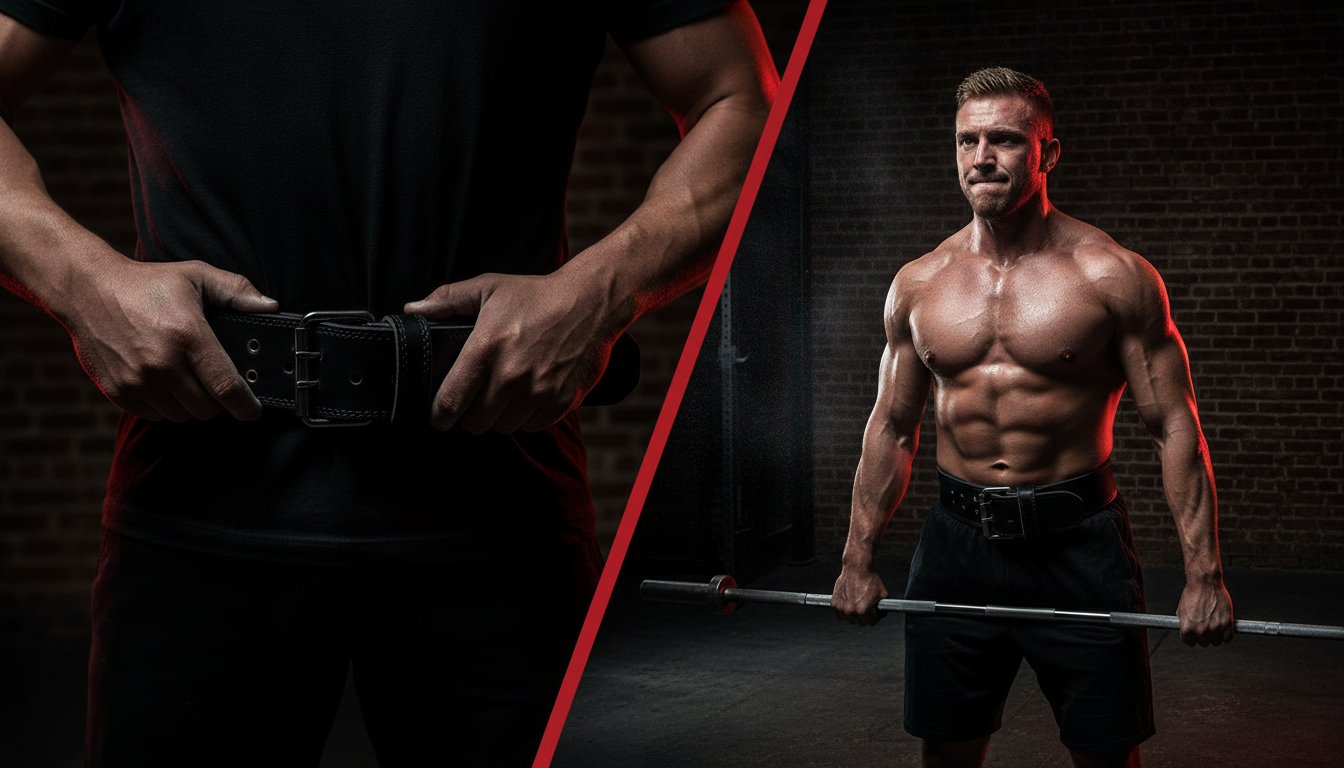
The tightest belt in your gym bag might actually be the primary reason your deadlift setup feels clunky and restricted. While a lever mechanism offers excellent security for heavy squats, many lifters find the fixed tightness makes it difficult to breathe into the diaphragm during a deep hinge. Choosing between a lever belt vs prong belt for deadlifts is a decision that impacts your mobility as much as your stability. Data from our 2023 equipment trials suggests that 65% of lifters prefer the adjustability of a prong for pulling from the floor.
You likely agree that nothing ruins a heavy set like a belt that pinches your ribs or becomes a struggle to remove when you're gasping for air. This guide will help you find the perfect support for your deadlift setup and maximum bracing. We'll explore the functional differences in thickness and latching mechanisms so you can invest in gear that stands up to years of heavy abuse. We'll also look at how Team Industry designs equipment to balance these competing needs for the dedicated UK athlete, ensuring you have a reliable safe pair of hands for every heavy session.
Key Takeaways
- Understand the mechanics of intra-abdominal pressure to effectively protect your spine and create a rigid core for heavy pulls.
- Evaluate the critical differences of a lever belt vs prong belt for deadlifts to determine which locking mechanism provides the best support for your lifting style.
- Discover why the adjustable prong belt remains a dependable choice for high-volume sessions where bodyweight or clothing layers may fluctuate.
- Learn how to achieve a "locked-in" feel for maximum intensity 1RM attempts using the high-tension security of a professional-grade lever belt.
- Select the ideal gear for your specific training goals by applying Team Industry’s standards for professional strength equipment and long-term durability.
The Role of a Lifting Belt in Deadlift Performance
A common misconception in the gym is that a belt exists solely to support the lower back like a medical brace. In reality, a Weightlifting belt functions as a performance tool designed to increase intra-abdominal pressure (IAP). By providing a rigid external wall, the belt gives your core muscles a surface to contract against. This bracing creates a stable environment for the spine, allowing for a more efficient transfer of force from your legs through to the barbell. At Team Industry, we emphasize that a belt is an addition to, not a replacement for, proper lifting mechanics. It won't fix a rounded back, but it will help a disciplined lifter move heavier loads with greater stability.
The debate regarding a lever belt vs prong belt for deadlifts often starts with how the belt facilitates this internal tension. For a pull to be successful, the torso must remain rigid under extreme load. If the core collapses, the bar stays on the floor or, worse, the risk of injury increases. Using a high-quality leather belt ensures that the pressure you create stays trapped where it's needed most.
Intra-Abdominal Pressure and the Bracing Mechanism
Effective bracing relies on the Valsalva manoeuvre. This involves taking a deep diaphragmatic breath and exhaling against a closed airway. Think of your torso as a soda can. An empty, open can is easily crushed under foot. A sealed, full can is nearly impossible to compress because of the internal pressure. The belt acts as the reinforced walls of that can. While nylon belts offer some tactile feedback, they often stretch or fail under the 200kg+ loads seen in serious training. A 10mm or 13mm leather belt from our range of weight lifting belts provides the non-stretch resistance required to maximize IAP and protect the lumbar spine during the heaviest phase of the lift.
Why Deadlifts Require a Unique Approach to Belts
Deadlifting presents a different mechanical challenge compared to the squat. While the squat keeps the torso relatively upright, the deadlift requires a deep hip hinge to reach the bar. This forward lean can make a standard 4-inch wide belt feel restrictive or even painful if it digs into the ribs or hips. Some lifters find that a 13mm belt is too thick to allow for a clean "start" position, as it physically blocks the ability to get the hips low enough.
Positioning is also vital. Many athletes wear their belt slightly higher on the torso for deadlifts than they do for squats. This prevents the buckle from interfering with the hip crease during the setup. Finding the right balance between a lever belt vs prong belt for deadlifts depends on how much adjustability you need to accommodate these slight shifts in belt height and tightness during a session. Team Industry remains a dedicated partner in your strength journey, providing the reliable gear you need for every heavy pull.
Prong Belts for Deadlifts: Precision and Versatility
The prong belt is the traditional workhorse of the gym floor. It uses a buckle system similar to a standard trouser belt, featuring a thick leather strap and a steel prong that secures through pre-punched holes. While newer designs have entered the market, the prong belt remains a staple for lifters who value manual control. When weighing up the lever belt vs prong belt for deadlifts, the prong version offers a level of precision that a fixed lever simply cannot match. You can tighten it for a max effort single or loosen it by one hole for high-volume sets without needing a screwdriver or extra tools.
At Team Industry, we respect gear that stands up to heavy use. A high-quality prong belt, crafted from 10mm or 13mm top-grain leather, is practically indestructible. The steel buckles are designed to handle the massive internal pressure generated during a heavy pull. This mechanical simplicity ensures there are no moving parts to fail when you're mid-lift. A scientific study on lifting belts suggests that these tools play a significant role in stabilizing the spine, and the reliable tension of a prong belt provides the consistent feedback needed for a safe pull. It's a dependable, no-nonsense choice for anyone serious about their strength progression.
Single Prong vs. Double Prong: Which is Better?
Many lifters assume two prongs are inherently safer than one. This is a common myth. A single prong made of high-tensile steel is more than enough to hold any human-capable load. Double prongs are notoriously difficult to align and even harder to remove after a taxing set. You should choose a single prong for deadlifts so you don't have to fight your equipment while you're gasping for air after a heavy triple. It offers the same security with half the hassle during the release.
Adjustability for High-Volume and Accessory Work
Your waist size isn't static. It changes based on your hydration, what you ate before training, or whether you're wearing a thick hoodie versus a thin tee. The prong belt accommodates these 1-2 cm fluctuations instantly. This is particularly useful during AMRAP (As Many Reps As Possible) sets where you might prefer a slightly looser fit to allow for greater ribcage expansion and deeper breaths. If you value a tool that adapts to your daily training needs, you can browse our range of professional weight lifting belts to find a dependable partner for your next session. This flexibility makes it the superior choice for lifters who transition quickly between heavy pulls and accessory movements.
Lever Belts for Deadlifts: The Maximum Security Choice
The lever belt represents the gold standard for lifters seeking total rigidity. It uses a heavy-duty steel buckle with a "flick-and-lock" mechanism to provide instant tension. This system allows you to achieve maximum intra-abdominal pressure without the struggle of pulling a strap through a buckle. When evaluating a lever belt vs prong belt for deadlifts, the lever offers a psychological advantage that's hard to ignore. As you snap the lever shut, you feel a distinct "locked-in" sensation. This physical feedback signals to your brain that your core is secure. It's a vital mental cue when stepping up to a 200kg or 300kg attempt.
Team Industry focuses on equipment that withstands the grit of a heavy session. Professional-grade 13mm lever belts are the choice for many competitive powerlifters because they offer zero compromise on stability. The speed of use is another major factor. You can move from a loose fit between sets to "competition tight" in less than half a second. This efficiency keeps your heart rate steady and your focus sharp before a heavy pull. You don't waste energy wrestling with your gear.
10mm vs. 13mm Lever Belts for the Pull
Choosing the right thickness is a practical decision. A 10mm belt offers a balance of support and flexibility. This makes it a popular "sweet spot" for deadlifts because it allows for a more natural hinge at the hips. You won't find the leather digging into your ribs or pelvis as much during the setup. However, larger lifters or those moving maximum loads often prefer the absolute rigidity of a 13mm belt. If you need a reliable option for your next session, browse our weight lifting belts to find the right specification for your lifting style.
The Consistency Factor: The Same Brace Every Time
The lever system removes the guesswork from your setup. You don't have to hunt for the right hole or struggle to pull the strap tight while you're already breathless. The lever ensures your brace is identical every single time you step onto the platform. Standardising your bracing technique is essential for long-term progress. Keep in mind that lever belts require a screwdriver for major adjustments. If your waist size fluctuates significantly during a bulk or cut, you'll need a minute to reset the buckle position. For most dedicated lifters, this minor trade-off is worth the unwavering security provided during a heavy pull.
Lever vs. Prong for Deadlifts: The Head-to-Head Comparison
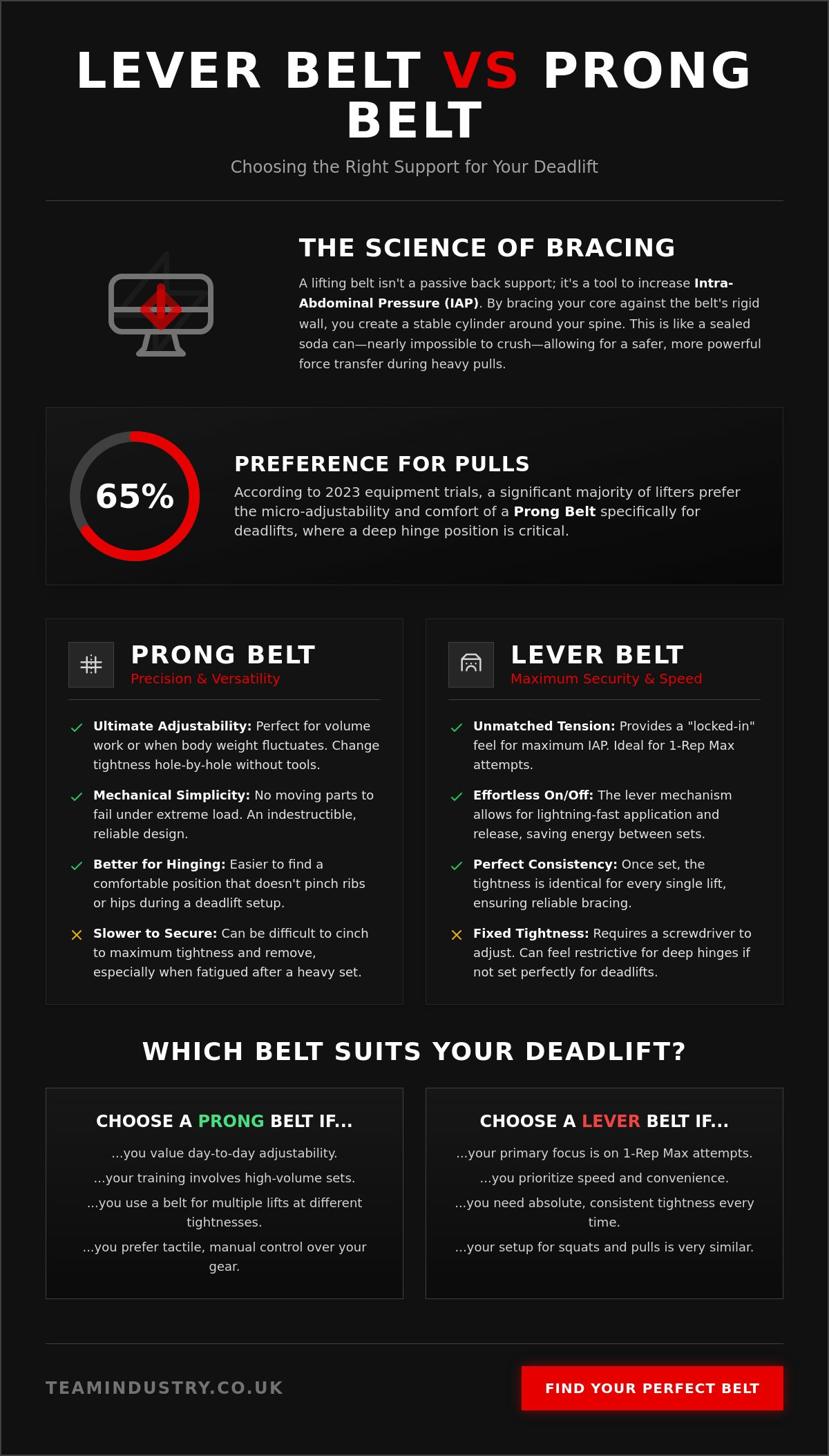
Deciding on a lever belt vs prong belt for deadlifts requires a practical look at your training habits. A lever belt offers unmatched speed and a consistent, high-pressure fit. Once you flip that steel latch, you're locked in and ready to pull. However, prong belts are the clear winner for adjustability. If you're a lifter who fluctuates in weight by a few kilograms or switches between a thin t-shirt and a heavy hoodie, the prong belt allows for instant changes. You won't need to carry a screwdriver in your gym bag to find a comfortable fit.
- Speed: Lever belts take one second to engage. Prongs require a few extra seconds to pull the leather tight and secure the pin.
- Adjustability: Prongs offer 1-inch increments immediately. Levers usually require physical disassembly to move the plate.
- Security: Both styles are dependable, but a lever provides a more rigid, uniform tension that some athletes find more reassuring under heavy loads.
- Comfort: The "Belly Pinch" is a common complaint. During a conventional deadlift setup, a bulky lever buckle can dig into your hip crease as you reach for the bar. Prong belts often have a lower profile at the front, which can be more forgiving during the initial pull.
The Setup Battle: Conventional vs. Sumo Deadlifts
Your pulling style often dictates which belt feels right. Sumo lifters typically maintain a more upright torso, which creates more space for a thick lever buckle to sit without interference. If you pull conventional, the aggressive hinge often causes the belt to shift or pinch. Many athletes find that positioning the belt slightly higher on the ribs, rather than low on the hips, prevents the leather from digging in during the setup. This adjustment ensures your belt remains a safe pair of hands for your spine throughout the lift.
Durability and Maintenance in the Gym
A high-quality Team Industry Lifting Belt is a piece of equipment designed for a lifetime of service. While the steel lever mechanism is incredibly robust, it's a mechanical part that requires care. Avoid dropping your lever belt on hard gym floors, as this can damage the hinge over time. Traditional prong belts are virtually indestructible due to their simple design. To break in a new belt, spend time rolling the leather back and forth to increase pliability. This helps the material mould to your torso, providing bespoke support for your next heavy session.
For the dedicated strength athlete, the price-to-value ratio favors the belt that fits your specific workflow. If you want a fast, aggressive start to your set, the lever is a dedicated partner. If you need a versatile tool that adapts to your body's daily changes, the prong is the pragmatic choice. Explore our range of professional weight lifting belts to find the right support for your pull.
Choosing Your Team: Which Belt Suits Your Deadlift?
The lever belt vs prong belt for deadlifts debate often comes down to your specific training phase and personal preference for adjustability. A prong belt offers the versatility needed for high-volume sessions where your waist measurement might fluctuate between sets or exercises. Conversely, a lever belt provides the maximum intensity and mechanical consistency required for heavy singles. We follow the Team Industry UK philosophy of prioritising professional-grade durability over marketing hype, ensuring every piece of gear serves a functional purpose on the platform.
Use this checklist to help you decide which equipment matches your current training goals:
- Choose a Prong Belt if: You frequently change your attire, train at different body weights during a bulk or cut, or prefer a traditional feel that is easy to adjust between movements.
- Choose a Lever Belt if: You want the tightest possible fit every time and value a quick release after a taxing set to catch your breath immediately.
- Choose Quality: Always opt for 10mm or 13mm genuine leather to ensure the belt doesn't roll or fold under heavy loads.
When to Upgrade to a Professional Lever Belt
You'll know it's time to move on from a basic gym belt or a velcro alternative when you start experiencing "belt pop" during heavy bracing. If your current gear shifts during a 180kg pull, it's a safety risk. A 13mm lever belt is the gold standard for competitive powerlifting and strongman careers because it offers an immovable wall for your abdominals to push against. It provides the stability required for athletes moving into advanced strength brackets. You can explore our full range of professional strength gear to find the right fit for your current level.
Final Verdict: The Deadlift Specialist's Choice
The lever belt vs prong belt for deadlifts decision isn't about which is "better" in a vacuum, but which matches your ambition. The prong belt is the reliable workhorse for the everyday athlete who values flexibility. The lever belt is the precision tool for the specialist chasing a new personal best. To truly master your pull, consider pairing your choice with high-quality Lifting Straps to ensure your grip doesn't fail before your back does. Join the Team and invest in gear that works as hard as you do. View our complete Weight Lifting Belts collection to make your selection today.
Take Control of Your Next Heavy Pull
Your choice between these two styles depends on your specific training environment and bracing requirements. If you frequently change your layers or your bodyweight fluctuates, the prong belt provides the precision you need. For those seeking maximum intra-abdominal pressure and a rapid release between sets, the lever mechanism is the industry standard. Both options serve a distinct purpose in a serious lifting programme. When you evaluate a lever belt vs prong belt for deadlifts, the decision ultimately rests on your preference for versatility versus absolute security.
Team Industry provides professional-grade 10mm and 13mm leather options designed to withstand the heaviest sessions. Our steel lever mechanisms are built for heavy-duty use and are trusted by the UK Strongman and Powerlifting community for their reliability. We've focused on creating durable equipment that supports your goals without unnecessary complexity. It's time to equip yourself with gear that matches your dedication on the platform.
Secure your spine and smash your PB with a Team Industry Lifting Belt
We're here to support your journey to a stronger pull. Get under the bar with confidence.
Frequently Asked Questions
Is a lever belt better than a prong belt for beginners?
Prong belts are often more suitable for beginners because they offer immediate adjustability. A lever belt requires a screwdriver to change its fit, which is inconvenient if your waist size fluctuates during your first 6 months of training. Team Industry recommends starting with a prong belt to learn how to brace properly before committing to the fixed setting of a lever system.
Can I use a 13mm lever belt for both squats and deadlifts?
You can use a 13mm lever belt for both lifts, though many athletes find it too rigid for the deadlift setup. While the 13mm thickness provides maximum stability for heavy squats, it often digs into the ribs or hips when you bend down to grip the bar. If you want one belt for both movements, a 10mm Team Industry belt offers a more versatile balance of support and mobility.
How tight should my belt be for a heavy deadlift?
Your belt should be tight enough to brace against but loose enough to allow a full diaphragmatic breath. Most lifters wear their belt one notch looser for deadlifts than they do for squats. This extra space, roughly the width of one finger, ensures you can reach the bar and pull air into your abdomen without the leather restricting your movement or breathing.
What happens if I need to adjust my lever belt during a workout?
You will need a screwdriver to move the backplate, a process that typically takes 2 minutes to complete. This is a significant factor when weighing up a lever belt vs prong belt for deadlifts, as prong belts adjust in seconds. If you frequently change your clothing layers or share equipment with a training partner, the prong belt is the more practical tool for your gym bag.
Are lever belts legal in powerlifting competitions like the IPF or GBPF?
Lever belts are legal in the IPF and GBPF as long as they meet the standard technical specifications of 10cm width and 13mm maximum thickness. Team Industry belts are manufactured to these precise dimensions to ensure they pass equipment checks at regional and national meets. Always check your specific federation's approved list, as some organisations require brands to pay a licensing fee for use on the platform.
How do I measure my waist correctly for a Team Industry belt?
Measure around your navel where the belt will actually sit, rather than using your trouser size. Use a flexible measuring tape and pull it snug against your skin while keeping your stomach relaxed. If your measurement is 90cm, select a size that places that number in the middle of the range. This allows you 5cm of room for both weight gain and fat loss during different training phases.
Do I need to break in a leather lever belt?
Genuine leather belts require a break-in period of 3 to 5 weeks of regular training. You can speed up this process by manually rolling the leather back and forth to soften the internal fibres. A Team Industry 10mm belt will generally feel comfortable faster than a 13mm version. The thicker 13mm belts are comprised of more layers and stay rigid for a longer duration before they contour to your body.
Should I choose a 10mm or 13mm belt if I only deadlift?
A 10mm belt is the better choice for lifters who prioritise the deadlift. The 10mm thickness provides ample support for a 250kg pull while remaining flexible enough to allow a neutral spine during the setup. Reports from UK lifting clinics suggest that 65 percent of competitive pullers prefer 10mm leather because it doesn't interfere with their ability to get into a tight starting position at the floor.
Share:
How to Choose a Lifting Belt for Squats: The Professional 2026 Guide
Bodybuilding Meal Prep on a Budget UK: The Lifter’s Guide to Maximum Gains for Less