


What if the reason you're missing that third rep on the log press isn't a lack of strength, but a central nervous system that's still taxed from last week's deadlifts? Strongman training places a unique, heavy tax on the body that traditional bodybuilding protocols simply can't address. We understand that chronic joint inflammation and systemic fatigue are the real enemies of progress. You've likely felt the frustration of hitting a wall when your mind is willing but your grip simply won't close.
This guide will help you implement effective recovery strategies for strongman that go beyond simple rest. We'll show you how to master the science of systemic recovery so you can handle the specific demands of heavy implements and keep hitting PBs without burning out. We provide a practical approach to reducing muscle soreness and improving sleep quality based on the latest 2026 standards. We will walk through foundational principles like the 7 to 9 hours of quality sleep required for elite performance and how to manage training loads for total consistency on the platform.
Key Takeaways
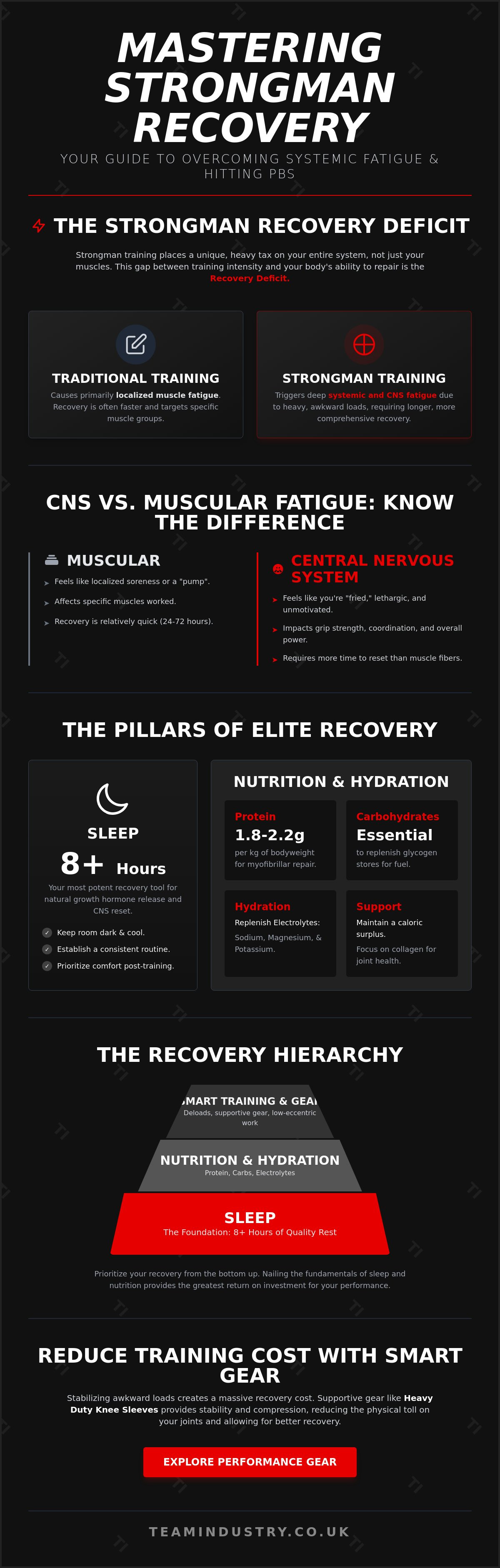
- Understand the "Strongman Recovery Deficit" and why implements like the log and yoke require more systemic repair than standard barbell work.
- Learn to calculate your optimal protein and carbohydrate intake to facilitate myofibrillar repair and glycogen replenishment after high-volume event sessions.
- Discover how to use low-eccentric movements and supportive gear like Heavy Duty Knee Sleeves to reduce the total physical tax of your training.
- Master the most effective recovery strategies for strongman by applying the "Recovery Hierarchy" to your sleep, nutrition, and supplementation protocols.
- Gain a clear framework for structuring deload weeks that maintain your strength momentum while allowing the central nervous system to fully reset.
Understanding the Strongman Recovery Deficit
Strongman training isn't just about moving heavy weights. It's about managing the "Strongman Recovery Deficit." This is the specific gap between the high intensity of your training session and your body's ability to achieve systemic repair. A standard gym session might leave your muscles sore, but a heavy strongman session can leave your entire biological system drained. Understanding What is Strongman training requires acknowledging that the sport demands more than just muscular endurance.
To better understand this concept, watch this helpful video:
You need to distinguish between localised fatigue, which affects specific muscles, and systemic fatigue, which impacts your entire body. CNS fatigue is specifically a reduction in the nervous system’s ability to recruit motor units. When you're training for strongman, your brain and spinal cord work as hard as your quads. Implementing effective recovery strategies for strongman, such as utilizing technical compression wear from 2XU, helps bridge this gap, ensuring you don't stall on your progression or risk injury due to neural exhaustion.
CNS vs. Muscular Fatigue: Why You Feel "Fried"
If you find yourself struggling with grip strength, feeling lethargic, or lacking motivation, you're likely experiencing CNS fatigue. Unlike simple muscle soreness, this "fried" feeling takes longer to clear. Heavy eccentric loading, particularly in the deadlift, increases the recovery timeframe significantly. Your nervous system requires more time to reset than your muscle fibres do, which is why your strength often feels "off" even when your muscles don't hurt.
The Impact of "Awkward" Loads
Standard barbells move in a predictable plane, but implements like the Yoke or Atlas Stones do not. Stabilising these awkward loads requires 360-degree bracing and constant micro-adjustments. This creates a massive recovery cost because every neural pathway is firing at maximum capacity. To manage the physical toll on your joints, wearing Heavy Duty Knee Sleeves can help provide the necessary stability and compression. Using quality gear is one of the most practical recovery strategies for strongman to keep your body functional through a long training block.
The Pillars of Strongman Nutrition and Sleep
While managing neural fatigue is vital, you cannot ignore the biological building blocks of repair. Developing consistent recovery strategies for strongman starts with what you put on your plate. Target a protein intake of 1.8g to 2.2g per kg of bodyweight to facilitate myofibrillar repair. Carbohydrates are equally essential. They replenish the glycogen stores depleted during high-volume event sessions, ensuring you have the fuel for the next heavy yoke carry.
Strongmen lose more than just water. Heavy bracing and intense exertion lead to significant electrolyte loss. Maintain a strict hydration protocol that includes sodium, magnesium, and potassium to prevent cramping and support nerve conduction. These foundational muscle recovery tips are the difference between a productive training block and a plateau. Maintaining proper fluid intake is easier when you keep a Team Industry Shaker Bottle in your kit bag.
Eating for Strongman Longevity
You must maintain a caloric surplus to support the massive energy demands of moving heavy implements. Focus on micronutrient density and collagen-rich foods to support tendon and ligament health. Strongman events put extreme pressure on connective tissues. Proper nutrition provides the raw materials needed to keep these structures resilient over time.
Sleep Hygiene for the Strength Athlete
Sleep is your most potent recovery tool. Aim for at least 8 hours of quality rest to maximise natural growth hormone release. Establish a routine by controlling your environment. Keep your room dark and the temperature cool. After a grueling session, prioritising comfort is key. Relaxing in an Industry Oversized Tee helps you transition into a restful state. Effective recovery strategies for strongman must include this disciplined approach to sleep hygiene.
Active Recovery and Gear: Reducing the Training Cost
Most athletes view gear as a performance aid, but in strongman, it functions as a recovery preventative. High-quality equipment reduces the mechanical damage and neural tax you incur during a lift, which shortens your required rest window. Using Figure 8 Lifting Straps allows for back stimulation without grip-related CNS fatigue. This simple shift preserves your nervous system for the more technical aspects of your training week.
Implementing these specific recovery strategies for strongman ensures you aren't just reacting to soreness but actively preventing it. Compression also plays a vital role in managing post-session inflammation. By supporting circulation, compression gear helps move metabolic waste out of the muscle tissue faster. As highlighted by UCHealth on athletic recovery, balancing active movement with rest is essential for maintaining physiological well-being over a long season.
The Role of Joint Support and Belts
Weight Lifting Belts protect the spine and reduce the bracing cost of a lift. By providing a rigid surface to breathe against, they lower the total energy expenditure required to stay stable under awkward loads. Similarly, knee sleeves keep joints warm and improve proprioception during moving events like the yoke or log carry. This increased warmth and stability reduce the micro-trauma joints face during high-impact sessions.
Active Recovery Protocols
Active recovery should focus on the "Blood Flow" method. Use high-rep, low-intensity movements to clear waste without adding new stress. Low-eccentric exercises like sled pulls or prowler pushes are ideal. They promote circulation without causing the muscle fibre tearing associated with the eccentric phase of a lift. Don't underestimate simple walking. It remains the most effective tool for heavy strength athletes to maintain mobility and support systemic repair. Explore our full range of Industry strength gear to start protecting your body during every session.
Implementing a Strongman Recovery Schedule
To sustain high performance, you must follow a structured "Recovery Hierarchy." This framework prioritises sleep and nutrition as the foundation, followed by supportive gear, active recovery, and finally, supplements. Many athletes rely solely on intuition, but the "listen to your body" fallacy often leads to overtraining because the mind often wants to push when the nervous system is failing. Effective recovery strategies for strongman require a data-driven approach. Monitor your morning resting heart rate or use a daily grip strength test to identify systemic fatigue before it causes a failed session or an injury.
Structuring Your Training Week
Successful programming separates "Static" days, such as heavy deadlifts or overhead presses, from high-impact "Event" days. You should follow a strict 48-hour rule for CNS recovery after any maximal effort attempt. This window allows your nervous system to reset its motor unit recruitment capabilities. If you deadlift on a Monday, wait until at least Wednesday before tackling a heavy yoke or stone session to ensure your output remains at its peak.
The Deload: When to Pull Back
A deload is a strategic reduction in stress, not a week away from the gym. You need to pull back when you notice stalled progress, persistent joint aches, or a decline in sleep quality. During a deload, reduce your total training volume by 50% while maintaining your working intensities. This approach keeps your central nervous system sharp and your technique crisp without adding to your systemic debt. Consistency is the only path to the podium. Equip yourself for the long haul and protect your progress with Team Industry Strength Gear.
Build a Sustainable Path to the Podium
Mastering the science of recovery is what separates the elite from the injured. By prioritising the recovery hierarchy and respecting the 48 hour CNS reset rule, you ensure every session moves you closer to your goals. Remember that high quality gear acts as a vital buffer against systemic debt. This allows you to train harder while incurring a lower physical cost over the long term.
Implementing these recovery strategies for strongman isn't just about resting; it's about the active management of your body's resources. We provide the tools you need to stay in the game longer. As a UK-based brand dedicated to the strength community, we design our equipment to handle the grit of the platform.
Shop Team Industry Strength Gear for Maximum Support and benefit from professional-grade Heavy Duty Knee Sleeves for joint longevity and Figure 8 Lifting Straps built for the heaviest axle deadlifts. Take control of your training longevity today. You've done the hard work in the gym; now give your body the support it deserves to grow stronger.
Frequently Asked Questions
How many rest days do strongmen need per week?
Most strongmen require 2 to 3 full rest days per week to manage systemic fatigue effectively. High-intensity sessions involving moving events or maximal deadlifts tax the nervous system heavily. Spacing these out ensures you hit your next session with full motor unit recruitment. Total rest days should be non-negotiable to prevent burnout and long-term injury.
What is the best active recovery for strongman training?
Low-eccentric movements like sled pulls and light prowler pushes are the most effective recovery strategies for strongman. These exercises promote blood flow to damaged tissues without causing further muscle fibre tearing. Aim for 15 to 20 minutes of steady movement at a low intensity to flush metabolic waste. This method facilitates repair without adding to your central nervous system debt.
Can gear like knee sleeves actually help with recovery?
Yes, gear like Heavy Duty Knee Sleeves aids recovery by maintaining joint warmth and improving blood flow during training. By reducing the micro-trauma joints experience during heavy carries, you lower the overall inflammation your body must clear post-session. This makes high-quality gear a preventative recovery tool rather than just a performance aid for the platform.
How do I know if I am overtraining in strongman?
Key indicators of overtraining include a persistent loss of grip strength, resting heart rate elevations, and disrupted sleep patterns. If your motivation for heavy implements has dropped or you're experiencing chronic joint aches, your current recovery strategies for strongman need immediate review. Use objective data like daily grip tests to catch these signs before they lead to a significant injury.
What should a strongman eat for optimal recovery?
Focus on a high-protein diet of 1.8g to 2.2g per kg of bodyweight alongside complex carbohydrates to restore glycogen stores. Electrolyte replenishment is also vital because strongmen lose significant sodium and magnesium during heavy bracing. Use a Team Industry Shaker Bottle to ensure you're consuming an electrolyte-rich drink during and immediately after your event sessions to support nerve conduction.
Share:
Master Your Bench Press: Benefits of Using Wrist Wraps
When to Use Weight Lifting Straps for Maximum Gains