

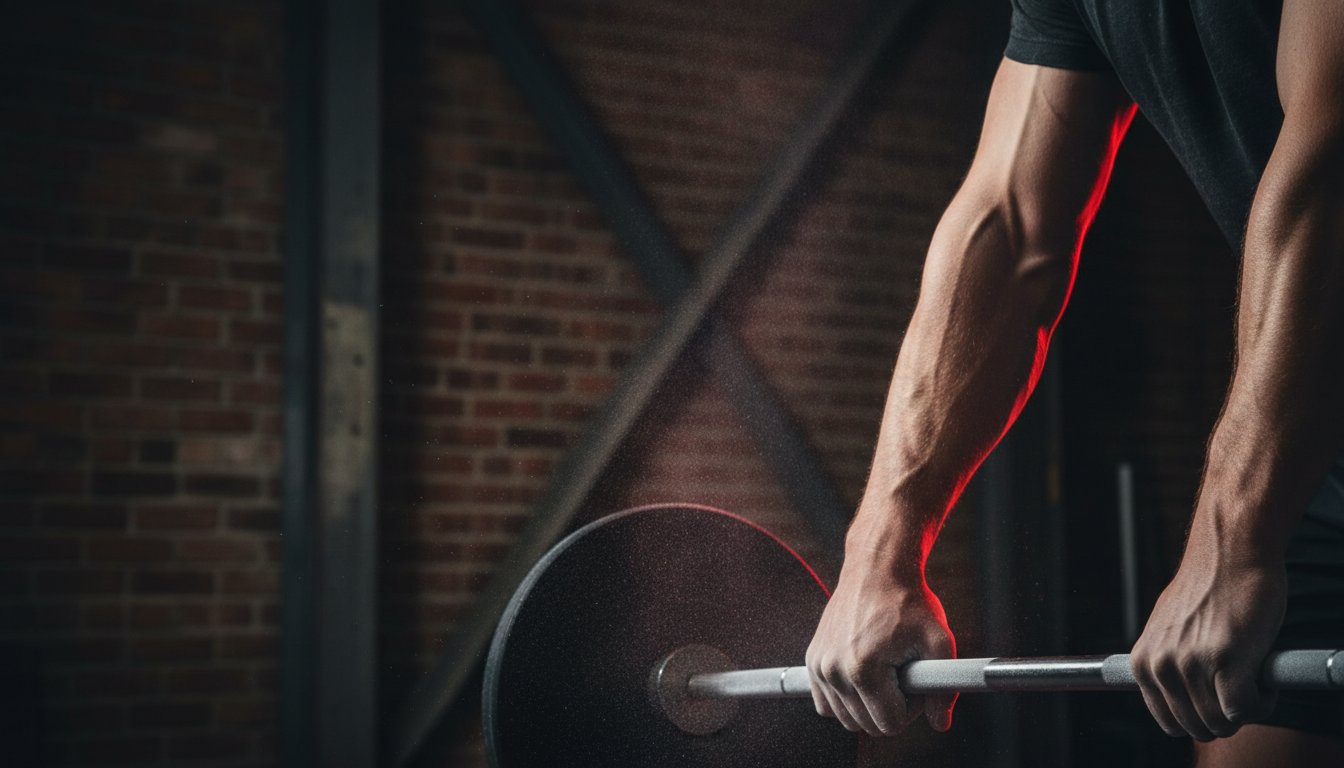
Think of your calluses as functional armor; if they get too thick, they become a structural liability that causes friction instead of preventing it. It's a common sight in any serious training environment: a heavy deadlift session cut short because a jagged piece of skin finally gave way, leaving blood on the barbell. You likely view these rough patches as a badge of hard work, but when they snag and tear, they become a direct threat to your training consistency. Learning how to prevent calluses from lifting isn't about having soft hands. It's about maintaining a smooth, even surface that allows for a secure grip without the risk of painful skin tears.
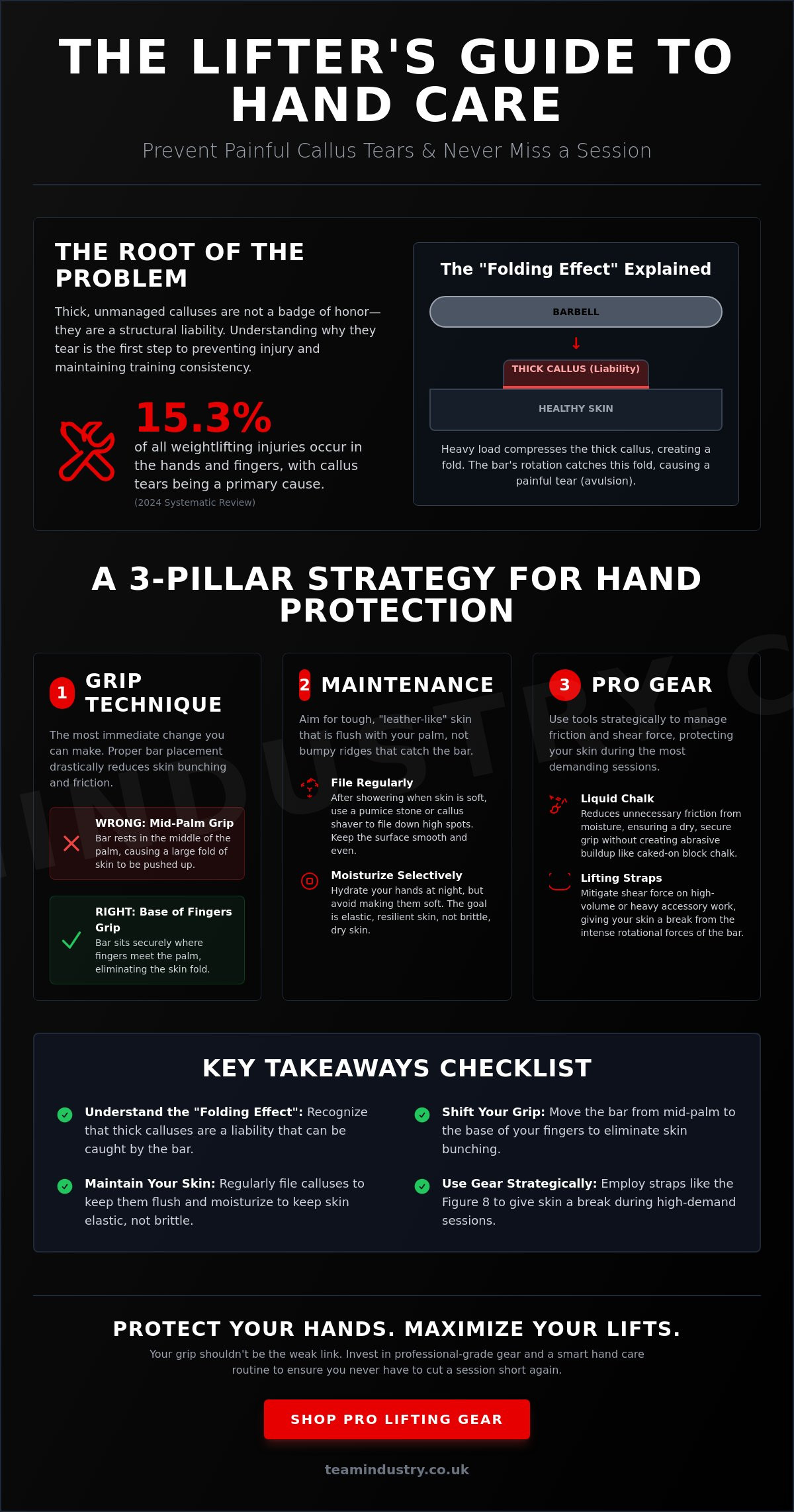
We know how frustrating it is to have your grip slip just as you're hitting your stride. A 2024 systematic review identified the hands and fingers as one of the most common injury sites in weightlifting, accounting for 15.3% of all injuries. This guide provides the professional techniques needed to manage your skin, from daily maintenance to using the right tools like Team Industry Liquid Chalk to reduce unnecessary friction. We'll walk you through a reliable hand care routine that keeps your calluses tough but flat. You'll learn how to use Leather Weight Lifting Straps to protect your skin during high volume sets and how to treat your hands so you never miss a session due to a preventable injury.
Key Takeaways
- Master the mechanics of the "folding effect" to understand why thick skin becomes a structural liability during heavy pulls.
- Shift your grip from the mid-palm to the base of your fingers to significantly reduce the friction that leads to painful skin avulsions.
- Discover the professional maintenance routine for how to prevent calluses from lifting, utilizing regular filing and targeted moisturizing to keep skin flush.
- Integrate reliable gear like Team Industry Figure 8 Lifting Straps to give your skin a necessary break during demanding accessory sessions.
Understanding the Mechanics: Why Calluses Lift and Tear
Understanding the mechanics of skin trauma is the first step in learning how to prevent calluses from lifting. Scientifically, What is a callus? It is a localized thickening of the skin's outer layer, designed to protect the body from pressure and friction. For a strength athlete, this skin is essential armour. However, when a callus becomes excessively thick, it stops acting as a protective barrier and becomes a structural liability. This transition from protection to problem often happens without warning, usually during a heavy pulling session when the load is at its peak.
The primary cause of a tear is the 'Folding Effect'. When you grip a heavy barbell, the knurling compresses the thickened skin, pushing it into a small fold. This fold creates a leverage point. As the bar rotates or shifts under load, it catches this fold and peels it back. If your skin is overly dry, it becomes brittle and loses the elasticity needed to withstand this pressure. Callus avulsion is the separation of the stratum corneum from the underlying tissue due to shear force. This specific type of injury accounts for a significant portion of the 15.3% of weightlifting injuries that occur at the hands and fingers.
The Difference Between Protective Armour and Structural Liability
Effective hand care aims for 'leather-like' skin that is tough but flush with the rest of the palm. Bumpy, protruding calluses are dangerous because they create a ridge at the base of the fingers. This ridge catches the bar's knurling, especially during heavy sets. Keeping your skin flat ensures there is no edge for the bar to grab, which is a key component of how to prevent calluses from lifting during your peak training weeks. You want a smooth surface that allows the bar to sit securely without bunching the skin.
Friction vs. Shear Force in Heavy Pulling
Distinguish between friction and shear force to manage your skin health properly. High-rep movements like pull-ups create repetitive friction that wears skin down. In contrast, heavy deadlifts involve intense shear force. Since 90% of weight training injuries occur during the use of free weights, managing the contact point between your hand and the steel is vital. As the bar attempts to rotate, it applies lateral pressure to your calluses. Using Leather Weight Lifting Straps for heavy accessory work can mitigate this force, protecting the skin from the sudden 'lifting' action that causes deep, painful tears.
Strategic Grip Adjustments to Minimise Skin Friction
Adjusting how you hold the bar is the most immediate way to manage skin health and maintain training consistency. While medical institutions provide general advice on how to treat and prevent calluses, lifters require specific mechanical adjustments to handle heavy iron. Mastering these adjustments is a practical step in learning how to prevent calluses from lifting during high-intensity training. By following these four steps, you can significantly reduce the abrasive forces acting on your palms.
- Step 1: Shift the bar from the mid-palm to the base of the fingers, specifically the proximal phalanges. This stops the skin from bunching.
- Step 2: Engage the 'Hook Grip' for extreme loads. This locks the bar in place and reduces the rotation that causes skin to peel.
- Step 3: Keep your equipment clean. Dried, caked-on chalk from previous sessions acts like sandpaper against your skin.
- Step 4: Control the bar on the descent. Many tears occur when the bar is allowed to slide down the thighs, catching on calluses as it drops.
The 'Finger-Grip' Method for Deadlifting
Most lifters instinctively place the bar in the middle of their palm. When you close your hand, the bar pushes a large amount of 'meat' toward your fingers, creating a massive fold. By placing the bar exactly where the fingers meet the palm, you eliminate this excess skin trap. This adjustment ensures that when you apply tension, the bar sits securely against the bone rather than pinching the skin. It's a reliable standard for anyone moving heavy loads regularly.
Managing Bar Rotation and Knurling Interaction
There's a constant trade-off between aggressive knurling and skin integrity. While sharp knurling helps grip, it increases the risk of 'lifting' a callus if the bar rotates even slightly. You should maintain a firm, static grip throughout the entire set. Avoid 're-gripping' or adjusting your hands once the lift has started. If you find your grip failing during high-volume accessory work, using Weight Lifting Straps is a smart way to protect your palms without sacrificing your training volume.
The Essential Hand Care Routine for Strength Athletes
Consistent maintenance is the only reliable way to ensure your skin remains a functional asset rather than a training obstacle. Just as a fleet manager prioritises regular vehicle inspections to prevent breakdowns, a lifter must treat hand care as a non-negotiable part of their recovery. Establishing a proactive routine is central to how to prevent calluses from lifting during heavy training cycles. By dedicating a few minutes each week to skin health, you can avoid the pain of a deep tear that could sideline your progress for days.
- Filing: Use a pumice stone or callus file 2-3 times a week. Perform this after a shower when the skin is soft. Aim to keep the callus flush with the rest of your palm.
- Moisturising: Apply a high-urea or wax-based cream every night. This keeps the skin supple and elastic, allowing it to move with the bar rather than snapping under pressure.
- Trimming: Use cuticle nippers to safely remove any small 'flaps' or jagged edges. Never pull at loose skin, as this often leads to a deeper, more painful avulsion.
- The Post-Session Check: Inspect your hands after every workout for 'hot spots' or areas of localized redness. Early detection allows you to file down a problem area before it becomes a tear.
Shaving vs. Filing: Which is Safer for Lifters?
Many athletes reach for a razor to remove thick skin, but this is often a mistake. Shaving makes it too easy to go deep, potentially removing the protective layers you've worked hard to build. This leaves the skin raw and sensitive to the touch. Filing is a far safer, incremental approach. The goal is a flat, even surface. You want your hands to feel like tough leather, not like a series of hard ridges that catch on the barbell knurling.
Hydration and Skin Elasticity
Hard, dry skin is brittle. When subjected to the shear forces of a heavy deadlift, brittle skin cracks and lifts. Supple skin has the elasticity to deform slightly under the bar and return to its original shape. Use non-greasy moisturisers that absorb quickly so your grip isn't compromised during your next session. If your skin feels particularly battered after a heavy week, give it a chance to heal by using Leather Weight Lifting Straps for your accessory movements to reduce direct friction.
Professional Gear: Using Straps and Chalk to Protect Your Palms
Deploying the right equipment is your final tactical advantage in the gym. While manual skin maintenance is vital, professional gear provides a physical barrier that helps manage how to prevent calluses from lifting during the most intense phases of your training cycle. High-quality liquid chalk is particularly effective because it creates a more even, bonded layer compared to traditional block chalk. This uniform coating fills the micro-crevices of your skin, reducing the direct abrasive contact between your calluses and the barbell knurling.
Strategic use of lifting straps is another essential technique. Use them for high-volume accessory work, such as rows or Romanian deadlifts, to give your palms a necessary break from the knurling. With injury rates in weightlifting reported between 2.4 and 3.3 per 1000 hours of training, using reliable gear is a practical safety measure. Save your straps for top sets to maintain natural grip strength while protecting your hands from the 90% of weight-related injuries that occur with free weights.
The Role of Liquid Chalk in Skin Protection
Liquid chalk functions as a thin, sacrificial barrier between your skin and the steel. By absorbing moisture more effectively than block chalk, it prevents the bar from slipping and catching on a ridge of skin. This reduces the friction that leads to painful tears. For those looking to refine their technique further, our guide on Mastering Your Pull covers advanced methods for securing your grip under heavy loads.
When to Deploy Figure 8 vs. Lasso Straps
For maximum security on heavy deadlifts or Strongman axle bars, Figure 8 straps are the gold standard. They provide a double-loop lock that makes it nearly impossible for the bar to rotate within your hand. Using the right Team Industry strength gear allows you to train around existing calluses and hot spots without aggravating them. Whether you choose a classic lasso or a Figure 8, the goal is to maintain training intensity without sacrificing the integrity of your skin.
Sustain Your Training Momentum with Professional Hand Care
Maintaining skin health is a continuous process that requires the same discipline as your programming. By refining your grip mechanics and establishing a three-minute filing routine after your shower, you protect your most vital contact point with the weights. These professional habits are the foundation of how to prevent calluses from lifting when the loads get heavy. Don't let a preventable skin tear stall your progress or force an unplanned deload week. It's a small investment of time that ensures your hands remain a reliable tool for every session.
Team Industry is proud to support the UK Strongman and Powerlifting community with equipment built for the grit of the industrial training world. Our professional-grade Liquid Chalk offers a mess-free grip that stays put, while our heavy-duty Figure 8 straps provide the reliability required for your heaviest deadlift sessions. We understand that your training relies on consistent, pain-free performance. Trust in gear that's designed to meet the high standards of serious strength athletes.
Secure your grip and protect your palms with Team Industry Strength Gear. Take control of your hand care today and keep your focus where it belongs: on the barbell.
Frequently Asked Questions
Is it better to peel or cut a lifted callus?
You should always cut a lifted callus rather than peeling it. Peeling often pulls healthy skin away from the underlying tissue, creating a deeper wound that requires more recovery time. Use a clean pair of cuticle nippers to trim the flap as close to the base as possible. This stops the edge from catching on the barbell during your next set and is a vital step in how to prevent calluses from lifting further.
How often should I file down my gym calluses?
Aim to file your calluses 2 to 3 times per week to maintain a smooth, even surface. The most effective time for this is immediately after a shower when the skin is soft and saturated. Use a pumice stone or a dedicated callus file to bring the hardened ridge flush with the rest of your palm. Regular maintenance prevents the skin from bunching, which is the primary cause of tears during heavy pulling.
Can I still lift if my callus has already ripped off?
You can continue to lift, provided you protect the raw skin from further trauma. Clean the area thoroughly and apply a flexible adhesive bandage or athletic tape to create a temporary barrier. For heavy deadlifts or rows, use Team Industry Leather Weight Lifting Straps to bypass direct contact between the barbell knurling and the wound. This allows you to maintain your training volume without aggravating the injury or risking infection.
Do gym gloves actually prevent calluses from forming?
Gym gloves don't prevent calluses; they simply shift the friction point and can often hinder your grip performance. Gloves increase the effective diameter of the bar, which can reduce your total grip strength by approximately 10 percent according to common coaching standards. A more effective strategy for how to prevent calluses from lifting is mastering the finger-grip method and using liquid chalk to manage the skin-to-steel interface directly.
What is the best way to treat a 'bloody' callus tear after a workout?
Clean the tear immediately with mild soap and warm water to remove chalk and bacteria. Apply an antiseptic and keep the area covered with a moist, occlusive dressing like a hydrocolloid bandage. This environment can speed up skin regeneration by up to 50 percent compared to letting the wound air dry and scab. Once a new layer of skin forms, resume your regular filing and moisturising routine to ensure the new tissue remains supple.
Share:
What to Wear for Your First Powerlifting Meet: The Ultimate 2026 Gear Guide
Team Industry vs SBD: Which Strength Gear Is Best?