

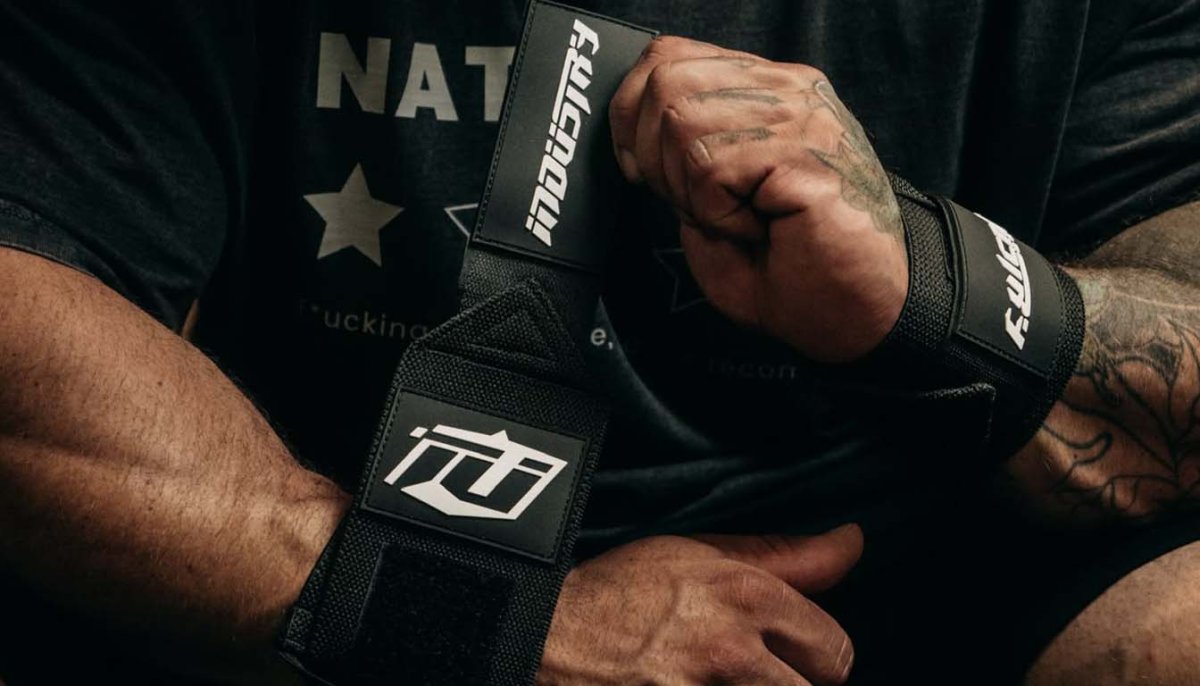
Your bench press strength isn't just about your chest and triceps. It's about how effectively you can transfer force from your body through to the barbell. If your wrists kick back or feel unstable during a heavy set, you're leaking power and risking injury. Using high-quality wrist wraps for bench press isn't a sign of weakness; it's a mechanical necessity for any lifter serious about moving heavy weight safely. We know the feeling of a heavy unrack where the bar feels like it's about to roll out of your hands, causing an immediate loss of confidence.
We agree that nothing kills progress faster than nagging joint pain or a lack of stability under the bar. This guide shows you how professional-grade equipment can improve your technique and help you move more weight while protecting your joints. We'll break down the technical application of wraps, explain the differences between flexible and stiff materials, and show how Team Industry wrist wraps provide the dependable support required for heavy lifting. It's time to stop worrying about your wrists and start focusing on your pressing power.
Key Takeaways
- Learn how to eliminate force leakage by maintaining a perfectly stacked wrist position directly over the radius and ulna.
- Discover how to choose the ideal wrist wraps for bench press by matching material stiffness and length to your specific training goals.
- Master the correct wrapping technique to ensure the support covers the actual joint line for maximum stability under heavy loads.
- Extend the lifespan of your professional-grade equipment with proper cleaning methods that protect the integrity of the elastic.
- Understand how to combine wrist support with a Team Industry Lifting Belt to create total body tension during max effort sets.
The Role of Wrist Wraps in Bench Pressing Mechanics
Wrist wraps are elasticated supports engineered specifically to limit wrist extension under heavy load. While some lifters view them merely as comfort accessories, they function as an external ligament system that maintains joint alignment. By reinforcing the wrist, these tools ensure that the barbell stays positioned directly over the radius and ulna, which are the primary load-bearing bones of the forearm. This alignment is what professionals call the 'stacked' position.
Using wrist wraps for bench press provides more than just physical support; it offers critical tactile feedback. When you unrack a heavy weight, the pressure of the wrap against your skin signals that the joint is secure. This psychological boost allows for a more aggressive grip and a more confident press. Without this support, the wrist often 'cocks back' under pressure, leading to mechanical inefficiency and potential joint strain. In high-effort sports like powerlifting, these wraps function similarly to a wrist brace by providing necessary external reinforcement.
Force Transfer and Pressing Efficiency
Every centimetre the wrist extends backward creates a point of energy dissipation. Force leakage is the loss of vertical drive that occurs when joint misalignment diverts energy away from the barbell. If your wrists collapse, your pectorals and triceps are working to stabilise the joint rather than moving the weight. High-quality Wrist Wraps allow you to 'cast' the joint, effectively turning your hand and forearm into a single, rigid pillar of force. This is the difference between simply supporting the joint and creating a mechanical advantage for maximum output.
When Should You Start Using Wraps?
We recommend introducing wraps during working sets that reach 70-80% of your one-rep max (1RM). This threshold is typically where the load exceeds the natural stabilising capacity of the wrist ligaments. While beginners should focus on developing foundational grip strength without assistance, intermediate and advanced lifters shouldn't view equipment as a crutch. Using professional-grade tools is a strategic decision to ensure safety and performance during top-end strength development. It's about training smarter to reach your operational peak without unnecessary joint wear.
Selecting the Right Wrist Wraps: Stiffness and Length
Choosing the correct equipment depends entirely on your specific training objectives. While academic research on wrist wraps suggests they may not directly increase raw power output, the significant increase in perceived stability allows lifters to handle heavier loads with greater confidence. Selecting the right wrist wraps for bench press requires an understanding of how material stiffness and length interact with your lifting style.
Flexible vs. Stiff: Matching Your Training Style
Flexible wraps are typically constructed from a blend of cotton and elastic, providing a supportive but comfortable fit. These are ideal for high-volume hypertrophy work or overhead pressing where you might require a small degree of joint mobility. In contrast, stiff wraps are designed for maximal effort. They use a higher grade of elastic to 'cast' the joint, effectively immobilising the wrist to prevent any deviation during a heavy eccentric phase. If your goal is a new one-rep max, choosing the stiffest Industry Wrist Wraps will provide the rigid foundation you need.
Length is the second critical factor in your selection process. Consider these standard options:
- 12-inch: Provides minimal support, best suited for smaller athletes or light accessory movements.
- 18-inch: The industry standard. It offers a balance of support and ease of use for most lifters.
- 24-inch: Delivers maximum revolutions around the joint, making it the preferred choice for heavy-duty powerlifting and those with larger wrists.
Durability and Professional Construction
Reliability is non-negotiable when you're under a heavy barbell. You should look for wraps featuring heavy-duty velcro and reinforced stitching at the attachment points. If the velcro fails during a set, the sudden loss of tension can lead to immediate joint collapse. Additionally, pay attention to the thumb loop integrity. The loop is designed for positioning the wrap during the application process; it should always be removed from the thumb before you start the lift to ensure a secure grip and compliance with competition standards. You can explore all Industry strength gear to find the specific tools that match your operational requirements.
How to Wrap Your Wrists for Maximum Bench Stability
Applying wrist wraps for bench press is a technical skill that directly impacts your lifting efficiency. Most lifters fail to achieve maximum stability because they treat the wrap like a sweatband rather than a mechanical tool. To prevent force leakage, the wrap must cover the carpal bones and the base of the hand, not just the forearm. This creates a rigid structure that keeps the bar path vertical and the joint secure under heavy loads.
We recommend a high level of tension for your heaviest sets. This compression ensures the joint is completely casted, but it must be released immediately after the set. Unwrapping between sets is vital for maintaining circulation and ensuring your recovery remains optimal for the next effort. Achieving this level of support requires a deliberate crossover technique, where each layer overlaps the previous one to build a reinforced wall of elastic tension.
Step-by-Step Wrapping Technique
- 1. Alignment: Insert your thumb through the loop and align the top edge of the wrap with the base of your palm.
- 2. Initial Tension: Pull the wrap with high tension across the wrist joint. Ensure the first revolution covers the joint line completely.
- 3. The Spiral: Continue wrapping in a spiral pattern with a 50% overlap. This consistent compression prevents gaps where the joint could potentially buckle.
- 4. Final Lockdown: Secure the heavy-duty velcro. Remove the thumb loop and tuck it away before you grip the bar.
Common Wrapping Mistakes to Avoid
The most frequent error is wrapping too low on the forearm. If the wrap doesn't cross the joint line, it won't prevent the wrist from cocking back. Additionally, many lifters leave the thumb loop on during the lift. According to the 2026 IPF Technical Rule Book, the thumb loop cannot be over the thumb or fingers during the lift. Failing to remove it is a safety hazard and will result in a failed attempt in competition. Secure your foundation with our 16-inch Industry Wrist Wraps to ensure you have the length and stiffness required for a professional unrack.
Optimising Your Bench Press with Professional Gear
Maximising your bench press requires a holistic approach to your equipment. While wrist wraps for bench press handle the terminal point of force transfer, they work best when integrated into a complete strength system. Combining these wraps with Weight Lifting Belts creates a rigid chain from your feet to the bar. This total body tension ensures that every ounce of energy generated by your legs and core reaches the barbell without being dissipated through unstable joints.
Proper maintenance is essential for preserving the lifespan of your gear. To maintain the integrity of the elastic, don't use a washing machine or tumble dryer. Instead, hand wash your wraps in cold water with a mild detergent and allow them to air dry. This prevents 'gym funk' while ensuring the material remains stiff enough for heavy training. Our Blackout Wrist Wraps are built to withstand these harsh gym environments, featuring heavy-duty velcro that stays secure during the most intense sets.
Building a Professional Strength Kit
Investing in high-grade Lifting Straps and wraps is a pragmatic choice that saves money by avoiding frequent replacements. For lifters looking to refine their form alongside their gear, we recommend reading The Ultimate Bench Press Guide. These tools are also highlighted as critical components in our Strongman Training Gear UK guide, proving their utility across multiple strength disciplines.
The Team Industry Community
We are a community-focused brand deeply committed to supporting UK federations and event sponsorship. Our gear is designed by lifters for lifters, ensuring every product meets the operational standards required for competitive powerlifting and strongman. We invite you to join a community that understands the grit and reality of heavy lifting. Browse our Accessories Collection today and experience the difference in stability on your next heavy chest day.
Take Command of Your Pressing Stability
Mastering the bench press requires attention to every mechanical detail. By ensuring your wraps cover the joint line and selecting the appropriate stiffness for your training load, you eliminate force leakage and protect your long-term joint health. We've established that professional gear acts as a mechanical extension of your body, providing the stability needed to handle maximal weights with total confidence. It's about ensuring that every ounce of effort you put into the bar results in a successful lift.
Investing in professional-grade wrist wraps for bench press transforms your setup into a rigid, efficient pillar of strength. Our equipment is designed for the specific demands of Strongman and Powerlifting, focusing on professional-grade durability that stands up to heavy training environments. With fast UK shipping, you can upgrade your kit quickly and start seeing the results in your next session.
Shop Professional Wrist Wraps at Team Industry UK and secure your next personal best. We're committed to providing the reliable tools you need to move more weight safely. Step under the bar with the stability you deserve.
Frequently Asked Questions
How tight should wrist wraps be for bench press?
Your wraps should be tight enough to immobilise the joint during the actual lift. For maximal effort sets, apply high tension to create a rigid cast that prevents any wrist extension. It is essential to unwrap between sets to restore blood flow and maintain optimal circulation. If you can move your wrist with ease, the tension is insufficient for heavy pressing.
Do wrist wraps increase your bench press max weight?
Using wrist wraps for bench press doesn't technically increase your muscular strength, but it improves your mechanical efficiency. By stabilising the joint, you prevent force leakage and ensure the barbell stays stacked over your forearms. This increased stability allows you to handle heavier loads more confidently, which often leads to higher successful attempts on the platform.
Can I use wrist wraps for every set of bench press?
You can use wraps for every set, but we recommend saving them for loads exceeding 70% to 80% of your max. Relying on them for light warm-up sets can limit the development of your natural stabilising muscles. Use them strategically as a tool for your heavy working sets to ensure you maintain proper form under significant stress.
What is the difference between wrist wraps and lifting straps?
Wrist wraps provide joint stability by casting the wrist, whereas Weight Lifting Straps are designed to assist your grip. You use wraps to prevent your wrists from bending back during a press. You use straps to secure your hand to the bar for pulling movements like deadlifts or rows. They serve entirely different operational purposes in a strength programme.
Are wrist wraps allowed in powerlifting competitions?
Wrist wraps are permitted in most powerlifting competitions if they meet specific technical criteria. Under IPF regulations as of 2026, wraps must not exceed 1 metre in length or 8 centimetres in width. They must also be from an approved manufacturer and cannot extend more than 10cm above or 2cm below the centre of the wrist joint. Always verify your equipment against your federation's current rulebook before competing.

Share:
Lever Belt vs Prong Belt: Which Lifting Belt is Right for Your Strength Goals?
Powerlifting Motivation for Heavy Training Days: A Professional Framework