
More gear won’t automatically make a lift safer or stronger. Strength training accessories are most useful when they address a specific need, and the right choice depends on your lifts, training habits and how the equipment fits. Belts, straps, knee sleeves and wrist wraps serve different purposes, so buying what’s popular can leave you with kit you rarely use.
Before adding an item to your gym bag, identify the task you want it to support. Is grip a recurring issue during pulling exercises? Do you want a particular kind of support for a lift? Once you know the need, compare the accessory types designed for that task and consider whether they’ll be comfortable and practical in your sessions.
This guide explains what common strength training accessories are used for and how to assess them. You’ll learn what to check for fit and function, when adding gear makes sense, and how to prioritise useful essentials over optional extras. Build your kit step by step, choosing equipment to match your training rather than trying to buy everything at once.
Key Takeaways
- Match each accessory to the lift or training task it’s intended to support, rather than choosing gear based on popularity.
- Strength training accessories are optional tools, not replacements for sound technique. Their usefulness depends on your goals, experience and preferences.
- Compare suitable gear by how it fits, feels and works with the movements you do most often.
- Start with one recurring need, then review how often you use the accessory and whether it remains comfortable before adding more.
Strength Training Accessories: What Do They Actually Do?
Strength training accessories are optional items worn or held during exercise to support a particular training task. They don’t replace sound technique or the equipment needed to perform a lift. Whether an accessory is useful depends on the movement, your training goal, experience and personal preference. Gear that suits one lifter may be unnecessary for another.
A barbell, plates and rack are core gym equipment: they provide the load or setup for exercises such as squats and bench presses. Accessories are used alongside that equipment. For a broader overview of common strength training equipment, including lifting accessories, see this reference.
This short video offers an overview of gym gear:
How do accessories differ from core gym equipment?
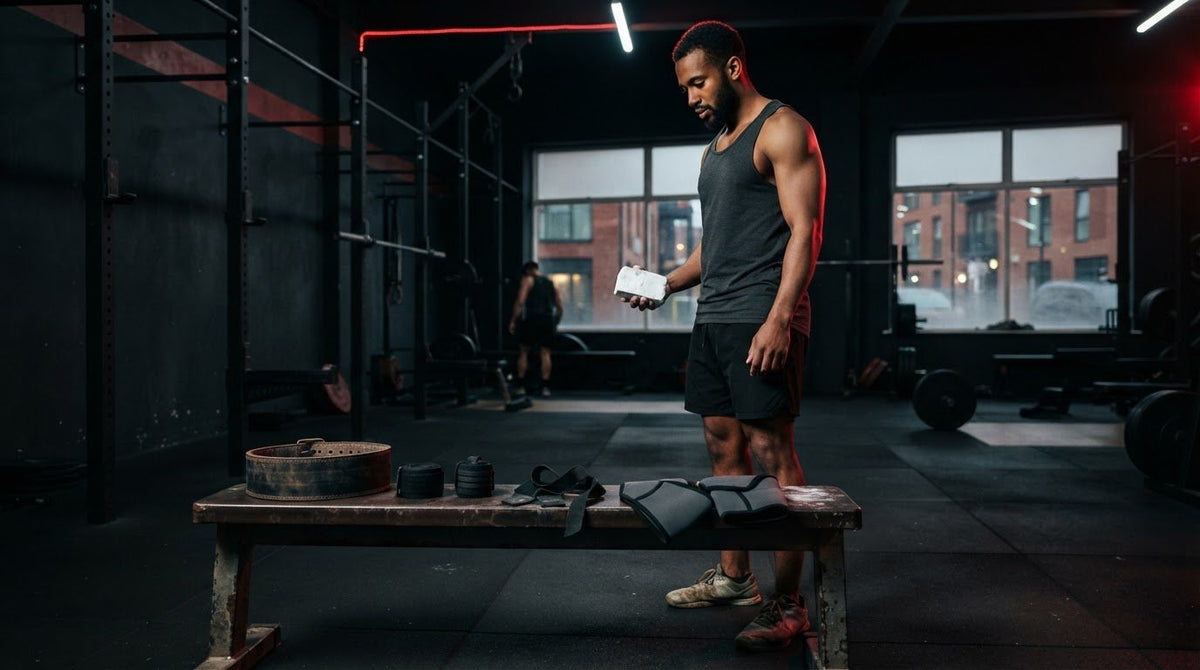
Core equipment lets you set up and perform a lift; accessories are worn or held while you do it. For example, straps or chalk may suit a grip-related need, wrist wraps are worn around the wrists, and knee sleeves or wraps are worn around the knees. A lifting belt is another option for lifting support. None is automatically essential. Choose based on what your training calls for.
Which training needs can accessories support?
Identify the task you want help with before shopping. Grip, wrist, knee and lifting support are different needs, and different accessory types address them in different ways. Consider which movements you train, how often the need comes up and whether the item feels comfortable while you move. To explore relevant categories, visit the strength accessories range.
Strength Training Accessories by Function: Match Gear to the Lift
Choose by task, not by appearance. Straps, liquid chalk, wrist wraps, knee sleeves and belts aren’t interchangeable: each has a different intended use. The health benefits of strength training are a reason to build a consistent routine; accessories remain optional tools that may suit particular lifts or preferences.
| Accessory type | Intended task | Fit or use consideration |
|---|---|---|
| Lifting straps | Connect the hands to the bar or load for grip-related support | Practise securing them correctly before relying on them in a working set |
| Liquid chalk | Apply to the hands as a grip aid | Check that it suits your training environment and feels comfortable to use |
| Wrist wraps | Provide support around the wrist during lifts | Adjust for a secure, comfortable fit without restricting movement |
| Knee sleeves or wraps | Offer support around the knee during relevant lifts | Choose a fit that feels comfortable through your range of motion |
| Lifting belt | Support bracing during lifts where you choose to use one | Check that it sits securely and works with your lifting position |
Which accessories address grip-related training needs?
Straps and liquid chalk address grip in different ways. Straps wrap around the hand and bar or load; chalk is applied to the hands. Neither is a universal requirement. First decide which task you want to support, then compare the product information and consider what suits your training. You can explore Team Industry’s lifting straps range and its liquid chalk as part of the accessories range.
How do belts, knee sleeves, and wrist wraps differ?
A belt is worn around the torso for lifting support, while knee sleeves or wraps and wrist wraps are worn around the relevant joints. Their suitability depends on your lifts, individual needs and comfort. Check how each feels during the movements you train, and don’t treat any accessory as a medical or injury-prevention solution.
How to Choose Strength Training Accessories That Suit Your Routine
Use a clear process before buying strength training accessories. Start with a recurring situation in your sessions, such as grip becoming a limiting factor during pulling exercises. Then decide what kind of support you’re looking for and compare accessory types designed for that task. A broad product claim isn’t enough: the item should make sense for the movements you do and how often you train them.
What should you check before choosing an accessory?
Read the product information carefully. Check the sizing guidance and, where available, how the item adjusts. Review materials and care instructions so you know what you’re choosing and how to look after it. If ordering online and you’re unsure about fit, check the returns information before buying. Consider the movement too: an accessory should feel comfortable and practical through the range of motion you need.
How can beginners avoid buying gear they will not use?
Begin with one clearly identified need, not a complete kit. Ask whether that situation comes up regularly and whether the accessory suits your preferences. If the need is occasional or unclear, wait and reassess rather than buying on impulse. A useful choice is one you’re comfortable using consistently, not simply another item in your gym bag.
Quick check: Name the task. Identify the need. Compare suitable types. Check fit, materials and care. Reassess whether you use it.
Use this checklist to make a considered choice. If you’ve identified a specific need, browse the strength training accessories range to compare relevant gear.
Build a Practical Strength Training Accessories Kit Gradually
A useful kit starts with one clear, recurring need, not a target number of items. Choose the lift or training situation you want to support, then select an accessory that suits both the task and your preferences. If a belt fits the need you’ve identified, compare options in the lifting belt collection. If it doesn’t, focus on the category that does.
How should you prioritise your first accessory?
Think about what comes up regularly in your sessions. A grip-related challenge during pulling work, for example, may make a grip accessory more relevant than a belt. Before settling on an option, check its fit and comfort, and consider how it works with the movements you perform. Don’t add gear simply because it’s common in someone else’s kit.
Give your first choice time to prove useful in your normal routine. Ask yourself: does it feel comfortable? Does it suit the lift? Do I reach for it consistently? If the answers point to a poor fit or little practical use, reassess before buying another item.
Where can you explore strength accessories?
Team Industry offers categories including lifting belts, knee sleeves, straps and wrist wraps. Treat these as options to compare against your training needs, not a checklist every lifter must complete. Review the product information for details that matter to you, including sizing guidance, materials and care instructions. If you prefer to assess apparel in person, the walk-in shop lets customers view the range and try items on; equipment can also be tested there.
Once you know what you’re looking for, browse the Team Industry strength gear collection. A practical kit is built step by step: choose what serves your training, then add more only if a new need becomes clear.
Choose Gear That Earns Its Place in Your Kit
The most useful strength training accessories are the ones that support a clear, recurring need in your routine. Match each item to the lift and task, check that it fits comfortably, then review whether you actually use it before adding more. A complete kit isn’t a requirement, and thoughtful choices matter more than buying gear for its own sake.
Team Industry supports federations and events that promote strength sports. Its range includes belts, knee sleeves, straps, wrist wraps and liquid chalk, giving you categories to compare with your training needs.
Use the selection steps from this guide to decide what, if anything, would be useful in your kit. When you’re ready, browse Team Industry strength accessories and choose at your own pace. Start with one considered choice, train with it, and let your experience guide what comes next.
Frequently Asked Questions
Do I need strength training accessories as a beginner?
No, accessories are optional, and you can begin by learning movements and following a suitable training plan. Consider adding gear once you can identify a recurring need, such as a grip preference or comfort during a particular lift. Choose an item for that purpose, then assess whether it suits your routine. You don’t need to buy a full kit straight away.
Which strength training accessories should I buy first?
Start with the training task you want to support, then compare accessory types designed for that purpose. Check fit, comfort, intended use, sizing guidance and care instructions before choosing. There’s no universal first purchase for every lifter. Pick one item that addresses a clear need, use it in your routine, and reassess its usefulness before deciding whether to add more.
Are lifting straps and wrist wraps the same thing?
No, lifting straps and wrist wraps are different accessory categories with different intended uses. Don’t treat them as interchangeable. Think about what you want the item to do during your training, then check the product guidance for the category you’re considering. If you’re unsure which suits your lifts or experience, compare descriptions or ask a suitably qualified coach for advice.
Can strength training accessories replace good technique?
No, accessories aren’t a substitute for learning and practising sound technique. Gear may suit a particular training task or personal preference, but its usefulness depends on the lifter and context. Choose an item for a clear purpose and follow its instructions. If you need support with movement technique or training decisions, seek guidance from a suitably qualified coach.
Share:
Strongman Training for Powerlifters: Adding Events
Justifying the Cost of Quality Lifting Equipment