

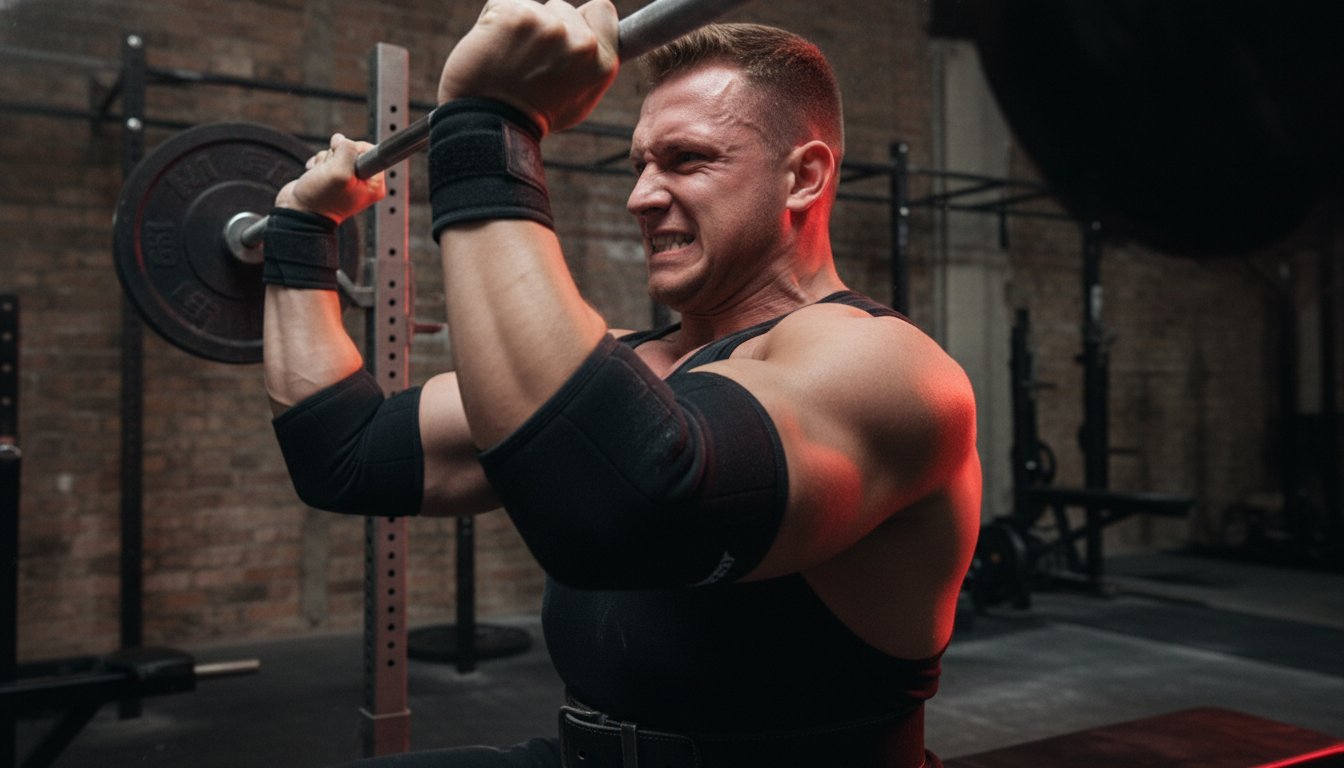
That sharp "ping" in your tendons during a heavy set of bench press isn't just a distraction; it's a signal that your joint stability has reached its limit. Many lifters find themselves stuck between pushing through the pain of elbow tendonitis and backing off the heavy loads they need to grow. While sleeves offer warmth, the mechanical advantage of high-quality elbow wraps provides the rigid support necessary for maximal effort training and heavy lockouts.
We understand that choosing between different wrapping styles and levels of compression can be confusing. You want to lift heavy without the constant worry of joint instability at the bottom of a press. This guide will help you master the technical application of elbow wraps to protect your joints and increase your pressing power safely. We'll examine the super heavy-duty offerings from Goblin Gear alongside the professional standards of Team Industry gear.
You'll learn the specific differences between competition-legal gear and training-only tools, helping you build confidence with heavy loads. Whether you're considering the extreme tension of specialized wraps or the dependable reliability of Team Industry Wrist Wraps and Heavy Duty Knee Sleeves, we provide the practical knowledge you need. Let's break down the mechanics of the perfect wrap so you can focus on the weight, not the discomfort.
Key Takeaways
- Understand how elastic energy storage creates a "rebound" effect to help you power through the bottom of a heavy bench press.
- Learn when to choose the high compression of elbow wraps for maximal sets versus the all-session support of Heavy Duty Knee Sleeves.
- Master the distal-to-proximal wrapping technique to ensure proper blood flow while maximizing joint stability.
- Identify the specific material blends and length requirements needed to ensure your gear provides a reliable "snap-back" under heavy loads.
Table of Contents
-
Understanding Elbow Wraps: Mechanism and Benefits for Lifters
-
How to Use Elbow Wraps: Proper Technique for Maximum Support
-
Selecting Professional-Grade Gear: Why Quality Material Matters
Understanding Elbow Wraps: Mechanism and Benefits for Lifters
Elbow wraps are heavy-duty elasticised bands designed to provide maximal joint compression during heavy pressing movements. Unlike standard sleeves, they're a tool for temporary joint stability during maximal effort pressing. Their primary function involves storing elastic energy during the descent of a lift, which creates a "rebound" effect. This energy assists the transition from the eccentric to the concentric phase, helping you drive the weight off your chest or overhead more efficiently. The use of supportive equipment in powerlifting has long been a standard for athletes looking to push past natural plateaus while maintaining safety.
By tightly binding the joint, these wraps help maintain joint centration. This alignment prevents the "elbow flare" that often leads to missed reps or unnecessary shoulder strain. Beyond the physical mechanics, there's a significant psychological benefit. The increased proprioception, or the sense of where your limb is in space, allows for greater confidence under heavy loads. When the joint feels "locked in," you're less likely to hesitate during the most difficult part of the lift.
To better understand how to apply this tension correctly, watch this helpful video:
The Science of Compression and Joint Stability
High-grade elbow wraps do more than just squeeze the arm. They slightly limit the range of motion at the very bottom of a press, which prevents the joint from overextending under extreme loads. This mechanical stop provides a safety net when you're working with weights close to your one-rep max. Additionally, the thick material helps with heat retention. Keeping the tendons and ligaments warm during long rest periods between heavy sets is vital for long-term health. It's vital to distinguish between true joint support and simply masking pain; wraps should enhance a healthy joint, not hide a serious injury.
Who Should Use Elbow Wraps?
These tools aren't for every set, but they're essential for specific high-intensity scenarios. Consider adding them to your kit if you fall into these categories:
-
Powerlifters: If you're testing a 1RM bench press, the added stability allows you to focus entirely on the drive.
-
Strongman Athletes: During overhead press or log press events, the instability of the implement makes elbow wraps a tactical necessity.
-
Bodybuilders: When performing heavy compound movements like weighted dips, wraps provide the confidence to go deep without joint discomfort.
For lifters who need consistent support without the "on-off" nature of wraps, our Heavy Duty Knee Sleeves (often used by larger athletes for elbow support) or Wrist Wraps offer a dependable alternative for general training volume and joint warmth.
Elbow Wraps vs. Elbow Sleeves: Which Should You Choose?
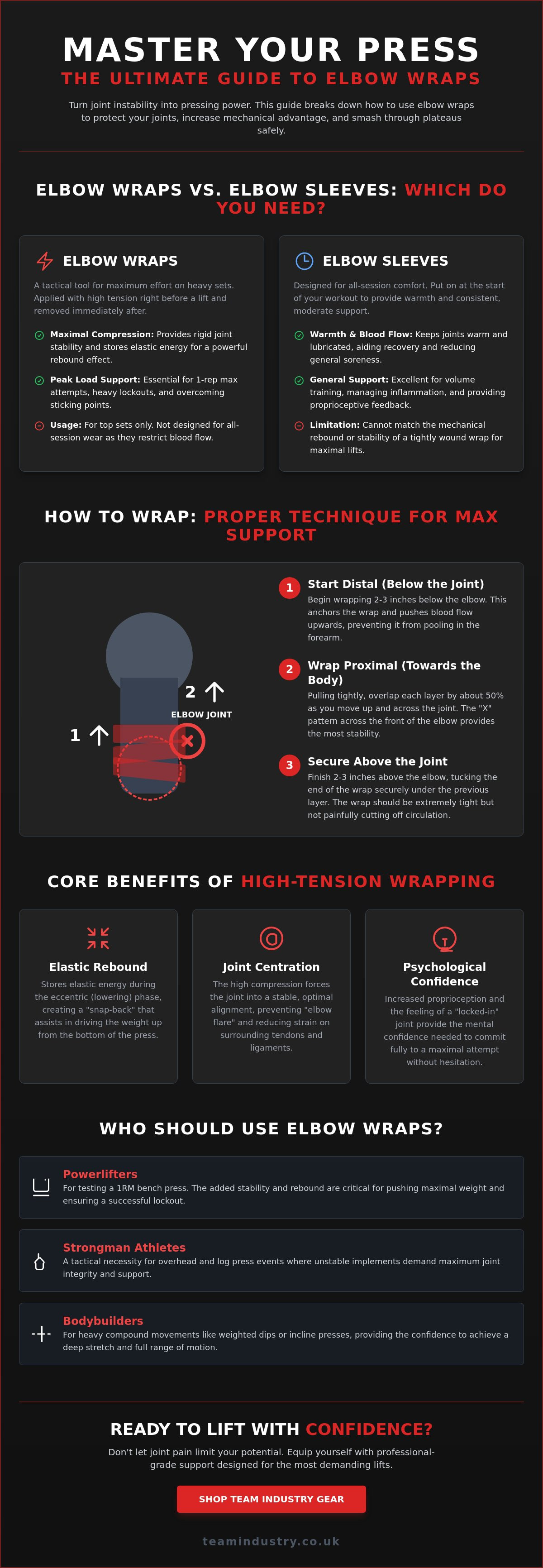
Many lifters mistakenly treat sleeves and wraps as interchangeable. They aren't. Sleeves are designed for "all-session" wearability. You put them on at the start of your workout and keep them on until the end. They provide consistent warmth and moderate compression. In contrast, elbow wraps have an "on-off" nature. You apply them with high tension immediately before a heavy set and remove them immediately after to allow blood flow to return.
The difference in compression is substantial. Even a high-grade 7mm neoprene sleeve cannot match the mechanical tension of a heavy-duty wrap. While sleeves are excellent for managing inflammation and Understanding Tennis Elbow risks during repetitive volume, wraps are a tactical tool for handling peak loads. As you progress through a training block, you'll reach a "tapering" phase where intensity increases and volume drops. This is the specific point where switching from sleeves to wraps becomes necessary to support the joint under maximal stress.
When to Wear Elbow Sleeves
Sleeves are your primary tool for high-volume hypertrophy work. They excel during accessory movements like tricep extensions or lateral raises where maintaining blood flow and joint temperature is the priority. If your training session involves a lot of "pump" work, the constant compression of a sleeve is more practical. For lifters with larger arms or those seeking maximum neoprene thickness, our Heavy Duty Knee Sleeves are frequently used on the elbows to provide a similar level of dependable support.
When to Deploy Elbow Wraps
Reserve elbow wraps for sets exceeding 85% of your one-rep max. This includes max effort bench press, heavy overhead pressing, and weighted dips where joint centration is the priority. Integrating this gear into a technical framework is essential for long-term progress. You can find more detail on how to align your equipment with your lifting mechanics in our Ultimate Bench Press Guide. For those looking to upgrade their training kit, exploring our full range of joint support gear is a sensible next step.
How to Use Elbow Wraps: Proper Technique for Maximum Support
Applying your gear correctly is the difference between a successful personal record and a missed lift. Technical application ensures the tension is distributed where it's needed most without causing unnecessary distress to the surrounding tissue. Follow these steps to master the application of elbow wraps for your next heavy pressing session.
-
Step 1: Positioning. Keep your arm in a slightly flexed position. Never wrap a fully locked-out arm. A slight bend allows the material to sit correctly against the joint and prevents the wrap from cutting off circulation once you begin the movement.
-
Step 2: Direction. Start the wrap approximately two inches below the joint (distal) and move upwards (proximal). This direction supports venous return, helping blood flow back toward the heart rather than pooling in the forearm.
-
Step 3: The "X" Technique. As you reach the center of the elbow, create a cross-over pattern directly over the elbow crease. This "X" creates the primary mechanical "spring" that assists in the eccentric-to-concentric transition.
-
Step 4: Securing. Finish the wrap two inches above the joint. Secure the end using the hook-and-loop closure. If your wraps use a "tuck" method, ensure the tail is tucked under a high-tension layer to prevent it from popping loose mid-set.
Before you approach the bar, test the tension. Perform a single "air rep" of your pressing movement. If you feel sharp tingling or your hand changes color immediately, the wrap is too tight. You want significant compression, but you must maintain enough dexterity to grip the bar firmly.
Common Wrapping Mistakes to Avoid
Many lifters wrap too high or too low, effectively missing the joint capsule entirely. This provides a false sense of security without actually stabilising the elbow. Another frequent error is leaving elbow wraps on between sets. This practice increases the risk of nerve compression and can lead to temporary numbness. Always unwrap immediately after your set is finished. Finally, ensure each revolution of the wrap overlaps the previous one by about half the width of the material. This prevents "pressure hot spots" and ensures an even distribution of support.
Adjusting Tension for Different Lifts
Your tension should match your rep range. For "competition" style sets of 1 to 3 reps, apply the wrap with maximum tension. The goal here is pure mechanical advantage. For "support" sets in the 5 to 8 rep range, use moderate tension. This provides stability and warmth without becoming unbearable before the set ends. Consistent tension is the key to repeatable performance; try to count the number of revolutions you use so you can replicate the feel every time you train.
If you find that you need technical support for your joints throughout your entire workout, explore our range of Wrist Wraps and other professional gear to find the right balance of compression and mobility.
Ready to upgrade your training kit? Shop our full collection of joint support gear here.
Selecting Professional-Grade Gear: Why Quality Material Matters
The effectiveness of your elbow wraps depends entirely on the integrity of the material. A professional-grade wrap uses a specific blend of heavy-duty cotton and high-strength elastic. This combination ensures the wrap doesn't just stretch, but provides a powerful "snap-back" that supports the joint under load. While cheaper alternatives might feel comfortable, they often lack the rigidity required for maximal effort training. High-strength elastic provides the consistent resistance needed to store energy effectively during the eccentric phase of a lift.
Length is another critical factor for performance. While some brands offer extreme lengths that are difficult to manage alone, 40 inches has become the industry standard for most lifters. This length provides enough material to cover the joint capsule and create the necessary "X" pattern without becoming too bulky to secure. To ensure the wrap stays in place during a heavy lockout, industrial-grade hook-and-loop closures are essential. A mid-set closure failure isn't just frustrating; it's a significant safety risk when handling peak weights.
Durability in the Strongman Environment
Generic gym gear often fails when exposed to the high-intensity demands of strongman training. Sand, sweat, and repetitive high-tension stretching quickly degrade inferior elastic fibres. To maintain your gear, hand wash your wraps in cold water with a mild detergent. Avoid tumble dryers. Extreme heat destroys the elastic's ability to retract, leading to "thinning" of the fabric. Replace your elbow wraps as soon as you notice a loss of tension or visible elastic fatigue, as compromised gear directly impacts your joint safety.
The Team Industry Advantage
We position our gear for those who understand the grit and reality of the iron game. Our Industry Strength Gear collection is the result of collective collaboration between lifters who demand equipment that performs under pressure. We focus on the operational excellence of our products rather than flashy marketing. For a complete injury prevention setup, we recommend pairing your wraps with items from our Joint Support collection. This ensures every joint is protected during your heaviest sessions, allowing you to train with total confidence.
Secure Your Progress with Professional Support
Transitioning from general joint warmth to maximal stability requires a shift in both equipment and technique. You've learned that elbow wraps are tactical tools for your heaviest sets, providing a mechanical rebound that sleeves simply cannot match. By prioritising the distal-to-proximal wrapping method and selecting gear with high-strength industrial elastic, you ensure your joints remain centrated under peak loads. Proper application isn't just about power; it's about the long-term health of your tendons.
Reliability matters when you're under a heavy barbell. Our equipment is designed by strength athletes specifically for these maximal loads. It's gear built for the grit and reality of the platform, featuring industrial-grade materials that won't fail mid-set. You can Shop Professional-Grade Joint Support at Team Industry UK to find tools trusted by the UK strongman and powerlifting community.
Don't let joint instability or nagging discomfort hold back your progress. With the right technical knowledge and dependable gear in your kit, you're ready to push your pressing power to new levels. Stay focused on your goals and keep moving the weight with confidence.
Frequently Asked Questions
Do elbow wraps actually help with bench press?
Elbow wraps provide a mechanical advantage by storing elastic energy as you lower the bar. This "rebound" effect helps you drive the weight through the transition phase more effectively. Beyond the strength boost, they stabilise the joint capsule, preventing unnecessary lateral movement during maximal effort sets. This mechanical stop allows you to focus entirely on force production, which often leads to a more confident and powerful lockout.
Are elbow wraps better than elbow sleeves for tendonitis?
Elbow sleeves are generally superior for managing tendonitis because they provide sustained warmth and compression throughout your entire workout. While elbow wraps offer higher peak tension for a single set, the "on-off" nature can lead to joint cooling between reps. For consistent relief during volume work, we recommend our Heavy Duty Knee Sleeves, which many lifters use on their elbows to maintain blood flow and manage inflammation.
How tight should elbow wraps be for heavy lifting?
Your wraps should be tight enough to provide significant resistance without causing numbness or loss of grip. Aim for approximately 70% to 80% of the material's maximum stretch for heavy lifting. If you experience sharp tingling or your hands change colour, the tension is too high and requires immediate adjustment. Always test your dexterity with an "air rep" before approaching the bar to ensure you can maintain a safe, firm grip during the set.
Can I use elbow wraps for every workout?
You shouldn't use elbow wraps for every workout. They're a specialised tool intended for peak intensity sets, usually those exceeding 85% of your one-rep max. Over-using them can lead to a technical dependency and may stall the development of your natural joint stability. Reserve them for your heavy "top sets" or during the final weeks of a strength block. For general hypertrophy and accessory work, rely on sleeves or bare joints to build well-rounded durability.
Are elbow wraps legal in powerlifting competitions?
These wraps are almost universally banned in "raw" powerlifting divisions. Federations like the IPF don't allow any elbow support during competition lifts. Others, such as the RPS, permit single-layer sleeves for the squat and deadlift but prohibit all elbow gear for the bench press. Check your specific federation's 2026 rulebook for compliance. Most athletes use them as a tactical training tool to safely handle supra-maximal loads outside of a sanctioned platform.
What is the difference between stiff and flexible elbow wraps?
Stiff wraps use a high-density elastic to provide a rigid mechanical stop and maximum rebound, which is ideal for stationary pressing like the bench press. Flexible wraps allow for more revolutions and offer a greater range of motion, making them better for dynamic movements. If you're performing heavy overhead work or strongman events, a more flexible wrap provides support without restricting the movement needed for a clean. Both styles require high-quality Wrist Wraps for total arm stability.
Share:
How to Use Liquid Chalk Properly: A Lifter’s Guide to Maximum Grip
When to Start Using Knee Sleeves: A Guide for Strength Athletes (2026)