

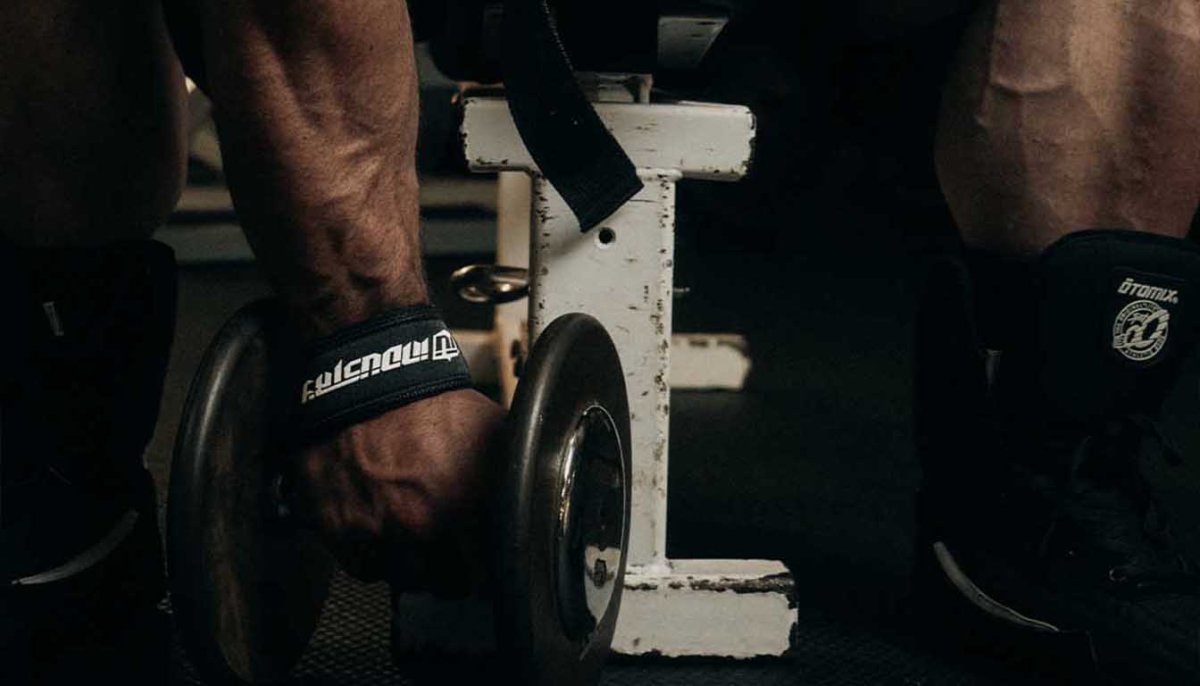
Your back and legs often have more power to give, but if your hands can't hold the steel, those gains stay on the platform. It's frustrating when a potential personal best fails because the bar starts to slide at mid-thigh. You're not alone in feeling that your grip is the only thing standing between you and a heavier set. Many lifters worry that using gear is cheating, yet even the world's strongest athletes, like Raúl Flores who pulled a record 511 kg in September 2026, rely on straps to push their absolute limits during heavy training sessions.
This guide teaches you exactly how to use lifting straps for deadlifts to eliminate grip fatigue and secure your connection to the weight. We provide a pragmatic, step-by-step breakdown of the technical application for both classic lasso and figure-8 straps. You'll learn how to achieve a locked-in feeling that protects your wrists and allows you to focus entirely on the pull. This professional overview ensures you can hit higher rep counts and new heavy milestones with total operational reliability and safety.
Key Takeaways
- Understand why lifting straps are a strategic tool for hypertrophy that allows your back and legs to work past the point of grip failure.
- Compare the design of classic lasso straps against the high-security double-loop of Figure 8 Lifting Straps to find the setup that's right for you.
- Follow our technical breakdown on how to use lifting straps for deadlifts, including the "under and over" wrap and the "throttle" tightening technique.
- Identify the signs of equipment wear and learn why heavy-duty materials are essential for maintaining safety and comfort during high-volume pulling sessions.
Understanding the Role of Lifting Straps in Your Deadlift
Lifting straps function as a mechanical aid that transfers the weight load from your fingers directly to your wrists. This shift allows you to maintain a secure hold on the barbell even when your forearm muscles reach exhaustion. Lifting straps are a tool to bypass grip fatigue for maximal posterior chain recruitment. Mastering how to use lifting straps for deadlifts is a strategic decision for any athlete who prioritizes high-volume training and muscle growth.
Many lifters avoid gear due to the common "cheating" myth. However, straps are not a shortcut; they are an operational necessity when your grip becomes the bottleneck that prevents your legs and back from reaching true failure. By removing the mental distraction of a slipping bar, you can achieve higher total tonnage and better isolation of the lats and hamstrings during your heaviest pulling sessions.
To better understand this concept, watch this helpful video:
When to Introduce Straps into Your Workout
Maintain your raw grip strength by pulling your initial warm-up sets without aids. Only introduce Weight Lifting Straps during your heaviest top sets or high-volume accessory work where grip failure is likely. Learning how to use lifting straps for deadlifts at the right time in your program prevents unnecessary plateauing; it's the most efficient way to manage fatigue across multiple sets.
Straps vs. Hook Grip and Mixed Grip
While a mixed grip is common in powerlifting, it often creates an asymmetrical "helicoptering" effect where the bar rotates unevenly during the ascent. Straps keep the bar symmetrical and secure without the technical difficulty or significant thumb pain associated with a hook grip. Using professional gear provides a dependable platform for every rep, allowing you to focus on your technical cues rather than hand discomfort.
Choosing Your Weapon: Lasso vs. Figure 8 Straps
Selecting the right gear depends on your specific training objectives. While many guides treat all straps as identical, the technical differences in leverage and security between types are significant. Understanding these nuances is a key part of learning how to use lifting straps for deadlifts effectively. Your choice will dictate how you interact with the bar and how much mental energy you must dedicate to your grip.
The Classic Lasso Strap
The lasso strap is the industry standard for versatility. It features a single loop that goes around the wrist and a long tail that wraps around the bar. This design is ideal for bodybuilding and general hypertrophy training because it works across various equipment, including dumbbells and rows. A major operational advantage is the "quick release" factor; if you need to ditch the weight quickly, you simply open your hand and the strap unwinds. For those prioritizing flexibility across a full session, our Weight Lifting Straps provide a dependable, multi-purpose solution.
The Figure 8 Powerhouse
For maximum effort pulls and strongman training, Figure 8 Lifting Straps are the gold standard. The double-loop design creates a mechanical lock that makes it virtually impossible to drop the bar. This "locked-in" security changes your mindset, allowing you to focus entirely on leg drive rather than hand position. They're particularly useful for axle bars and heavy deadlifts where the bar diameter or weight is extreme.
Material choice also impacts performance. Cotton offers immediate comfort and a softer feel on the skin, while heavy-duty nylon provides zero-stretch reliability under high tension. If you're chasing a heavy personal best, the extra durability of nylon is a pragmatic choice. Choosing the right tool ensures your equipment never becomes the weak link in your chain. Explore our full range of lifting straps to find the right fit for your goals.
Step-by-Step: How to Use Lifting Straps for Deadlifts
Proper application is the difference between a secure pull and distracting equipment failure. If you don't secure the strap correctly, you risk wrist bruising or the bar tilting mid-set. Learning how to use lifting straps for deadlifts requires a focus on direction and tension to ensure the load transfers safely from your hands to your wrists.
Mastering the Lasso Wrap
Follow these steps for a secure lasso setup:
- Thread the tail through the loop and slide your hand in so the strap rests against your palm.
- Place your hand on the bar and wrap the tail under and over the steel.
- Ensure you wrap in the opposite direction that your fingers curl to create a counter-tension lock.
- Tighten the second strap by using your free fingers to guide the tail while your hand is already positioned.
- Apply the "throttle" technique by twisting the bar toward you, like a motorcycle handle, to remove any remaining slack.
For a consistent, dependable grip on every rep, equip yourself with Industry Classic Lifting Straps.
Setting Up the Figure 8
The figure-8 design offers a more direct mechanical connection. To set up, put your wrist through one loop and pass the rest of the strap under the bar. Reach through and put your wrist through the second loop. The bar should sit securely in the "crook" created by the crossover. This positioning lowers the centre of gravity and creates a lock that won't budge during heavy sets. Always check that the material is flat against your skin to avoid painful pinching under high tension. Understanding how to use lifting straps for deadlifts in this manner ensures you can focus entirely on your leg drive during max-effort training.
Optimising Your Pull with Professional Strength Gear
High-tension training requires equipment that won't compromise your safety. Cheap, thin straps often dig into the wrists or fail at the stitching when you're pulling heavy loads. This is why learning how to use lifting straps for deadlifts correctly must be paired with high-quality materials. Conduct a safety check before every session by inspecting for fraying or stitch-tearing. If the structural integrity is compromised, replace them immediately to avoid injury during a lift.
For a truly "glued" grip, pair your straps with Liquid Chalk. This creates a dry, high-friction base that prevents the strap from sliding on your skin or the bar. Investing in professional-grade lifting straps is a pragmatic choice for any athlete who values operational reliability during max-effort pulls.
Pairing Straps with Other Essential Gear
Straps function best as part of a comprehensive equipment system. Use them alongside a Weight Lifting Belt to facilitate total body bracing and intra-abdominal pressure. While essential for conventional pulls, they are also highly effective for accessory movements like Romanian Deadlifts and heavy shrugs. These movements require extended time under tension, making grip assistance a vital part of your training etiquette.
Maintaining Your Straps for Longevity
Longevity depends on consistent care. For cotton straps, hand wash them with mild detergent to remove sweat and prevent odour buildup. For nylon versions, store them in a cool, dry place. Avoid leaving them in direct sunlight or high-heat environments, as this can cause the synthetic fibres to become brittle. Proper maintenance ensures your gear remains dependable for years, but remember that knowing how to use lifting straps for deadlifts is only effective if you trust the durability of the fabric.
Master Your Next Heavy Session
Mastering how to use lifting straps for deadlifts is a practical step toward breaking through strength plateaus. Shifting the load from your fingers to your wrists allows your posterior chain to reach true failure. Don't let your grip be the bottleneck. Whether you choose a lasso strap or a figure 8 design, professional-grade gear provides the operational reliability you need for high-volume training. We've covered technical application and maintenance. Now it's time to pull.
Team Industry products are trusted by the UK strength community for their heavy-duty construction. These tools are designed by lifters for lifters to ensure safety during every max-effort set. Upgrade your grip with Team Industry Professional Lifting Straps today and keep your focus on the weight. You've got the technical knowledge. Go hit that next personal best.
Frequently Asked Questions
Are lifting straps considered cheating in a deadlift?
No, lifting straps are a tactical training tool, not a form of cheating. While they are forbidden in most raw powerlifting competitions, such as the IPF, they are an essential operational aid for building muscle hypertrophy and managing fatigue. They allow you to pull heavier loads or higher reps than your grip would otherwise permit. This ensures your back and legs reach true failure without your hands becoming the bottleneck.
Should I use Lasso or Figure 8 straps for my first pair?
Choose Lasso straps if you value versatility across different exercises. These are the industry standard for general bodybuilding and rows because they allow for a quick release of the bar. However, if your primary objective is learning how to use lifting straps for deadlifts at maximum weight, Figure 8 straps provide a more secure mechanical lock. Most beginners find Lasso straps more adaptable for a wide range of gym movements.
Will using straps make my grip weaker over time?
Straps will only weaken your grip if you rely on them for every set. To maintain forearm strength, pull your warm-up sets and lighter volume work without assistance. Introduce professional gear only during your heaviest top sets or high-rep accessory work. This pragmatic approach ensures you develop raw hand strength while still benefiting from the increased total tonnage that straps allow during your primary pulling sessions.
Can I use lifting straps for movements other than deadlifts?
Yes, lifting straps are highly effective for any pulling movement where grip fatigue limits your performance. Common applications include Romanian deadlifts, heavy barbell rows, and shrugs. They are also useful for high-volume pull-ups or lat pulldowns to ensure you isolate the target muscles. Using Weight Lifting Straps for these accessories allows you to focus entirely on the mind-muscle connection rather than finger fatigue.
How tight should lifting straps be around my wrists?
Straps should be snug enough to prevent slipping but loose enough to avoid cutting off circulation. You want a secure connection that feels like an extension of your arm. When learning how to use lifting straps for deadlifts, ensure the material lies flat against your skin. This distributes the load evenly across the wrist joint and prevents painful pinching or bruising during high-tension pulls. Always test the tension before beginning your set.
Share:
Knee Sleeves vs. Knee Wraps: Which Support is Best for Your Strength Training?
Heavy Duty Knee Sleeves: The Ultimate Guide to Support and Performance