


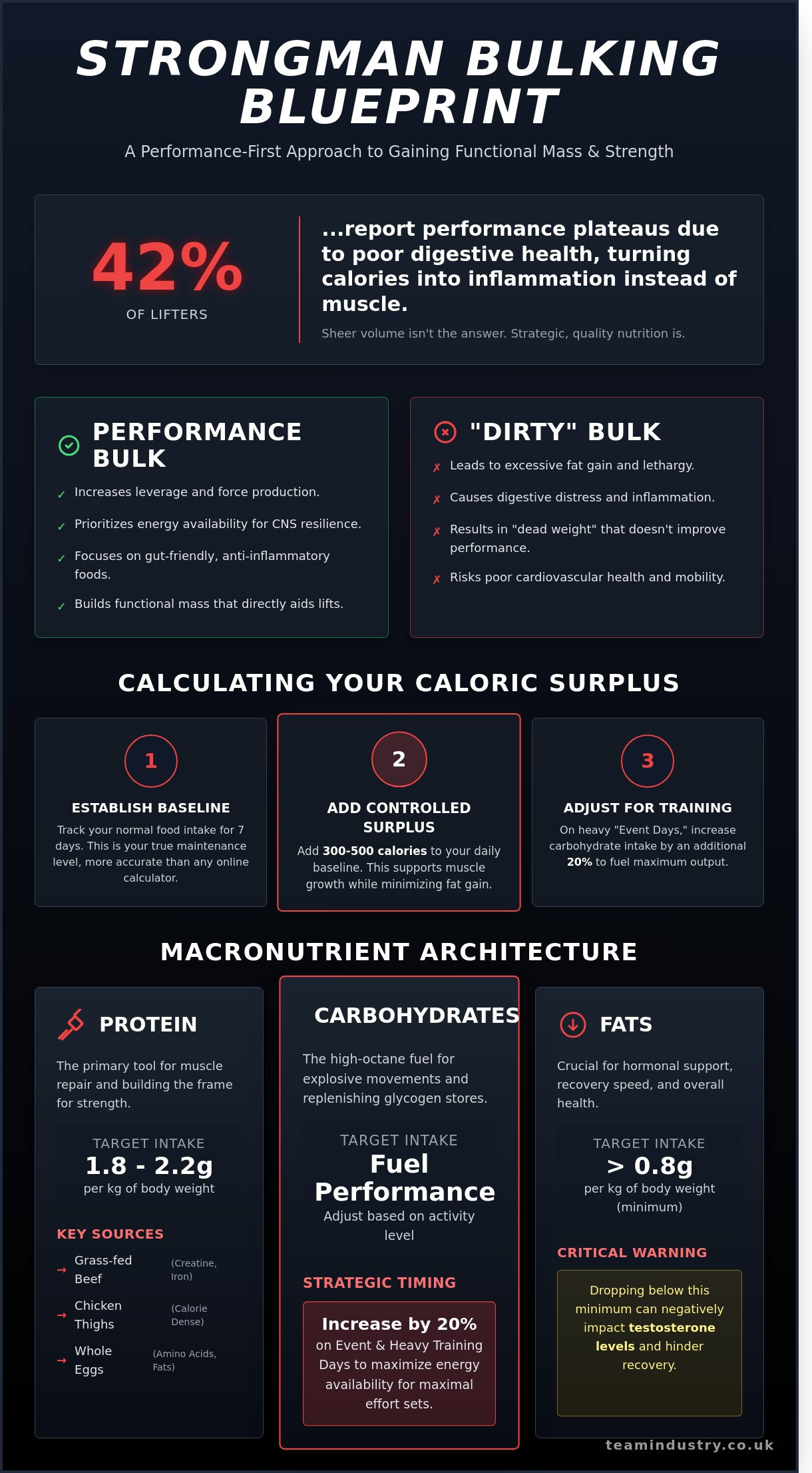
Eating 10,000 calories a day won't turn you into a world-class competitor if your body spends its energy fighting inflammation instead of building muscle. Most athletes believe that "mass moves mass," but a 2023 survey of competitive lifters showed that 42% of participants felt their performance plateaued because of poor digestive health. If you are struggling to hit your daily targets or feeling sluggish during event training, you need a professional strongman diet plan to bulk up that emphasizes quality over sheer volume.
We understand that the logistics of a high-performance lifestyle are demanding. It's difficult to balance heavy training sessions with the preparation required to fuel them properly. At Team Industry, we believe that success comes from a grounded, structured approach to your daily routine. This guide teaches you how to build a bespoke nutrition strategy that supports record-breaking lifts and rapid recovery without the unwanted side effects of a traditional "dirty bulk." We'll walk you through macro-nutrient timing, gut-friendly food choices, and the practical steps to maintain consistency every single day.
Key Takeaways
- Learn how to transition to a performance-led bulk that uses strategic mass to increase your leverage and force production during heavy lifts.
- Define your macro targets to ensure your strongman diet plan to bulk up provides the specific protein and carbohydrates required for tissue repair and energy.
- Master the fundamentals of digestion and electrolyte balance to maintain high energy levels and prevent cramping during demanding training sessions.
- Implement a disciplined daily structure that starts with immediate hydration and utilises calorie-dense snacks to sustain your performance.
- Maximise your results by treating recovery as a professional requirement and ensuring your equipment remains compliant with your new physical frame.
The Foundation of a Strongman Bulk: Calories vs Performance
A successful strongman diet plan to bulk up focuses on a strategic increase in mass to improve mechanical leverage and force production. This isn't about aimless eating; it's a calculated approach where every calorie serves a functional purpose. In the strength world, we adopt a performance-first mindset. Your success isn't measured by a body fat percentage, but by your ability to lock out a heavy log press or pull a new deadlift personal best. If the numbers on the scale go up but your gym performance stalls, you aren't bulking; you're just gaining dead weight.
Standard Basal Metabolic Rate (BMR) calculators often fail the modern strength athlete. These formulas are designed for average populations and frequently undershoot the needs of a 120kg lifter by 15% or more. High muscle density and the massive metabolic cost of moving heavy implements mean your baseline energy needs are significantly higher than a standard office worker's. While bulking and cutting cycles in other sports focus on extreme leanness, a strongman bulk prioritizes energy availability. This ensures your central nervous system stays resilient during 200kg yoke walks and high-volume training sessions.
Calculating Your Caloric Surplus for Strength
To find your starting point, track your current food intake for a 7-day period without making any changes. This data provides a more accurate maintenance baseline than any online calculator. Once you have this number, add a controlled surplus of 300 to 500 calories. This range is safer for maintaining mobility and cardiovascular health compared to a "dirty bulk" that can lead to excessive fat gain and lethargy. You should also adjust your intake based on your training schedule. On "Event Days," increase your carbohydrate intake by 20% to fuel the high-intensity output required for stones and carries. On "Rest Days," stick to your baseline to facilitate recovery without unnecessary fat storage. Supporting your body with our all-industry strength gear ensures you can safely handle the increased loads that come with this extra energy.
The Role of Body Mass in Static Lifts
In open-weight strongman, the "weight moves weight" philosophy remains a fundamental truth. Increased body mass, particularly through the trunk and upper back, improves your leverages for the squat and deadlift. Leverage is the mechanical advantage gained through body positioning and mass that reduces the effort required to move a heavy load. This extra mass acts as a counterbalance, providing a more stable foundation when pressing overhead or resisting the shearing forces of a heavy axle. Absolute mass matters because it shifts your center of gravity, making you harder to displace and more efficient at transferring force into the implement.
Building Your Strongman Meal Plan: Macros for Maximum Mass
Executing a successful strongman diet plan to bulk up requires more than just eating everything in sight. You need a calculated approach to macronutrients to ensure your body repairs tissue and fuels explosive movements. A National Institutes of Health study highlights that strength athletes have unique metabolic demands, requiring specific ratios of protein and carbohydrates to maintain lean mass during heavy training cycles. For a trainee weighing 100kg, this means consuming upwards of 4,000 calories daily to see consistent progress.
Protein serves as your primary tool for muscle repair. You should aim for 1.8g to 2.2g of protein per kg of body weight. This range provides enough amino acids to recover from 2 hour sessions of deadlifts and yoke walks. While protein builds the frame, carbohydrates provide the fuel. They replenish glycogen stores and ensure your ATP levels stay high for maximal effort sets. Fats shouldn't be neglected either. Dropping fat intake below 0.8g per kg of body weight can negatively impact testosterone levels and overall recovery speeds.
Protein Sources for the Heavy Lifter
Focus on high calorie, nutrient dense protein sources. Grass-fed beef is a staple in the strongman community because it contains natural creatine and iron, which are vital for oxygen transport and power output. Chicken thighs are often preferred over breasts because the extra fat content helps hit daily caloric targets without feeling bloated. Eggs provide a complete amino acid profile and healthy fats for hormonal support.
Efficiency matters when you're busy at the gym or on a job site. Using a Team Industry shaker bottle makes it easy to consume 30g to 50g of whey protein immediately after training. This quick hit of liquid protein jumpstarts the recovery process before you sit down for a solid meal. If you're looking to upgrade your training kit, you can explore our full range of strength gear to match your nutritional commitment.
Carbohydrate Cycling for Event Training
Managing your energy requires a strategic mix of simple and complex carbohydrates. Use sweet potatoes and oats for sustained energy throughout the day. During a 120 minute event session, your body needs fast acting sugars. White rice is the preferred choice for many top tier athletes because it's easy on the digestive system and enters the bloodstream quickly. This "Vertical Diet" approach focuses on low FODMAP carbs to prevent the "strongman slump" often caused by bloating.
- Pre-workout: 50g of complex carbs (oats) 2 hours before lifting.
- Intra-workout: 30g of simple sugars to maintain glucose levels.
- Post-workout: 100g of white rice to spike insulin and shuttle nutrients to the muscles.
Don't ignore micronutrients like magnesium and zinc. These minerals prevent cramping and support deep sleep, which is when 90% of your growth happens. Eating "clean" 80% of the time ensures your gut health stays intact, allowing you to process the massive amount of food required for a strongman diet plan to bulk up.
Optimising Digestion and Energy for Heavy Events
Eating for size is a full-time job. A successful strongman diet plan to bulk up relies on your body's ability to process nutrients effectively. You aren't what you eat; you're what you absorb. If your gut is constantly bloated, you cannot train at 100 percent capacity. Choose easy-to-digest carbohydrates like white rice or cream of rice before a session. These provide rapid glucose without the gastric distress caused by high-fibre alternatives. For athletes weighing over 100kg, hydration is a non-negotiable metric. Aim for at least 1 litre of water for every 25kg of body mass to maintain cognitive function and muscle elasticity during 300kg deadlift attempts.
The Vertical Diet Principles for Strongmen
This framework prioritises gut health to ensure you stay in a caloric surplus without falling ill. Stick to low-FODMAP vegetables like carrots and peppers. Avoid brassicas like broccoli or cauliflower, which often cause gas and uncomfortable pressure under a weight lifting belt. The 'Monster Mash' is the staple meal for the Team. Combine 200g of ground beef with 300g of white rice and bone broth. It's calorie-dense and passes through the digestive tract quickly. Add 30g of sauerkraut to your daily routine. This fermented food introduces beneficial bacteria, helping you break down the massive protein loads required for growth.
Sodium: The Forgotten Performance Enhancer
Salt is a powerful tool for strength. While general health guidelines suggest 6g daily for the public, an active strongman may require 10g to 15g to replace what is lost through sweat during a two-hour session. Sodium regulates muscle contractions and increases blood volume. This creates a better 'pump' and provides vital joint stability during heavy overhead presses. Do not rely on processed snacks for this. Instead, add 2g of high-quality sea salt to your pre-workout meal and intra-workout drinks. Proper electrolyte balance prevents the debilitating cramps that often ruin a heavy frame carry or yoke walk. If you are pushing your limits, ensure your joint support is backed by internal hydration and mineral balance. This pragmatic approach to nutrition ensures you remain a reliable and consistent performer on the platform.
How to Structure Your Daily Strongman Diet Plan
Success in heavy lifting depends on a logistical approach to nutrition. To follow an effective strongman diet plan to bulk up, you must treat your eating window like a professional shift. Consistency is your most valuable asset. Start your day with 500ml of water to rehydrate your system immediately after sleep. Follow this with a breakfast containing at least 40g of protein to halt muscle protein breakdown. This initial fuel sets the tone for the 5,000 or more calories required for elite strength performance.
Your mid-morning snack should focus on calorie density. A serving of 60g of mixed nuts or a large Greek yoghurt provides the necessary energy without causing digestive sluggishness. Two hours before you hit the gym, consume a meal rich in complex carbohydrates and moderate protein. This 120-minute window allows for proper glucose absorption, ensuring you have the explosive power needed for heavy carries or log presses. Don't skip this step; training on an empty stomach is an operational failure in a bulk.
Recovery starts the moment the session ends. Drink a rapid-absorption shake containing 50g of whey protein and 60g of simple carbohydrates within 30 minutes of your final set. Follow this with a substantial whole-food meal 90 minutes later. Finally, consume slow-digesting protein like casein or four whole eggs before bed. This provides a steady supply of amino acids for the 8 hours of sleep required for tissue repair and hormonal balance.
Sample 5,000 Calorie Strongman Day
Hitting high calorie targets requires a structured menu. A typical day for an athlete on a strongman diet plan to bulk up might look like this:
- Breakfast: 5 large eggs, 3 thick slices of sourdough toast with grass-fed butter, and 250ml of orange juice.
- Lunch: 250g of sirloin steak, 2 cups of white jasmine rice, and a large portion of steamed spinach for micronutrients.
- Dinner: 2 large salmon fillets, 400g of roasted potatoes, and 150g of carrots.
Managing Appetite During a Bulk
Eating for mass is often more taxing than eating for fat loss. When solid food becomes difficult to stomach, use liquid calories. A smoothie containing oats, nut butter, and protein can provide 800 calories in a format that bypasses the "full" sensation. Implement the 10-minute walk rule after your largest meals. Light movement aids digestion and has been shown to improve gastric emptying by up to 20 percent. Organise your meal prep every Sunday to ensure you never miss a meal during a busy work week. Reliability in the kitchen leads to reliability on the platform.
Prepare for your heaviest training sessions with professional-grade equipment designed for the industrial athlete. Explore the full Team Industry strength gear collection here.
Supporting the Bulk: Recovery, Gear, and Consistency
Eating for a strongman diet plan to bulk up is only half the battle. Sleep acts as the primary driver for tissue repair and hormonal regulation. Research from the University of Chicago indicates that sleeping 8.5 hours compared to 5.5 hours can result in a 55% difference in how the body retains muscle mass during weight changes. For a strongman, sleep is the most anabolic tool available. Aim for a minimum of 8 hours of quality rest to ensure your central nervous system recovers from the extreme mechanical tension of heavy carries and pulls.
Monitoring your progress requires a more nuanced approach than just stepping on the scale. While a steady weight gain of 0.5kg to 1kg per week is a healthy target for a bulk, the logbook is your most reliable witness. If your body weight is rising but your logbook shows your 1RM (one-rep max) is stalling, you're likely gaining excess fat rather than functional mass. Use a combination of the mirror, gym performance, and monthly measurements to track your growth. Once you reach your goal weight, transition into a maintenance phase for 4 to 6 weeks. This allows your body to solidify the new muscle mass and prevents the "rebound" effect often seen after aggressive dieting phases.
Adjusting Your Strength Gear for a Heavier Frame
As your body mass increases, your old equipment will inevitably feel restrictive. A 10kg gain often means your standard prong belt is suddenly on its final hole, which can compromise your core stability during a heavy yoke walk. Upgrading to a professional lever belt provides the consistent, heavy-duty tension required for 200kg+ deadlifts. It's also vital to invest in joint support as your training loads increase alongside your body weight. Your tendons and ligaments often take longer to adapt than your muscles. Finally, ensure your lifting clothes provide enough room for a full range of motion. Tight, restrictive fabric shouldn't be the reason you miss a depth on a squat.
This dedication to a professional setup extends beyond personal equipment. For training facilities and gyms aiming to provide a top-tier experience, ensuring high-quality amenities like towels and other essentials is crucial. To source these supplies reliably, you can visit Linen Plus.
The Mental Game of Bulking
Committing to a strongman diet plan to bulk up requires significant mental grit. You'll likely lose some abdominal definition as you move toward a heavier weight class. This is a strategic trade-off for hitting a 300kg squat or a 140kg log press. Food fatigue is a real obstacle, especially when you're facing your fourth 1,000-calorie meal of the day. It's helpful to view eating as part of your job. Stick to the plan for at least 12 to 16 weeks to see genuine structural changes. Consistency beats intensity every time when you're building a world-class strength foundation.
This level of dedication is what separates amateurs from professionals, a principle that applies just as much in the workplace. For businesses looking to foster a similar high-performance culture through strategic rewards, it's worth it to discover EiC Direct.
Fuel Your Next Personal Best
Mastering your strongman diet plan to bulk up requires a disciplined approach to both the kitchen and the platform. You'll need to maintain a consistent surplus, often exceeding 4,500 calories daily for heavyweight athletes, to support the high-intensity effort required in training. Focus on hitting 2g of protein per kilogram of body weight and timing your 75g carbohydrate servings around your heaviest lifting windows. This structured method ensures your energy levels remain stable during grueling 90 minute event sessions.
The Team Industry philosophy is built on the reality of the grind. We provide professional-grade gear designed by UK strength enthusiasts who understand that a heavy yoke walk requires more than just calories. Our equipment is trusted by competitive strongmen and powerlifters across the country to provide the stability needed during maximum effort sets. Don't leave your recovery or safety to chance when you're pushing for a new 320kg deadlift record.
Ready to fuel your gains? Shop the Team Industry Strength Collection
Consistency is the foundation of every great lifter, so stay dedicated to the process.
Frequently Asked Questions
How many calories should a beginner strongman eat to bulk up?
Beginner strongmen should aim for a daily intake of 15 to 20 calories per pound of body weight. For a 90kg athlete, this equates to roughly 3,000 to 4,000 calories to maintain a consistent strongman diet plan to bulk up. Track your weight weekly and adjust your intake by 250 calories if the scale doesn't move. Team Industry's daily tracking logs help you maintain this precision without any guesswork.
Can I do a strongman diet as a vegetarian or vegan?
You can successfully follow a strongman diet as a vegetarian or vegan by prioritizing high-density plant proteins. Focus on seitan, which provides 75g of protein per 100g, or pea protein isolates. Many athletes find that three daily shakes help them reach their 200g protein targets. Our Team Industry nutrition guides offer plant-based alternatives that match the caloric density of traditional meat-based plans.
What do professional strongmen eat on competition day?
Professional strongmen consume fast-acting carbohydrates and electrolytes every 45 to 60 minutes during a competition. Common choices include rice pudding, bananas, and honey to keep glycogen stores full. Avoid high-fiber or high-fat foods on the day, as these slow down digestion and cause lethargy. Stick to the 50g carb-per-hour rule to maintain peak power output during heavy pulls.
Is it okay to have 'cheat meals' on a strongman diet plan?
Incorporating cheat meals is acceptable if they help you reach a 4,000 calorie target, but they shouldn't exceed 20% of your weekly intake. High-calorie options like burgers provide necessary fats and salts for heavy sessions. However, 80% of your strongman diet plan to bulk up must consist of nutrient-dense whole foods like steak, rice, and greens. Reliable progress requires a stable nutritional foundation rather than a diet of processed snacks.
How much protein is too much for a strength athlete?
Consuming more than 2.5g of protein per kg of body weight generally yields diminishing returns for muscle synthesis. For a 120kg athlete, 300g of protein is the effective limit according to 2023 sports science benchmarks. Excess protein often displaces the carbohydrates you need for explosive energy. Use Team Industry's macro calculator to ensure your ratios support recovery without wasting expensive supplements.
What are the best supplements to support a strongman bulk?
The most effective supplements for a strongman bulk are creatine monohydrate, whey protein, and Vitamin D3. Taking 5g of creatine daily increases ATP production for better performance in the 1 to 5 rep range. We recommend adding a high-quality multivitamin to cover micronutrient gaps during high-volume training phases. These tools support the hard work you put in at the gym but don't replace a solid meal plan.
How do I stop feeling bloated all the time while eating for mass?
To reduce bloating, space your meals 3 hours apart and incorporate digestive enzymes or fermented foods like kimchi. Drinking 150ml of water with a tablespoon of apple cider vinegar before large meals can also improve gastric emptying. Many athletes find that switching from large amounts of raw vegetables to steamed versions reduces gas by 40%. Team Industry's meal prep templates emphasize easy-to-digest carb sources like white rice to keep you feeling light.
Should I do cardio while trying to bulk up for strongman?
You should perform 2 to 3 sessions of low-intensity steady state (LISS) cardio per week to improve recovery and heart health. Keeping your heart rate between 120 and 130 beats per minute for 30 minutes won't hinder your bulk. It actually improves blood flow to damaged muscle tissues and increases your work capacity for heavy sets. Think of cardio as a maintenance task that keeps your engine running efficiently while you add mass.


Share:
Weightlifting Lifting Straps: A Professional Comparison for Strength Athletes
Smelling Salts for Lifting: The Ultimate Guide to Science, Safety, and Performance