


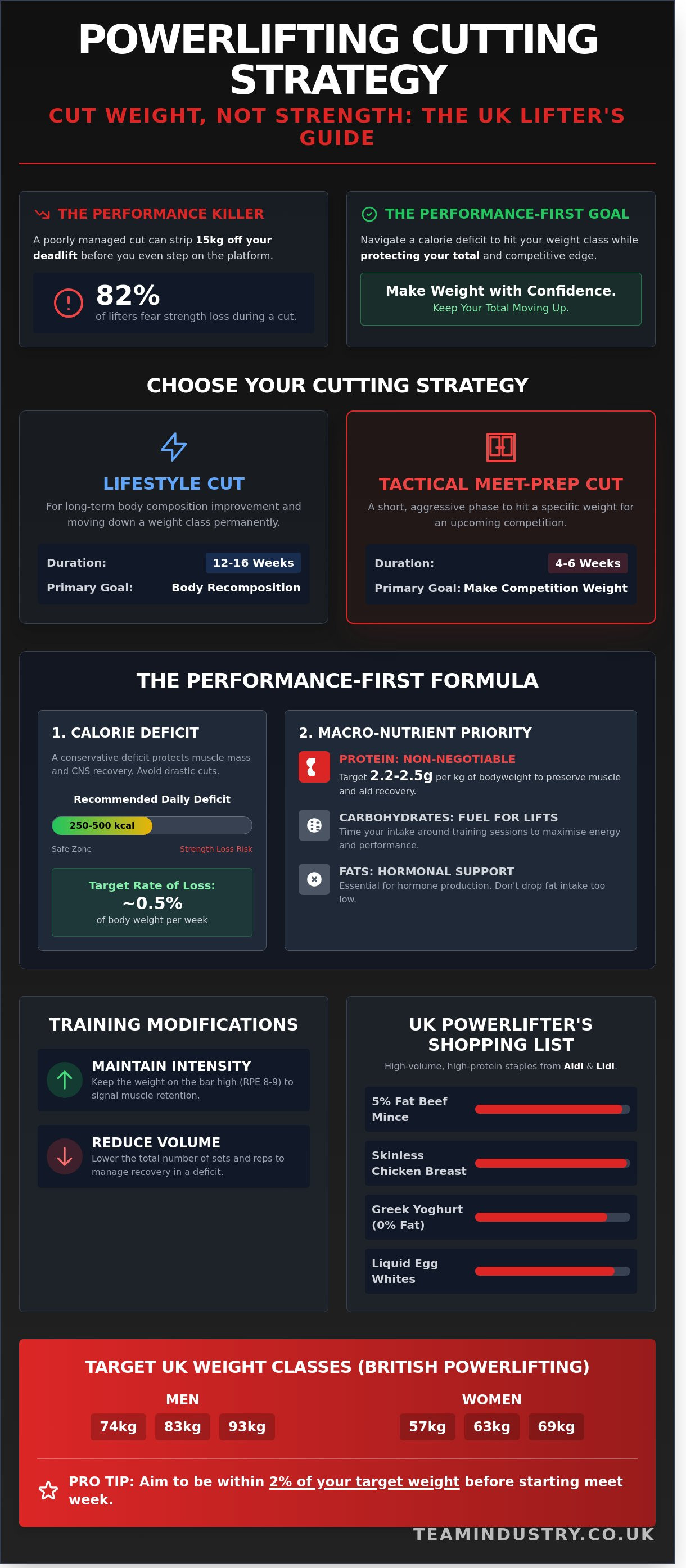
A poorly managed weight cut can strip 15kg off your deadlift before you even step onto the platform. It's a common trap for lifters who prioritise the scales over the barbell. If you've ever felt your energy levels tank during heavy triples, you know that a generic deficit isn't enough. Finding a reliable powerlifting diet plan for cutting uk requires a pragmatic approach that accounts for local food standards and the grit of British training halls. At Team Industry UK, we value the same precision in nutrition that we apply to logistics and staffing. We know that 82% of lifters fear strength loss during a cut, but with the right strategy, that fear is unnecessary.
You shouldn't have to choose between hitting your weight class and maintaining your GL points. We're here to show you how to navigate a 500-calorie daily deficit without losing your competitive edge. This guide provides a clear, actionable strategy for dropping weight while keeping your strength locked in. We'll break down UK-specific shopping lists from retailers like Aldi and Lidl, macro-tracking for British labelling, and the exact timing you need to stay fuelled for every session. It's time to make weight with confidence and keep your total moving in the right direction.
Key Takeaways
- Learn how to distinguish between a standard lifestyle cut and a tactical meet-prep strategy to drop a weight class while sparing maximum muscle.
- Establish a performance-focused powerlifting diet plan for cutting uk by calculating a moderate calorie deficit that protects your top-end strength.
- Identify high-volume UK food staples that manage hunger effectively and provide the best nutritional value for your weekly shopping budget.
- Discover how to modify your training programme by maintaining bar intensity while reducing volume to ensure your total remains high as your weight decreases.
- Get practical advice on meal prepping for a busy lifestyle and staying consistent with your goals as part of the supportive Team Industry community.
Understanding the Powerlifting Cut: Weight Classes vs Body Composition
A powerlifting cut is a calculated strategy to reduce body fat while keeping every possible kilogram of muscle mass. Unlike a standard weight loss phase, this process focuses on maintaining your total across the squat, bench press, and deadlift. When you develop a powerlifting diet plan for cutting uk, you must choose between a lifestyle cut and a tactical meet-prep cut. A lifestyle cut focuses on improving body composition over 12 to 16 weeks to move into a lower weight class long-term. In contrast, a tactical cut is a shorter, 4 to 6 week aggressive phase designed to hit a specific weight for an upcoming competition.
To succeed, you have to value performance over being "shredded." Carrying slightly more body fat often provides better leverages and joint protection during heavy sessions. Before you start, it's helpful to understand What is Powerlifting? and how its specific demands dictate your nutritional needs. Your goal is to enter the platform lean enough to fit your category but fueled enough to break personal records.
Why Powerlifters Cut Differently Than Bodybuilders
Bodybuilders focus on muscle volume and skin-thin leanness, but powerlifters must protect the central nervous system (CNS). Heavy lifting at 90% of your one-rep max requires immense neurological recovery that a standard bodybuilding "shred" often ignores. You also need to maintain physical leverages. Losing too much "padding" around the midsection can change your squat mechanics or reduce your "pop" off the chest in the bench press. If you feel "flat" or depleted, your technique will break down under 150kg or 200kg loads, increasing injury risks. Using high-quality all industry strength gear during this phase helps maintain stability as your body dimensions shift.
Identifying Your Target UK Weight Class
The UK powerlifting scene is dominated by British Powerlifting (IPF) and the GPC-GB. British Powerlifting uses standard categories like 74kg, 83kg, and 93kg for men, and 57kg, 63kg, and 69kg for women. GPC-GB offers different brackets, often attracting lifters who prefer a different weigh-in protocol. Deciding whether to cut depends on your current strength-to-weight ratio. If you're 85kg and your lifts are stagnant, dropping to the 83kg class might make you more competitive. To ensure a safe and effective weight-class drop, aim to be within 2% of your target body weight before starting any final competition week adjustments. As your waist size changes, check that your weight-lifting belts still provide the necessary intra-abdominal pressure for heavy singles.
Calculating Your Macros for a Performance-First Cut
Precision is the foundation of any successful strength programme. To lose body fat without watching your deadlift numbers plummet, you must first establish your Total Daily Energy Expenditure (TDEE). For a typical 90kg lifter, maintenance often sits between 2,800 and 3,200 calories depending on daily activity levels. Creating a powerlifting diet plan for cutting uk requires a conservative approach; jumping straight into a 1,000-calorie deficit will likely lead to central nervous system fatigue and muscle loss.
The Team recommends a moderate deficit of 250 to 500 calories. This controlled reduction targets a weight loss of roughly 0.5% of body weight per week. This pace preserves the lean tissue necessary to move heavy loads while allowing for consistent recovery. Rapid weight loss is the enemy of the squat rack. By keeping the deficit small, you ensure that your training sessions remain productive rather than just a struggle to survive.
The Protein Priority: Protecting Your Hard-Earned Muscle
Protein is the most critical macro-nutrient during a cut. You should aim for 2.2g to 2.5g of protein per kilogram of body weight. If you weigh 100kg, your daily target is 220g to 250g. High protein intake is non-negotiable because it provides the amino acids required to repair tissue under the heavy stress of triples and singles. It also has a higher thermic effect, meaning your body burns more energy processing it compared to fats or carbs.
UK supermarkets offer excellent lean options to hit these targets without overshooting your calorie budget. Focus your trolley on 5% fat beef mince, skinless chicken breasts, and Greek yoghurt from retailers like Aldi or Lidl. For those on the move, high-protein snacks are essential to stay on track. Keeping your kit bag stocked with the right fuel and performance-focused gear ensures you stay prepared for every session.
Carbohydrates and Fats: Fueling the Big Three
Hormonal health depends on fat intake. You must establish a fat floor of at least 0.6g per kg of body weight to maintain testosterone levels and joint health. For an 80kg athlete, this means a minimum of 48g of fat daily. Once you've set your protein and fat, the remaining calories belong to carbohydrates. This specific powerlifting diet plan for cutting uk prioritises glycogen availability for your heaviest training days.
The Team Industry approach involves eating for the workout you have. This means carbohydrate cycling. On heavy squat or deadlift days, increase your carb intake by 50g to 100g and reduce them on rest days. This strategy ensures you have maximum explosive power when under the bar while maintaining the weekly calorie deficit needed for fat loss. It is a pragmatic, results-oriented method that respects the grit required for high-level lifting.
Strategic Food Choices: A UK Powerlifter’s Shopping List
Managing hunger is the primary challenge when executing a powerlifting diet plan for cutting uk. You need to prioritise high-volume, low-calorie foods that fill the stomach without exceeding your daily energy allowance. Most UK supermarkets use the traffic light labelling system on 80% of processed goods. Focus on "green" or "amber" for fats and sugars to keep your macros on track. You should also aim for 2 to 3 litres of water daily. This helps maintain blood volume and strength. Adding a pinch of sea salt or a dedicated electrolyte tablet to your water ensures your muscles fire correctly during heavy sets. If your joints feel the strain of lower calories, consider using joint support sleeves to stay protected during your heaviest sessions.
Lean Protein Sources Found in the UK
Protein is non-negotiable for muscle retention. Skyr and Quark are essential UK staples, often providing 11g of protein per 100g with minimal fat. They're cheaper than most supplements and very versatile. For main meals, 5% fat British beef mince offers 20g of protein per 100g while keeping calories manageable. Tinned tuna and pre-cooked chicken breasts provide quick, 25g protein hits for lifters on the go. If you prefer plant-based options, Quorn pieces contain roughly 14g of protein per 100g. Seitan is even more dense, often reaching 25g of protein per 100g. These choices ensure you hit your targets without breaking the bank at the checkout.
High-Fibre Carbs for Satiety and Energy
Stable energy levels prevent gym sessions from stalling. Oats and sweet potatoes provide a slow release of glucose, which is vital for long training blocks. Wholemeal pasta is another reliable choice for keeping your digestive system moving. You can use the "volume hack" by filling half your plate with cruciferous vegetables. 400g of broccoli contains only 136 calories but takes up significant space in the stomach. White rice is a superior pre-workout carb for digestion because it enters the bloodstream quickly without causing bloating during squats. This ensures you have the immediate fuel required to maintain your PRs. To keep your form tight as your waistline shrinks, a high-quality weight lifting belt provides the necessary intra-abdominal pressure for safety and performance.
Managing Training Intensity and Gear During a Cut
When you transition to a powerlifting diet plan for cutting uk, your recovery capacity naturally decreases. You can't expect to maintain the same total training volume as you did during a mass-gain phase. Focus on keeping the intensity high. Keep the weight on the bar at roughly 85% of your max, but reduce the total number of sets by 25% to 40% to prevent burnout. This approach signals to your body that it needs to keep its muscle mass while shedding fat. If you drop the weight too low, you risk losing the very strength you worked so hard to build.
Why Your Lifting Belt Fit Changes
A weight loss of just 2kg to 5kg can significantly alter your abdominal circumference. This change directly impacts how you brace. If your belt is too loose, you lose vital intra-abdominal pressure, which puts your lower back at risk during heavy squats. Team Industry weight lifting belts, especially lever designs, provide the consistent resistance needed for a secure brace. You'll likely find yourself moving down a notch every 3 to 4 weeks. Don't wait until the belt feels like it's sliding; tighten it as soon as you feel a gap between your core and the leather.
Support Gear and Joint Health
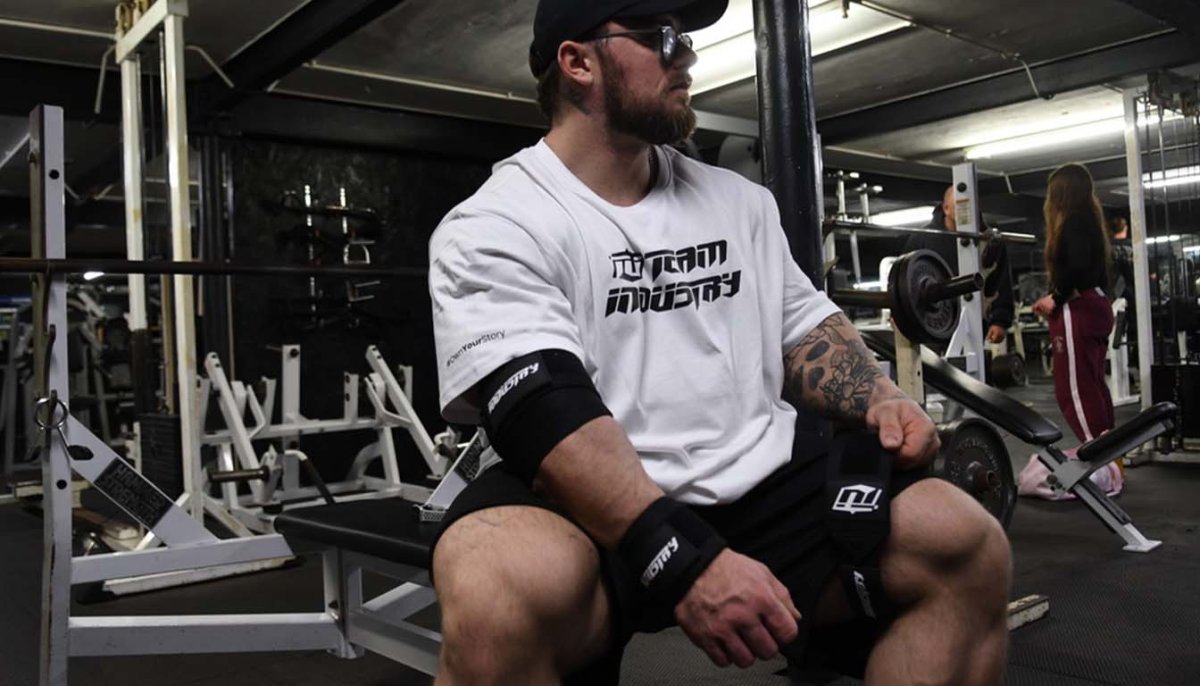
As body fat and water retention decrease, you lose what many lifters call "internal padding" around the joints. This often leads to increased aches during heavy sessions. Using joint support like 7mm knee sleeves provides the compression and warmth necessary to keep your movements fluid.
- Wrist Stability: When energy levels are low, your form can waver. Use wrist wraps on the bench press to ensure the bar stays stacked over your forearms.
- Grip Maintenance: Central nervous system fatigue often shows up first in your grip. Apply liquid chalk to ensure the bar doesn't slip during heavy deadlift sets when your focus is elsewhere.
- Recovery: Listen to your joints. If a specific movement causes sharp pain due to reduced cushioning, swap it for a similar variation that allows for pain-free execution.
Maintaining your strength during a calorie deficit requires a pragmatic approach to both your programme and your equipment. It's about being efficient with your energy and ensuring your safety remains a priority.
Prepare for your next session with our professional powerlifting gear designed for maximum support.
Executing the Plan: Consistency and the Team Industry Community
Executing a successful powerlifting diet plan for cutting uk requires more than just a spreadsheet of macros. It demands a pragmatic approach to your daily routine. Batch cooking is your most effective tool for managing a busy UK lifestyle. Dedicate a few hours on a Sunday to prep lean proteins like turkey mince or chicken breast from your local butcher. This prevents you from reaching for high-calorie convenience meals during a late-night commute from the gym. If you find yourself at a social event, don't panic. Choose a high-protein option and get back to your plan the next morning. One meal outside your targets won't ruin a twelve-week prep, but the guilt associated with it can lead to a cycle of poor choices. Stay grounded and focus on the next win.
Tracking Progress Beyond the Scale
Your morning weight and your "gym weight" will differ. Factors like hydration, salt intake, and even the time of day you train can cause fluctuations of up to 2kg. Don't let a temporary spike on the scale discourage you. Use your training logbook as the primary indicator of success. If you're maintaining your 140kg bench press while your body weight drops, you're losing fat, not muscle. Monitor your recovery markers closely. A sudden drop in sleep quality or a rising resting heart rate often indicates that your deficit is too aggressive. It is also vital to ensure your mens gym clothes still fit correctly. High-performance apparel should support your movement without being so loose that it interferes with your bar path during a heavy pull.
The goal is to track trends, not daily blips. Of course, the official weigh-in requires a level of precision that home scales can't match. For industries and events where accuracy is non-negotiable, a professional provider like Australia's Independent Scale Service is the standard for maintaining calibrated equipment. This commitment to precision is something every competitive lifter can appreciate.
Joining the Team: Long-Term Strength
Cutting is a difficult phase that tests your discipline. Having a community behind you makes the process manageable. Team Industry UK functions as a partner in your strength journey, providing the reliability you need when training gets tough. We understand the grit required to step onto the platform at a lower weight class while keeping your total high. As you gear up for your next meet, consider the impact of your weight change on your equipment. If your belt or wraps feel different, visit our physical location in Surrey. We provide expert advice on gear sizing and offer bespoke apparel printing to help you represent your team with pride. Consistency is the only path to the podium. Stay focused on the work, and we'll see you on the platform.
Secure Your Total and Master Your Weight Class
Successfully executing a powerlifting diet plan for cutting uk requires more than simple calorie restriction. It demands a precise macro balance, such as maintaining protein at 2.2g per kilogram of body mass to preserve essential lean tissue. You've learned how to swap standard supermarket staples for nutrient-dense UK alternatives and why adjusting your RPE by 1 or 2 points during peak weeks prevents physical burnout. Consistency is the only metric that guarantees results on the scales.
As your bodyweight drops, your equipment becomes a vital insurance policy against technical breakdown. Team Industry provides professional-grade lever belts that ensure consistent bracing even as your waist measurements decrease. Our heavy-duty knee sleeves offer 7mm of neoprene support for critical joint protection during heavy sessions. We're a specialist brand trusted by over 1,000 members of the UK strength community to deliver reliable kit that survives the competitive grind.
Upgrade your strength gear for your next cut at Team Industry UK
Stick to the data, trust your preparation, and we'll see you on the platform.
Frequently Asked Questions
How much weight can a powerlifter safely lose per week?
A powerlifter should aim to lose between 0.5% and 1% of their total body weight every seven days. For a lifter weighing 93kg, this equates to a loss of 0.46kg to 0.93kg per week. This gradual approach ensures you retain maximum muscle mass and maintain the leverage required for heavy squats and deadlifts. Dropping weight faster than this often leads to a 10% or greater reduction in training volume.
Will I lose strength if I cut for a powerlifting meet?
You won't necessarily lose strength if you manage your powerlifting diet plan for cutting uk with a modest daily deficit of 300 to 500 calories. Research from 2022 indicates that lifters who lose weight over a 12-week period often maintain or even increase their Wilks score. The Team Industry approach focuses on high protein intake, specifically 2.2g per kilogramme of body weight, to protect your 1RM during the fat loss phase.
What are the best pre-workout meals for powerlifting on a cut?
The best pre-workout meal consists of 30g to 60g of fast-digesting carbohydrates paired with 20g of lean protein, consumed 60 minutes before your session. A 150g serving of white rice with 100g of chicken breast or two rice cakes with honey and a whey shake are excellent UK-friendly options. These provide the immediate glucose needed for high-intensity sets without causing digestive discomfort. Team Industry's nutrition guides offer bespoke meal templates to help you hit these specific targets.
Should I do cardio while cutting for powerlifting?
You should incorporate low-intensity steady-state (LISS) cardio, such as 30 minutes of brisk walking three times a week, to increase your calorie deficit without impacting recovery. Avoid high-impact activities like running, which can interfere with the "interference effect" and hinder your squat progress. Keeping your heart rate between 110 and 120 beats per minute ensures you burn fat while keeping your legs fresh for the platform.
How do I manage a water cut after a successful fat loss phase?
Start your water load five days before the weigh-in by increasing intake to 6 or 8 litres per day, then taper down to 500ml the day before the meet. This process triggers a natural flushing effect through the kidneys. It's a technical procedure that requires precision; many lifters use Team Industry's monitoring logs to track every millilitre. Only attempt a water cut if you're within 3% to 5% of your target weight class.
Can I use smelling salts to boost performance while on low calories?
Yes, smelling salts provide a sharp boost to the central nervous system that can help you overcome the mental fatigue of training on lower calories. They trigger an immediate adrenaline rush, which is useful for top-set attempts on a powerlifting diet plan for cutting uk. While various brands are popular in the UK, remember that salts are a temporary stimulant and don't replace the need for proper recovery and nutrition.
What supplements are essential for a powerlifting cut in the UK?
Creatine monohydrate, whey protein, and Vitamin D3 are the three most essential supplements for a UK-based lifter on a cut. Since 60% of the UK population is Vitamin D deficient during winter months, taking 2,000 IU daily is vital for maintaining bone density and hormonal health. Team Industry recommends sourcing batch-tested supplements to ensure you remain compliant with British Powerlifting and IPF anti-doping regulations.
How do I know if I should move down a weight class or stay put?
Move down a weight class if your body fat percentage is currently above 15% for men or 24% for women. If you're already lean and your lifts have stalled for more than 16 weeks, it's usually better to stay put or even move up. Performance should always dictate your category choice. Use a professional set of callipers or a DEXA scan to get an accurate reading before making a final decision.

Share:
Oversized Bodybuilding T-Shirts: The Ultimate Guide to Fit, Fabric, and Performance
Weightlifting Lifting Straps: A Professional Comparison for Strength Athletes