

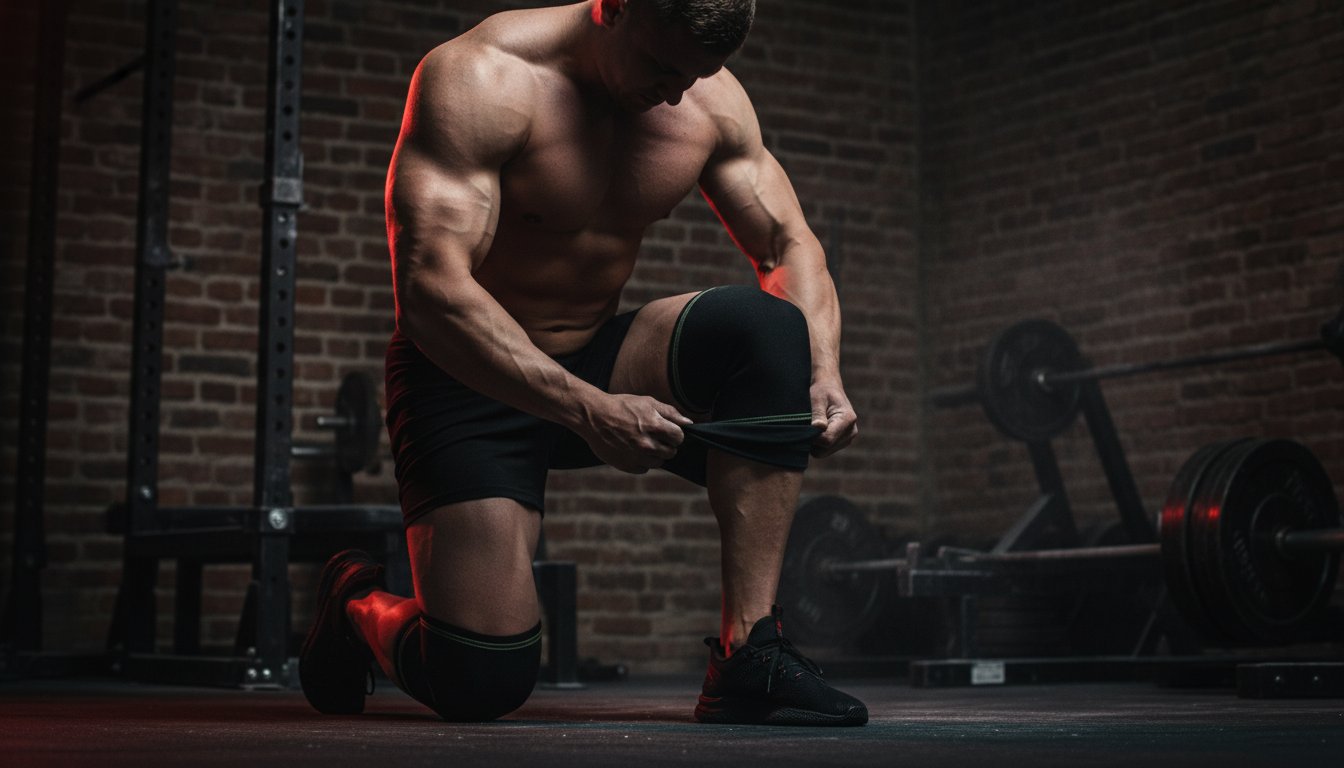
You're halfway through a 140kg squat when you feel the familiar, irritating slide of neoprene drifting toward your shins. It's a distraction that can ruin a max-effort lift and leave your joints cold just when they need support the most. Learning how to stop knee sleeves from rolling down is about more than just comfort; it's about maintaining the compression required for safety and performance. At Team Industry UK, we believe your equipment should be a reliable partner in the gym, not a source of frustration that causes skin irritation or lost focus.
We agree that nothing breaks your concentration like having to readjust your gear between every single set. This guide provides the professional techniques you need to ensure your sleeves stay locked in place for your entire training session. We'll examine the impact of correct sizing, the role of moisture-wicking skin prep, and how the construction of our Heavy Duty Knee Sleeves compares to others on the May 2026 IPF approved list. By the end of this article, you'll know exactly how to maximise the lifespan of your current gear and when it's time to upgrade to a more dependable fit.
Key Takeaways
- Identify the physical difference between sleeve sliding and rolling to troubleshoot whether your issue is sweat management or a sizing mismatch.
- Master the professional "Inside-Out" application technique to learn how to stop knee sleeves from rolling down by positioning the neoprene securely on the upper thigh.
- Apply a light layer of Team Industry Liquid Chalk to the calf area to create a friction-based "stopper" that prevents gear from drifting mid-set.
- Learn to evaluate the structural integrity of your equipment, as most competition-grade sleeves have a functional lifespan of 12 to 18 months.
- Understand when to transition from standard support to Heavy Duty Knee Sleeves to ensure your gear can handle the demands of max-effort powerlifting.
Understanding Why Knee Sleeves Roll or Slip During Lifts
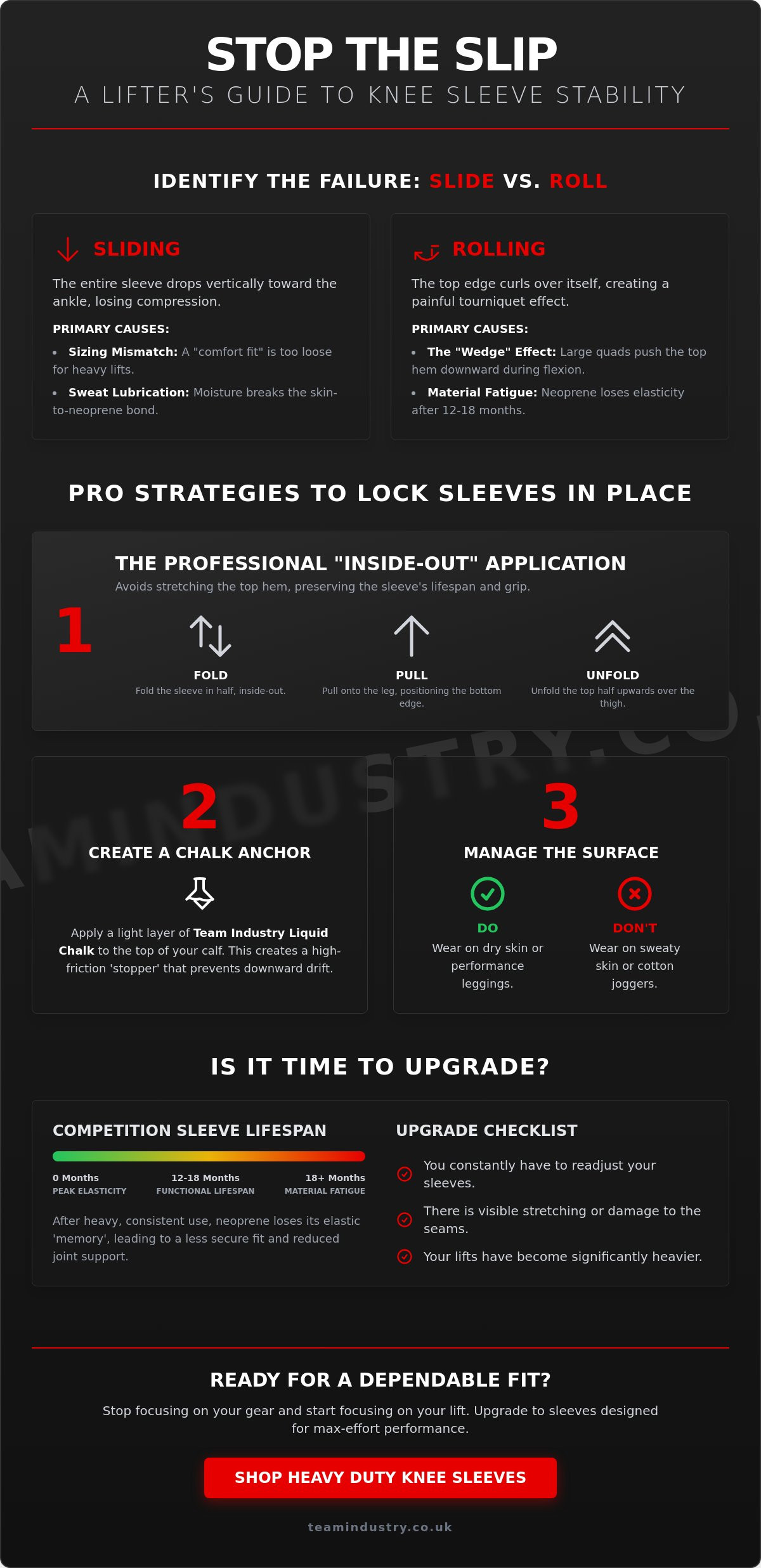
Rolling and sliding are two distinct mechanical failures that disrupt your lifting rhythm. A "slide" is a total vertical drop where the entire sleeve shifts toward the ankle. A "roll" occurs when the top edge curls over itself, often creating a painful tourniquet effect on the lower quad. Both issues distract you during heavy sets, but they stem from different causes. Most lifters struggle with how to stop knee sleeves from rolling down because they haven't addressed the friction bond between the neoprene and the skin. Sweat acts as a lubricant, breaking this bond, while material fatigue over 150 sessions causes neoprene to lose its "memory" and elasticity.
Sizing Errors: The Difference Between Comfort and Performance Fit
A "comfort fit" might feel right for a general bodybuilding session, but it rarely survives a 180kg squat. For compression garments to function as intended, they require a specific tension that resists the downward force of movement. Measure your calf and the lower portion of your thigh while the muscle is relaxed. If you're between sizes, a "competition fit" involves sizing down. However, extreme downsizing can lead to seam failure within six months and restricted blood flow. Accurate measurement is the first step in ensuring your gear stays put.
The Taper Factor: Why Muscular Quads Cause Rolling
Lifters with significant quad development often face the "wedge" effect. When the thigh is significantly wider than the knee, the natural taper of the leg pushes the sleeve downward during deep flexion. Thick 7mm sleeves, like those found in our joint support range, provide superior rebound but have less flexibility than 5mm variants. This extra wall thickness makes them more prone to rolling if the top diameter doesn't perfectly match your thigh circumference. Understanding this ratio helps you choose a sleeve that can handle your specific leg shape.
Practical Strategies to Keep Knee Sleeves in Place
Maintaining a secure fit requires managing the interface between your skin and the neoprene material. If you're wondering how to stop knee sleeves from rolling down, start with moisture control. Even a small amount of sweat acts as a lubricant that allows the sleeve to migrate. Always begin your session with bone-dry skin and sleeves. Pull the sleeve roughly 2 to 3 centimetres higher on the thigh than you think is necessary before your first warm-up set. This initial "over-pull" accounts for the minor settling that occurs during your first few reps.
The Chalk and Sweat Strategy
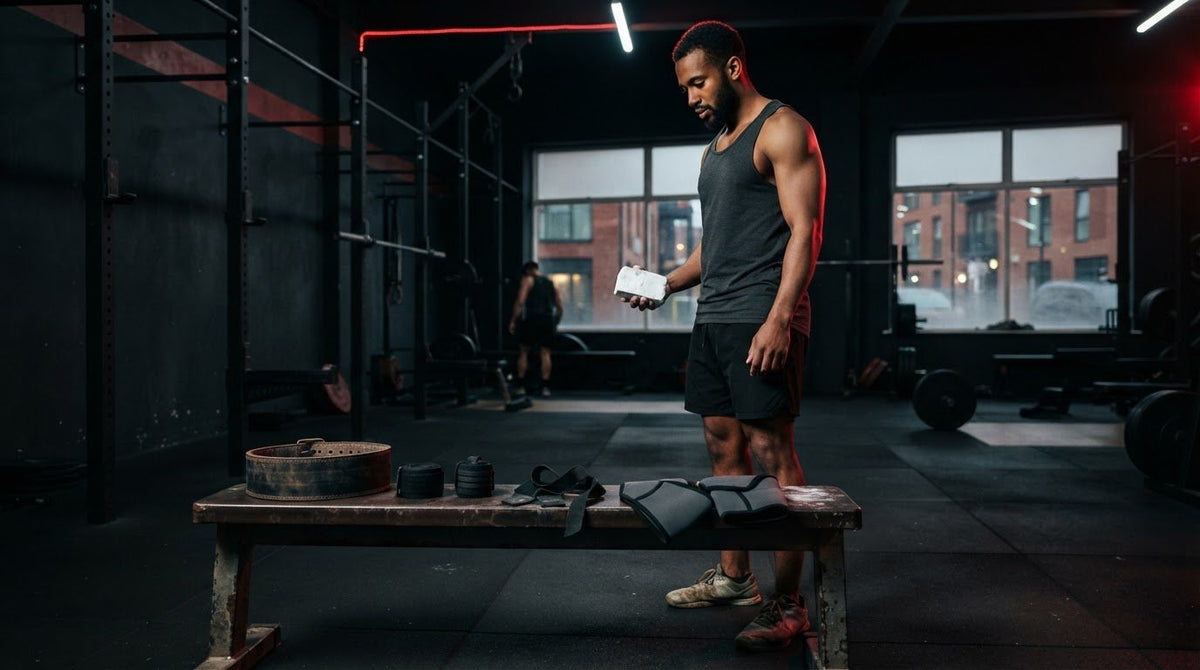
A highly effective professional tip involves using liquid chalk as a friction anchor. Apply a light dusting to the top of your calf, just below the knee joint. This creates a textured "stopper" that prevents the bottom cuff from sliding, which in turn keeps the top from rolling. Between sets, use a dry towel to wipe away any perspiration. Maintaining this vacuum-like seal is supported by a scientific literature review on knee sleeves, which highlights how consistent compression is vital for proprioception and joint stability.
Apparel Choices: Bare Skin vs. Performance Leggings
The surface you wear your sleeves over dictates their grip. While bare skin offers high initial friction, it becomes slippery as you sweat. Cotton joggers are the worst choice; the loose fabric bunches and actively encourages the sleeve to slide. Conversely, high-quality performance leggings provide a consistent, moisture-wicking surface that locks the neoprene in place. The fabric's compression works in tandem with the sleeve to create a unified layer. If you find bare skin is too unreliable, consider exploring our range of gym accessories to improve your training setup's reliability.
The Professional Application Method: Step-by-Step
Many lifters instinctively grab the top hem of their gear and yank it upward. This is a mistake. Constant pulling at the top hem compromises the structural integrity of the neoprene and permanently stretches the upper opening. Once that top band loses its tension, the sleeve will inevitably slide. Learning the correct mechanical application is the most effective way to understand how to stop knee sleeves from rolling down over the long term. Proper technique ensures the material remains snug against the skin without being prematurely damaged.
How to Use the Inside-Out Fold Method
Turn the sleeve completely inside out and upside down. Slide it up your leg until the bottom cuff, which is currently at the top, sits firmly at the top of your calf. From there, roll the rest of the sleeve up and over your knee. This method ensures the tightest part of the sleeve reaches the highest point on your thigh without fighting the friction of the entire neoprene panel. Once in place, verify the centre of the sleeve aligns with your patella. Finally, "burp" the sleeve by sliding a finger under the top and bottom hems to release trapped air. This creates the vacuum seal necessary for improved proprioception and postural control during heavy squats.
Restoring Grip Through Proper Maintenance
Neglecting your gear allows salt from dried sweat to accumulate within the neoprene pores. These crystals act as a microscopic lubricant, making the internal surface slick and prone to movement. Regular washing is a performance requirement, not just a matter of hygiene. Hand-wash your sleeves every 4 to 6 sessions in cool water with a mild detergent to preserve the internal "tackiness" of the material. Avoid machine-washing or tumble-drying, as high heat makes the neoprene brittle and causes it to lose its shape. Always air-dry them flat in a shaded area. If your current pair has lost its shape entirely despite proper care, it may be time to invest in Heavy Duty Knee Sleeves from our professional strength range.
When to Upgrade to Heavy-Duty Strength Gear
Even the most disciplined application techniques can't compensate for equipment that has reached the end of its functional life. High-density neoprene generally maintains its elasticity for 12 to 18 months when used in a consistent training programme. Beyond this window, the material begins to "thin" at the primary stress points, specifically around the knee cap and the upper thigh. If your gear feels loose despite following the sizing guides, the internal structure has likely broken down, making it impossible to maintain a secure fit.
Transitioning from a 5mm to a 7mm sleeve often provides the mechanical solution for how to stop knee sleeves from rolling down. The increased wall thickness of a 7mm sleeve offers greater resistance to folding and curling. Look for gear featuring reinforced stitching and high-density neoprene, as these construction markers ensure the sleeve keeps its shape under the high-pressure loads of a max-effort squat. Investing in professional-grade heavy-duty knee sleeves ensures your equipment remains a reliable partner throughout your heaviest sessions.
Choosing the Right Support for Your Discipline
Your choice of support should mirror the demands of your specific sport. While powerlifters benefit from the maximum stiffness of a 7mm sleeve for squats, strongman athletes often require slightly more flexibility for dynamic moving events. Ensure your joint support works in tandem with your lifting belt to create a cohesive bracing system. When your belt and sleeves provide consistent, high-level compression, you reduce the risk of gear shifting during a lift.
The Team Industry Standards
At Team Industry, we function as a safe pair of hands for the UK lifting community. Our gear is tested by competitive athletes to ensure it stays locked in place under loads exceeding 200kg. We focus on the grit and reality of the industrial-strength training world, prioritising durability over hyperbolic marketing claims. Explore the full range of Team Industry strength gear to find professional-grade support that won't fail you when the weight gets heavy.
Lock in Your Support for the Next Heavy Set
Mastering the Inside-Out application method and managing moisture are the most effective ways to address the mechanical causes of gear failure. By using friction anchors like liquid chalk and ensuring a proper vacuum seal, you finally solve the problem of how to stop knee sleeves from rolling down during max-effort attempts. These small adjustments protect both your joints and your equipment, allowing you to focus entirely on the lift rather than your gear.
When technique and maintenance are no longer enough, it's time to transition to professional-grade equipment. Our Heavy Duty Knee Sleeves are constructed from high-density 7mm neoprene and feature reinforced seams to ensure maximum longevity. We've had these sleeves tested by competitive UK strongman and powerlifting athletes to guarantee they remain secure under 200kg+ loads. Don't let slipping gear compromise your safety or your total. Upgrade to Team Industry Heavy Duty Knee Sleeves and experience the difference that reliable, industrial-strength support makes to your training.
Stay focused on your progression and keep your equipment in top condition. We look forward to seeing you hit your next personal best with gear that stays exactly where it belongs.
Frequently Asked Questions
Is it better to wear knee sleeves on bare skin or over leggings?
Bare skin offers the highest friction coefficient until you begin to sweat. Once perspiration starts, high-quality Industry Performance Leggings provide a more consistent, moisture-wicking surface for the neoprene to grip. Avoid cotton joggers; the fabric is too loose and will actively encourage your sleeves to slide toward your shins during deep squats. Choosing a performance fabric ensures the sleeve stays locked in place for the duration of your session.
Can I use hairspray to stop my knee sleeves from slipping?
You should avoid using hairspray because the chemical resins can damage neoprene and make it brittle within 3 to 4 months of regular use. A professional alternative is a light dusting of Liquid Chalk on the upper calf. This creates a clean, friction-based anchor that won't compromise the structural integrity of your gear or leave a permanent sticky residue on your skin or equipment.
How often should I wash my knee sleeves to maintain their grip?
You should wash your sleeves every 4 to 6 sessions to prevent the accumulation of sweat salts and skin oils. These substances act as a microscopic lubricant that causes the material to lose its grip. Hand-washing in cool water helps maintain the internal "tackiness" of the neoprene, which is essential for how to stop knee sleeves from rolling down during heavy sets. Always air-dry them to preserve their shape.
Should I size down in knee sleeves if they keep rolling?
Sizing down is effective only if your current measurements are at the lower end of a size bracket. If your sleeves feel loose while you are standing still, a smaller size will provide the 7mm of compression needed for a secure fit. A "competition fit" typically involves choosing one size smaller than the standard comfort recommendation on our sizing charts to ensure the material remains under sufficient tension during movement.
Why do my knee sleeves roll down only during squats but not deadlifts?
Squats involve significantly more knee flexion than deadlifts, which creates a mechanical "wedge" effect against the material. As your quad expands and the knee joint reaches full depth, the physical pressure pushes the top of the sleeve downward. Deadlifts have a more limited range of motion; therefore, the vertical force acting against the neoprene is much lower, resulting in less movement and a more stable fit throughout the lift.
Share:
High Waisted vs Mid Rise Gym Leggings: The Lifter’s Comparison Guide
What to Wear for Your First Powerlifting Meet: The Ultimate 2026 Gear Guide