

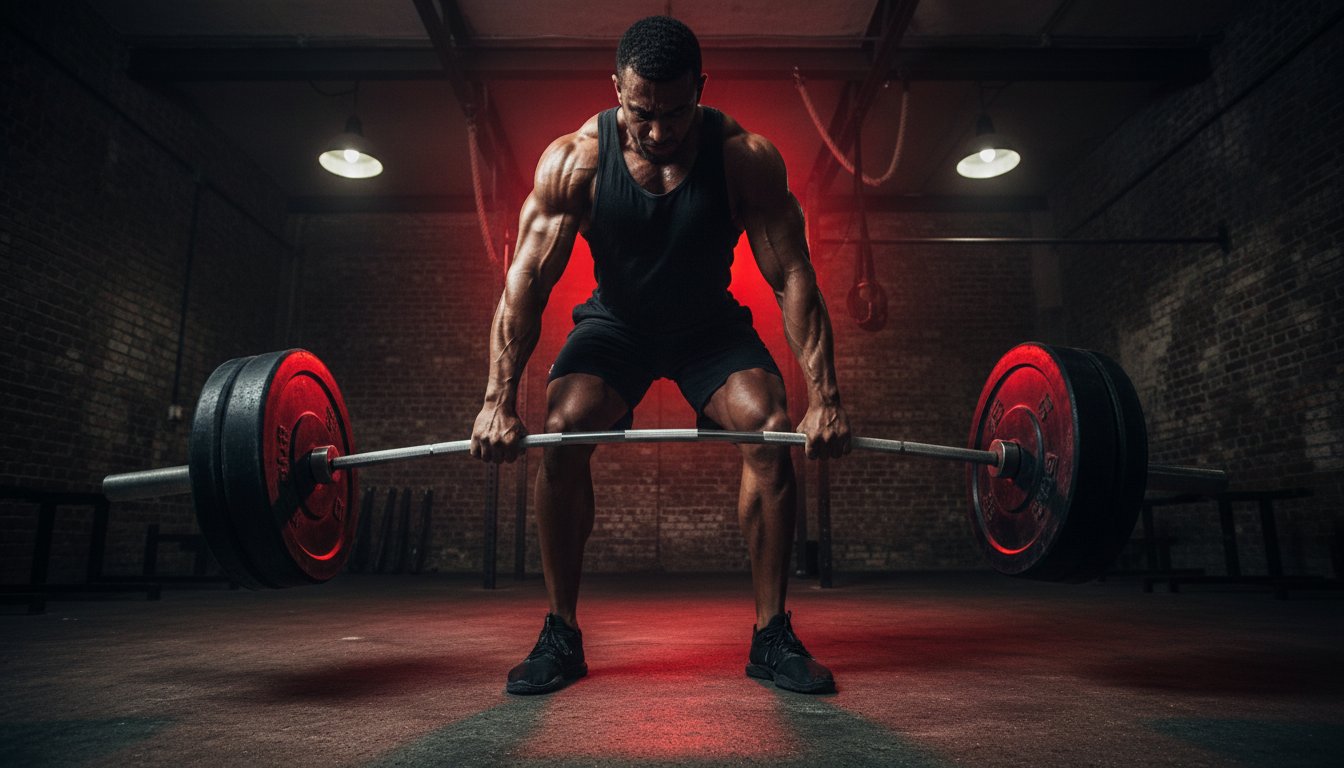
What if your next personal record isn't stalled by a weak back, but by your hands simply giving up? It's a common frustration for anyone dedicated to heavy lifting. You have the power to pull, but the bar begins to slide before you reach the lockout. Mastering the best grip exercises for deadlift is the only way to ensure your hands remain a reliable part of your physical toolkit. At Team Industry, we believe your grip should be as dependable as your work ethic. Whether you're training for raw strength or preparing for a sanctioned meet, a secure hold is non-negotiable.
We understand that forearm fatigue can quickly ruin an otherwise productive session. You need a pragmatic approach that balances raw grip development with the smart use of professional aids. This guide provides a concrete list of exercises that carry over directly to the platform. You'll learn how to integrate Team Industry Liquid Chalk to manage moisture and when to utilize our Figure 8 Lifting Straps to increase your training volume safely. While the IPF 2026 rulebook strictly prohibits straps in competition, they remain a vital tool for building the heavy-duty muscle required for a massive pull. We'll show you how to build a grip that stays locked until the whistle blows.
Key Takeaways
- Identify the specific physiological gap between your leg strength and your support grip to stop the bar from slipping.
- Incorporate the best grip exercises for deadlift, focusing on timed barbell hangs and heavy rack pulls to build specific endurance.
- Deploy Team Industry Liquid Chalk to maintain friction in commercial gyms where traditional powder is often restricted.
- Use Figure 8 Lifting Straps during high-volume accessory work to ensure your back and legs reach full fatigue without grip failure.
- Adopt the "Grip-Last" rule by scheduling direct forearm work at the end of your session to protect your main lifting performance.
Why Your Deadlift Grip is Failing (The Weakest Link)
It is a common sight in any serious lifting facility: a lifter pulls a heavy weight with perfect form, only for the bar to slide from their fingers inches from the lockout. This happens because your posterior chain is naturally stronger than the small muscles in your hands and forearms. Your legs and back can often handle 200kg or more, while your grip might fail at 150kg. This physiological gap creates a bottleneck that stops you from reaching your true potential.
Technical errors often worsen this issue. Many lifters place the bar too deep in their palms. As the weight increases, gravity pulls the bar down, causing it to roll and pinch the skin. This leads to painful calluses and a loss of control. Instead, you should secure the bar closer to the base of your fingers. Some advanced lifters adopt the Hook Grip to create a mechanical lock, though this requires significant practice. Understanding these mechanics is as vital as choosing the best grip exercises for deadlift.
Support Grip vs. Crush Grip
There is a massive difference between squeezing a spring-loaded hand gripper and holding a 200kg barbell. Hand grippers focus on "crush grip," which is the ability to close your hand against resistance. Deadlifting requires "support grip," the capacity to maintain a static hold under immense tension for a specific duration. While hand grippers have their place, they don't offer the same carryover as holding onto a thick, knurled bar during a heavy set.
The Impact of Friction and Sweat
Friction is your best ally when fighting a slippery bar. High-quality knurling helps, but moisture from sweat acts as a lubricant that ruins your connection to the steel. This is where professional aids become essential. Applying Liquid Chalk creates a dry, high-friction surface on your skin. It is a practical solution for commercial gyms where traditional powder is banned, ensuring your hands stay bone-dry throughout the entire session.
The Best Grip Exercises for Deadlift Performance
Building a resilient grip requires more than just high-rep sets. You need specific movements that mirror the exact demands of a heavy pull. While many programs focus on general forearm size, the best grip exercises for deadlift prioritize support endurance and neurological adaptation. At Team Industry, we recommend integrating these holds into your existing routine to ensure your progress remains steady and predictable.
Expert guidance on Grip Training for Deadlifting suggests that specificity is the primary driver for progress. Timed Barbell Hangs are perhaps the most effective tool in this regard. Simply hang from a pull-up bar or hold a loaded barbell at the top of a deadlift for 30 to 60 seconds. This forces your fingers to maintain tension against gravity, directly replicating the final seconds of a difficult lift. For those looking to overload their hands, Heavy Rack Pulls using a double overhand grip are essential. By pulling from just below the knee, you can use weights that exceed your standard deadlift, forcing your grip to adapt to massive loads.
Strongman-style Farmer’s Carries offer another layer of training. They build total body tension and hand toughness simultaneously. If your gym has an axle bar, use it. The "Fat Bar" effect increases the diameter of the hold, which significantly raises the neurological demand on your forearms. This makes a standard barbell feel much easier to manage during your main sets.
Static Holds and Overloaded Carries
To maximize carryover, perform static holds at the lockout of your final deadlift set. Hold the bar for an extra 10 seconds before lowering it. This builds the finishing strength needed for a sanctioned meet. Farmer’s Carries should be heavy. Aim for a weight that challenges you to walk 20 to 30 metres without dropping the handles. Before starting these heavy carries, apply a layer of Liquid Chalk to ensure your hands stay secure throughout the movement.
Plate Pinches for Thumb Strength
Your thumb acts as the anchor in a double overhand grip. If your thumb is weak, the bar will roll. Plate pinches are the solution. Take two 10kg or 20kg plates and hold them together smooth-side out using only your fingers and thumb. Hold for 30 seconds per side. This develops the pinch strength required to lock the bar into your palm. Consistent work here makes the best grip exercises for deadlift even more effective by closing the gap in your hand's mechanical weak points.

Strategic Use of Grip Aids: Chalk and Straps
While mastering the best grip exercises for deadlift is essential for long-term development, your primary goal is to pull as much weight as possible. There is a tactical point in every session where your legs and back remain fresh, but your hands begin to fail. To prevent your posterior chain from stagnating, you must know when to transition from raw lifting to using professional aids. This isn't about avoiding hard work; it's about ensuring your grip isn't a bottleneck for your overall strength progress.
As noted in this comprehensive guide to grip training, programming aids effectively allows you to maintain high intensity without overtaxing your central nervous system. For standard training sets, focus on raw grip until the bar starts to slip. Once you reach your top sets or high-volume accessory work, deploying a dependable aid ensures you complete every rep with total confidence.
Liquid Chalk: The Friction Advantage
Traditional block chalk is effective but often banned in commercial gyms due to the mess it creates. Liquid Chalk provides a superior, mess-free alternative. It works by filling the microscopic grooves in your skin, creating a bone-dry bond between your hand and the steel. At approximately $13 to $18 for an 8.5oz bottle, it is a cost-effective investment for anyone serious about heavy lifting. Apply a small amount before your heaviest sets to neutralise sweat and maximise friction immediately.
Choosing the Right Lifting Straps
Not all straps are built for the same purpose. Standard lasso-style Weight Lifting Straps are excellent for general hypertrophy work and rows. However, for max-effort barbell pulls, many lifters prefer Figure 8 Lifting Straps. These create a mechanical double-loop that secures your wrist directly to the bar, making it virtually impossible for the weight to slip. If you prefer a more traditional, rugged feel, Leather Weight Lifting Straps offer exceptional durability and a natural grip that improves as the leather breaks in over time.
Ready to secure your next PR? Explore our professional lifting straps to find the perfect fit for your training style.
Programming Grip Work Without Ruining Your Sessions
Success in the gym requires a calculated approach to recovery. You shouldn't train your hands before your main barbell work. If your forearms are fatigued during your first few sets, your technical execution will suffer. Adopting the "Grip-Last" rule ensures that your primary lifts remain the priority. Save the best grip exercises for deadlift for the final fifteen minutes of your session. This allows you to push your hands to failure without compromising the safety of your heavy pulls.
Integrating grip work into your existing sets is a highly efficient tactic. Use your warm-up reps as a training tool by holding the bar for an extra five seconds at the top. As the load increases, you'll naturally transition through different levels of support. Managing this transition is vital for long-term progress and injury prevention.
The Team Industry Grip Hierarchy
We recommend a structured hierarchy to help you decide when to lift raw and when to use equipment. This system ensures you build maximum natural strength while still hitting your volume targets.
- Level 1: Double Overhand. Use this for all warm-up sets. It is the most honest test of your support grip.
- Level 2: Hook Grip or Mixed Grip. Switch to these for your primary working sets. They provide the mechanical security needed for heavy loads.
- Level 3: Straps. Deploy Lifting Straps for back-off sets or high-volume accessory work. This prevents your hands from giving out before your back and legs have reached their limit.
Weekly Volume Guidelines
Direct grip training should be treated as a "finisher" at the end of your pull sessions. Perform two to three sets of timed holds or carries twice per week. If you notice persistent aching in your elbows or tendons, reduce the frequency immediately. For more detailed advice on integrating gear into your routine, read our guide on Mastering Your Pull: The Ultimate Guide to Lifting Straps. Consistency and smart programming will ensure your grip never limits your progress again.
Secure Your Hold and Pull Heavier
A failing grip is often the only barrier between a lifter and a massive new personal record. By identifying the gap between your leg power and hand endurance, you can take a more tactical approach to your training. Implementing the best grip exercises for deadlift, such as timed barbell hangs and plate pinches, into your routine ensures your hands never become the limiting factor on the platform. Remember to follow the Grip-Last rule to protect your main lifts while building the support strength needed for sanctioned meets.
Success requires the right tools for the job. Whether you need high-friction Liquid Chalk for a mess-free bond or heavy-duty Figure 8 straps for maximum security, choosing professional-grade equipment is vital. This is the same gear trusted by UK Strongmen to handle the heaviest loads on the planet. Don't let a slippery bar dictate your progress any longer. Upgrade your grip with professional-grade Team Industry Strength Gear and feel the difference of a truly secure hold. You have the strength to pull the weight; it's time to make sure your grip stays locked until the very end.
Frequently Asked Questions
Is it "cheating" to use lifting straps for deadlifts?
It isn't cheating to use lifting straps in a training environment. While the IPF 2026 rulebook prohibits straps in sanctioned powerlifting competitions, they are an essential tool for overloading your posterior chain. Using Team Industry Figure 8 Lifting Straps allows you to complete heavy sets when your hands are the only limiting factor. This prevents your back and leg development from stalling while you work on direct grip strength separately.
Should I use a mixed grip or a hook grip for heavy pulls?
The choice between mixed grip and hook grip depends on your comfort and competition goals. Mixed grip is easier to learn but can lead to muscle imbalances or bicep strain over time. Hook grip is more secure and symmetrical, though it requires a painful adaptation period for the thumbs. Regardless of your choice, consistently performing the best grip exercises for deadlift will make both techniques feel more stable under heavy loads.
How long does it take to see improvements in grip strength?
You can typically expect to see noticeable improvements in grip stability within four to six weeks of consistent training. Initial gains are often neurological as your body learns to recruit forearm muscles more efficiently. Long-term structural changes to tendon strength and muscle thickness take longer. Stick to a dedicated routine of timed holds and carries twice per week to ensure these gains are permanent and dependable.
Can I build a strong grip just by deadlifting more often?
Deadlifting more often is rarely enough to fix a failing grip. While the lift itself provides some stimulus, the time under tension is usually too short to build elite support endurance. You need specific accessory movements that isolate the forearms and fingers. Integrating movements like farmer's carries or axle bar holds alongside your main sessions is the most efficient way to close the strength gap between your hands and your back.
What is the best type of chalk for a commercial gym environment?
Liquid chalk is the superior choice for commercial gyms with strict "no powder" rules. It provides the same friction benefits as traditional blocks without leaving a mess on the floor or equipment. A single application of Team Industry Liquid Chalk dries quickly and fills the micro-grooves of your skin. This creates a reliable bond that lasts through multiple heavy sets, making it a pragmatic solution for any serious lifter.
Share:
Team Industry vs SBD: Which Strength Gear Is Best?
Top Weightlifting Brands: Key Benefits and Expert Selection