

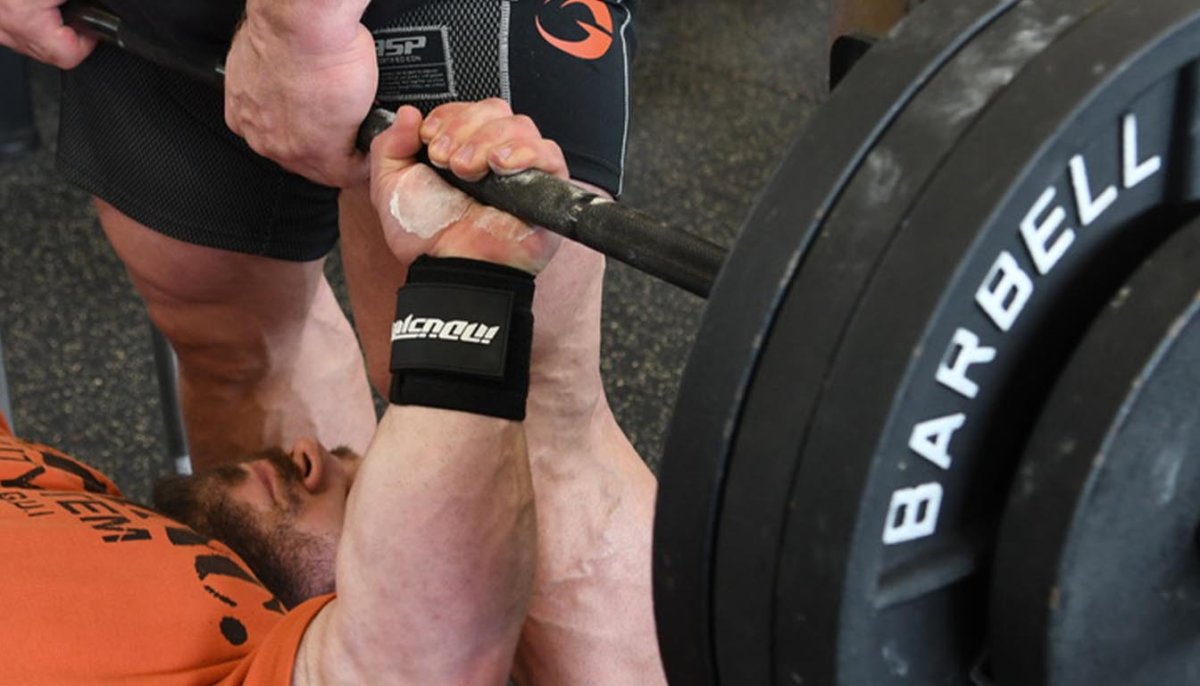
What if the reason your bench press has stalled isn't a lack of effort, but a failure to treat the lift as a technical skill rather than just a test of strength? It's frustrating to deal with stagnant numbers and nagging shoulder discomfort when you're putting in the work every week. You want chest thickness that reflects your dedication, but high volume alone often fails to deliver the results you've been chasing. Finding the best way to train your chest and increase your bench press requires a shift from mindless pressing to a structured, mechanical approach that prioritizes both muscle growth and joint safety.
We understand that breaking through a plateau takes more than just adding another plate. This article promises to help you master the technical mechanics and structural training protocols required to build a powerful chest while protecting your shoulders. We'll examine how to optimize your setup for maximum stability, refine your bar path, and implement the specific assistance work needed to drive your one-rep max to new heights.
Key Takeaways
- Understand why chest hypertrophy is the primary engine for strength gains and how to treat the bench press as a total-body compound movement.
- Master the technical setup by prioritizing scapula retraction and grip width to improve joint stability and protect your shoulders under heavy loads.
- Identify the best way to train your chest and increase your bench press by targeting common bottlenecks like tricep lockout and front deltoid strength.
- Learn how professional gear like Wrist Wraps and a Team Industry UK Lifting Belt can stabilize your torso and prevent energy leaks.
- Review the 2026 technical standards to ensure your lifting form remains compliant with updated rules regarding chest thrusts and elbow lockout.
Mastering the Bench Press: Technique, Mechanics, and Chest Hypertrophy
The Bench press is a complex compound movement that demands total body tension. To move heavy loads safely, you must engage your legs, lats, and core alongside your upper body. Think of your body as a rigid platform. Any softness in your setup leads to a loss of force and increased injury risk. Key stability factors include:
- Firm foot placement to initiate leg drive.
- Lat engagement to create a stable pressing base.
- Core bracing to maintain torso rigidity.
Finding the best way to train your chest and increase your bench press involves viewing strength as a skill. Your nervous system needs frequent practice to improve neurological efficiency, which allows you to recruit more muscle fibers simultaneously. Don't fall for the common misconception that "powerlifting form" reduces chest engagement. A stable, arched position actually allows you to handle heavier weights, which provides a greater mechanical stimulus for the pectoralis major.
To better understand these mechanics, watch this science-based breakdown:
The Science of Force Production in the Chest
The pectoralis major functions as the primary mover during the bottom half of the lift, where the muscle is under the greatest stretch. Long-term strength gains rely on increasing the cross-sectional area of these muscle fibers, as a larger muscle has a higher potential for force production. Progressive overload in chest training is the consistent increase of total work volume or resistance over time to force physiological adaptation.
Balancing Hypertrophy and Peak Power
Peak strength is built with low-rep, high-intensity sets, but muscle size requires more total volume. Use "back-off sets" at 70% to 80% of your training max after your heavy triples or singles to accumulate the reps needed for growth. Ensure you're wearing non-restrictive apparel like the Industry Oversized Tee to maintain a full range of motion. This prevents the fabric from binding at the shoulders, allowing for a deep stretch and a powerful contraction on every rep. By combining heavy intensity with high-volume accessory work, you establish the best way to train your chest and increase your bench press over the long term.
A Step-by-Step Guide to the Perfect Bench Press Setup
A precise setup is the foundation of every heavy lift. Without a stable base, you're leaking energy before the bar even leaves the rack. Start by retracting your scapula to create a "shelf" with your upper back. This protects the shoulder joints and provides a solid platform to press against. Finding the best way to train your chest and increase your bench press starts here. If your base is unstable, your power output will suffer regardless of your muscle size.
Grip width is a personal variable, but it significantly impacts which muscles do the heavy lifting. A wider grip increases the stretch on the pecs, while a narrower grip shifts the load toward the triceps. Research on Optimizing Pectoralis Major Development suggests that finding your optimal width is crucial for maximizing fiber recruitment. Experiment with your hand placement to find the balance between a deep chest stretch and tricep power.
Bar path optimization is also vital. Moving the bar in a straight vertical line is actually less efficient. An optimal path follows a slight "J" curve, where the bar travels from the lower chest back toward the rack as it ascends. This keeps the load centered over your center of gravity and reduces the moment arm on the shoulders.
Creating a Stable Base of Support
Mastering the "tuck and flare" method is essential for high-performance pressing. As you lower the bar, tuck your elbows slightly to protect the rotator cuffs. As you drive upward, allow them to flare out to fully engage the chest. Your feet should be planted firmly. Drive your heels into the floor to create horizontal tension through your quads and into your upper back. This leg drive stabilizes the torso without your glutes leaving the bench. If you're also interested in functional strength, check out our guide on Strongman Training Gear UK for more insights on heavy lifting mechanics.
The Descent and the Press
Don't just let the bar fall. Use the cue of "pulling the bar apart" to engage your lats during the descent. This creates a controlled eccentric phase and builds elastic energy. Avoid the temptation to bounce the bar off your sternum. A controlled touch ensures the chest performs the work and keeps you within the technical standards of professional lifting. For added stability during these max efforts, consider using a Team Industry UK Lifting Belt to maintain rigid intra-abdominal pressure.
Accessory Movements: Building the Support System for a Bigger Press
Success on the platform isn't just about the main lift. Identifying and strengthening your specific weak points is the best way to train your chest and increase your bench press. If you struggle to finish the lift, your triceps are likely the bottleneck. Conversely, if you can't get the bar moving off your chest, your front deltoids need more attention. Incorporating targeted accessory movements ensures that every link in the chain is strong enough to handle maximal loads.
Dumbbell work is also essential for structural balance. Unlike a barbell, dumbbells allow each arm to move independently, which helps address muscular imbalances. They also provide a greater range of motion at the bottom of the rep. This increased stretch is a powerful driver for hypertrophy. Various scientific studies on barbell chest-press training highlight how training aids and exercise variations can significantly alter muscle recruitment and biomechanical efficiency.
Strengthening the Primary Tricep and Shoulder Drivers
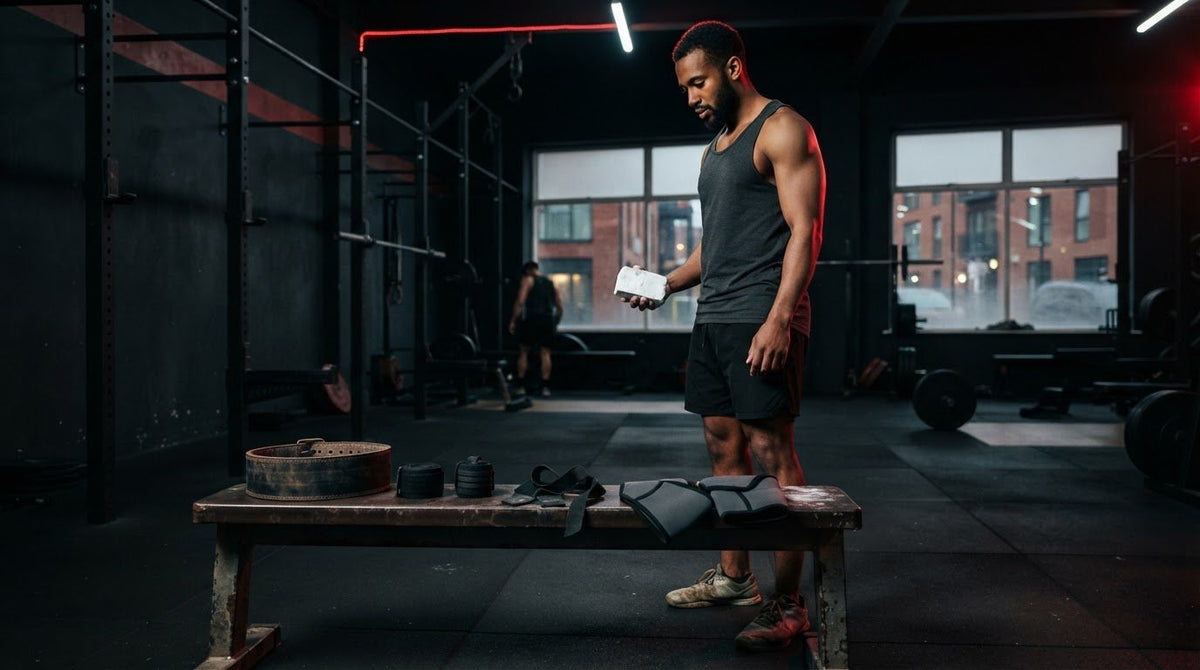
Close-grip bench press and floor presses are the gold standard for lockout strength. These movements shift the stress from the chest to the triceps. They're particularly effective for lifters who find the final few inches of the press to be their biggest challenge. Overhead pressing should also be a staple in your program. It builds the front deltoids and improves overall shoulder stability. When performing heavy dumbbell flies or rows, grip fatigue can limit your volume. Applying Liquid Chalk keeps your hands dry and ensures your grip doesn't fail before your muscles do. You can find more information in our Liquid Chalk Guide.
The Importance of Posterior Chain and Lat Stability
You can't press heavy weight without a stable foundation. A strong upper back acts as a platform for the shoulders and provides the necessary tension to control the bar during the descent. Barbell rows and face pulls are essential for maintaining shoulder health and counteracting the forward-pulling force of heavy chest training. If you row as much as you bench, you'll find your setup feels tighter and more secure. For guidance on improving your back training, read Mastering Your Pull. To ensure your grip stays locked during heavy back volume, pick up a pair of Industry Classic Lifting Straps from our store.
Maximising Performance with Professional Strength Gear
While technical skill and muscle mass are the foundations of strength, the best way to train your chest and increase your bench press involves optimizing your stability with professional equipment. Strength gear isn't a shortcut. It's a tool for safety and efficient force transfer. When you're handling loads near your one-rep max, any minor instability can lead to a failed lift or unnecessary joint strain. Quality gear provides the rigid platform required to express the strength you've built through training.
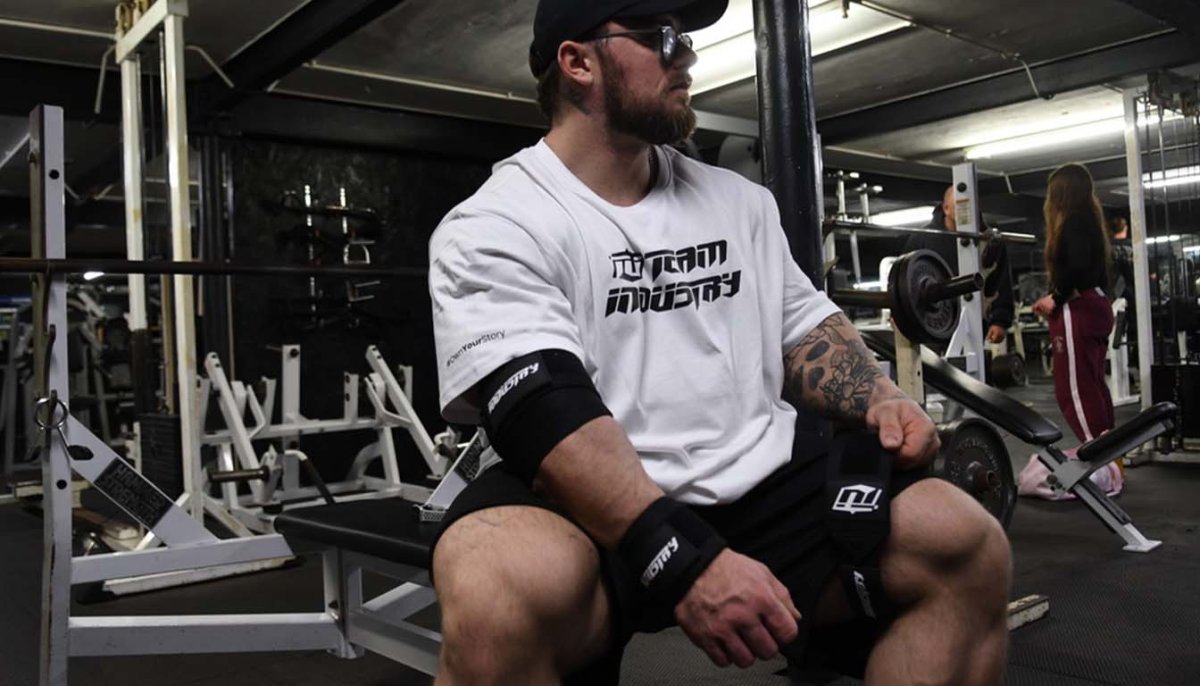
Joint warmth and compression are also vital for high-volume sessions. Elbow sleeves help manage inflammation and keep the tendons warm between sets, which is essential for maintaining performance during long chest workouts. Beyond the physical support, professional gear offers a significant psychological advantage. Knowing your joints are protected allows you to approach the bar with the confidence needed to handle maximal loads without hesitation.
Wrist Wraps for Joint Integrity and Force Transfer
Energy leaks occur when your joints fail to remain stacked directly under the bar. If your wrists fold back during a heavy press, you lose the direct line of force from your forearms into the weight. Stiff wraps provide maximal support for heavy singles, while more flexible versions allow for a bit more movement during high-volume hypertrophy work. Using Industry Blackout Wrist Wraps ensures your joints remain rigid throughout the lift. For many intermediate lifters, Team Industry UK Wrist Wraps are the essential tool needed to break through a 100kg plateau by allowing for a more secure, powerful grip.
Leveraging Lifting Belts for Bench Press
A belt is just as useful on the bench as it is for squats or deadlifts. A 10mm Lever Belt provides a tactile cue that helps you maintain rigid intra-abdominal pressure. This pressure stabilizes your torso and helps you maintain your arch and leg drive throughout the movement. By providing a surface to brace against, the belt ensures your midsection doesn't collapse when the bar reaches your chest. This stability is crucial for maintaining your bar path and protecting your spine during max efforts. To find the right tools for your next heavy session, explore the full Team Industry UK Strength Collection.
Take Action to Break Your Bench Press Plateau
Achieving a significant increase in your numbers requires a shift in focus from raw effort to technical precision. By refining your setup and addressing specific bottlenecks through targeted accessory work, you create a foundation for consistent progress. Finding the best way to train your chest and increase your bench press involves balancing high-intensity efforts with the right structural support. Whether you're mastering the "tuck and flare" method or building your upper back stability, every technical adjustment brings you closer to your next personal record.
As UK-based strength specialists, we provide the tools you need to lift with confidence. Our professional-grade 10mm and 13mm lever belts offer the rigid stability required for maximal efforts, while our community-trusted fitness apparel ensures you stay comfortable throughout your session. Don't let equipment be the weak link in your training program. We understand the grit required for this sport and are committed to helping you reach your goals through reliable, high-standard gear.
Shop Professional Strength Gear at Team Industry UK and start building a more powerful press today. We're here to support your journey toward operational excellence in the gym. Stay consistent, stay disciplined, and keep pushing forward.
Frequently Asked Questions
How many times a week should I train chest to increase my bench press?
Training your chest and bench press two to three times per week provides the ideal balance between stimulus and recovery. This frequency allows you to practice the technical mechanics of the lift more often, which improves neurological efficiency. You shouldn't perform max effort sets every session. Instead, rotate between heavy strength days and moderate intensity hypertrophy sessions to ensure your muscles and central nervous system can recover properly.
Will training my chest with dumbbells help my barbell bench press?
Dumbbell training is highly effective because it forces each side of your body to work independently, which corrects muscular imbalances. These variations allow for a deeper stretch at the bottom of the movement, providing a powerful stimulus for chest growth. Incorporating these movements alongside your primary barbell work is the best way to train your chest and increase your bench press. Using Liquid Chalk during these sets will keep your grip secure as the weights get heavier.
Do wrist wraps actually help you bench more weight?
Wrist wraps provide external support that prevents your joints from collapsing or folding back under heavy loads. By keeping your wrists stacked directly over your forearms, you ensure that every ounce of force is transferred into the bar rather than being lost through joint instability. Utilizing Team Industry UK Wrist Wraps allows you to handle maximal weights with greater confidence and significantly reduced joint strain.
Why has my bench press plateaued even though I am training hard?
A plateau typically indicates that your training stimulus has become stagnant or your technical efficiency has reached a limit. If you're pushing hard but the weight isn't moving, you may need to adjust your accessory work to target specific bottlenecks like tricep lockout or lat stability. Refining your setup is the best way to train your chest and increase your bench press when raw effort is no longer enough to drive progress. Don't overlook the importance of deload weeks to let accumulated fatigue dissipate.
Is a lifting belt necessary for bench pressing?
A belt isn't strictly required, but it acts as a valuable bracing tool that increases your torso stability. By providing a firm surface to breathe and brace against, a Team Industry UK Lifting Belt helps you maintain a rigid arch and prevents your midsection from softening during the press. This increased intra-abdominal pressure provides a more stable platform for your chest and shoulders to generate force from, especially during heavy singles or triples.
Share:
Essential Strongman Accessories UK: The Ultimate 2026 Kit Guide for Strength Athletes
Is a 13mm Lifting Belt Too Thick? A Guide to Professional Strength Support