

Transitioning from conventional gym training to the world of strongman is a significant step. The weights are heavier, the implements are awkward, and the demands on your body are unlike anything else. While raw strength is the foundation, success and safety in this sport depend on having the right tools. Strongman accessories are not just for support; they are tactical equipment designed to bridge the gap between human limitation and the massive, unconventional loads you are about to lift.
For UK-based athletes preparing for the 2026 season, building a competition-ready kit bag can feel overwhelming. You're no longer just thinking about a standard barbell; you're facing axle bars, logs, yokes, and stones. This guide cuts through the noise, providing a pragmatic, event-driven framework for assembling the essential strongman accessories you need to perform at your best, stay safe, and comply with UK federation standards.
The Core Foundation: Choosing a Professional Strongman Lifting Belt
In strongman, your lifting belt is the single most important piece of support gear. Unlike a standard gym belt, a specialised strongman belt is engineered to create maximum intra-abdominal pressure (IAP), stabilising your entire torso under immense loads. For static lifts like the log press and heavy deadlifts, this stability is non-negotiable for both performance and spinal safety.
The industry standard for serious strongmen is a 13mm thick lever belt. While a 10mm belt offers more initial comfort and is an excellent starting point, the 13mm provides unparalleled rigidity and support. This extra thickness helps you brace harder, creating a solid column of pressure that protects your lower back during maximal attempts. Furthermore, a secure lever locking mechanism is crucial. During dynamic events like the yoke walk, the last thing you want is a belt that shifts or comes undone. The instant, reliable closure of a lever belt ensures your core remains braced from the moment you pick the implement up until you set it down.
For athletes seeking federation-ready support, Team Industry Weight Lifting Belts are constructed to provide the uncompromising stability required for UK strength competitions.
Lever Belts vs. Prong Belts for Event Medleys
While both lever and prong belts provide excellent support, the lever belt holds a distinct advantage in the fast-paced environment of a strongman medley. Competitions often require rapid transitions between events, and the ability to release and secure your belt in a single second with a lever can save valuable time and energy. A common concern is that a lever belt cannot be adjusted mid-competition, but most athletes find a single tightness setting that works for the majority of events. Correct sizing is key; your belt should be tight enough to brace against but not so tight that it pinches your skin or restricts your breathing during a deep Atlas stone load or squat.
Maximising Intra-Abdominal Pressure Safely
To get the most out of your belt, you must use it to facilitate the Valsalva maneuver—taking a deep breath into your abdomen and bracing your core muscles against the belt to create a rigid torso. A 13mm powerlifting-style belt is far superior to the tapered, padded belts often seen in commercial gyms, as its uniform width provides 360-degree support for your abdominal wall and lower back. For a deeper understanding of when and how to use this fundamental tool, our professional guide on using a weight lifting belt offers detailed advice.
Mastering the Pull: Essential Straps and Grip Aids for Strongman
Grip strength is a common limiting factor in strongman, especially when dealing with thick, non-knurled implements. While developing a powerful grip is crucial, certain events are designed to test your posterior chain, not your hands. This is where specialised lifting straps and grip aids become essential performance tools.
For max-effort deadlifts, particularly with an axle bar, standard lasso-style straps are often insufficient. The 2-inch diameter of an axle bar makes it incredibly difficult to hold onto, which is why most competitive strongmen rely on Figure 8 straps. These straps create a secure, locked-in connection to the bar, allowing you to focus entirely on driving with your legs and back. For events that don't allow straps, liquid chalk is the superior choice for maintaining a dry, reliable grip. It provides a long-lasting, high-friction layer without the mess of traditional block chalk, which is often banned in commercial gyms.
Why Figure 8 Straps are Non-Negotiable for Axle Deadlifts
The unique "double loop" design of Figure 8 straps is their greatest strength. You pass your wrist through one loop, wrap the strap under the bar, and then pass your wrist through the second loop. This simple mechanic effectively locks you to the bar, removing grip as a variable. This not only allows you to lift more weight but also adds a layer of safety; if you need to bail on a lift, you can simply open your hands and let go, and the straps will release. For athletes looking to add kilos to their pull, a pair of Industry Figure 8 Lifting Straps are a fundamental kit bag addition. To ensure you're using them correctly for maximum effect, consult our complete strongman's guide to setting up Figure 8 straps for axle deadlifts.
Liquid Chalk: The Mess-Free Performance Essential
Liquid chalk is a simple yet effective solution, combining magnesium carbonate with alcohol in a liquid suspension that dries to a durable, friction-enhancing film on your hands. This single application often lasts longer than multiple applications of block chalk, making it ideal for long medleys or high-volume training sessions. If your gym has a "no chalk" policy, a bottle of Team Industry Liquid Chalk is the perfect way to ensure a secure grip without breaking the rules.
Joint Protection: Heavy-Duty Knee Sleeves and Wrist Support
The sheer weight involved in strongman places enormous stress on your joints. Protecting your knees during heavy moving events and stabilising your wrists during overhead presses is critical for both performance and long-term health. High-quality sleeves and wraps provide mechanical support, compression, and warmth to keep your joints safe and functioning optimally.
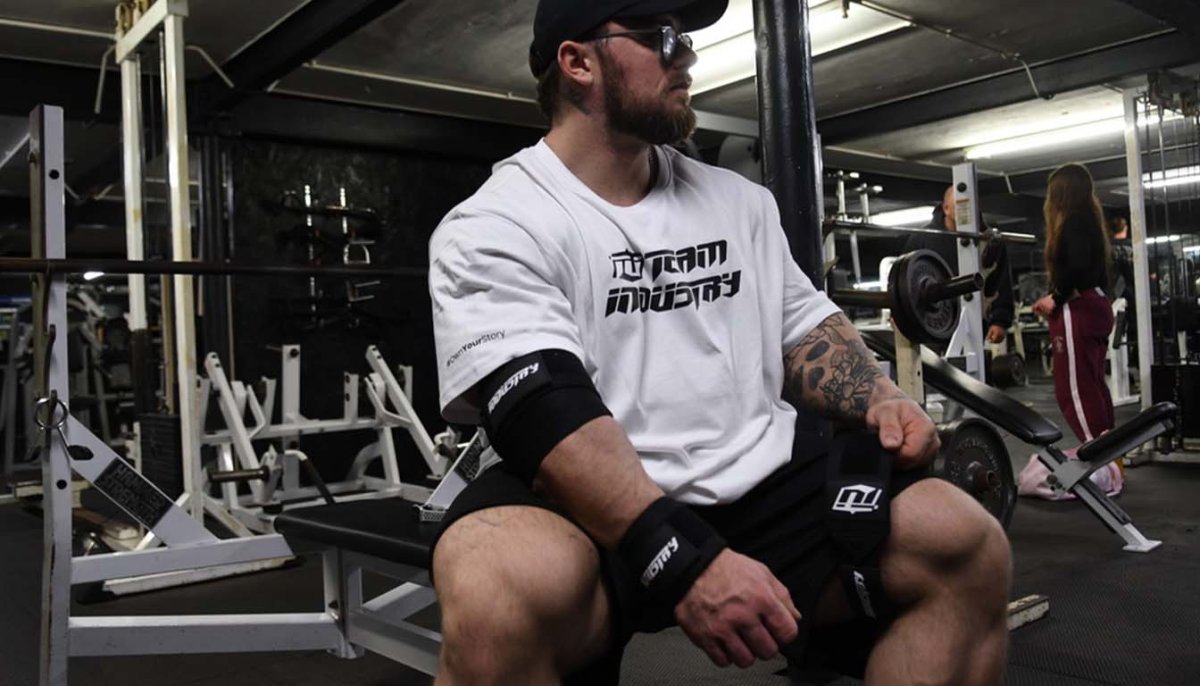
For events like the Yoke Walk and Farmer's Carry, heavy-duty knee sleeves are essential. They provide compression to the patellar tendon and surrounding ligaments, increasing stability and blood flow. The neoprene material also provides a thermal benefit, keeping the knee joint warm and lubricated between attempts. Similarly, stiff wrist wraps are a must-have for the log press and axle press. They prevent dangerous hyperextension of the wrist joint under load, allowing for better force transfer into the implement.
Compression vs. Support: Finding the Right Balance
Strongman athletes often prefer a much tighter fit in their knee sleeves compared to powerlifters. This enhanced compression provides maximum support during dynamic, unstable movements. When choosing a sleeve, look for robust stitching and high-density 7mm neoprene, which indicates a quality product built to withstand heavy use. Learning when to start using knee sleeves is a key part of progressing safely in your training. A good pair of Heavy Duty Knee Sleeves should feel snug and supportive without cutting off circulation.
Wrist Wraps for Overhead Pressing Stability
For overhead events, a quality pair of 16-inch or 18-inch wrist wraps can create a "casting" effect, effectively immobilising the wrist joint in a strong, neutral position. This prevents the wrist from bending backward during the press, which can lead to a loss of power and potential injury. The goal is to wrap them tightly enough to provide rigid support while still allowing enough flexion to properly clean the log or axle to your chest. For maximum stiffness and support, consider the Industry Blackout Wrist Wraps, designed for elite-level pressing.
Building the Ultimate Strongman Kit Bag: A UK Checklist
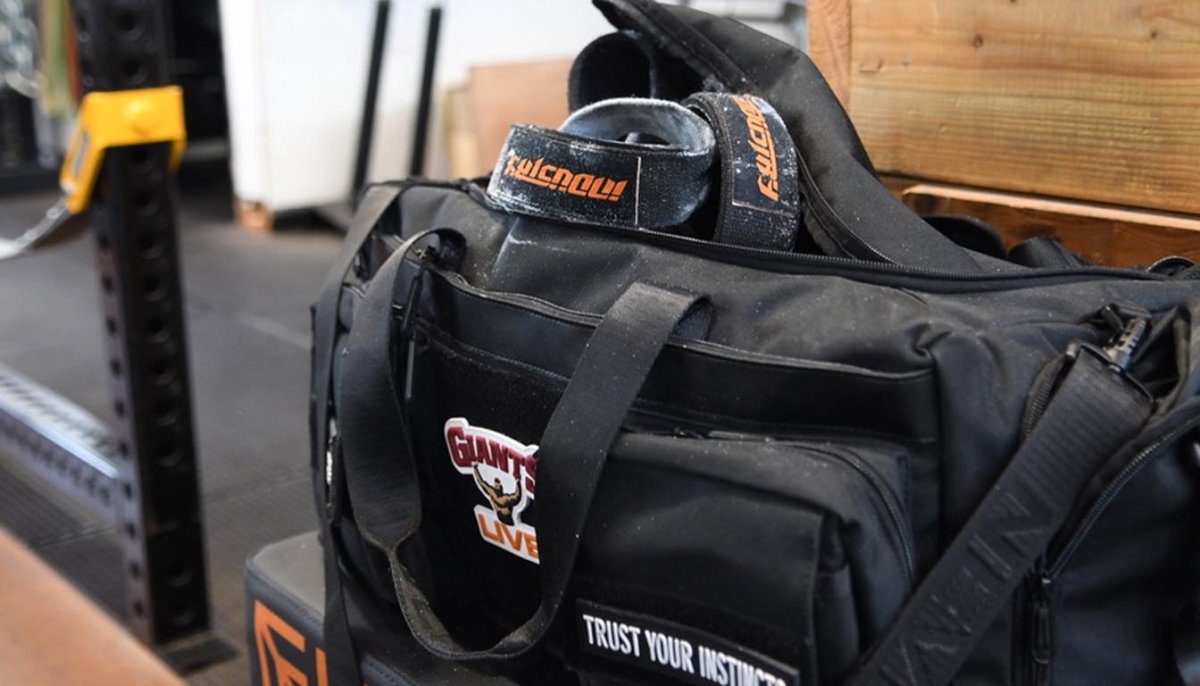
Having a well-organised, competition-ready kit bag means you can walk into any gym or competition with the confidence that you are prepared for any event. Beyond the core items, a few extra accessories can provide a significant psychological and physiological edge when it matters most. This includes smelling salts for a powerful neurological stimulus before a max attempt and appropriate apparel that allows for a full range of motion.
For a comprehensive overview of all the implements and accessories you might encounter, our professional's kit guide for strongman training is an invaluable resource.
The "Must-Haves" for Every Competition Bag
Your core kit bag should always be stocked with the essentials. This ensures you're ready for any training session or last-minute competition.
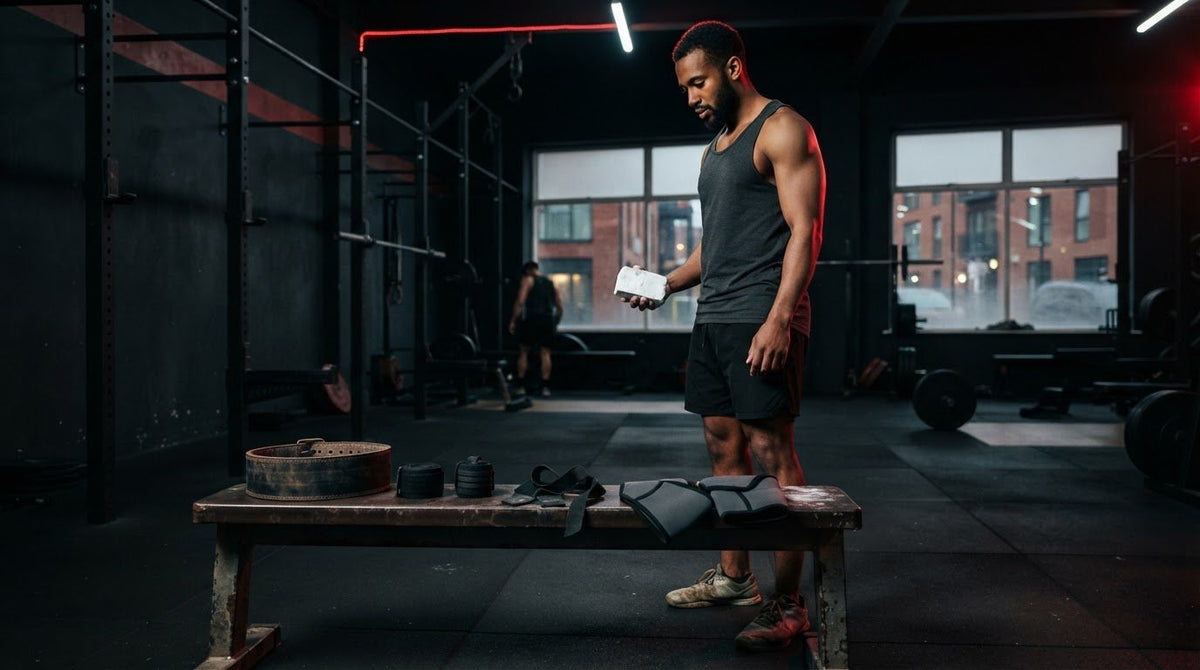
- Primary Gear: 13mm Lever Belt, Figure 8 Straps, Heavy Duty Knee Sleeves, and Stiff Wrist Wraps.
- Grip Aids: Liquid Chalk and/or Block Chalk (if permitted).
- Performance Boosters: Smelling Salts for maximal attempts.
- Support: A high-quality shaker bottle for hydration and intra-workout nutrition, and athletic tape for protecting your thumbs during hook grips.
- Redundancy: Always carry a backup pair of lifting straps. A broken strap on a high-volume deadlift day can end your session prematurely.
Apparel That Performs Under Pressure
The right clothing is a functional part of your kit. During an Atlas stone load, the last thing you want is a restrictive t-shirt that bunches up or tears. Oversized, durable apparel provides the freedom of movement necessary to get your chest over the stone and complete the lift. Industry Oversized Tees are designed with this in mind, offering a comfortable fit that won't hinder your performance. As you assemble your gear, you can visit the Team Industry store to complete your strength kit with everything you need to succeed.
Frequently Asked Questions
What is the difference between powerlifting and strongman accessories?
While there is some overlap (belts, sleeves), strongman accessories are often more specialised. For example, strongmen almost exclusively use Figure 8 straps for max deadlifts, whereas powerlifters do not use straps in competition. Strongman also requires event-specific gear like tacky for stones and specialised footwear for moving events, which are not found in powerlifting.
Do I really need Figure 8 straps for my first strongman competition?
If the competition includes a max deadlift or a deadlift for reps event (especially with an axle bar), then yes. While not mandatory, you will be at a significant disadvantage without them. Your grip will likely fail long before your back or legs, and Figure 8 straps are the standard tool used by competitors to overcome this.
Should I choose a 10mm or 13mm lever belt for strongman training?
For a beginner, a 10mm belt is an excellent choice that provides great support with a shorter break-in period. However, if you plan to be competitive in the sport long-term, investing in a 13mm belt from the start is a wise decision. The superior rigidity and support it offers are better suited for the extreme loads found in strongman.
Is liquid chalk better than block chalk for strongman events?
Liquid chalk generally lasts longer and creates less mess, making it ideal for medleys where you don't have time to re-chalk. Block chalk can offer a slightly better feel for some lifters and is great for coating implements like an Atlas stone mould. Many athletes carry both and use them for different applications.
How tight should my knee sleeves be for moving events like the Yoke Walk?
Your knee sleeves should be significantly tighter for strongman events than for general gym use. They should be difficult to put on and provide a high degree of compression. This tightness is what gives you the maximum joint stability needed when moving dynamically with hundreds of kilos on your back. However, they should not be so tight that they cut off circulation or cause pain.
Share:
Best Powerlifting Gear for the Money: A Value Guide for Lifters (2026)
How to Train Your Chest and Increase Your Bench Press