

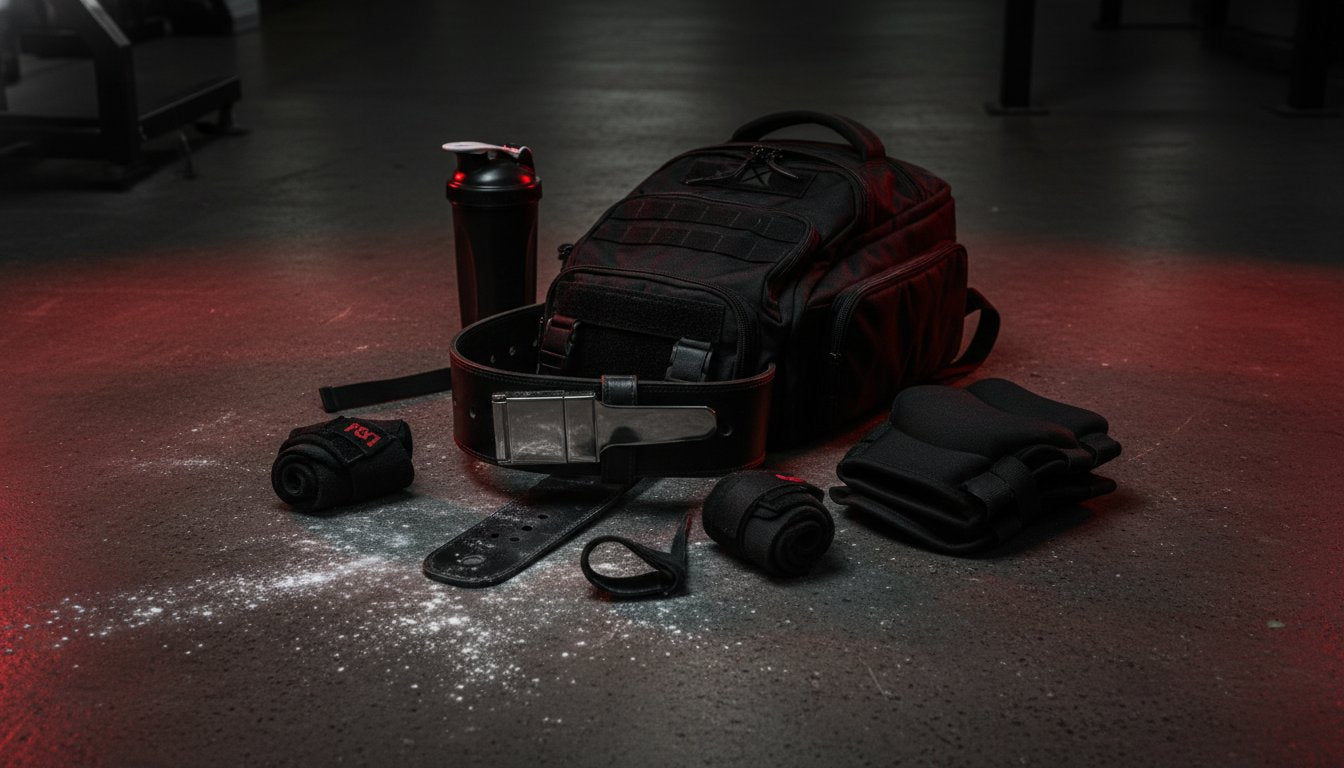
What if your next deadlift PR isn't limited by your physical strength, but by the equipment currently sitting in your locker? Many lifters reach a plateau not because of their programming, but because their gear fails under the pressure of heavy sets. You already know that powerlifting is a technical discipline where your equipment acts as a performance tool rather than a simple accessory. If you are tired of gear failure or the confusion between bodybuilding straps and powerlifting essentials, knowing exactly what to pack in a gym bag for powerlifting is your first step toward a successful meet prep.
This article provides a professional-grade checklist to help you transition from a casual lifter to a serious athlete. You will discover the essential gear required for heavy squats, benches, and deadlifts, and why high-performance items from Team Industry UK, such as the 13mm Lever Belt and Heavy Duty Knee Sleeves, are vital for stability. We also cover the latest 2026 federation standards for Wrist Wraps and how to organize your Tactical Back Pack so you can step onto the platform with total confidence in your preparation.
Key Takeaways
- Learn to utilize a Team Industry UK 13mm Lever Belt as a technical tool for intra-abdominal pressure to stabilize your heaviest compound lifts.
- Discover how Wrist Wraps and Liquid Chalk prevent grip fatigue and maintain joint alignment during the Big Three movements.
- Streamline your training sessions by learning what to pack in a gym bag for powerlifting, specifically focusing on how a Tactical Back Pack handles the weight of specialized gear.
- Explore the practical application of Smelling Salts for CNS arousal and how to manage hydration with a high-capacity Team Industry UK Shaker Bottle.
- Identify the specific role of Heavy Duty Knee Sleeves in providing joint warmth and compression for more efficient squat mechanics.
The Foundation: Heavy-Duty Supportive Gear for the Big Three
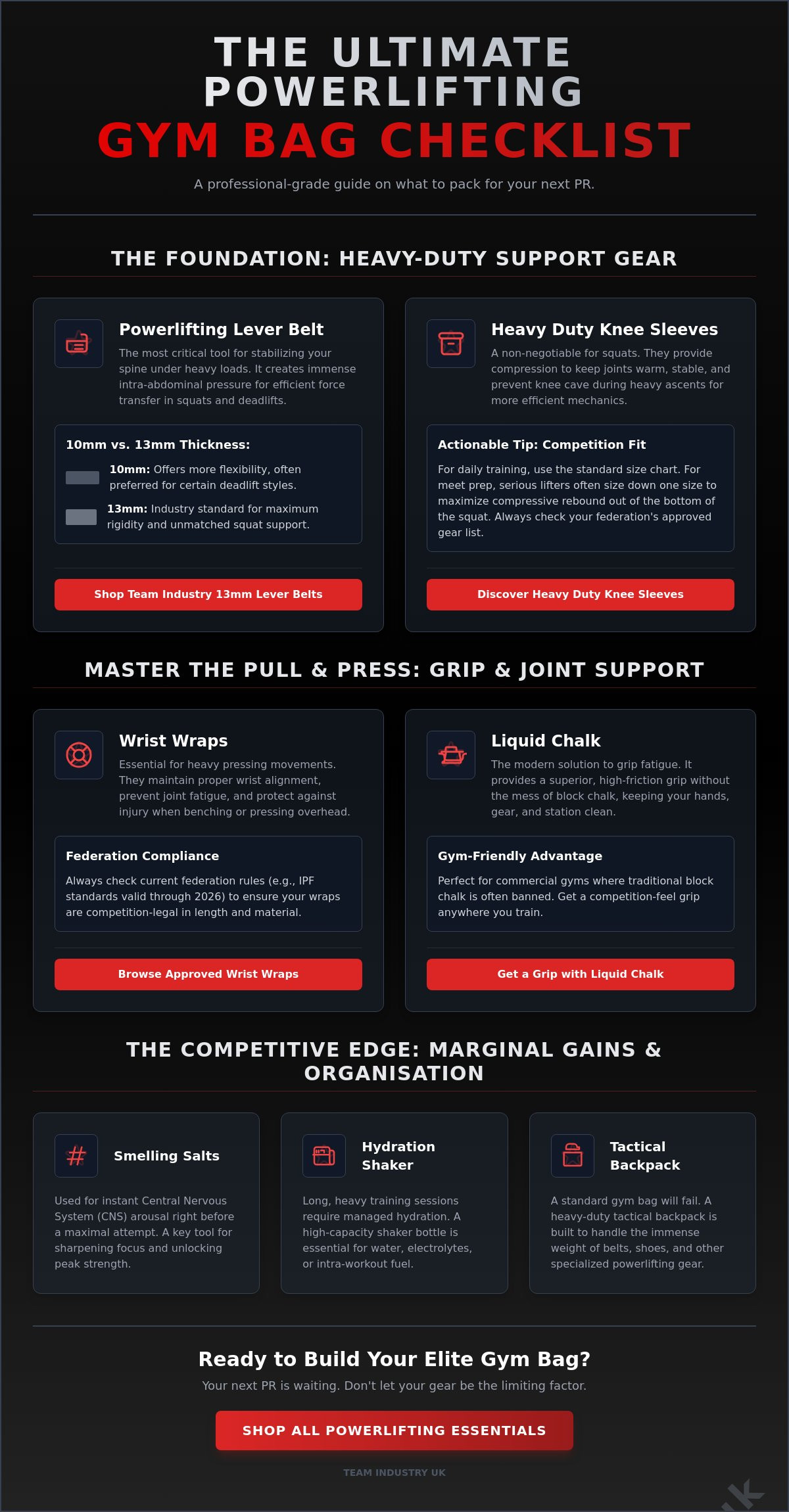
Building a total for What is Powerlifting? starts with understanding that your gear is an extension of your body's mechanics. When you consider what to pack in a gym bag for powerlifting, the belt is your most critical investment. Unlike standard fitness belts that focus on comfort, a professional powerlifting belt is a rigid tool designed to create intra-abdominal pressure. This pressure stabilizes your spine under load, allowing you to transfer force more efficiently through your core during the squat and deadlift. Knowing what to pack in a gym bag for powerlifting ensures you never face gear failure during a heavy set.
To better understand the role of specialized equipment, watch this helpful video:
Choosing Your Powerlifting Belt: 10mm vs. 13mm
Most commercial gyms offer thin, tapered belts that often fail during maximal attempts. For serious athletes, a Team Industry UK 13mm Lever Belt is the industry standard for maximum support. While a 10mm Lever Belt offers more flexibility for certain deadlift styles, the 13mm version provides unmatched rigidity for the squat. The lever mechanism is essential because it allows you to lock in the exact tension required in seconds and release it immediately after your set. New leather gear requires a breaking-in period. Expect the material to be stiff for the first few weeks as it molds to your torso.
Knee Sleeves: Support for Squat Depth
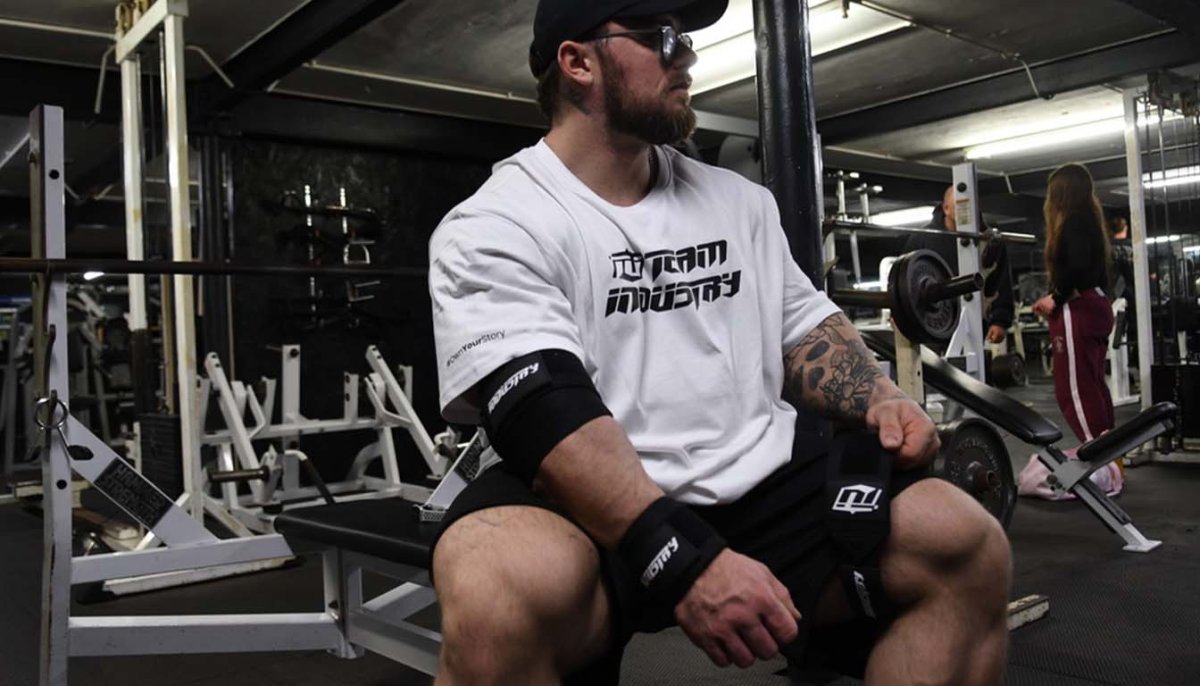
Knee sleeves are another non-negotiable for the three core lifts. Our Team Industry UK Heavy Duty Knee Sleeves provide the compression needed to keep joints warm and stable. This compression aids in lateral stability, preventing the knees from caving during a heavy ascent. For daily training, choose a size that follows the standard chart for a comfortable fit. If you're preparing for a meet, many lifters opt for a "competition fit" by sizing down to maximize rebound at the bottom of the squat. Always verify your gear against current federation standards. For example, the IPF Approved List valid through December 31, 2026, dictates which models are permitted in sanctioned competitions.
Mastering the Pull and Press: Grip Aids and Joint Support
Deadlifts and heavy rows often end prematurely because your hands give out before your back does. Grip fatigue is a reality for most lifters, but it shouldn't limit your posterior chain development. When you are deciding what to pack in a gym bag for powerlifting, including high-quality grip aids allows you to overload the target muscles without being held back by a weak hold. While "raw" training is essential for competition prep, using aids during high-volume accessory work is a pragmatic way to push past plateaus and ensure your central nervous system isn't the only thing getting a workout.
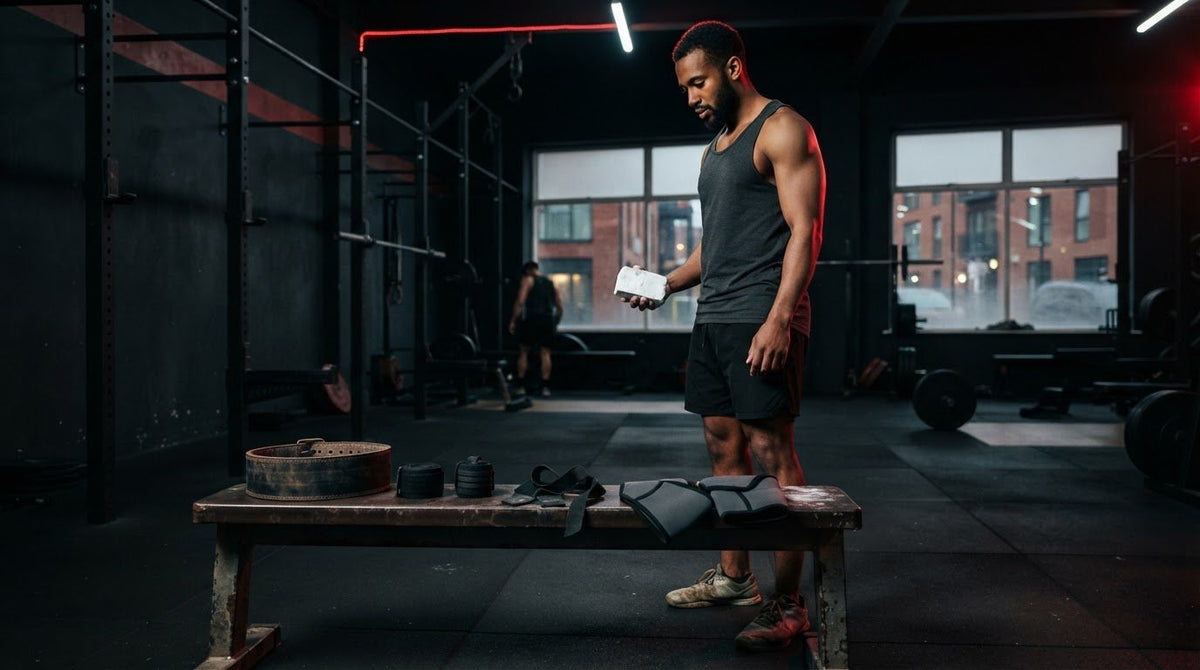
Commercial gyms often ban block chalk due to the mess it creates on platforms and bars. A bottle of Liquid Chalk provides a professional, mess-free solution that keeps your hands dry and your station clean. It creates a high-friction surface that mimics the feel of a competition bar, ensuring your setup remains consistent with official equipment specifications. Maintaining a consistent grip is the simplest way to improve your confidence before a heavy pull.
Lifting Straps: Lasso vs. Figure 8
Standard lasso-style Weight Lifting Straps are versatile for most pulling movements and allow for a quick release of the bar. However, Team Industry UK Figure 8 Lifting Straps offer a superior level of security for maximum effort sets. By looping twice around the wrist and bar, they virtually eliminate the risk of the bar rolling out of your hands. This is particularly useful for heavy RDLs or high-rep deadlifts where grip is the primary failure point. For those who prefer a traditional feel, our Classic Straps provide a dependable, heavy-duty alternative.
Wrist Wraps for Maximum Pressing Power
A neutral wrist position is vital for efficient force transfer during the bench press. If your wrists cock back under load, you lose power and risk joint strain. Using Team Industry UK Wrist Wraps creates a rigid support system that prevents these energy leaks. We recommend the 16-inch Blackout wraps for most training sessions. They offer a balance of comfort and cast-like support that keeps the bar stacked directly over your forearms. If you want to stabilize your bench, consider adding a pair of professional wraps to your daily rotation.
The Powerlifter’s Marginal Gains: Salts, Hydration, and Prep
Success on the platform is often decided by the details you manage between your heaviest sets. While novice lifters focus solely on their footwear, experienced athletes look for marginal gains in physiological arousal and recovery. Citing authoritative guidance on powerlifting gear confirms that preparation tools are just as vital as your belt. When you are determining what to pack in a gym bag for powerlifting, you must include items that support your central nervous system and keep your energy levels stable over a multi-hour training session.
Small essentials often save a workout from stalling. Pack thumb tape to protect your skin during heavy hook-grip deadlifts and keep a small first-aid kit specifically for managing torn calluses. A physical or digital logbook is also mandatory. Tracking your Rate of Perceived Exertion (RPE) and load percentages allows you to make objective decisions about your next attempt rather than relying on how the weight feels in the moment.
Smelling Salts: The Instant Performance Spike
Smelling salts provide a sharp sensory jolt by irritating the membranes in the nasal cavity, which triggers an inhalation reflex. This response increases your heart rate and focus immediately before a maximal effort attempt. In 2026, many lifters prefer pre-activated formulas or scented options like mint to manage the harshness of the ammonia. Use these sparingly, primarily for top sets or competition simulations. Always secure the lid tightly after use. Leaking salts can ruin the fabric of your bag and lose their potency within weeks.
Hydration and Nutrition Management
Heavy lifting sessions are metabolically demanding. You need a durable Team Industry UK Shaker Bottle to manage electrolytes and essential amino acids throughout your workout. Hydration isn't just about water; it's about maintaining the mineral balance required for muscle contractions. For sessions exceeding two hours, pack high-glycemic snacks like rice cakes or dried fruit. These provide a quick glucose spike to fuel your final accessory movements after the primary "Big Three" lifts are finished. Keep your performance high from the first warm-up to the final rep with our professional accessories collection.
Choosing and Organising Your Powerlifting Tactical Backpack
Standard duffel bags often fail at the seams when loaded with a 13mm lever belt and specialized lifting shoes. Powerlifting gear is heavy and dense. Most consumer backpacks aren't designed to carry 20 pounds of rigid leather and steel on a daily basis. When you consider what to pack in a gym bag for powerlifting, the carrier itself must be a piece of high-performance equipment. You need a bag that maintains its shape and protects your investment in professional gear while providing quick access to essentials during a long training session.
The Tactical Advantage: Why Bag Structure Matters
Our Tactical Back Pack offers the structural integrity required for serious athletes. These bags feature reinforced straps and dedicated compartments to keep your liquid chalk and smelling salts separate from your clean apparel. Utilize the external MOLLE webbing to attach Weight Lifting Knee Wraps or a used shaker bottle. This allows wet gear to air dry; preventing the odor and bacteria growth common in standard gym bags that lack ventilation. It's a pragmatic solution for the grit of the powerlifting environment.
Dressing for the Platform
The right apparel is a functional requirement for the Big Three. Oversized Tees are essential for heavy squats because the heavy cotton fabric helps the bar remain secure across your posterior deltoids. Avoid slippery synthetic fabrics that cause the bar to roll during your set. Additionally, pack your specialized footwear in a dedicated shoe compartment. Storing flat-soled deadlift shoes and heeled lifters separately keeps the rest of your kit clean. Understanding what to pack in a gym bag for powerlifting means preparing your attire for the specific mechanical demands of the platform.
To maximize efficiency, follow a logical load order when packing your bag:
- Bottom Layer: Place heavy lifting shoes and your 13mm belt at the base to stabilize the center of gravity.
- Middle Layer: Pack your Industry Oversized Tee and spare socks to provide padding for smaller items.
- Top Layer: Keep wrist wraps, lifting straps, and chalk at the top for immediate access during your warm-ups.
- External Pockets: Store smelling salts, thumb tape, and your logbook in secure side compartments to avoid digging through the main bag.
Step Onto the Platform with Professional Preparation
Transitioning from a casual lifter to a serious athlete requires a commitment to equipment that matches your intensity. You have learned that the foundation of success lies in technical tools like 13mm lever belts and heavy-duty sleeves. Beyond the big lifts, managing your central nervous system with smelling salts and maintaining your grip with specialized straps ensures that no session is wasted due to preventable failure. Mastering what to pack in a gym bag for powerlifting is about eliminating variables so you can focus entirely on the weight.
Consistency in training is only possible when your gear is as reliable as your work ethic. Team Industry provides the same professional-grade 13mm lever belts and durable tactical gear used by elite UK strongmen and powerlifters. Our equipment is built to withstand the heavy loads and operational grit of a high-standard strength environment. Gear up for your next PB with Team Industry Professional Strength Equipment. Every rep counts toward your total; make sure your equipment supports the effort you put in. We look forward to seeing your progress on the platform.
Frequently Asked Questions
What is the difference between a bodybuilding and powerlifting gym bag?
A powerlifting bag is built for weight and technical specificity rather than aesthetic variety. While a bodybuilding bag might carry light bands and foam rollers, a powerlifting kit requires space for a rigid 13mm belt and multiple pairs of specialized shoes. Choosing a Tactical Back Pack ensures your seams don't burst under the strain of heavy metal and leather. This structural integrity is the primary difference when deciding what to pack in a gym bag for powerlifting.
Do I really need a lever belt for powerlifting?
A lever belt is the preferred choice for competitive lifters because it offers the most consistent tension and immediate release. While prong belts work, the 13mm Lever Belt allows you to lock in your intra-abdominal pressure to the exact same setting every time. This reliability is vital during a heavy meet or a high-intensity training block. It's a technical upgrade that provides a significant psychological and physical advantage over standard fitness belts.
Are Figure 8 straps better than standard lifting straps?
Figure 8 straps are superior for heavy deadlifts and axle bar work because they create an unbreakable loop between your wrist and the bar. Unlike Classic Straps, which rely on friction and wrapping technique, Figure 8s lock you in completely. This allows you to focus entirely on your posterior chain without worrying about your grip failing during a maximal attempt or high-volume accessory sets. They are a specialized tool for maximum security.
Is liquid chalk better than block chalk for powerlifting?
Liquid chalk is the better option for lifters training in commercial or modern specialized facilities. It provides the same high-friction grip as traditional blocks but without the dust and residue that lead to gym bans. Our Liquid Chalk dries in seconds and stays on your hands longer than block chalk. It's a cleaner, more professional way to ensure your grip remains steady throughout your bench and deadlift sessions.
How do I stop my gym bag from smelling like knee sleeves?
To stop odor, you must air out your equipment immediately after every training session. Neoprene absorbs sweat and bacteria; leaving knee sleeves inside a closed bag is what causes the smell. Use the external MOLLE webbing on a Tactical Back Pack to hang your Heavy Duty Knee Sleeves while you commute. This constant airflow prevents bacteria from settling into the fabric and extends the life of your gear.
Share:
Essential Strongman Equipment UK: The 2026 Definitive Guide for Strength Athletes
How to Improve Grip Strength for Strongman: The Ultimate Training Guide (2026)