
What if your next personal best isn't waiting in your quad strength, but in a controlled irritation of your nasal membranes? You've likely watched athletes at the British Powerlifting Championships take a sharp, aggressive sniff before approaching a loaded bar. It's natural to feel sceptical about the safety of these ammonia inhalants, especially since a 2021 industry report found that 62% of lifters use them without fully understanding the physiological impact. Understanding exactly what do smelling salts do for lifting is the first step toward deciding if they belong in your kit bag.
The Team Industry approach is built on reliability and professional standards, ensuring you have the right tools to perform when the pressure is on. We'll show you the physiological mechanism behind the adrenaline rush and how to use these tools to sharpen your focus for your heaviest sets. This guide breaks down the science of the "inhalation reflex" and provides a clear, three-step protocol to ensure you're lifting with maximum intensity and professional-grade safety.
Discover Team Industry Smelling Salts here: https://teamindustrysupplements.com/
Key Takeaways
-
Understand the biological "fight or flight" response triggered by ammonia to sharpen your mental focus before a maximal effort.
-
Learn exactly what do smelling salts do for lifting by exploring how the inhalation reflex irritates nasal membranes to kickstart your sympathetic nervous system.
-
Master the essential safety protocols and best practices required to use ammonia inhalants responsibly without risking nasal irritation.
-
Discover the step-by-step method for using salts at the correct moment in your lifting sequence to ensure you approach the bar with peak intensity.
-
Learn how to combine mental focus with physical stability by pairing your protocol with a professional Team Industry weightlifting belt.
Table of Contents
What are Smelling Salts and Why Do Lifters Use Them?
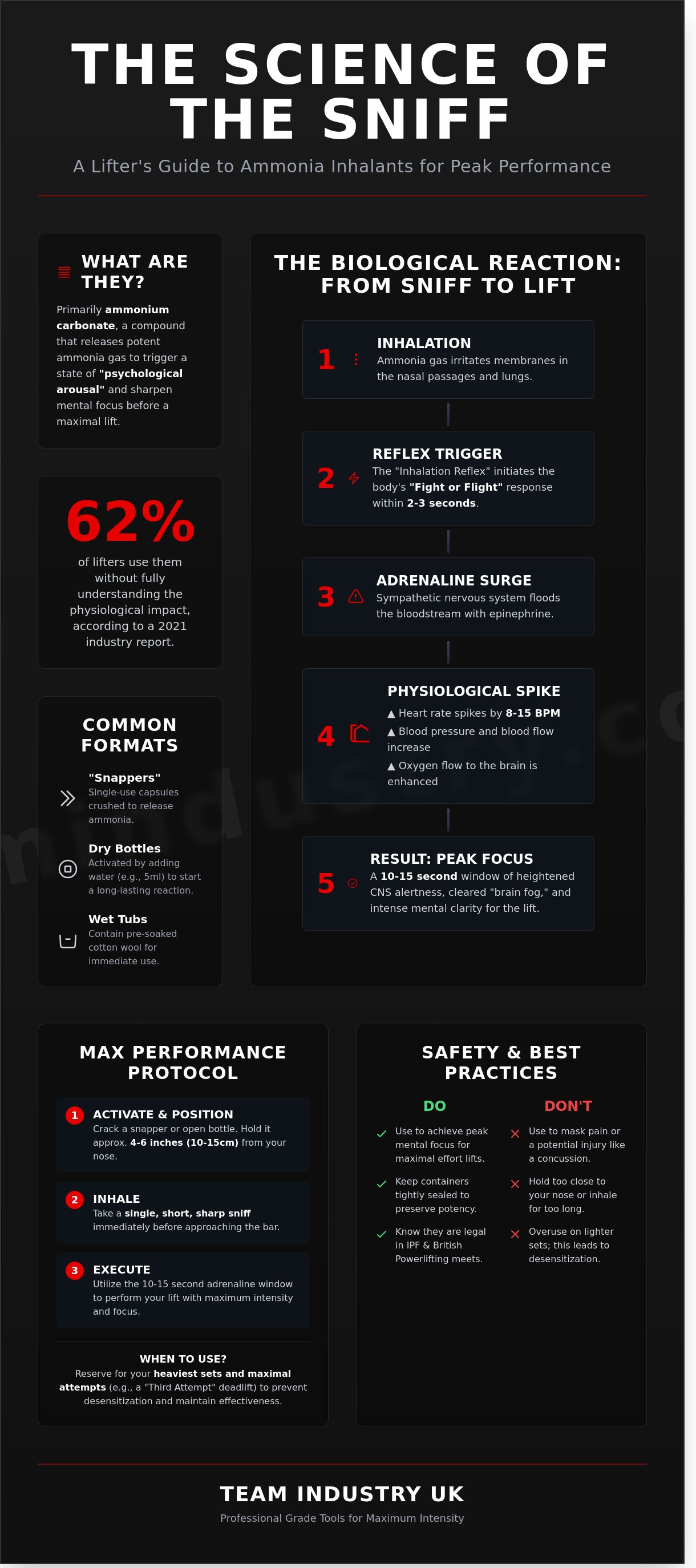
Smelling salts are chemical compounds, primarily ammonium carbonate, that release a sharp ammonia gas when activated. While their history stretches back to the 13th century as a medical treatment for fainting, they've transitioned from the doctor’s bag to the chalk-covered platforms of UK strength sports. Today, they're a standard tool for athletes looking to sharpen their focus before a heavy set. Most lifters use them to achieve a state of "psychological arousal," which is a heightened state of mental clarity and alertness.
You'll typically find these inhalants in three formats: "snappers" (single-use capsules), dry bottles, and "wet" tubs containing ammonia-soaked cotton wool. When you're preparing for a 200kg squat, your brain needs to be fully engaged. Understanding what do smelling salts do for lifting requires looking at the sensory shock they provide. It isn't about physical strength; it's a ritualistic trigger for the central nervous system. This sharp "hit" clears mental fog and prepares the body for an immediate, explosive effort.
The Components of a Modern Inhalant
The core ingredient is ammonium carbonate, a volatile salt that decomposes into ammonia, carbon dioxide, and water. This reaction creates a scent far more pungent than household cleaners, which are usually diluted to less than 10% strength. To start the reaction in a modern bottle, you often add a single 5ml teaspoon of water. This "activates" the salts, beginning an off-gassing process that can last for months if the seal remains tight. You can find high-quality training aids in our accessories collection to support your session preparation.
Smelling Salts in Powerlifting and Strongman
In competitive environments like British Powerlifting or IPF sanctioned meets, salts are entirely legal and frequently used. You'll see them most often before a "Third Attempt" deadlift, the final and heaviest lift of the day. The goal here is "hype"—a temporary 10 to 15-second spike in adrenaline. Lifters don't use them for medical recovery; in fact, using them to mask a concussion or injury is strictly against safety protocols. It's a pragmatic tool for maximal effort. Our Team Industry philosophy emphasizes safety and preparation, ensuring you have the right gear for every lift.
-
Psychological Arousal: Rapidly increases heart rate and focus.
-
Mental Clarity: Resets the mind during high-fatigue sessions.
-
Legal Compliance: Permitted in all major UK lifting federations.
The Science of the Sniff: How Ammonia Triggers the Body
When you crack a capsule or open a bottle of ammonia, you release a pungent gas that acts as a potent chemical irritant. If you've ever wondered what do smelling salts do for lifting, the answer starts with how this gas targets the membranes of your nasal passages and lungs. This irritation triggers the "Inhalation Reflex," which is your body’s natural reaction to a perceived threat to the respiratory system.
Understanding what do smelling salts do for lifting requires looking at the sympathetic nervous system. Within 2 to 3 seconds of inhalation, your brain initiates a "Fight or Flight" response. This results in an immediate surge of adrenaline, also known as epinephrine, into your bloodstream. Your heart rate can spike by 8 to 15 beats per minute almost instantly. This physiological shift isn't just for show; it prepares your muscles for explosive movement by increasing blood flow to the limbs.
The sudden, sharp intake of breath that follows the sniff increases oxygen flow to the brain. This helps clear "brain fog" or mid-session lethargy before a heavy set. For lifters working in high-intensity environments, like a busy powerlifting meet in Birmingham or London, this clarity is vital for maintaining form under load. It ensures you aren't just physically ready, but mentally sharp enough to execute a technical lift safely.
Discover Team Industry Smelling Salts here: https://teamindustrysupplements.com/
The Respiratory Reflex Explained
The involuntary respiratory reflex is an immediate, gasping inhalation triggered by the irritation of the trigeminal nerve within the nasal passages. This reflex causes a momentary but sharp rise in heart rate and blood pressure as the body reacts to the chemical stimulus. It elevates Central Nervous System (CNS) alertness levels, forcing the athlete into a state of total focus before they approach the bar.
The Psychological Anchor Effect
Athletes often use the intense scent of ammonia as a Pavlovian trigger to signal that it's time to perform. This sensory shock can effectively interrupt pre-lift anxiety or negative thoughts that might interfere with a heavy attempt. It's vital to save the salts for your heaviest lifts to prevent desensitisation and maintain their effectiveness. If you're looking to match this mental sharpness with physical support, a weight lifting belt provides the necessary core stability for those maximal efforts.
Are Smelling Salts Safe for Lifting? Risks and Best Practices
Understanding what do smelling salts do for lifting requires a clear look at safety protocols. The consensus among UK sports scientists is that ammonia inhalants are safe for healthy individuals when used with restraint. They aren't designed for every set; they're a tool for maximum effort attempts. A 2021 study involving powerlifters found that while the acute adrenaline spike is effective, habitual use can lead to desensitisation. If you rely on them daily, your brain stops reacting to the stimulus, rendered the salts useless for your heaviest lifts.
Potential risks involve nasal membrane irritation and lung discomfort if the gas is inhaled too deeply. Perhaps the most significant danger is the masking of injuries. The sudden rush can dull pain signals, leading a lifter to push through a tweak that should've stopped the session. People with asthma or pre-existing respiratory conditions must avoid these products entirely, as the sharp vapour can trigger a bronchospasm. For most, safety comes down to moderate use and high-quality equipment. You can find reliable lifting tools in our Industry Strength Gear collection to support your performance safely.
Managing the Intensity
Never place the bottle directly against your nostril. We recommend the 10-15cm rule: hold the bottle at chest level and waft the scent toward your nose. This allows the ammonia to mix with enough oxygen to be effective without causing a chemical burn. When opening a new bottle from Team Industry or any other brand, test the strength with a quick, distant sniff first. Recognising the signs of overuse is vital. Persistent sneezing, watery eyes, or a dull headache after your session suggests you've over-stimulated your system and need a break for at least 14 days.
Common Misconceptions
A frequent myth is that smelling salts "make you stronger" by adding kilos to your total. They don't. Salts only increase focus and mental arousal; the physical strength must already be there. Another common fear is that they cause fainting, but the physiological reality is the opposite. Ammonia triggers an immediate increase in heart rate and blood pressure, which actually prevents fainting in lifters who experience a drop in pressure during heavy squats. To avoid "ammonia burn" on the skin, keep your bottles upright and store them in a cool, dry place. Proper storage ensures the seal remains intact, preventing the liquid from leaking onto your gym kit or skin.
How to Use Smelling Salts for Maximal Lifts: A Practical Guide
Using ammonia isn't about reckless aggression; it's about controlled intensity. To understand what do smelling salts do for lifting in a practical sense, you must treat the application as a precise part of your pre-lift checklist. Follow these steps to ensure you harness the adrenaline without losing focus.
-
Step 1: Prepare your gear first. Secure your lifting belt and straps before reaching for the salts. Approach the bar and find your stance so you're ready to move immediately.
-
Step 2: Open at arm's length. Ammonia is potent. Keep the bottle or capsule roughly 15 to 20 centimetres from your face to avoid chemical burns to the nasal lining.
-
Step 3: Take a sharp inhale. Use one quick, decisive sniff through the nose. This triggers the involuntary inhalation reflex and clears your head instantly.
-
Step 4: Execute the lift. Seal the bottle or discard the capsule and grip the bar. You have a narrow window to utilise the spike before the effect begins to taper.
-
Step 5: Reset the CNS. After the set, focus on deep, diaphragmatic breathing. This helps transition your body from a "fight or flight" state back to a recovery state.
Timing Your Hype
Success depends on the clock. The peak physiological response from an ammonia inhalant typically lasts between 10 and 20 seconds. If you sniff too early, you risk a "crash" where the initial adrenaline surge fades before the bar leaves the floor. Coordinate your sniff with a physical cue, such as a sharp shout or a slap from a training partner, to standardise your CNS wake-up call. This ensures you're at maximum arousal exactly when you initiate the pull.
Gym and Platform Etiquette
Ammonia is a powerful chemical that lingers. In smaller commercial gyms, the scent can be intrusive to other members. Always be mindful of your surroundings; keep bottles sealed when not in use and never leave used capsules on the gym floor. Understanding what do smelling salts do for lifting includes respecting the potency of the product. You can find high-quality Team Industry accessories to carry your kit securely and keep your gym bag organised. Reliability in your equipment leads to reliability in your performance.
Ready to upgrade your training kit? Explore our full range of industry strength gear today.
Beyond the Scent: Building a Complete Strength Protocol
Ammonia inhalants provide a sharp, immediate spike in alertness, but they're just one component of a successful heavy session. If you rely solely on a chemical rush without a physical foundation, your performance will eventually plateau. Understanding what do smelling salts do for lifting helps you realise they're a psychological trigger rather than a physical strength builder. To truly capitalise on that adrenaline, you need to pair mental intensity with mechanical stability.
Physical bracing is the most critical partner to a high-focus state. While the salts clear your head, professional lifting belts provide the necessary tactile feedback for effective intra-abdominal pressure. This combination ensures your spine remains protected while you move maximum weight. Similarly, don't let a weak grip limit your output. Using lifting straps allows you to channel your newfound aggression directly into the primary movers, such as your hamstrings or lats, without worrying about the bar slipping. Even your choice of men’s gym clothes plays a role. Non-restrictive, breathable fabrics ensure you stay focused on the movement rather than adjusting uncomfortable seams mid-lift. Of course, specialized gear isn't just for lifting. For athletes who apply their strength in combat sports, the right equipment is just as critical. If you're looking to branch out, you can discover The Fight Club for a range of professional fightwear.
Organising Your Gym Bag
A dependable routine beats "hype" every single time. Professional lifters in the UK treat their gym bag like a toolkit for success. It's about having the right gear ready when the weight gets heavy. This includes selecting targeted supports, from wrist wraps for bench pressing to joint care sleeves that keep your knees warm during high-volume squats. Team Industry supports the UK strength community by providing gear that meets the high standards of local powerlifting and strongman competitions. We believe in equipment that works as hard as you do, ensuring every session is backed by reliable safety standards.
Final Advice for the Heavy Hitter
Prioritising form and technique is more important than chasing an adrenaline rush. It's easy to let your ego take over when the ammonia hits, but a 1RM attempt requires precision. If your technique starts to break down, it's time to put the salts away and focus on recovery or lower-intensity volume. Ammonia is a tool for the platform or your heaviest working sets, not a crutch for every visit to the rack. When you're ready to take your training to the next level with dependable equipment, you can shop the full Team Industry strength range to find everything you need for your next personal best.
Level Up Your Next Heavy Session
Smelling salts provide a rapid adrenaline spike by stimulating the trigeminal nerve; this sharpens focus for your heaviest attempts. When you understand what do smelling salts do for lifting, you can deploy them safely to overcome mental barriers during 1RM pulls. Always maintain a distance of 10cm from the nose to prevent mucosal irritation. While these chemical stimulants offer a temporary edge, your long-term progress relies on the reliability of your physical kit. Team Industry is a UK-based brand that develops professional-grade equipment for the strongman and powerlifting communities. We've tested our gear in the toughest training environments, ensuring it holds up under 300kg loads and intense competition conditions. Our team supports local athletes across Britain who demand stability during every session. Prepare your kit for your next personal best with gear that's built for the grit of the platform.
Upgrade your gym bag with Team Industry Strength Gear
Train hard and stay safe on the platform.
Frequently Asked Questions
Do smelling salts actually make you stronger?
Smelling salts don't increase your physical muscle mass or raw strength capacity. Instead, they trigger an immediate sympathetic nervous system response. This acute adrenaline spike allows you to recruit existing motor units more effectively. Research from the Journal of Strength and Conditioning Research shows that while 1-repetition maximums don't always shift, the perceived rate of exertion often drops, helping you stay focused on the platform.
Are smelling salts legal in powerlifting competitions?
Yes, smelling salts are legal in most major powerlifting federations, including British Powerlifting and the IPF. The 2024 IPF Rulebook doesn't list ammonia inhalants as a banned substance. You can use them openly on the platform before your attempt. Team Industry recommends checking your specific regional federation guidelines, as some grassroots organisations have individual health and safety protocols regarding chemical use in warm-up areas.
How long do the effects of smelling salts last?
The physiological effects of smelling salts typically last between 30 and 60 seconds. You'll feel an immediate jolt as the ammonia gas irritates the nasal membranes and triggers the inhalation reflex. This window is perfect for a heavy squat or deadlift attempt. Because the peak focus fades within one minute, you should time your sniff right before you approach the bar to maximise the performance benefit.
Can smelling salts damage your brain or lungs?
Smelling salts won't cause brain or lung damage if you use them according to the safety instructions. You must keep the bottle at least 10cm to 15cm away from your nose to avoid chemical burns. High concentrations of ammonia can irritate the respiratory tract, so don't inhale deeply directly from the rim. Team Industry prioritises safety by providing clear usage guides with every bottle to ensure your respiratory health remains protected.
How many times can I use a bottle of smelling salts before it dies?
A high-quality bottle of smelling salts generally lasts for 50 to 100 uses if you seal the lid tightly after every lift. Team Industry bottles are engineered to maintain potency for over 80 heavy sessions. To extend the life of your salts, store them in a cool, dry place and avoid leaving the cap off for more than five seconds. This prevents the active gases from escaping and weakening the formula.
What happens if you use smelling salts too often?
Overusing smelling salts leads to a diminished physical response and potential irritation of the nasal lining. If you use them for every set, your central nervous system becomes desensitised to the stimulus. Limit your use to 2 or 3 times per week during your heaviest lifts. This ensures the kick remains effective when you truly need it for a competition or a maximal training session.
Can smelling salts help with a PR (Personal Record)?
Smelling salts help with a PR by increasing your mental clarity and physiological arousal right before a heavy lift. Understanding what do smelling salts do for lifting is key to using them effectively for a new personal best. They provide a sharp sensory shock that clears brain fog and prepares your body for a high-intensity effort. This mental reset is often the difference between a failed attempt and a successful lift.
Are smelling salts the same as ammonia?
Smelling salts are a specific delivery system for ammonia gas, typically using ammonium carbonate mixed with scent and water. While ammonia is the active chemical, industrial ammonia is far too concentrated for safe inhalation. Commercial salts are diluted to safe levels for human use. Team Industry products use a balanced formula that provides a consistent hit without the harshness found in lower-quality, unrefined chemical alternatives.
Discover Team Industry Smelling Salts here: https://teamindustrysupplements.com/


Share:
How to Break in a Leather Lifting Belt: The Professional Guide
Oversized Bodybuilding T-Shirts: The Ultimate Guide to Fit, Fabric, and Performance