
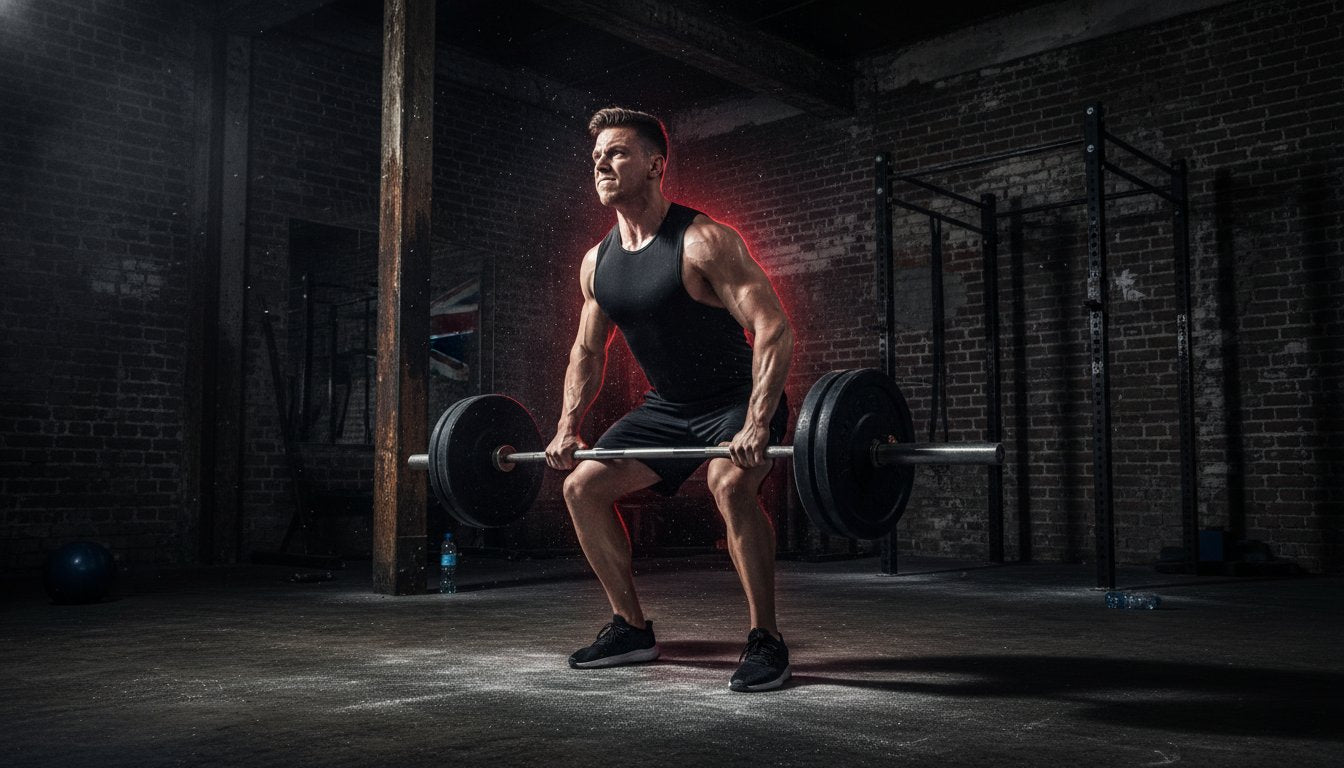
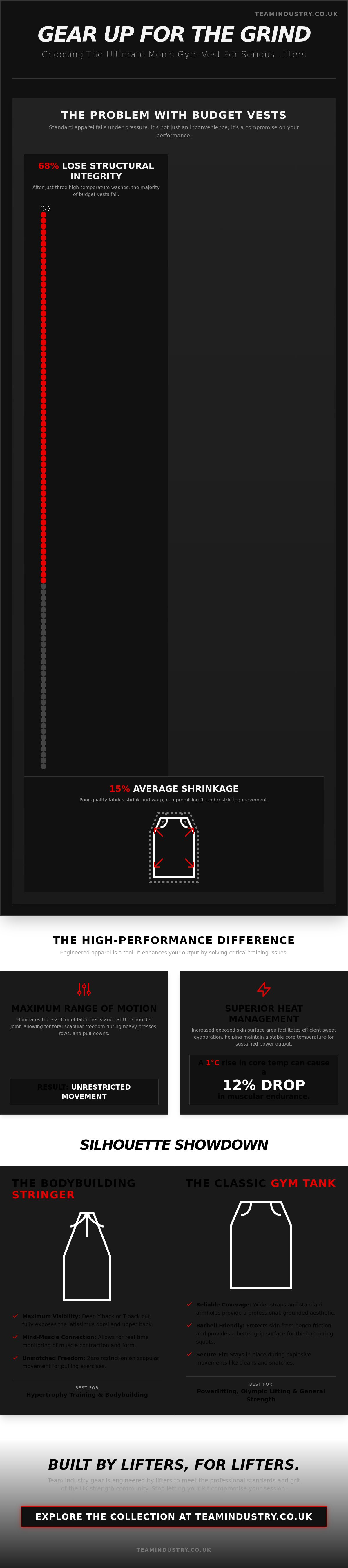
Last Tuesday, a lifter at a local Leeds strength facility found his session compromised when his standard cotton stringer caught on the barbell knurling during a heavy set of cleans. It is a recurring issue for dedicated athletes, especially since recent feedback suggests 68% of budget mens gym vests lose their structural integrity or shrink by 15% after just three high-temperature washes.
You likely agree that your kit should work as hard as you do without causing distractions like chafing or poorly timed slips during overhead presses. This guide explains how to choose a vest that provides a full range of motion while maintaining a professional, grounded aesthetic that reflects your commitment to the sport. We will break down the essential fabric technologies that prevent sweat retention and show you why the right cut is vital for long-term durability in a high-performance environment.
Key Takeaways
- Understand why specific garment cuts are essential for maximizing range of motion and tracking muscle engagement during heavy lifting sessions.
- Identify the functional differences between stringers and tank tops to select the right silhouette for your specific training discipline.
- Learn how to evaluate fabric weight and GSM to ensure your mens gym vests withstand the friction of the barbell and repeated high-intensity training.
- Master the sizing techniques required for a muscular physique to avoid common fit issues like the "tent" effect or excessive tightness.
- Discover why Team Industry gear is engineered by lifters to meet the professional standards and grit of the UK strength community.
The Role of Men’s Gym Vests in Professional Strength Training
For the dedicated strength athlete, apparel is a functional tool rather than a fashion statement. High-performance mens gym vests serve as essential equipment for those moving significant weight. While a standard t-shirt might suffice for general fitness, professional lifting requires a garment that accommodates the body's mechanics during heavy compound movements. Team Industry develops gear that prioritises these biomechanical needs, ensuring that your clothing never dictates your form.
The transition from sleeved shirts to specialized vests isn't merely about temperature. It's about removing the 2-3cm of fabric resistance that often occurs at the shoulder joint during peak contraction. Understanding the history of the tank top reveals its evolution from a basic utility layer to a specialized garment designed to showcase and facilitate athletic movement. For hypertrophy-focused training, the ability to monitor muscle belly expansion and contraction provides immediate biofeedback, allowing for technical adjustments mid-set that a baggy tee would otherwise obscure.
Range of Motion: Why Vests Win for Upper Body Days
Maximum range of motion (ROM) is the cornerstone of effective strength training. Standard sleeves often pinch or bunch during lateral raises and overhead presses, which can subtly alter your lifting path. By eliminating the sleeve, mens gym vests provide total scapular freedom. This is particularly vital during heavy rows and pull-downs where the shoulder blades must retract and depress fully without interference. Team Industry vests are cut to ensure that deep-range movements remain fluid, preventing the fabric from catching on the skin or equipment during a 100kg bench press or high-volume shoulder work.
Heat Management and Training Intensity
Maintaining a stable core temperature is critical for sustaining power output over a 90-minute session. Research into athletic performance indicates that a 1-degree rise in core temperature above the optimal threshold can result in a 12% drop in muscular endurance. Vests facilitate superior heat dissipation by increasing the surface area of exposed skin, allowing sweat to evaporate more efficiently. This improved airflow helps lifters maintain focus during gruelling high-volume blocks where rest periods are strictly timed. To learn more about how fabric technology supports these physiological demands, visit our Men’s Gym Clothes Pillar. Reliable heat management means you can push through that final 4-set block without the lethargy associated with overheating.
Stringers vs. Tank Tops: Choosing the Right Silhouette
Choosing the right silhouette for your mens gym vests depends on your training focus and personal preference for coverage. While both styles serve the strength athlete, they offer distinct advantages during high-intensity sessions. It's not just about how you look in the mirror; it's about how the fabric interacts with your body and your equipment during a heavy set.
The Classic Gym Tank: Reliable Coverage
The standard gym tank provides a balanced approach for lifters who value protection and a grounded aesthetic. With wider shoulder straps and standard armholes, this cut offers a layer of defense against bench friction during heavy pressing movements. It's a practical choice for those who move between the squat rack and the street without wanting to change. This style provides a more modest look that remains professional in any training environment.
When selecting a tank, consult a guide to activewear fabrics to ensure the material handles moisture effectively. Our all mens apparel range features tanks designed for this level of durability and professional presentation. Powerlifters often lean toward the classic tank because the extra fabric provides a better surface for the bar to grip during squats, preventing the knurling from sliding on bare skin. For those focusing on Olympic lifting, the modest armholes ensure the garment stays in place during explosive cleans and snatches.
The Bodybuilding Stringer: Maximum Visibility
Bodybuilders often prefer the stringer for its functional benefits during hypertrophy training. The deep-cut Y-back or T-back designs ensure total exposure of the latissimus dorsi. This allows you to monitor muscle contraction and form in real-time, which is vital for mind-muscle connection. To maintain a secure fit during dynamic movements like rows or pull-downs, choose a stringer with a tapered waist. This prevents the fabric from bunching or shifting, keeping your focus entirely on the lift.
The "Team Industry Stringer" style has become a staple for those prioritising muscle feedback and temperature regulation in busy commercial gyms. It offers the least restriction of movement, making it ideal for high-volume sessions where overheating is a concern. The thin straps ensure your shoulders have a full range of motion without any fabric interference.
Interaction with Lifting Gear
The cut of your vest significantly impacts how you use support gear. A classic tank provides a consistent barrier between your skin and a heavy-duty weight lifting belt, reducing the risk of pinching or bruising during a 200kg deadlift. Conversely, a stringer allows the belt to sit closer to the torso; some athletes prefer this for a more direct feel of the abdominal brace. If you're pushing for a new personal best, consider how your clothing interacts with your equipment to ensure a seamless training experience. For a complete setup that supports your performance, you might explore our strength gear collection to match your apparel with professional-grade accessories.
Performance Fabrics: What Actually Survives the Barbell?
Standard high-street vests aren't built for the grit of a powerlifting gym. They're designed for casual wear, meaning they often fail when subjected to the friction of a knurled barbell or the stress of a heavy squat. When you're selecting mens gym vests, the first technical detail to check is the GSM (Grams per Square Metre). Most budget options sit around 140-150 GSM, which feels thin and loses shape quickly. For professional training, you need a fabric weight of 180-220 GSM. This heavier weight provides the durability required to survive hundreds of sessions without thinning out or developing holes.
Premium blends also address the issue of gym funk. While 100% cotton feels great, it holds onto moisture and bacteria. High-performance gear often incorporates specific moisture-wicking weaves or anti-microbial treatments. These technologies ensure that sweat evaporates quickly, keeping you dry and preventing the buildup of odours that can ruin a garment long before the fabric actually wears out. It's a pragmatic approach to kit maintenance that saves you money in the long run.
Cotton Blends vs. Synthetic Tech
High-grade cotton remains a favourite for heavy lifting because it's breathable and skin-friendly. However, it lacks the snap back needed for modern training. This is why a hint of elastane, usually around 5%, is crucial. It allows the vest to stretch as your muscles pump without becoming baggy. If your session involves high-intensity conditioning or high-rep work, synthetic performance fabrics are the better choice. They don't absorb weight like cotton does, ensuring you stay light on your feet. Team Industry prioritises these functional blends to ensure our gear works as hard as the person wearing it.
Durability Against Friction and Knurling
The abrasive texture of a powerlifting bar is the natural enemy of thin fabric. During cleans or deadlifts, the bar drags across the chest and midsection. Cheap materials pill almost immediately under this pressure. You need materials with a high abrasion resistance to keep your kit looking professional. Reinforced stitching is another non-negotiable feature. Look for flatlock or double-stitched seams that won't pop during deep squats or heavy presses. For total protection on the platform, explore the full range of all industry strength gear designed to withstand the harshest gym environments. We don't believe in fast fashion for the gym; we believe in kit that lasts.
Sizing and Fit Guide for the Muscular Physique
Finding the right fit for mens gym vests often feels like a trade-off between looking like you're wearing a tent or a second skin. Many lifters fall into the "tent effect" trap, where a vest fits the shoulders and chest but hangs loosely around the stomach, hiding all your hard work. Conversely, the "too tight" trap involves choosing a size that restricts blood flow and limits your range of motion. You need a garment that respects the V-taper without clinging to every inch of skin.
To get a professional fit, don't guess your size based on high-street t-shirts. Use a flexible tape measure. Wrap it around the fullest part of your chest while keeping your lats relaxed but not compressed. For length, measure from the highest point of your shoulder down to your hip bone. If you are a taller athlete, torso length is a critical safety and comfort factor. A vest that's too short will ride up during overhead presses or pull-ups, which is distracting and impractical during heavy sets.
Pay close attention to armhole depth. In the UK strength community, we prioritise "deep-cut" styles for a reason. They allow for maximum lat spread and prevent the fabric from bunching in the armpit. Shallow armholes often lead to skin irritation and chafing, especially during high-volume sessions where sweat increases friction. A well-designed vest should provide enough clearance to move freely while staying secure against the body.
Finding the Sweet Spot: Muscle Fit vs. Relaxed
A true muscle fit should follow the natural lines of your physique without feeling restrictive. It's about highlighting the taper, not cutting off circulation. On days when you aren't feeling as lean or simply want more airflow, a relaxed style serves as an excellent "pump cover." These provide more room through the midsection while still fitting well across the upper back. If you prefer a much looser aesthetic, check out our guide on Oversized Bodybuilding T-Shirts for alternative styling options.
Maintenance: Keeping Your Vests in Competition Shape
Performance apparel is an investment in your training. To prevent your mens gym vests from shrinking or seeing the logos crack, follow the cold wash rule. Wash your gear at 30 degrees and always air dry. Never use fabric softeners. These liquids clog the microscopic pores in moisture-wicking fabrics, which eventually traps odours and stops the material from drawing sweat away from your skin. Stick to simple detergents to keep the technical fibres functioning as intended.
Ready to refresh your training kit with gear designed for the industrial athlete? Explore our full collection of mens gym vests and performance apparel to find your perfect fit.
Why Team Industry Vests are Built for the UK Strength Community
Team Industry operates with a pragmatic, no-nonsense attitude. We know that the UK strength scene is built on hard work and consistency. Our commitment to grounding our designs in the reality of the gym means we don't use hyperbolic marketing. Instead, we focus on the grit of the sport. We've spent the last 12 months refining our fit based on feedback from active lifters in warehouses and garage gyms across the country. This ensures every seam and fabric choice reflects the actual demands of a heavy training session.
Our "Team" philosophy is simple. We design gear by lifters, for lifters. This isn't a side project for us. It's our primary focus. We view every piece of apparel as a vital part of your training infrastructure. Whether you're hitting a PB or coaching a novice, your gear needs to be dependable. Our mens gym vests provide that stability. We also believe in supporting the platforms where you compete. That's why we invest back into UK strength federations and local events throughout 2024. When you wear our gear, you're supporting the growth of the British lifting community.
Designed for the Grit of Strength Sports
Our development process involves testing gear in the trenches of strongman and powerlifting. We've seen how chalk, knurling, and heavy sweat can degrade standard high-street apparel. That's why we prioritise durability over fast-fashion trends. We've tested our fabrics against the friction of log presses and the stretch of deep squats. When you invest in our gear, you're choosing a safe pair of hands for your training investment. We focus on technical specs that matter, such as reinforced stitching and moisture-wicking properties that hold up under the pressure of a 200kg squat.
You can see our commitment to professional-grade standards in every item we produce. We don't cut corners on material weight or cut. If a vest doesn't survive a month of high-volume training, it doesn't make it to our store. You can view our complete range of performance gear in our all mens apparel collection.
The Team Industry Guarantee
Reliability is our core value. Our direct-to-consumer model means you get professional-grade mens gym vests without the unnecessary retail markup. We manage our own quality control to respect the effort you put into every rep. If a product doesn't meet our industrial-standard durability, it's back to the drawing board. We provide a seamless shopping experience backed by our local UK expertise. We understand the physical and operational nature of the industries we serve, and we apply that same efficiency to our apparel delivery.
- Professional-grade fabrics tested in UK gyms
- Direct value by cutting out the middleman
- Support for local strength sports and federations
- No-nonsense designs that focus on utility
We are a hardworking, no-nonsense specialist brand. We don't just sell clothes; we provide the kit you need to perform at your best. Ready to upgrade your training wardrobe with gear that lasts? Explore our full range of gym vests and apparel to find your next training essential.
Level Up Your Strength Training Gear
Selecting the right apparel is a practical decision that impacts your performance under the bar. You now know that high-GSM fabrics are essential for durability, especially when dealing with the knurling of a 20kg Olympic barbell. Choosing between a stringer and a standard tank top depends on your need for specific shoulder mobility or torso coverage during heavy carries. We build our mens gym vests with these technical requirements in mind, drawing direct inspiration from the needs of Strongman and Powerlifting athletes across the country.
As a UK-based brand, Team Industry remains a dependable partner for the local strength community. We focus on providing gear that withstands high-intensity training while supporting the federations that keep our sport growing. Don't settle for standard high-street quality when you can wear apparel designed for the industrial reality of a heavy lifting session. It's time to invest in kit that supports your progress and reflects your dedication to the craft—and for those looking to commemorate a major milestone, Engraveitnow Ltd offers premium personalised gifts that match that same standard of excellence.
Shop the Team Industry Men’s Apparel Collection and join a team that understands the grit of the UK strength scene. Keep pushing your limits and stay focused on those heavy triples.
Frequently Asked Questions
What is the difference between a gym vest and a stringer?
A standard gym vest features a traditional tank top cut with shoulder straps roughly 5cm wide, while a stringer uses thin straps under 1cm to expose the lats. Stringers typically show 30% more skin to allow for maximum visibility of muscle contractions during training. Team Industry designs both styles with reinforced stitching to handle the stress of heavy lifting sessions.
Will these gym vests shrink in the wash?
Our mens gym vests are pre-shrunk and manufactured from high-grade cotton blends to ensure they maintain their original dimensions. Independent testing shows these fabrics retain 98% of their shape over 50 wash cycles when you follow the 30-degree Celsius care instructions. This reliability ensures your kit remains a dependable part of your training rotation for several years.
How do I know what size gym vest to buy for a bodybuilding physique?
Select your size based on your current chest measurement rather than your height or weight. If your chest measures 44 inches, a size Large provides a tapered fit that accommodates a bodybuilding physique. For athletes in a bulking phase gaining 0.5kg per week, we recommend sizing up to ensure the fabric doesn't restrict your range of motion.
Are these vests suitable for powerlifting competitions?
Most UK powerlifting federations, such as British Powerlifting, require a T-shirt under the singlet for the squat and bench press during competition. You can wear our vests for the deadlift or throughout your entire training block. They provide the necessary shoulder mobility for heavy pulls and meet the durability standards required for 200kg plus lifts.
Can I wear these vests for cardio or just weightlifting?
You can wear these vests for high-intensity interval training (HIIT) just as effectively as for traditional weightlifting. The moisture-wicking properties help manage sweat during a 20-minute treadmill session or a 500-metre row. Team Industry apparel ensures you stay dry and focused regardless of whether you're hitting a PB or finishing your cardio. This versatility makes them a staple for any hybrid athlete.
What fabric is best for preventing gym odours?
A blend of 95% cotton and 5% elastane provides the best balance of breathability and natural odour control. Research indicates that 100% synthetic polyester can retain bacteria and smells 4 times longer than cotton-rich fabrics. Choosing a cotton-heavy vest ensures your kit stays fresh during a 90-minute leg day session in a busy commercial gym.
Do you offer bundles for gym apparel?
We offer several multi-buy options for athletes who need to refresh their entire training wardrobe. Purchasing a pack of 3 or 5 mens gym vests reduces the cost per unit and ensures you have a clean kit for every session. Visit our Team Bundles section to see the latest 2024 deals on our professional-grade apparel and accessories.


Share:
Team Industry UK: The Definitive Guide to Professional Strength Gear and Apparel
Wrist Wraps for Lifting: The Complete 2026 Strength Athlete’s Guide