


A wrist wrap isn't a fashion statement; it's a temporary cast designed to keep your joint from collapsing under load. If you've ever felt a sharp twinge during a heavy overhead press or noticed your fingers tingling mid-set, you've experienced the frustration of poor equipment setup. Many athletes remain confused about how tight should wrist wraps be for weight lifting to provide maximum support without sacrificing blood flow.
We know you're looking for reliability and stability when you step under the bar. It's vital to have gear that works with you, not against you. This guide will show you exactly how to calibrate your tightness for every lift, from the bench press to heavy squats. You'll discover a repeatable method to check your wrap tension, the correct way to handle thumb loops, and how to use professional-grade equipment to secure your next PR. We're here to help you build the confidence needed to handle heavy iron while keeping your joints healthy for the long haul.
Key Takeaways
- Learn why treating your wraps as a temporary cast for the joint prevents power leaks and protects against hyperextension during heavy sets.
- Master the Two-Finger Rule to determine exactly how tight should wrist wraps be for weight lifting without causing numbness or restricted blood flow.
- Understand the importance of the Set and Release protocol to maintain hand health and ensure you only apply maximum tension when it is needed most.
- Discover how to calibrate your wrap tension differently for the bench press versus the overhead press to balance stability with necessary mobility.
- Avoid common technical errors like wrapping too low on the forearm or keeping the thumb loop engaged during your lifts.
The Mechanics of Wrist Stability: Why Tightness Matters
Wrist wraps function as a temporary support system for the complex architecture of your wrist joint. When you're pressing heavy iron, your goal is to maintain a stacked position where the bar sits directly over the radius and ulna. Even a minor deviation into hyperextension creates a power leak, forcing your smaller forearm muscles to work harder to stabilize the weight instead of pushing it. Understanding The Mechanics of Wrist Stability is essential for any lifter moving serious weight. Determining how tight should wrist wraps be for weight lifting starts with understanding this casting effect.
The primary objective of a wrap is to cast the joint. This compression increases your proprioception, which is your brain's ability to sense the position and movement of the joint. With this heightened awareness, you can grip the bar more aggressively and maintain total control during the most difficult portion of a lift. Many lifters mistakenly believe that using wraps is a sign of weak wrists. In reality, wraps are specialized tools designed to manage high-intensity loads that exceed the natural structural capacity of the joint.
To better understand this concept, watch this helpful video:
The "Casting" Effect Explained
A high-quality wrap acts as an external skeleton for the small bones of the wrist. For a one-rep max (1RM), you want the wrap to be extremely rigid, essentially turning the hand and forearm into a single, unyielding unit. This level of tightness is necessary when the risk of the wrist buckling is at its highest. However, during high-volume hypertrophy training, you might choose a slightly less aggressive wrap to allow for better blood flow while still providing a reliable safety margin.
Support vs. Restriction
A common point of confusion is how tight should wrist wraps be for weight lifting to remain effective without being dangerous. You want to restrict specific directions of movement, primarily hyperextension, rather than cutting off all circulation to the hand. It's also important to distinguish these from lifting straps. While straps assist with your grip during pulling movements, wrist wraps are built strictly for joint reinforcement during pressing and squatting.
The 3-Step Tightness Test: Finding Your Perfect Fit
Before you tension the wrap, ensure it's positioned correctly. A wrap sitting entirely on the forearm provides zero support for the joint. It must sit across the back of the hand and the upper wrist to create the casting effect required for heavy lifting. When deciding how tight should wrist wraps be for weight lifting, remember that placement is just as critical as pressure. If the joint can still bend freely, the wrap isn't doing its job.
The Two-Finger Test
Once you've secured the wrap, try to slide your index and middle fingers between the material and your skin. You should feel firm resistance. If your fingers slide in easily, the wrap is too loose to support a max-effort load. Conversely, if you can't get even one finger under the edge, you've likely over-tightened the gear. This level of constriction can lead to nerve compression and actually weaken your grip during the lift.
The Circulation Check
Your safety depends on maintaining blood flow to the extremities. Perform a quick capillary refill check by pressing down on your fingernail. It should turn white and then return to pink within two seconds of release. If it stays white or you feel a persistent heartbeat in your palm, loosen the wrap immediately. Tingling or numbness in the fingers is a clear signal that you've crossed the line from support to dangerous restriction.
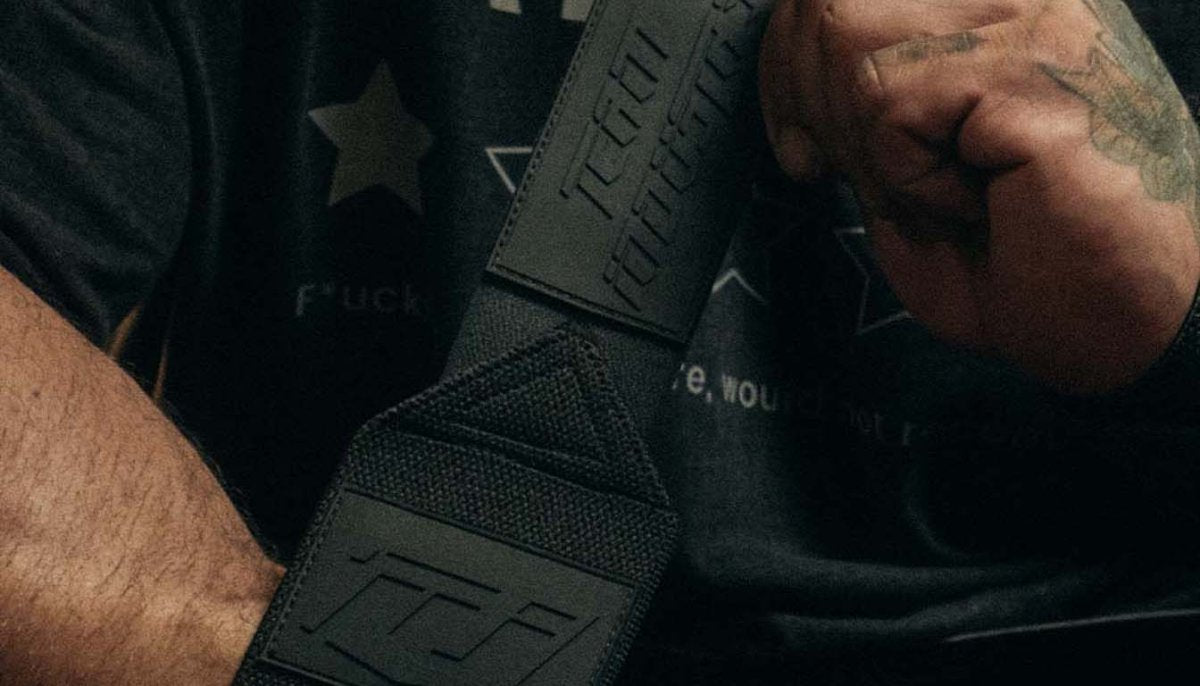
Adopt a strict Set and Release protocol. Professional lifters never keep their wraps at full tension for the duration of a workout. Tighten them right before you grip the bar, and unstrap them the moment your set is finished. This practice preserves your circulation and maintains the long-term durability of the heavy-duty elastic used in Industry Wrist Wraps. By loosening the gear between sets, you ensure your hands remain fresh and responsive for your entire training session.
Calibrating Tightness for Bench Press, Squats, and Overhead Lifts
Every movement in the gym places a unique demand on your wrist joint. A setting that feels perfect for a heavy squat might be insufficient for a maximum effort press. When determining how tight should wrist wraps be for weight lifting, you must consider the specific angle of force. For dynamic Strongman events like the Log Press or Axle Clean, you need a high level of support that still allows for the explosive transition into the rack position. Static pressing movements, however, require a much more rigid approach to keep the joint locked.
Maximum Support for the Bench Press
The bench press is the primary movement where professional wrist wraps are essential. Because the goal is to keep the bar directly over the forearm bones, you should apply maximum tension. Start your wrap slightly below the joint and work "low to high" toward the palm. This creates a ramp of support that prevents the thumb from being pushed out of position. This configuration ensures the load stays vertical, eliminating power leaks and protecting the small bones of the hand from excessive pressure during the drive.
Wrist Wraps for Squatting
Powerlifters often use wraps during low-bar squats to manage elbow flare and wrist strain. While your legs do the work, your wrists often fold under the weight of the barbell. For long squat sessions, aim for a medium-high tightness. It should be "comfort-tight," providing enough rigidity to keep your wrists neutral without causing the intense pressure needed for a bench press. This level of support helps you maintain a tight upper back and a secure shelf for the bar throughout your sets.
Overhead pressing requires a similar level of support to the bench, though you may need a fraction more mobility to achieve a clean rack position. Regardless of the lift, the goal is always to provide the necessary stability for the task at hand. Upgrade your support with Industry Wrist Wraps today to ensure your gear is as hardworking as your training program.
Common Wrapping Mistakes and Gear Maintenance
Even the highest quality gear fails if applied incorrectly. The most frequent error is wrapping too low on the forearm. If the material doesn't cross the actual wrist joint, you aren't providing support; you're simply wearing a heavy-duty sweatband. You must bridge the gap between the hand and the arm to lock the joint in place. When you are learning how tight should wrist wraps be for weight lifting, ensure the tension is centered directly over the break of the wrist.
The Thumb Loop: Utility vs. Safety
Treat the thumb loop as a starter tool to help you tension the wrap, not as a structural part of the support. Once the wrap is secured, remove the loop from your thumb. Leaving it on creates a distraction and can lead to uneven pressure across the hand. In sanctioned powerlifting competitions, leaving the loop on your thumb or fingers during a lift will result in a failed attempt.
Gear maintenance is equally important for long-term performance. Over time, the elastic fibers inside the wrap will experience fatigue. If your wraps feel soft or no longer snap back after being stretched, they've lost their structural integrity and require replacement. To extend their life, hand wash them in cold water and air dry them. Never use a tumble dryer. High heat destroys the elastic and ruins the Velcro hooks, rendering the wraps useless for heavy training.
Choosing Your Next Pair
Your choice of wrap depends on your training style. Flexible wraps are ideal for high-volume bodybuilding, while stiff, competition-grade wraps are better for max-effort powerlifting. For a versatile solution that offers a balance of comfort and cast-like support, we recommend the 16" Industry Wrist Wraps. These are designed to handle the grit of heavy-duty training while remaining durable enough for daily use. Understanding how tight should wrist wraps be for weight lifting is only half the battle; having the right gear completes the equation.
Secure Your Wrist Stability for the Next Set
Mastering the balance between rigid support and healthy circulation is essential for any dedicated lifter. By applying the two-finger rule and adjusting your tension for specific movements like the bench press or low-bar squat, you ensure your joints remain protected under heavy loads. Understanding how tight should wrist wraps be for weight lifting is often the difference between a shaky failed attempt and a stable new personal record.
Reliable gear is the foundation of a safe, high-performance training environment. Our equipment is trusted by UK Strongman athletes for its heavy-duty 2-inch Velcro and reinforced stitching, ensuring your support remains locked throughout the set. If your current wraps have lost their rebound or feel soft, it's time to upgrade to a professional solution that provides a true casting effect. We understand the grit required in the gym, and we're committed to providing the stability you need to push your limits.
Shop Team Industry Professional Wrist Wraps and take the guesswork out of your joint stability. Step onto the platform with the confidence that your gear is built to handle your heaviest sessions.
Frequently Asked Questions
Can I wear wrist wraps for every set of my workout?
You shouldn't use wrist wraps for every set of your training session. It's more effective to save them for your heaviest working sets and final warm-ups. Over-using them for lighter weights can prevent your natural wrist stability from developing. Save the support for when the load is high and the joint needs that extra casting protection to maintain a neutral position.
What is the difference between wrist wraps and lifting straps?
Wrist wraps provide external support to the joint during pressing and squatting movements. In contrast, lifting straps are tools designed to assist your grip during pulling movements like deadlifts or rows. While wraps keep your wrist from buckling under a press, straps ensure the barbell doesn't slip out of your hands when your grip fatigue sets in.
How do I know if my wrist wraps are too long?
Your wraps are too long if you're forced to wrap the material several inches up your forearm just to finish the length. Most competitive federations limit wrap length to 100 cm to keep the playing field level. When you're determining how tight should wrist wraps be for weight lifting, a standard 18-inch or 24-inch wrap provides plenty of tension for most athletes without adding unnecessary bulk.
Should I use stiff or flexible wraps for bodybuilding?
Flexible wraps are typically the better choice for bodybuilding and high-volume training. They provide reliable stability while allowing enough circulation for the pump associated with hypertrophy work. Athletes often ask how tight should wrist wraps be for weight lifting during a max effort; for those attempts, a stiff, competition-grade wrap is the preferred tool for absolute rigidity and joint immobility.
Are wrist wraps allowed in powerlifting competitions?
Wrist wraps are allowed in powerlifting competitions, but they must adhere to strict technical standards. Most federations require that the wraps don't exceed 1 meter in length or 8 cm in width. You must also ensure the thumb loop is off your hand during the lift to avoid a red light. Using professional Wrist Wraps ensures your gear meets the durability and performance standards required on the platform.
Share:
Heavy Duty Knee Sleeves: Support Guide for Athletes
Best Powerlifting Wrist Wraps: 2026 Selection Guide