

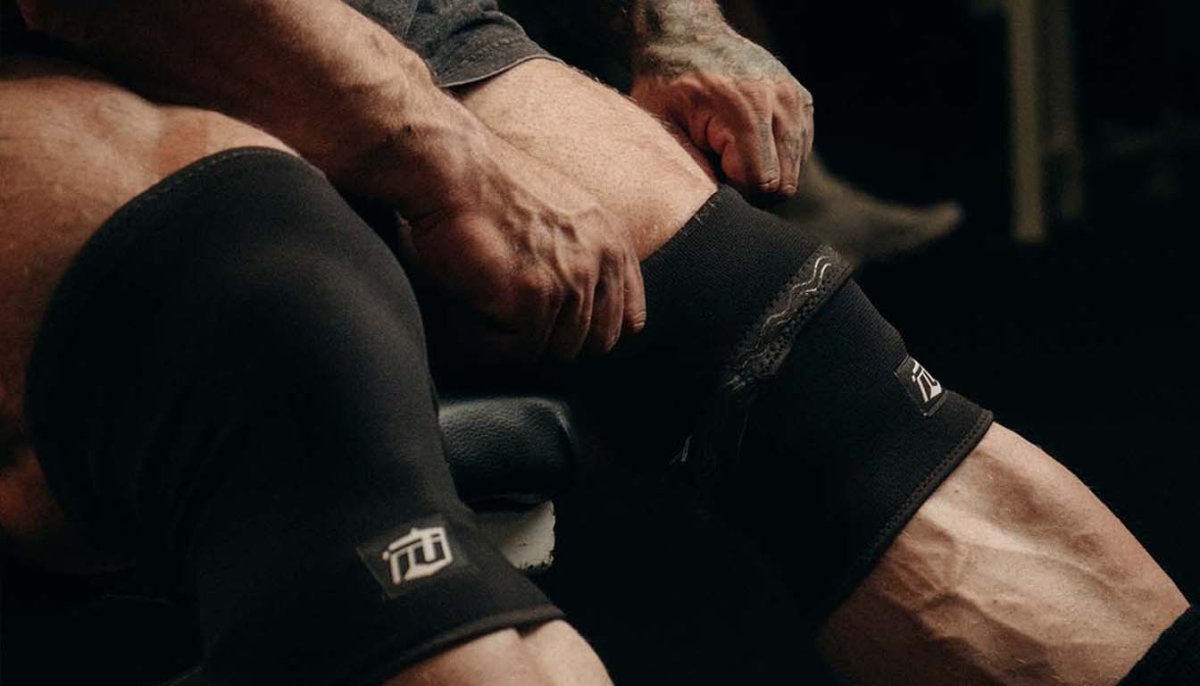
Your knees don't care how strong you are. Load a bar past your threshold without proper joint support, and they'll remind you of that fact in a way you won't forget. Heavy duty knee sleeves exist precisely for that line in training where standard gear stops doing its job and you need something built to handle real loads.
If you've ever felt a sleeve roll down mid-squat, or watched the elasticity fade after a few months of hard use, you already know the frustration. You're also probably wondering whether the thickness of the neoprene actually matters, or whether you'd be better served by a multi-ply option. Those are the right questions to be asking.
This guide cuts through the noise. You'll learn the practical difference between standard and heavy duty knee sleeves, what to look for in a sleeve that genuinely holds up under competition-level loading, and how the right choice can reduce joint discomfort while giving you the confidence to push heavier. We'll cover material construction, fit, and what separates durable, performance-grade gear from the rest.
Key Takeaways
- Heavy duty knee sleeves do more than protect joints — they enhance proprioception, helping your brain track knee position under maximal load for safer, more controlled lifts.
- The choice between 7mm neoprene and multi-ply construction isn't just about thickness — each serves a distinct purpose depending on whether you compete in powerlifting or strongman.
- Correct sizing requires two separate measurements, and getting either one wrong can compromise both performance and joint support when it matters most.
- How you care for your sleeves after training directly determines how long they hold their compression — and most athletes are unknowingly shortening their gear's lifespan.
- By the end of this guide, you'll know exactly what to look for in a sleeve built to handle competition-level loading, and how to make a choice that supports your long-term training.
Understanding the Role of Heavy Duty Knee Sleeves in Strength Training
At their core, heavy duty knee sleeves are high-compression tools designed to stabilise the joint under load. But calling them "joint support" undersells what they actually do. The right sleeve doesn't just wrap your knee; it actively communicates with your nervous system, keeps the joint primed for heavy work, and holds structural integrity through sets that would expose the limits of standard gear.
One of the least-discussed benefits is proprioception. Your brain relies on sensory feedback from the skin and soft tissue around your knee to track joint position in real time. Under maximal load, that feedback can become distorted. A firm, well-fitted sleeve increases surface contact around the joint, sharpening the sensory signal your body sends upward. The result is better spatial awareness of where your knee is tracking during a squat or pull, which directly influences movement quality when fatigue sets in. No competitor currently explains this mechanism clearly, but it's one of the most practical reasons serious lifters report feeling more controlled under heavy weight when wearing quality sleeves.
Joint warmth is the other factor that gets glossed over. Synovial fluid, which lubricates the knee joint, becomes less viscous in cooler conditions. A sleeve that retains heat during warm-up and between working sets keeps that fluid at a functional temperature, reducing the friction your joint experiences under load. This matters most during long training sessions or in cold environments.
Compression vs. Mechanical Support
Standard sleeves offer warmth and mild compression. That's useful for moderate training, but it stops short of what heavy loading demands. A high-density sleeve limits soft tissue movement around the patella and reduces localised inflammation during and after training. Stiffer sleeves built from denser neoprene also provide a measurable rebound effect out of the bottom of a squat, something a thin sleeve simply cannot replicate. That elastic energy return is a functional performance benefit, not just a comfort feature.
When to Upgrade from Standard to Heavy Duty
Two signs tell you your current sleeves have reached their limit:
- Loss of rebound: If you're no longer feeling that pop out of the hole, the neoprene has compressed and lost its elasticity.
- Visible thinning or rolling: Sleeves that migrate or visibly thin at the back of the knee aren't generating even compression, which compromises joint tracking.
Once you're regularly training above 80% of your one-rep max, standard sleeves aren't built for that demand. At those loads, joint stability and proprioceptive feedback become critical safety factors, not optional extras. That's the point where investing in professional-grade joint support stops being a preference and starts being a practical decision.
Comparing Materials: 7mm Neoprene vs. Multi-Ply Fabric
Material construction is where most sleeve comparisons fall short. You'll see thickness listed as a spec, but the reasoning behind it rarely gets explained. That gap matters because choosing the wrong material for your sport doesn't just affect comfort; it affects how your joint responds under load and whether your gear holds up through a full competition cycle.
The 7mm Neoprene Standard
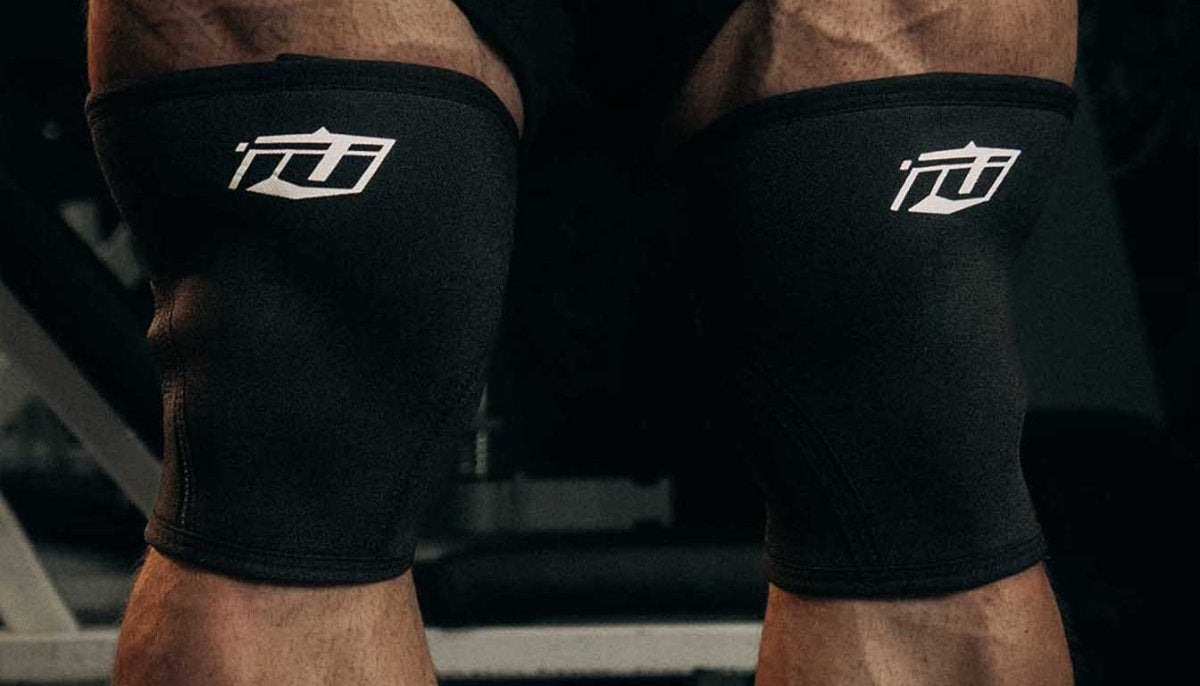
In most powerlifting federations, including the IPF, 7mm is the maximum allowable sleeve thickness. That's not an arbitrary number. It represents the upper limit of what provides meaningful compression and rebound without crossing into the mechanical assistance territory reserved for knee wraps. High-density 7mm neoprene delivers consistent, even tension across the joint throughout the full range of motion, from descent through lockout.
The quality of the neoprene itself is what separates durable sleeves from disposable ones. Lower-grade foam compresses unevenly and begins to tear at the seams under repeated heavy loading. High-grade neoprene maintains its density across hundreds of training sessions, which is why it's the benchmark material for heavy duty knee sleeves built for competition prep.
The Case for Double-Ply Polyester
Double-ply sleeves, typically constructed from a polyester and rubber blend, serve a different purpose. They're stiffer, more cast-like in feel, and built for environments where maximum joint containment takes priority over federation compliance. Strongman athletes gravitate toward them for good reason: events like atlas stones, heavy yoke carries, and max-effort deadlifts place lateral and rotational stress on the knee that 7mm neoprene isn't always designed to resist at that level.
The stiffness profile also makes double-ply sleeves useful for overload training, where you're deliberately working above competition weight to build strength. The added rigidity limits unwanted joint movement and gives the soft tissue around the knee a firmer container to work within.
Here's the practical breakdown:
- 7mm neoprene: Best for powerlifting, federation-compliant training, and sessions where consistent tension and elastic rebound are the priority.
- Double-ply polyester/rubber: Best for strongman events, overload blocks, and any training where maximum joint containment outweighs the need for compliance.
Neither option is universally better. The right choice depends on what you're training for. If you're preparing for a national-level powerlifting meet, 7mm neoprene keeps you compliant without sacrificing performance. If you're running a strongman block or pushing past your usual working maxes, a double-ply sleeve earns its place. Team Industry's range of joint support gear is built with these high-stress environments in mind, so it's worth reviewing what's available before your next training cycle.
Sizing and Fitment Strategies for Performance
Getting the size wrong on heavy duty knee sleeves is one of the most common and costly mistakes athletes make. Too loose and you lose compression; too tight and you create a different set of problems entirely. Accurate sizing takes two separate measurements, and skipping either one will compromise the result.
Follow these steps before ordering:
- Step 1 – Measure the knee joint: Sit with your leg straight and measure the circumference directly across the centre of the kneecap. This is your primary sizing reference.
- Step 2 – Measure the calf: Measure the widest point of your calf. A sleeve that fits your knee perfectly is useless if it can't physically pass over your calf to get there.
- Step 3 – Choose your fit type: A standard fit suits daily training, where you need compression without excessive restriction across multiple sets. A competition fit runs tighter, maximising joint containment and rebound for max-effort attempts. If you're unsure, consider what your training block demands right now rather than defaulting to the tightest option.
- Step 4 – Trial the fit: Once on, check for bunching behind the knee or skin pinching at the edges. Either signals a poor fit. The sleeve should sit flush against the skin with even tension throughout.
The Risks of Extreme Down-Sizing
Sizing down aggressively isn't a shortcut to better performance. Overly tight sleeves can restrict blood flow, cause numbness below the knee mid-set, and shift your focus from the lift to the discomfort around it. Seam integrity also suffers when neoprene is stretched beyond its designed range repeatedly. The sweet spot is where firm, consistent compression enhances joint awareness without creating any sensation you'd notice during a working set.
How to Put on Stiff Heavy Duty Sleeves
High-compression sleeves don't slide on easily, and that's by design. The fold-over method works well: fold the top third of the sleeve back on itself, position it over the ankle, then unroll it upward over the calf and into place at the knee. For ultra-tight competition fits, a plastic bag over the foot reduces friction dramatically and lets the sleeve move over the calf without a fight. Lifting straps can also be threaded through the sleeve and used as handles to pull it into position, which is particularly useful if grip fatigue is already a factor during a long session.
If you're building out your kit for a competition prep block, browse Team Industry's joint support range to find the right sleeve for your training demands.
Longevity and Care: Protecting Your Investment
Quality gear earns its cost over time, but only if you maintain it correctly. Most athletes who complain about sleeves losing their compression within six months are unknowingly accelerating that decline through poor post-training habits. The care routine is simple, but skipping any part of it compounds quickly.
Never machine wash or tumble dry high-grade neoprene. The heat and mechanical agitation from both processes break down the foam cell structure inside the neoprene, which is exactly what generates compression and rebound. Once that structure degrades, no amount of washing restores it. Hand wash only, using cool water.
The Air Dry Rule is non-negotiable: turn your sleeves inside out immediately after training and hang them in open air. The inner surface absorbs the most sweat and heat during a session. Trapping that moisture against the neoprene core by leaving them right-side out, or worse, bundled in a gym bag, is the single fastest way to degrade the material. A gym bag environment is warm, dark, and poorly ventilated, which accelerates both material breakdown and bacterial growth simultaneously.
Combating Neoprene Odour
Neoprene's closed-cell structure traps bacteria within the surface layer rather than allowing it to pass through. Standard detergents don't penetrate effectively, which is why odour persists even after washing. Use a specialist neoprene or sports equipment soap that's formulated to break down the organic compounds bacteria feed on. Soak briefly, rinse thoroughly with cool water, and air dry inside out. Don't rush this process with heat.
Identifying Sleeve Fatigue
Heavy duty knee sleeves don't fail suddenly. The signs are gradual:
- Loss of structural memory: The sleeve doesn't return to its original shape between sessions.
- Cracked or brittle feel: The neoprene core has dried out and the foam cells have collapsed.
- Seam fraying: Stitching that separates under load means the sleeve can no longer distribute compression evenly.
- Reduced rebound: If you've lost that pop out of the hole and your sleeves feel more like padding than a performance tool, the elasticity is gone.
Competitive lifters should keep a dedicated training pair and a separate meet pair. Reserve the meet pair for competition day and peak testing sessions only. This single habit extends the functional lifespan of your competition sleeves significantly, ensuring maximum compression when it counts most.
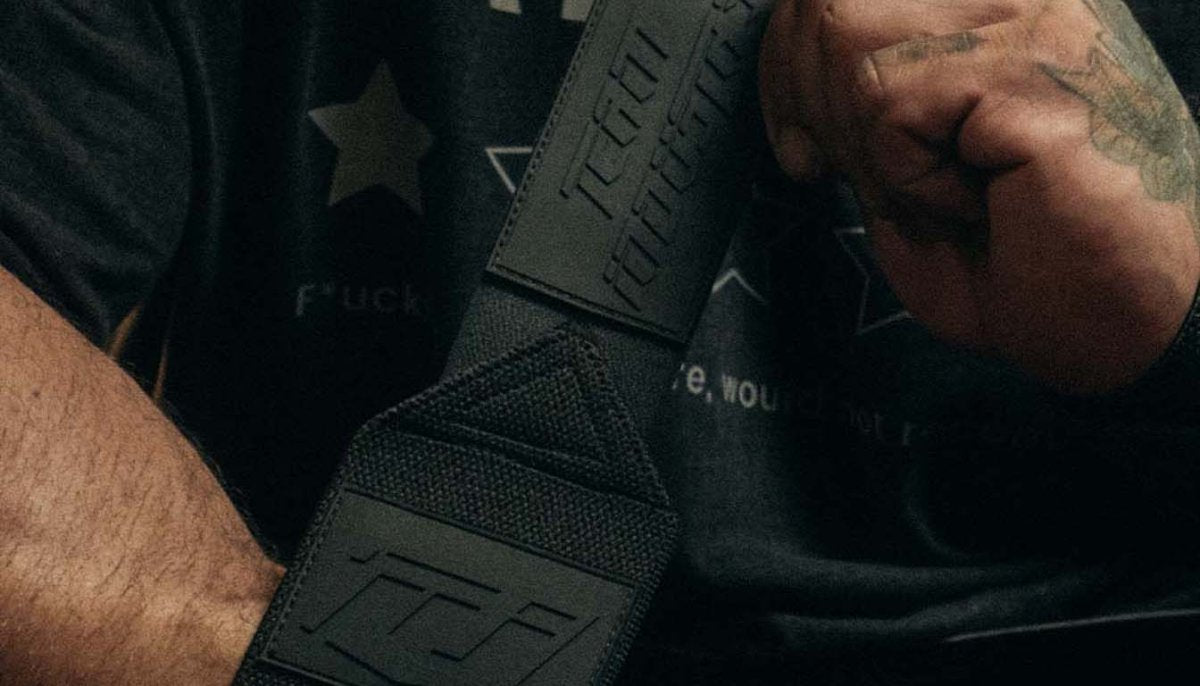
Sleeves work best as part of a complete support system. Pairing them with a quality lifting belt and wrist wraps distributes load management across the whole body rather than relying on any single piece of kit. Browse Team Industry's full strength gear range to build out a kit that holds up through a full competition prep cycle.
Build Your Kit Around Gear That Holds Up
Choosing the right heavy duty knee sleeves comes down to three things: understanding what your training actually demands, getting the fit right from the start, and maintaining your gear so it performs when you need it most. Material choice matters, sizing takes precision, and care habits determine how long your investment lasts.
If you're training for powerlifting or strongman at a serious level, your joint support needs to match that commitment. Cutting corners on gear at competition-level loading isn't a risk worth taking.
Team Industry's strength equipment is built specifically for the demands of powerlifting and strongman athletes, tested by the people who actually compete in those environments. With professional-grade joint support available and fast UK-wide shipping, getting the right kit to your door before your next training block is straightforward.
Shop Team Industry's heavy duty knee sleeves and joint support gear and go into your next session with the confidence that your equipment won't let you down before your knees do.
Frequently Asked Questions About Heavy Duty Knee Sleeves
Do heavy duty knee sleeves help with knee pain?
Heavy duty knee sleeves can reduce discomfort during training by compressing soft tissue around the joint, retaining heat to keep synovial fluid functional, and improving proprioceptive feedback. That combination helps many athletes train with less irritation. However, sleeves aren't a treatment for underlying injury. If you're experiencing persistent or sharp knee pain, get it assessed by a sports medicine professional before loading the joint further.
Can I wear knee sleeves for my entire workout?
There's no hard rule against it, but most experienced lifters reserve their sleeves for working sets rather than wearing them continuously. Keeping them on throughout a full session accelerates compression fatigue in the neoprene, shortening the sleeve's functional lifespan. It also reduces the proprioceptive benefit; your nervous system adapts to constant compression, which can blunt the sensory feedback that makes sleeves useful under maximal load.
What is the difference between 5mm and 7mm knee sleeves?
The core difference is compression density and rebound. A 5mm sleeve provides moderate warmth and joint awareness, making it well-suited for moderate training loads, Olympic lifting, or general gym work where mobility is a priority. A 7mm sleeve delivers significantly firmer compression and a more pronounced elastic rebound out of the bottom of a squat. For powerlifting or any training regularly exceeding 80% of your one-rep max, 7mm is the practical choice. It's also the maximum thickness permitted in most major powerlifting federations, including the IPF.
How do I stop my knee sleeves from smelling?
Standard detergent doesn't solve neoprene odour because bacteria embed within the material's surface layer rather than sitting on top of it. Use a specialist neoprene or sports equipment soap, soak briefly in cool water, and rinse thoroughly. The most important habit is turning your sleeves inside out immediately after training and hanging them to air dry completely before storing them. Leaving them bundled in a gym bag traps moisture and accelerates bacterial growth, which is what causes persistent odour in the first place.
Are knee sleeves or knee wraps better for squats?
They serve different purposes, so the better option depends on your goal. Heavy duty knee sleeves provide compression, joint warmth, and proprioceptive feedback across all rep ranges, making them suitable for both training blocks and competition in equipped or classic divisions. Knee wraps generate significantly more mechanical assistance and elastic rebound, which can add meaningful weight to a max squat but restricts movement and places higher stress on the joint. If you compete in a raw division or prioritise joint longevity over assisted performance, sleeves are the more practical daily tool. Team Industry stocks both heavy duty knee sleeves and weight lifting knee wraps, so you can choose based on what your training block actually demands.
Share:
Best Oversized Powerlifting Tees: A Technical Guide
How Tight Should Wrist Wraps Be? A Weightlifting Guide