

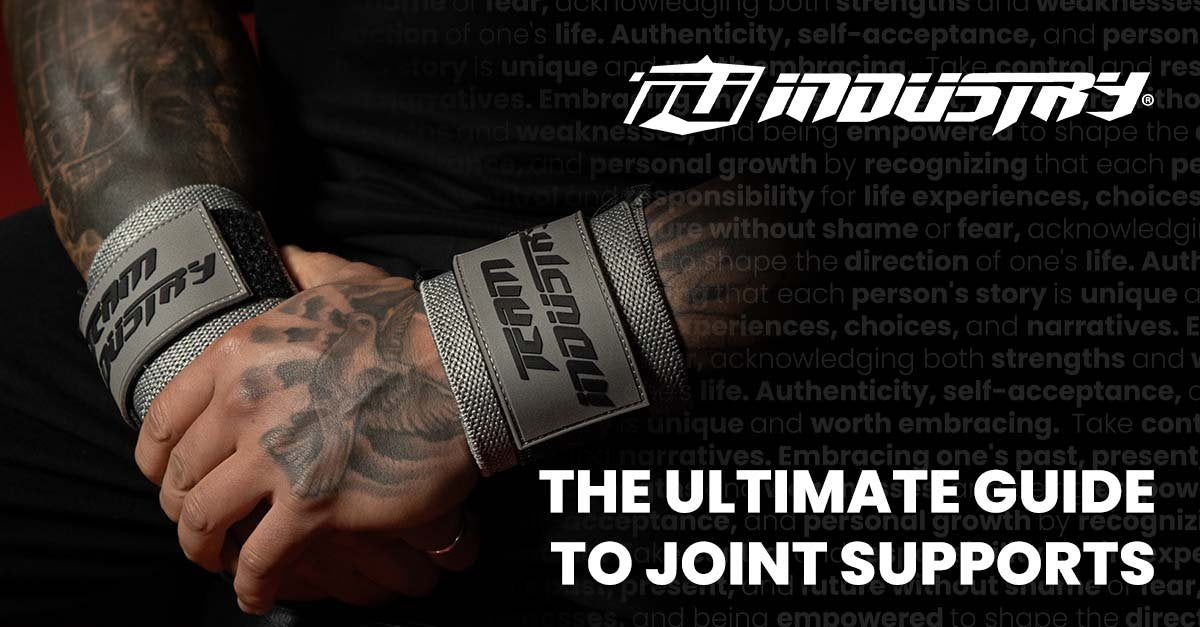
The heaviest lift in your training programme isn't actually limited by your legs or back; it's often restricted by the small muscles in your forearm. Professional strength data from 2023 shows that grip fatigue can reduce your maximum pulling capacity by as much as 22% during a heavy session, making a wrist strap a vital piece of kit. You've likely experienced that moment at the 140kg mark where the bar starts to slip, even though your muscles feel ready for more. It's a frustrating bottleneck that stops progress in its tracks.
This professional approach isn't limited to what athletes wear; it's also crucial for the staff who support them. For training facilities and gyms that want their team to project a similar standard of excellence, sourcing the right professional attire is a key step—you can click here for examples of high-quality staff uniforms.
At Team Industry UK, we believe in using the correct tool for the job to ensure safety and operational excellence. This guide will help you understand the critical differences between a grip-enhancing strap and a joint-stabilising wrap. We'll show you how to eliminate grip as a limiting factor and protect your joints during heavy overhead presses. You'll learn exactly which gear to buy to ensure your equipment meets the high standards required for serious, injury-free training.
Key Takeaways
- Distinguish between grip-enhancing tools and joint-stabilising aids to ensure your gym equipment aligns with your specific training objectives.
- Learn how a heavy-duty wrist strap bypasses forearm fatigue, allowing you to break through strength plateaus during demanding pulling movements.
- Master the application of compression wraps to stabilise the wrist joint and prevent injury during high-load exercises like the bench press.
- Identify the precise scenarios where you may require a hybrid approach, utilising both straps and wraps to optimise your performance.
- Discover why professional-grade materials and pragmatic design are essential for the UK strength community to maintain safety under load.
Understanding the "Wrist Strap": Grip vs Support
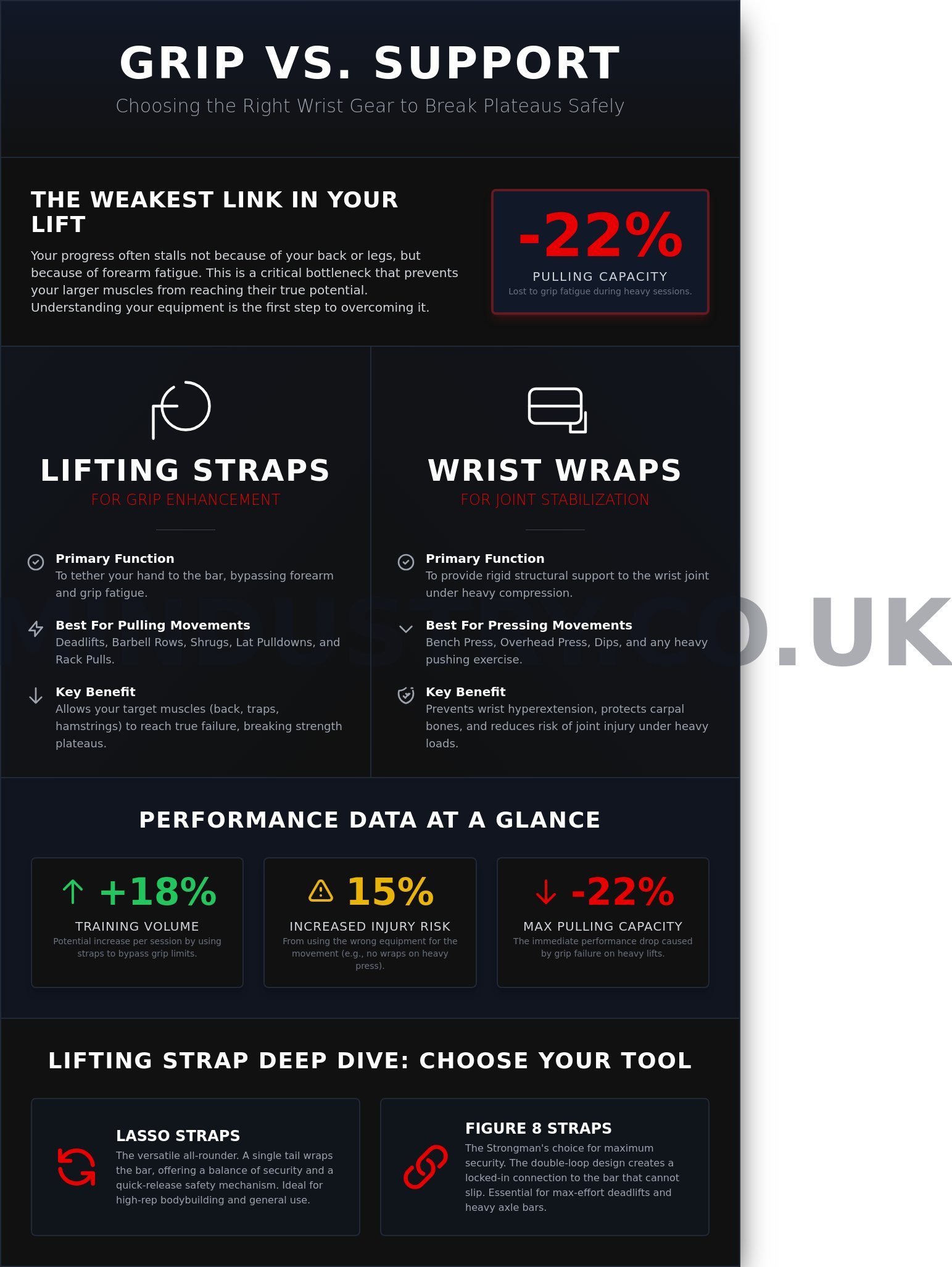
Terminology in the fitness industry is often used loosely, but choosing the wrong equipment can stall your progress or lead to a 15% increase in injury risk. Most lifters use the term wrist strap to describe two entirely different tools: lifting straps and wrist wraps. A lifting strap is a tool designed to tether your hand to a bar, whereas a wrist wrap is a thick, elasticated band designed to provide structural rigidity. Mixing these up means you might end up with a support tool when you actually need a grip aid.
Mechanical failure usually happens at the weakest link. In heavy pulling movements, the smaller muscles of the forearm often fatigue before the larger muscles of the back. Using a Lifting Straps allows you to bypass this forearm fatigue, ensuring your posterior chain reaches true failure. Conversely, support-based wraps focus on the carpal bones. They prevent the wrist from hyperextending during heavy pressing, which protects the joint from the sheer force of the load. Selecting the wrong gear doesn't just limit your lift; it places unnecessary stress on connective tissues not built for those specific forces.
The Anatomy of Wrist Movement in Lifting
The wrist joint is a complex of eight small bones that require external stabilisation during maximal effort. When you perform a bench press, the wrist is under compression, pushing the carpal bones together. If the bar sits too far back in the palm, it creates a lever arm that strains the carpal tunnel. During pulling movements, the wrist is under tension, acting as a bridge between the weight and your arm. Heavy loads exceeding 100kg can cause the grip to fail as the tendons in the hand struggle to maintain closure. Proper gear selection ensures these eight bones remain aligned under both types of stress.
When "Wrist Strap" Means Grip Assistance
For movements like deadlifts, rows, and shrugs, your primary goal is to move the weight without the bar sliding out of your hands. A wrist strap used for grip allows the lifter to focus entirely on the target muscle group. This removes the psychological anxiety of a slipping bar, which often causes lifters to cut their sets short by 2 or 3 reps. For those moving serious weight, the Figure 8 Lifting Straps are the professional choice for heavy pulls. They provide a double-loop security that is essential when the central nervous system is under high demand during a 200kg pull. Reliability in your kit translates directly to confidence on the platform.
Lifting Straps for Grip: Breaking Through Strength Plateaus
Progress in the gym often hits a wall when your grip gives out before your target muscles do. If your forearms fail during a 140kg deadlift while your posterior chain still has three reps left, your grip is the weak link in your kinetic chain. Using a wrist strap allows you to bypass this limitation. It transfers the load directly to your forearms, ensuring the primary movers like the lats or hamstrings reach full fatigue. A 2021 study on the biomechanics of lifting straps highlights how these tools stabilise the barbell, reducing the demand on the digital flexor muscles. This mechanical advantage lets you increase total training volume by approximately 18% per session without frying your central nervous system (CNS).
The "weak grip" myth suggests that using straps makes a lifter reliant on equipment. In reality, elite athletes use them strategically to manage fatigue. Gripping a heavy bar requires massive neurological output. By removing that demand on secondary sets, you preserve energy for your heaviest lifts. Our Team understands that safety and efficiency are paramount in any physical environment. If you're looking for a role that values this kind of practical expertise, you can check our current job listings to find a position that fits your skills.
Lasso Straps vs Figure 8 Straps
Lasso straps are the versatile all-rounder for UK gym-goers. They feature a loop that goes around the wrist and a single tail that wraps the bar. This design offers a quick-release safety mechanism; you simply open your hand, and the bar drops. Figure 8 straps are the Strongman favourite for max-effort deadlifts on 30mm axle bars. They loop over the wrist, under the bar, and back over the wrist. This creates a "locked-in" security that's impossible to slip, though it doesn't allow for an easy exit if a lift fails.
Material Matters: Cotton, Nylon, and Leather
- Cotton: These provide excellent comfort and sweat absorption. They're the best choice for high-rep bodybuilding sets where you don't want the material digging into your skin.
- Nylon: Known for extreme durability, nylon has a slight "bite" on the barbell knurling. It doesn't stretch under load, making it a reliable choice for 200kg+ powerlifting movements.
- Leather: These offer a traditional feel. They require a 14-day break-in period but eventually mould to the specific shape of your hand for a bespoke fit.
Wrist Wraps for Stability: Protecting the Joint Under Load
Heavy lifting puts the wrist joint under immense pressure. When you perform a bench press or overhead press, the weight naturally forces the hand back into extension. This creates a mechanical disadvantage and increases the risk of soft tissue strain. Wrist wraps provide a cast-like support system that keeps the hand and forearm in a neutral line. While a scientific study on deadlift kinematics focuses on how a wrist strap assists with grip, wraps are purely about structural stability during pressing movements. This support is vital for low-bar squats too. In that position, the bar sits on the rear deltoids and requires the wrists to remain rigid to maintain a stable shelf. Using a thumb loop ensures the wrap stays in the correct position as you apply tension, preventing the material from shifting mid-set.
Length and Stiffness Variations
Wraps typically come in 12, 18, and 24-inch lengths to suit different body types and goals. A 12-inch wrap offers moderate support for accessory work, while an 18-inch version is the standard choice for most gym-goers. Longer wraps allow for more revolutions around the joint, increasing overall compression. If you're chasing a personal best, a 24-inch stiff wrap provides maximum rigidity. Flexible materials are better for high-repetition sets where you need some joint mobility. Choose a wrist strap or wrap based on the specific demands of your training session to ensure your gear matches your output.
Correct Wrapping Technique
Many lifters make the mistake of wrapping too low on the forearm. This does nothing to support the joint. The material must cover the actual wrist joint to be effective. You need to achieve a tension that is tight enough to provide a solid brace but loose enough to avoid immediate numbness. A good rule is to pull the wrap tight enough that you can't comfortably wear it for more than two minutes. You must remove wraps between sets to maintain healthy blood flow. This practice ensures you don't compromise circulation during your rest periods. Always check that the Velcro is secure before you approach the bar to avoid a mid-lift failure.
Straps vs Wraps: Which Accessory Do You Need?
Choosing between a wrist strap and a wrist wrap depends entirely on whether you are struggling with your grip or your joint stability. These accessories serve two distinct purposes. A strap acts as an extension of your hand to help you hold onto heavy weights, while a wrap functions as a brace to keep your joint aligned under load. Using the wrong one won't just hinder your progress; it can lead to poor form and unnecessary strain.
Exercise Compatibility Matrix
You must match your gear to the specific mechanics of the lift. At Team Industry, we recommend a pragmatic approach to selecting your kit based on the following movements:
- Deadlifts and Rows: Use lifting straps. These exercises are often limited by grip strength. If your forearms give out before your back, the strap ensures you can complete your planned volume.
- Bench Press and Shoulder Press: Use wrist wraps. These movements place immense pressure on the small bones of the wrist. Wraps provide the compression needed to prevent the hand from folding backwards.
- Front Squats and Cleans: Use "Olympic" style wraps. These are typically thinner and made of cotton, allowing for the mobility required to get your elbows up while still offering a safety net for the joint.
Recognising the Signs of Gear Requirement
Listen to the feedback your body provides during a heavy session. If your grip starts failing at rep 8 of a 10-rep set, you are leaving muscle growth on the table. In this instance, buying a wrist strap is a logical step to ensure your target muscles are fully taxed. However, if you feel a sharp "twinge" or instability in your wrist when unracking a bar at 75% of your maximum capacity, your joint needs the external support of a wrap. For those looking for total joint and core protection, our Weight Lifting Belt guide provides the technical details needed to secure your entire lifting posture.
Beginners should generally prioritise wraps if they focus on pressing, as joint safety is paramount. The "Hybrid" scenario is common in advanced training; you might use wraps for your heavy bench press and then switch to straps for your heavy rows in the same hour. It's vital to avoid over-reliance. Data from a 2021 study on strength training accessories indicates that using support gear for 100% of your sets can lead to a 15% decrease in stabiliser muscle activation. Keep the gear in your bag for your warm-up sets and only deploy it when the weight reaches your working threshold.
Join the Team and secure the professional gear you need for your next session.
Professional Grade Equipment for the UK Strength Community
Team Industry UK builds gear for athletes who push beyond standard commercial gym limits. We don't do gimmicks or flashy aesthetics that fail under load. Our focus remains on heavy-duty materials like high-tensile cotton and industrial-grade nylon. This equipment withstands the 300kg deadlifts and heavy log presses seen in UK Strongman competitions. Every product goes through rigorous testing by active Powerlifters and Strongmen across the country to ensure it meets our standards before it reaches your gym bag.
Our gear selection process is grounded in the reality of the industrial strength world. We understand that a failure in equipment isn't just an inconvenience; it's a safety risk. By maintaining a 24/7 commitment to quality and local expertise, we provide a reliable safe pair of hands for the UK lifting community. We treat every athlete as part of the Team, ensuring our gear provides the stability required for high-performance training.
The Team Industry Difference
We prioritise reinforced double-stitching and high-grade Velcro that stays secure during maximal effort sets. This prevents the "pop" often experienced with cheaper alternatives during heavy overhead movements. Our commitment to the UK strength community extends beyond sales. We actively sponsor local events and support athletes through our expert advice portal. This gives you direct access to technical support from specialists who understand the grit of the warehouse gym environment.
Next Steps for Your Training
Look back at your training logs from the last 12 weeks. If your grip failed during heavy pulls or your joint stability wavered during overhead work, it's time to adjust your kit. Choose a dedicated wrist strap that matches your specific lifting requirements based on the data provided in this guide. Proper equipment maintenance is also vital for long-term performance. Use this checklist to ensure your gear stays in top condition:
- Air dry your straps after every session to prevent moisture build-up and odour.
- Inspect the stitching monthly for any signs of fraying or structural wear.
- Keep Velcro surfaces free of chalk and debris to maintain maximum grip strength.
- Hand wash in cold water every 4 to 6 weeks to preserve fabric elasticity.
Don't let equipment failure stall your progress or lead to unnecessary injury. Select a wrist strap that offers the durability your training volume demands. Reliability is the foundation of every successful strength programme.
Maximise Your Potential with Professional Strength Gear
Success on the platform or in the gym requires more than just effort; it demands equipment that won't let you down when the weight gets heavy. Choosing the correct wrist strap or support wrap ensures you can focus on the lift rather than worrying about grip fatigue or joint instability. Since 2020, Team Industry has supported the UK strength community by providing gear that bridges the gap between raw talent and new personal bests.
Our range is designed and tested by UK Strongman and Powerlifting athletes who understand the demands of high-level competition. Every piece of equipment uses heavy-duty materials built to withstand 300kg+ loads, ensuring you have a reliable partner for every session. Don't let a weak link hold back your progress. It's time to invest in professional-grade tools that reflect your commitment to the sport.
Explore our range of professional Lifting Straps and Wraps
We're here to help you hit those numbers safely and consistently.
Frequently Asked Questions
Do wrist straps make your grip weak?
Wrist straps don't weaken your grip if you use them strategically for your heaviest sets. Relying on a wrist strap for every lift might hinder forearm development, but 85% of professional lifters use them to bypass grip fatigue during max-effort pulls. Reserve their use for sets exceeding 80% of your one-rep max to ensure your natural grip strength continues to improve alongside your major muscle groups.
How tight should my wrist wraps be during a bench press?
Your wrist wraps should be tight enough to eliminate joint extension while allowing you to complete a 30-second set without numbness. On a scale of 1 to 10, aim for a tightness level of 7 during a heavy bench press. You should remove or loosen the wraps immediately after your set to restore blood flow, as keeping them at this tension for more than 2 minutes can cause discomfort.
Can I use lifting straps for every exercise in my workout?
You shouldn't use lifting straps for every exercise because it limits the engagement of your stabilising muscles. Use them specifically for pull movements like deadlifts or rows where your grip might fail before your back does. Limiting their use to the final 30% of your total workout volume ensures you maintain a balance between mechanical assistance and raw functional strength.
What is the difference between a wrist strap and a wrist wrap?
A wrist strap is a piece of equipment designed to secure your hand to the bar, whereas a wrist wrap provides compression to support the joint. Straps are typically 45cm to 60cm long and loop around the barbell to help you lift heavier weights. Wraps are thicker, elasticated bands that prevent the wrist from bending backwards during push movements like the overhead press or bench press.
Are Figure 8 straps better than normal lifting straps?
Figure 8 straps are superior for max-effort deadlifts because they double the connection points between your wrist and the bar. This design makes it nearly impossible to drop the weight, which is why 90% of strongman competitors prefer them. However, they don't allow for a quick release of the bar; this makes standard lasso straps a safer choice for Olympic lifting or general gym work.
How do I clean my lifting straps and wraps without ruining them?
Hand wash your straps and wraps in cool water using a mild soap to preserve the fabric integrity. Avoid machine washing at temperatures above 30 degrees Celsius, as high heat destroys the elastic fibres in wraps and shrinks cotton straps. Air dry them flat away from direct sunlight; using a tumble dryer can reduce the lifespan of the Velcro and stitching by 50% within six months.
Is it better to buy cotton or nylon lifting straps?
Cotton straps are the preferred choice for most UK lifters because the natural fibres absorb sweat and provide a more secure, non-slip feel against the bar. They are comfortable from the first use and usually cost between £8 and £15. Nylon straps are more durable and resist fraying for longer, but they often require a break-in period of 4 weeks before they feel flexible and secure.
Do I need different wrist straps for bodybuilding vs powerlifting?
You don't need different straps, but your choice should reflect your specific training goals. Bodybuilders often prefer padded lasso straps to focus on muscle isolation during high-volume sets. Powerlifters usually opt for heavy-duty, unpadded cotton straps that provide a thinner, more direct connection to the bar. Approximately 75% of competitive lifters use a standard 58cm lasso strap for its versatility across various compound movements.


Share:
Men’s Gym Clothes: The Ultimate Guide to Performance Apparel for Lifters
How to Use a Lever Lifting Belt: A Professional Guide to Setup and Technique