

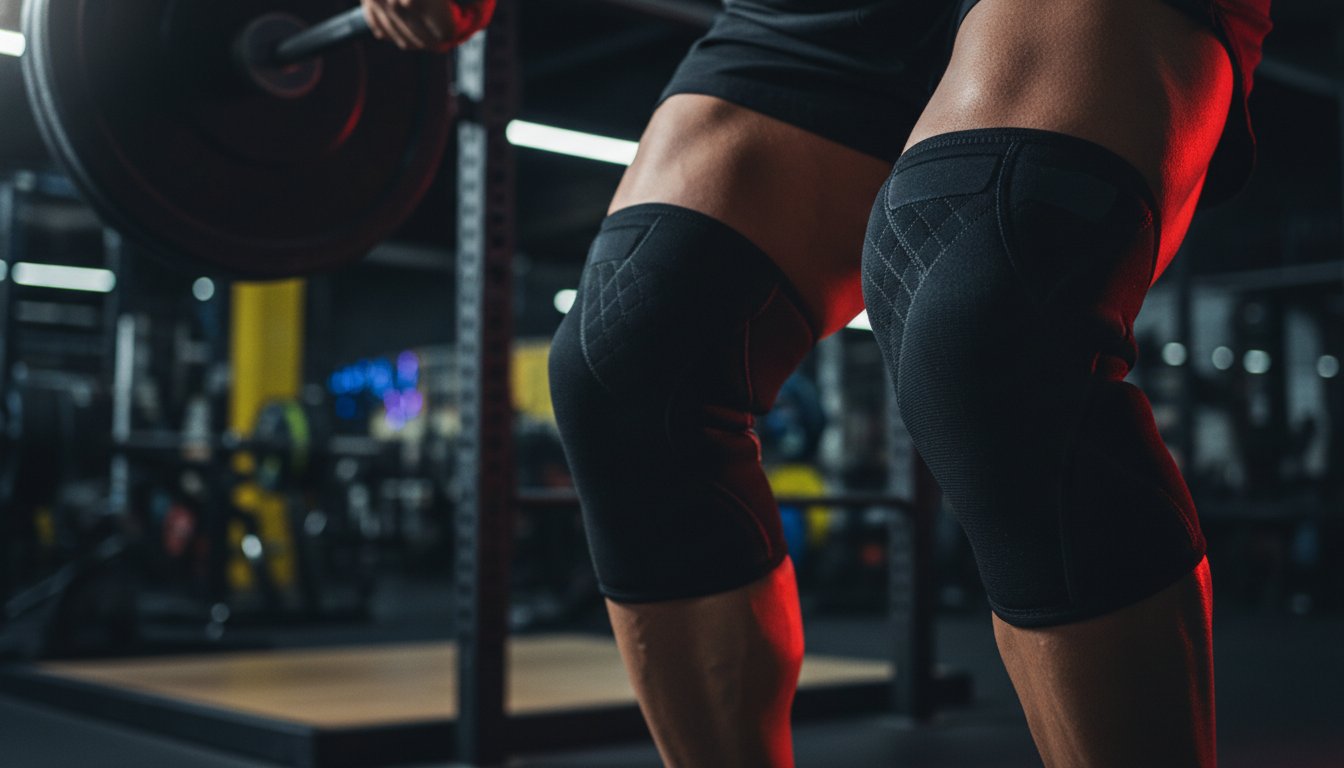
Are you waiting for a specific weight on the bar before you justify protecting your joints? Many athletes believe they must reach an elite total before they earn their gear, but this mindset often leads to unnecessary wear and tear. Deciding when to start using knee sleeves is less about the weight you lift and more about your training volume and recovery needs. You want to ensure you aren't using equipment to mask poor technique, yet you shouldn't ignore the persistent stiffness that follows a demanding leg day.
We understand the grit required for consistent progress and the need for reliable tools. Research published in the Journal of Strength and Conditioning Research shows that neoprene sleeves can improve squat performance by an average of 2.7 percent. This article provides a clear framework for identifying the physical cues and training milestones that signal it is time to add support to your gym bag. You will learn how compression aids joint warmth and discover why professional-grade options like our Heavy Duty Knee Sleeves are a staple for career longevity. We will also clarify the 5mm versus 7mm debate so you can invest in your performance with total confidence.
Key Takeaways
- Understand how anatomical neoprene supports use compression to regulate joint temperature and aid recovery between heavy sets.
- Identify the precise technical benchmarks and training frequencies that signal when to start using knee sleeves to protect your joint longevity.
- Master the working-set protocol to integrate support at the optimal moment in your session while maintaining skin health.
- Evaluate material density and stitching standards to ensure you choose professional-grade equipment like Heavy Duty Knee Sleeves for long-term durability.
Understanding the Role of Knee Sleeves in Strength Training
Knee sleeves are anatomical neoprene supports engineered to provide consistent compression and heat retention around the joint. Unlike basic elastic bandages, these sleeves use high-density materials to create a stable environment for the patella and surrounding connective tissues. By Understanding Compression Garments and their impact on blood flow, you can see how they facilitate faster intra-workout recovery. Research from the Journal of Strength and Conditioning Research indicates that this compression can lead to a 2.7 percent improvement in one-rep max performance, primarily by reducing the metabolic cost of the movement.
To better understand this concept, watch this helpful video:
Beyond simple pressure, thermal regulation is a primary benefit of professional gear. Keeping the synovial fluid warm is critical for joint health, as it maintains the fluid's viscosity and ensures smooth articulation during heavy eccentric loading. This warmth also enhances proprioception, which is your body's ability to sense its position in space. When you're at the bottom of a deep squat, the tactile feedback from a tight sleeve helps you "feel" your knee position, leading to better technical execution and confidence under the bar.
Sleeves vs. Wraps: Knowing the Difference
It's vital to distinguish between passive and active support. Sleeves offer passive support, meaning they move with your joint to provide warmth and stability without drastically altering your natural movement patterns. In contrast, knee wraps are designed for maximal effort and provide mechanical carry-over by physically resisting the flexion of the knee. For most athletes, sleeves are the superior choice for high-volume training. They allow for full range of motion while offering the protection needed for consistent progress. Beginners should almost always start with Heavy Duty Knee Sleeves before ever considering the extreme tension of wraps.
The Myth of Dependency
A common concern is that using gear will "weaken" your tendons or ligaments. This is a misunderstanding of how joint support works. Sleeves don't take the load away from your muscles; they simply provide a safer environment for those muscles to work. They are a supplement to, not a replacement for, sound technique and proper mobility. Knowing when to start using knee sleeves involves recognizing that gear is a tool for longevity. You still need to perform your empty-bar warm-ups and address any underlying movement compensations. When used correctly, sleeves allow you to handle the necessary volume to get stronger without the nagging stiffness that often halts progress.
Determining the Right Time to Introduce Knee Sleeves
Identifying when to start using knee sleeves requires an honest assessment of your technical proficiency. You must be able to hit consistent depth and maintain stable foot pressure before introducing supportive gear. Adding sleeves to an unstable squat often masks technical flaws rather than fixing them. Once your form is repeatable, you can look at your training schedule to determine if your volume warrants the extra protection.
Training frequency is a major indicator for gear adoption. If your program requires you to squat or lunge two or more times per week, the cumulative stress on your connective tissue increases significantly. This is where research on knee sleeve performance becomes relevant. Studies demonstrate that the compression provided by neoprene helps manage this volume, with 2023 data from the Journal of Strength and Conditioning Research indicating an average 2.7 percent improvement in one-rep max squat performance. This isn't just about strength; it's about providing the joint with the thermal environment it needs to handle high-frequency loading.
Load milestones also provide a pragmatic benchmark for the lifter. A common standard among strength specialists is reaching a squat max equal to your bodyweight. This ensures your tendons and ligaments have adapted to basic loading before you rely on external support. Evaluating when to start using knee sleeves is a decision rooted in your specific training volume and the reality of your recovery capacity.
Milestones for the Developing Lifter
Spend your first six months of training building foundational tendon thickness through consistent progressive overload. As you transition from general fitness to specialized strength sports like powerlifting, your gear needs will change. For most, a 7mm neoprene sleeve is the industry standard for heavy duty support. If you're moving into more frequent sessions, reviewing the options in our joint support collection will help you find the right fit for your training age.
Physical Cues to Watch For
Listen to your joints during the warm-up phase. Persistent clicking or a feeling of coldness in the knees during your first three sets are clear physical cues. You should also monitor your recovery speed. If you find that joint stiffness is lingering longer than muscle soreness, it's a sign that your connective tissues need the thermal support sleeves provide. True readiness is defined by the point where your technical form is stable but your joint recovery cannot keep pace with your increasing training volume.

How to Integrate Knee Sleeves into Your Training Sessions
Knowing when to start using knee sleeves during a workout is just as critical as knowing when to buy them. Integrating support into your daily routine requires a structured approach to ensure you don't become overly reliant on gear for basic movement. Most competitive lifters follow the 'Working Set' protocol. This involves performing your initial mobility work and empty-bar squats without support. Once you begin adding plates, you apply your sleeves to maintain the warmth generated during those first movements. This strategy ensures your joints are naturally lubricated before the neoprene provides its thermal and compressive benefits.
Managing your gear is just as important as using it correctly. Neoprene is an excellent insulator, but it also traps moisture against the skin. To prevent irritation or 'sleeve rash', pull the sleeves down to your ankles during rest periods that exceed three minutes. This allows the skin to breathe and prevents excessive sweat buildup. For long-term hygiene, always turn your sleeves inside out after your session to air dry. This simple maintenance step keeps your equipment professional and prevents the breakdown of the neoprene fibers.
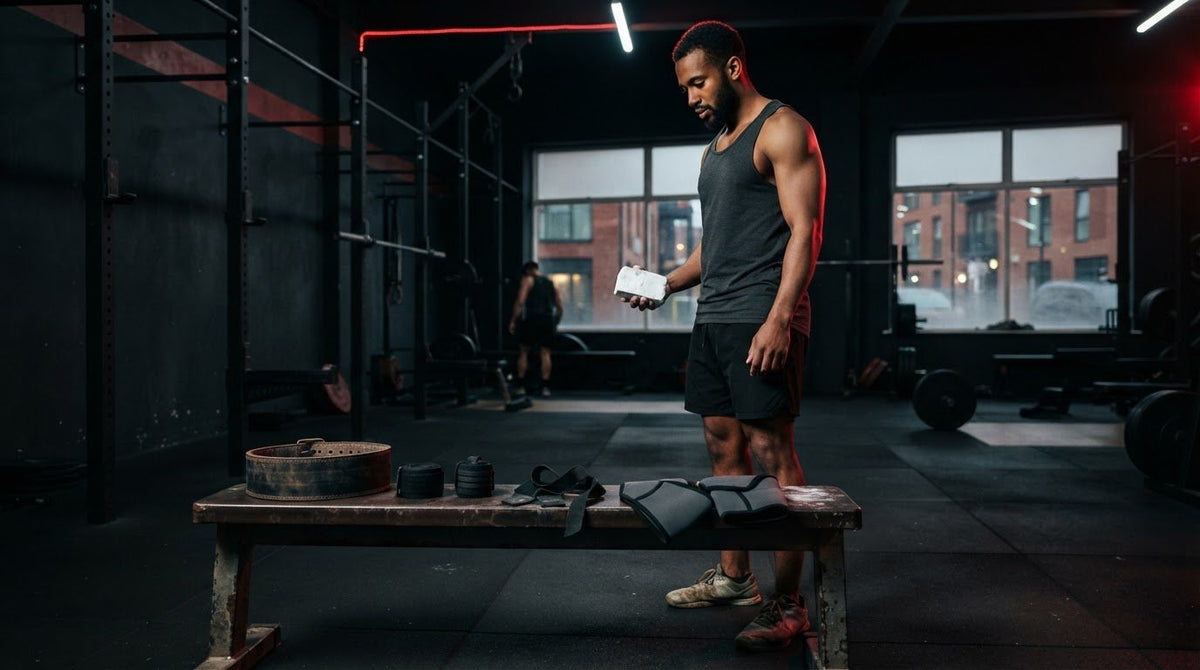
When you're pushing for a new personal best, your equipment should work as a cohesive system. Many athletes find that pairing their sleeves with weight lifting belts creates a sense of total-body stability. While the belt manages intra-abdominal pressure, the sleeves provide the external feedback needed for a stable base. This synergy is particularly effective during high-intensity sessions where technical breakdown is a risk.
Timing Your Application
Timing depends heavily on your specific discipline. Strongman athletes often wear sleeves throughout an entire session because moving events require constant joint warmth and protection against abrasions. In contrast, powerlifters might only pull them up for their heaviest sets to maximize the psychological effect of 'clicking into gear'. Decide when to start using knee sleeves in your session based on the ambient temperature of your gym and the complexity of your movements.
Choosing the Correct Thickness
Selecting the right material density is a pragmatic decision based on your training goals. 5mm sleeves offer a balance of support and flexibility, making them ideal for high-repetition work, agility drills, or cross-training. If your focus is purely on static strength or powerlifting, 7mm sleeves are the industry standard for maximum compression. When your training volume reaches a point where standard options feel insufficient, it's time to upgrade to heavy duty knee sleeves to ensure your gear matches your output.
Ready to stabilize your next session? View our professional joint support range to find the perfect fit for your goals.
Selecting Professional-Grade Support for Long-Term Progress
Choosing high-quality equipment is a pragmatic investment in your training career. While budget sleeves often utilize SBR (Styrene-Butadiene Rubber), professional-grade options prioritize high-density neoprene for superior compression memory. This material difference is vital because SBR tends to lose its shape and "spring" after only a few months of heavy use. When you're deciding when to start using knee sleeves, look for reinforced flat-lock stitching. This construction method prevents the seams from bursting during high-pressure movements like the bottom of a heavy squat or a log press.
Regulatory compliance is another factor for the competitive athlete. As of March 2026, the International Powerlifting Federation (IPF) maintains strict standards; sleeves must be a maximum of 7mm thick and 30cm long. Our gear is designed to meet these rigorous specifications, ensuring you don't face disqualification on the platform. For those moving into multi-event sports, integrating your support into a comprehensive strongman training gear setup provides the stability required for both static lifts and dynamic carries. The decision of when to start using knee sleeves is ultimately about balancing your immediate performance needs with your long-term joint health.
The Team Industry UK Standard
We don't believe in hyperbolic marketing. Our equipment is tested by competitive UK athletes who understand the grit of the labor-intensive strength world. Team Industry UK prioritizes a no-nonsense design that focuses entirely on joint stability and longevity. You can explore our full range of strength gear and accessories to find the tools that match your current training phase and technical proficiency.
Completing Your Support System
Your knees are only one part of the kinetic chain. It's often beneficial to add lifting straps to your accessory work when grip fatigue begins to limit your posterior chain development. Similarly, wrist wraps provide essential support for the "shelf" during low-bar squats, preventing unnecessary strain on the smaller joints of the upper body. To finalize your 2026 gear strategy, follow this checklist:
- Verify your form is consistent before adding supportive gear.
- Choose 7mm neoprene for maximum static strength support.
- Ensure all equipment meets your specific federation's 2026 rulebook standards.
- Prioritize reinforced stitching for long-term durability under heavy loads.
Invest in Your Joint Longevity and Performance
Deciding when to start using knee sleeves is a pivotal step in your journey as a strength athlete. You've learned that technical proficiency and training volume are the true benchmarks for adding gear. Once you hit depth consistently and your frequency increases to multiple sessions per week, the thermal support of neoprene becomes a vital tool for recovery. Don't wait for nagging stiffness to dictate your gear choices; use professional support to maintain the high-intensity training required for long-term progress.
Our gear is designed specifically for the rigorous demands of powerlifters and strongmen. We use high-density materials and reinforced stitching to ensure maximum durability under the heaviest loads. Since we are a UK-based specialist, you can rely on our expert support to help you choose the right equipment for your specific goals. We prioritize no-nonsense designs that deliver stability when it matters most.
Shop Professional-Grade Heavy Duty Knee Sleeves and take the next step in your training with confidence. Your future self will thank you for the extra protection today.
Frequently Asked Questions
Can I wear knee sleeves if I don't have an injury?
Yes, knee sleeves are primarily preventative tools designed to support healthy joints during heavy loading. They provide compression and warmth that help maintain joint health and reduce the risk of minor strains. By keeping the synovial fluid warm, they ensure your knees articulate smoothly throughout high-volume sessions.
Should I buy 5mm or 7mm knee sleeves for my first pair?
Your choice depends on your primary training goal and mobility requirements. If you focus on general gym work or agility, 5mm sleeves offer a balance of support and flexibility. However, most athletes deciding when to start using knee sleeves for serious strength work find our Heavy Duty Knee Sleeves in 7mm to be the most dependable option for maximum stability.
How tight should my knee sleeves be for daily training?
Your sleeves should be tight enough to provide firm compression without causing numbness or cutting off your circulation. A good rule of thumb is that you should be able to slide a finger under the top edge with some effort. If they slip down during a set, they're too loose; if your feet feel tingly, they're too tight.
Will wearing knee sleeves make my knees weaker over time?
No, knee sleeves won't weaken your joints because they provide passive support rather than mechanical assistance. Unlike heavy wraps, sleeves don't take the load away from your muscles or tendons. They simply create a warmer, more stable environment for your body to perform the work required to get stronger.
Can I use knee sleeves for every leg workout?
You can use them for every session, but it's best to save them for your heavier working sets. Performing your initial mobility work and empty-bar squats without support ensures your joints move naturally. This strategy helps you identify when to start using knee sleeves based on the actual intensity and load of each specific training day.
What is the best way to wash and dry neoprene knee sleeves?
Hand wash your sleeves in cold water with a mild detergent to preserve the elasticity of the neoprene. Avoid using a washing machine or tumble dryer, as high heat and agitation will break down the fibers and ruin the fit. Always air dry them in a well-ventilated area and turn them inside out after every session to prevent bacteria buildup.
Share:
Why invest in Team Industry elbow wraps
Are Lifting Belts Worth It for Beginners? The Essential Strength Guide (2026)