

What if the reason your grip fails during a heavy deadlift isn't a lack of forearm strength, but a tactical error in your chalk choice? We've all felt that mid-set panic when the bar starts to slide because sweat is breaking through a thin layer of dust. It's frustrating to see a PR attempt fail before your muscles do, especially when you're also managing the hassle of gym bans on messy powders or dealing with dry, cracked skin from low-quality products.
We understand that a reliable grip is the foundation of every successful lift. This guide settles the liquid chalk vs block chalk debate by analyzing the technical performance and practical application of each for your specific strength goals. You'll learn why liquid chalk is projected to become a 432 million dollar industry by 2031 due to its convenience and mess-free application. We will examine how to use liquid formulas as a high-performance base layer and when traditional blocks remain the superior choice for maximum friction during high-volume sessions. Whether you're training in a commercial facility or a competitive powerlifting environment, you'll discover the most efficient way to keep your hands dry and the bar secure.
Key Takeaways
- Identify the "Grip-Strength Gap" to ensure your hands never limit the progress of your primary compound lifts.
- Evaluate the technical performance of liquid chalk vs block chalk to choose the grip aid that best matches your training volume and bar knurling.
- Navigate commercial gym etiquette and avoid potential bans by understanding the "Dust Factor" and its impact on the training environment.
- Master the professional application process for Team Industry Liquid Chalk to create a reliable, long-lasting base layer that resists sweat.
Why Grip Strength is the Foundation of Every Big Lift
Gym chalk is technically magnesium carbonate. Its primary function is to neutralize moisture and increase friction between your palm and the bar. While high-level lifting involves complex biomechanics, the interface where your skin meets the steel is often the first point of failure. If you can't hold the weight, you can't lift the weight. It's a simple operational reality that many lifters overlook until they hit a plateau.
This failure creates the "Grip-Strength Gap." It occurs when your posterior chain and legs have the capacity to pull 200kg, but your hands lose their hold at 160kg. Bridging this gap requires a calculated choice between liquid chalk vs block chalk to ensure your grip matches your raw power. Without a reliable friction aid, you're leaving kilograms on the platform simply because of sweat.
Lifters have specific requirements that differ from other athletes. A climber relies on chalk to adhere to porous, irregular rock surfaces. In contrast, a strength athlete needs to maximize the "bite" into the sharp knurling of a power bar. Choosing the right tool depends on whether you prefer the traditional ritual of the block or the modern efficiency of a liquid formula.
To better understand this concept, watch this helpful video:
The Science of Magnesium Carbonate
Magnesium carbonate works by binding to the skin's surface and absorbing the oils and sweat that act as lubricants. Understanding what liquid chalk is made of helps explain why it provides such a consistent grip. The isopropyl alcohol in liquid chalk evaporates almost instantly to accelerate the drying process. This creates a uniform coating that blocks often fail to achieve on their own.
High-purity chalk is vital because it prevents the inclusion of cheap fillers that cause skin irritation or inconsistent friction. Using a specialized Liquid Chalk ensures a professional, dust-free application that stays on your hands instead of the floor. For those weighing the pros and cons of liquid chalk vs block chalk, the consistency of high-grade magnesium carbonate is the most important factor for skin health and long-term grip reliability.
Liquid Chalk vs Block Chalk: The Technical Performance Breakdown
The technical debate between liquid chalk vs block chalk often centers on staying power. Liquid chalk typically requires only one application to last through an entire high-intensity set. Block chalk, while effective, often demands frequent re-application as it rubs off on the bar or your clothing. This difference becomes critical when training with smooth implements like axle bars or logs. On these surfaces, you don't have sharp knurling to assist, so the chalk must provide all the friction. High-quality liquid chalk dries into a uniform layer that fills the microscopic ridges of your skin, providing a dry, non-tacky interface that blocks struggle to replicate on smooth steel.
When to Reach for the Block
Traditional blocks remain a staple for high-volume bodybuilding sessions where re-application is frequent. If you're performing multiple sets of 12 to 15 reps, the ritual of re-chalking can help reset your focus. It's also a cost-effective solution for home gym owners who don't have to worry about cleaning up dust. Some lifters simply prefer the tactile sensation of a physical block, finding it helps them mentally "lock in" before a heavy pull. However, the mess remains a significant drawback for anyone training in a shared space.
The Liquid Advantage for Modern Lifters
For those training in commercial spaces, liquid chalk is the superior choice. Many facilities have strict "no chalk" policies to prevent airborne dust from settling on equipment or irritating other members. A high-quality Liquid Chalk acts like a second skin. It provides an even coating that won't rub off on your Industry Oversized Tee or leave a trail of white powder across the floor. It's also significantly more portable. You can toss a bottle into your gym bag without worrying about it crumbling into a mess. This reliability makes it the pragmatic choice for the mobile athlete who needs a professional-grade grip. To keep your gear organized and ready for any session, consider a durable Tactical Back Pack for your daily essentials.
Practical Considerations: Gym Etiquette and Mess Management
Managing your training environment is just as important as managing your load. The "Dust Factor" is a primary concern in high-traffic facilities. Block chalk releases fine airborne particles that settle on upholstery, electronics, and machines. These particles can irritate the respiratory systems of other gym users, which is why many UK commercial gyms have implemented strict bans on powder and blocks. Liquid alternatives provide the necessary magnesium carbonate without the cloud, making them the standard for the modern professional lifter.
Maintaining a professional station involves following the "Clean Bar" protocol. Leaving a thick layer of residue in the knurling is a breach of gym etiquette. After your session, use a stiff nylon brush to clear the bar. This prevents the chalk from mixing with sweat and dead skin to create a slick, hardened paste that ruins the bar's texture for the next athlete. Keeping your area tidy with high-quality Accessories like towels and shaker bottles demonstrates a commitment to your gym community. When deciding between liquid chalk vs block chalk, the best choice is often the one that keeps you compliant with your facility's regulations.
Strongman and Powerlifting Environment Needs
Strongman and Powerlifting environments present unique challenges where grip is multi-faceted. When handling an Atlas Stone or a Log, you need friction across your palms, forearms, and sometimes your chest. Block chalk is often preferred in these niche settings because it allows you to "cake" the implement for maximum surface contact. Even when you're using Lifting Straps for heavy deadlift triples, a light layer of chalk on the bar prevents the strap from sliding during the pull.
In sanctioned competitions, block chalk remains the king of the warm-up room. It allows for rapid re-application between heavy attempts when time is limited. However, for 90% of your daily training sessions, the liquid chalk vs block chalk debate is usually won by the liquid option due to its reliability and cleanliness. Secure your grip and stay in your gym's good graces by picking up Liquid Chalk for your next session.
The Professional Approach to Chalk Application
Achieving a maximum-effort grip requires more than just rubbing powder on your palms. To exploit the full potential of your grip aid, you should adopt a "base layering" technique. This method ensures that friction remains consistent throughout the lift, providing a significant advantage when evaluating liquid chalk vs block chalk for a 1RM attempt. By using liquid chalk as a primer, you create a uniform foundation that traditional blocks cannot achieve alone.
Following a structured application process will maximize your stability on the bar:
- Step 1: Clean and dry your hands thoroughly. Natural oils act as a barrier that prevents magnesium carbonate from adhering properly to the skin.
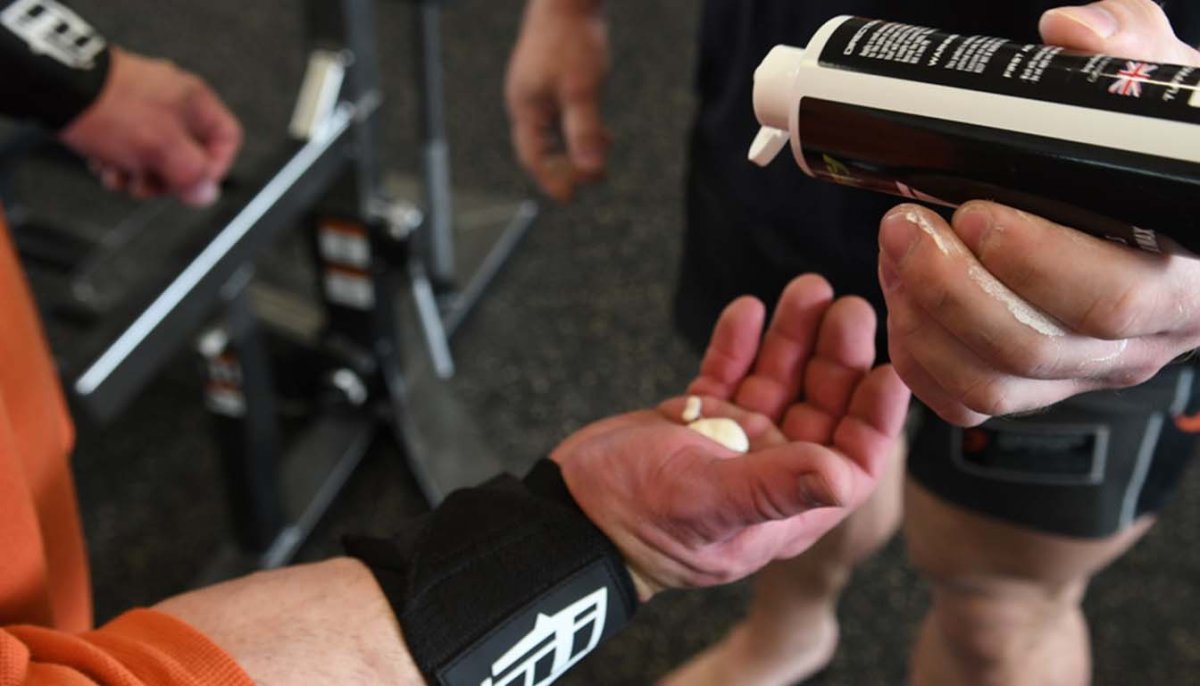
- Step 2: Apply a small pea-sized amount of liquid chalk. Spread it thinly across the entire gripping surface, ensuring you cover the base of the fingers where the bar sits.
- Step 3: Wait 15-20 seconds for the alcohol to evaporate completely. Do not blow on your hands, as this introduces moisture from your breath back into the coating.
- Step 4: For maximum-effort lifts, lightly dust a block over the "hot spots" of the palm. This creates a dual-layer system with the staying power of liquid and the immediate bite of block chalk.
Post-Workout Hand Care
Chalk is designed to dehydrate the skin, which can lead to excessive cracking if left on too long. Wash your hands immediately after training to remove all residue. Maintaining supple skin through regular moisturizing is essential to prevent painful tears. You should also perform regular maintenance on calluses with a file or pumice stone to prevent them from "tearing" during heavy pulling sessions.
Upgrading Your Grip Kit
View your chalk as one component of a broader strength system. Integrating a reliable grip with professional Weight Lifting Belts ensures your entire kinetic chain is stabilized for heavy loads. For everyday reliability across different training environments, keep a bottle of Liquid Chalk in your bag. It provides a consistent foundation that remains effective regardless of the gym's equipment or rules. When you're ready to optimize your performance, shop the full Team Industry Strength Collection here to complete your setup.
Master Your Grip for Every Session
The decision between liquid chalk vs block chalk defines the technical efficiency of your training. You now understand that while block chalk offers traditional tactile feedback, liquid formulas provide the uniform base layer required for high-intensity lifting in modern facilities. Adopting a structured application process ensures your grip remains secure without the operational risks of airborne dust or gym policy violations. A reliable grip is a tool that allows your primary muscle groups to reach their full potential before your hands give out.
The Team Industry community relies on equipment that stands up to the grit of real-world training. Our professional-grade formulas are used by UK Strongmen to ensure stability during the most demanding lifts. By choosing a mess-free solution, you maintain your station's professional standard while securing a reliable hold on any implement. It's time to bridge the grip-strength gap with a product trusted for its dependability and performance.
Upgrade your grip with Team Industry Professional Liquid Chalk today. Consistency is the foundation of long-term progress, and we are proud to partner with you on your journey toward operational excellence in the gym. Keep pulling heavy and stay focused on your next PR.
Frequently Asked Questions
Does liquid chalk ruin the knurling on expensive barbells?
Liquid chalk doesn't damage the structural integrity of barbell steel, but it can compromise the knurling's effectiveness if you don't maintain the equipment. The magnesium carbonate fills the gaps in the knurling, which reduces the "bite" of the bar over time. You should use a stiff brush to clear the residue after every session. This proactive approach ensures the bar remains a high-friction tool for every lifter in the facility.
Can I use liquid chalk if my gym has a "no chalk" policy?
Most commercial gym "no chalk" rules are designed to prevent the mess and respiratory irritation caused by airborne dust. Liquid formulas are typically permitted because they stay on your hands and don't migrate to the floor or upholstery. It's best practice to confirm this with your facility's management first. Using Team Industry Liquid Chalk allows you to follow professional etiquette while ensuring your grip doesn't fail.
How long does one application of liquid chalk usually last?
A single application of liquid chalk typically lasts through an entire high-volume set or several heavy singles. The formula bonds to your palms more effectively than loose powder, so it doesn't rub off on the bar as quickly. You'll find you spend less time re-applying and more time focused on the lift. This improved staying power is a major advantage when weighing liquid chalk vs block chalk for long training sessions.
Is block chalk better than liquid chalk for very sweaty hands?
Liquid chalk is often more effective for sweaty hands because the alcohol content acts as a drying agent during the application process. It creates a solid foundation that resists moisture from within the skin's pores. For lifters with extreme perspiration, using a liquid base provides a durable layer that blocks simply cannot provide on their own. You can always add a light dusting of block chalk over the liquid base for maximum friction.
Will liquid chalk dry out my skin more than block chalk?
Liquid chalk can be more taxing on your skin than block chalk because the isopropyl alcohol accelerates dehydration. This drying effect is what makes the product so effective for grip, but it requires consistent post-workout care. You must wash your hands with soap immediately after your final set and apply a moisturizer. Proper skin maintenance prevents the cracking and tearing that can otherwise interfere with your training schedule.

Share:
Mastering the Barbell Deadlift: A Step-by-Step Strength Guide for 2026
How to Train Your Back for the Ultimate V-Taper