

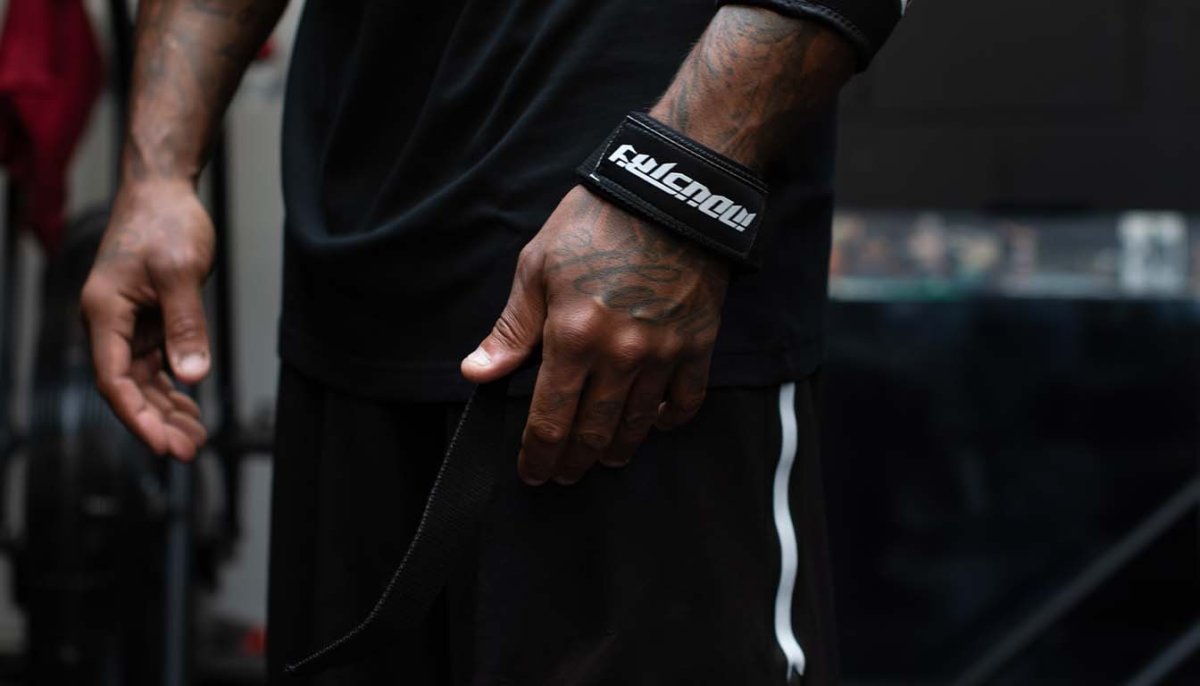
The rack pull is designed for heavy mechanical overload, not for testing the limits of your forearm endurance. If you're asking, "do i need lifting straps for rack pulls" because your grip fails before your back does, you're likely leaving significant muscle gains on the platform. It's a common frustration to feel your lats and traps ready for more volume while the barbell is physically sliding out of your palms. This bottleneck doesn't just stall your progress; it prevents you from reaching the intensity required for true back thickness and power.
We understand that you need dependable gear to move heavy weight with total confidence and control. This guide will show you exactly why lifting straps are an essential tool for breaking through strength plateaus and how they facilitate a better mind-muscle connection. You'll get a clear look at which strap types, from traditional leather to heavy-duty figure 8s, are best suited for partial pulls. We're here to provide the practical equipment advice you need to stop letting your grip strength dictate the quality of your training session.
Key Takeaways
- Identify if your forearm endurance is stalling your back development and discover why asking "do i need lifting straps for rack pulls" is critical for advanced strength training.
- Understand how isolating the posterior chain from grip limitations allows for the maximal mechanical tension required for hypertrophy in the traps and rhomboids.
- Compare the specific advantages of Lasso designs versus Figure 8 Lifting Straps to determine which equipment provides the most secure connection for your heavy sets.
- Learn professional techniques for removing slack from your setup to ensure a stable, safe, and efficient lift from the pins.
- Master the optimal bar positioning to balance a heavy overload with a range of motion that targets the mid and upper back effectively.
Table of Contents
Why Grip Strength is the Bottleneck in Heavy Rack Pulls
A rack pull is essentially a partial range-of-motion deadlift. By setting the bar on the safety pins of a power rack, usually just above or below the knee, you eliminate the most technically demanding part of the lift: the pull from the floor. This reduced distance allows you to handle weights that far exceed your standard deadlift maximum. It's a tool for absolute mechanical overload. However, this massive increase in poundage creates a specific problem. Your back might be ready for 250kg, but your hands likely aren't.
When you consider the question, "do i need lifting straps for rack pulls", you have to evaluate your primary training objective. If your goal is to build a thicker upper back and powerful traps, you can't let your finger flexors be the limiting factor. The "weakest link" theory applies here perfectly. If your grip gives out at 200kg, your traps never get to experience the stimulus of a 240kg pull. You're effectively capping your back development based on the size of your hands.
To better understand this concept, watch this helpful video:
The Mechanics of Grip Failure
The fatigue you feel in your forearms during a heavy set isn't just about "squeezing" the bar. The Science of Grip Strength differentiates between a crushing grip and an isometric hold. In a rack pull, you're performing a maximal isometric hold. As the load exceeds your deadlift max, gravity works against the friction of your skin and the strength of your tendons. Eventually, the fingers begin to uncurl. Once that process starts, the set is over, regardless of how much energy your lats have left.
Rack Pulls vs. Deadlifts: Different Goals, Different Gear
Standard deadlifts are often used to measure total body strength, where pulling double-overhand or using a mixed grip is part of the challenge. Rack pulls are different. They're a hypertrophy and overload tool. While we recommend using liquid chalk as a baseline to improve friction, there comes a point where even the best chalk isn't enough. When you reach that threshold, shifting to dedicated Weight Lifting Straps ensures that your back remains the focus of the movement, not your ability to hold onto the steel. If you're serious about back thickness, don't let a weak grip limit your heavy sets.
The Science of Overload: Why Straps Are Essential for Progress
Rack pulls are a specialized tool for targeting the thickest muscles of your posterior chain. When you perform this lift, you engage several key muscle groups designed for high-force output:
-
Traps: These handle the shrug-like finish at the top of the movement.
-
Rhomboids: These are essential for pulling the shoulder blades together under load.
-
Erector Spinae: These muscles maintain spinal integrity throughout the pull.
These muscles are capable of moving massive loads, often exceeding what you can hold with your bare hands. If you're still wondering, "do i need lifting straps for rack pulls", consider that your back's capacity for growth depends on the total tension it experiences. By removing the grip from the equation, you allow these muscles to reach their full potential without the set ending prematurely.
There's a common misconception that using straps is "cheating." In reality, using gear to isolate a specific muscle group is a standard professional practice. The Benefits of Strength Training are best realized when you can safely push your muscles to their limit. If you're concerned about hand strength, train it separately with farmers walks or timed hangs at the end of your session. Don't let your back development suffer because you're trying to use a heavy compound lift as a forearm exercise.
Maximising Posterior Chain Recruitment
Straps change the way your brain perceives the lift. Instead of worrying about the bar slipping, you can focus on pulling with your elbows. This shift in focus significantly increases lat and trap engagement. Mechanical tension is the force that stretches muscle fibres under load. To maximize this tension, you need to move heavy weight for sufficient volume. Using Weight Lifting Straps ensures that every rep counts toward your back growth.
Safety and Central Nervous System (CNS) Fatigue
Struggling with a failing grip creates "grip anxiety," which distracts you from maintaining a tight core. When your hands feel weak, your bracing often falters, leading to potential lower back strain and form breakdown. Straps provide a secure connection that allows you to focus entirely on your intra-abdominal pressure and spinal alignment. This stability reduces unnecessary CNS fatigue, letting you recover faster and train harder during your next session.
Lasso vs. Figure 8 Straps: Which is Best for Rack Pulls?
Selecting the right equipment is a pragmatic decision based on your training load and specific movement goals. In most UK gyms, you'll encounter two primary designs: the classic lasso and the figure 8. While both serve the same purpose of securing your connection to the bar, they function differently under the extreme tonnages typical of a heavy rack pull. Because these pulls allow you to move significantly more weight than a standard deadlift, your grip might wind up being a limiting factor. This reality is usually the point where lifters realize that asking "do i need lifting straps for rack pulls" is less about ability and more about operational efficiency.
Material choice also plays a role in durability. Heavy-duty cotton provides an immediate "bite" on the barbell's knurling, making it a dependable choice for high-volume sessions. Leather options offer long-term durability but often require a break-in period to lose their initial slickness. For the sheer load of a rack pull, you need a material that won't stretch or fray under several hundred kilograms of tension.
When to Choose Figure 8 Straps
Figure 8 straps are the superior choice for maximal, strongman-style overload. This design loops around your wrist, under the bar, and back over your wrist, effectively locking you to the steel. They're ideal when you have no intention of releasing the bar mid-rep. If you're focusing on pushing your rack pull numbers to their absolute limit, we recommend the Industry Figure 8 Lifting Straps for their uncompromising security and heavy-duty construction.
The Versatility of Classic Lasso Straps
Classic lasso straps are the most versatile option for general strength training. They allow for a quicker setup and a faster release if you need to ditch the bar. This versatility makes them excellent if you plan to use the same pair for heavy rows or pulldowns later in your workout. For a dependable, all-round gym essential that stands up to the grit of daily training, the Industry Classic Lifting Straps are a calculated investment in your performance.
Ensure your gear matches your ambition. You can find the right tools for your next heavy session by browsing our Weight Lifting Straps collection today.
Practical Tips for Mastering Strapped Rack Pulls
Using straps effectively requires more than just wrapping them around the bar. To get the most out of your setup, you must "set" the strap tight. Pull the slack out by rotating the bar toward you until the material is flush against the steel. This prevents the bar from rolling mid-lift, which can shift the load onto your wrists. When you're dealing with several hundred kilograms, even a small amount of slack can compromise your stability and focus.
Bar positioning is equally important for long-term progress. For most lifters, pulling from just below the knee offers the best balance of range of motion and mechanical advantage. This height allows you to maintain a neutral spine while moving the heaviest possible weights. To stay safe under these extreme loads, pair your straps with a professional weight lifting belt. The belt provides the necessary intra-abdominal pressure to support your spine, allowing the straps to handle the grip while your core handles the bracing.
If you're still debating "do i need lifting straps for rack pulls", consider a "Top Set" strategy. Use your unassisted grip for your warm-up sets to maintain hand and forearm endurance. Once the weight reaches a point where your grip might fail before your back is fully taxed, strap up for your heavy working sets. This approach ensures you develop both a functional grip and a massive posterior chain without one limiting the other.
Common Mistakes to Avoid
-
Hitching: Don't rest the bar on your thighs to grind out a rep. Keep the movement a pure, vertical pull to ensure your traps and erectors are doing the actual work.
-
Asymmetrical Pull: Ensure your straps are wrapped at an equal distance from the center of the bar. An uneven setup can cause the bar to tilt, putting unnecessary rotational stress on your lower back.
Complete Your Strength Kit
Heavy holds can put significant pressure on the small joints of the hand and wrist. Using wrist wraps can provide additional joint stability, especially during the isometric lockout phase of a rack pull. For those who demand the highest standards in their training gear, exploring the full Team Industry strength gear collection will ensure you have the professional support needed for operational excellence in every session.
Master Your Heavy Sets with Professional Support
Achieving maximal back development requires a pragmatic approach to your training equipment. By addressing the grip bottleneck, you ensure that your traps and erectors receive the mechanical tension necessary for genuine growth. The right tool, whether it's a versatile lasso or a secure figure 8 strap, is an investment in your operational efficiency on the platform. When you stop wondering "do i need lifting straps for rack pulls" and focus on moving serious weight, you'll break through the plateaus that hold most lifters back.
At Team Industry, we provide professional-grade strength equipment used by UK athletes who demand reliability. Our gear features heavy-duty materials designed specifically for maximal overload. If you're near Hertfordshire, visit our physical shop in Wormley for expert advice and to see our range in person. Otherwise, you can Shop Professional Lifting Straps at Team Industry UK online today to complete your kit. Take control of your training and start pulling with total confidence.
Frequently Asked Questions
Do lifting straps make your grip weak?
Lifting straps don't inherently weaken your grip if you integrate specific forearm work into your routine. They're a tool for isolating larger muscle groups during heavy pulls without being limited by hand fatigue. Use your unassisted grip for warm-up sets to maintain hand strength, then switch to straps for your working sets. This balanced approach ensures you don't limit your back development while still challenging your finger flexors during lighter movements.
Can I use Figure 8 straps for regular deadlifts as well?
You can use Figure 8 straps for regular deadlifts, particularly when your goal is absolute strength or competition preparation. They provide a secure "lock" that prevents the bar from rolling in your palms. Because they don't allow for a quick release, they aren't suitable for Olympic lifts where you might need to ditch the bar. For standard hypertrophy training, they're a reliable choice for any heavy pulling movement from the floor.
What is the best material for lifting straps?
The best material depends on your specific training environment and personal preference. Heavy-duty cotton is excellent for most lifters because it provides an immediate "bite" on the barbell knurling and absorbs sweat effectively. Leather Weight Lifting Straps offer superior long-term durability but usually require a break-in period to become pliable. Both materials are capable of handling the high tonnages required for rack pulls if the construction is professional-grade.
Should I use straps if I have wrist pain during rack pulls?
Straps can alleviate wrist discomfort by transferring the load from your fingers directly to your forearms. If you're asking "do i need lifting straps for rack pulls" due to joint pain, they're a practical solution for reducing isometric strain. You should also consider pairing them with Wrist Wraps for added stability. If pain persists, evaluate your bar positioning to ensure you aren't pulling from an angle that stresses the joint.
Are rack pulls better than deadlifts for building a big back?
Rack pulls aren't necessarily better than deadlifts, but they're more effective for targeted back overload. By shortening the range of motion, you can lift significantly heavier weights than a standard deadlift allows. This increased mechanical tension directly stimulates the traps and rhomboids for improved thickness. While deadlifts are a superior total-body strength builder, rack pulls are the preferred choice for lifters focusing specifically on upper back and posterior chain density.
Share:
Feeling Confident in a New Gym: The Lifter’s Guide to Physical and Mental Prep
Mastering the Barbell Deadlift: A Step-by-Step Strength Guide for 2026