

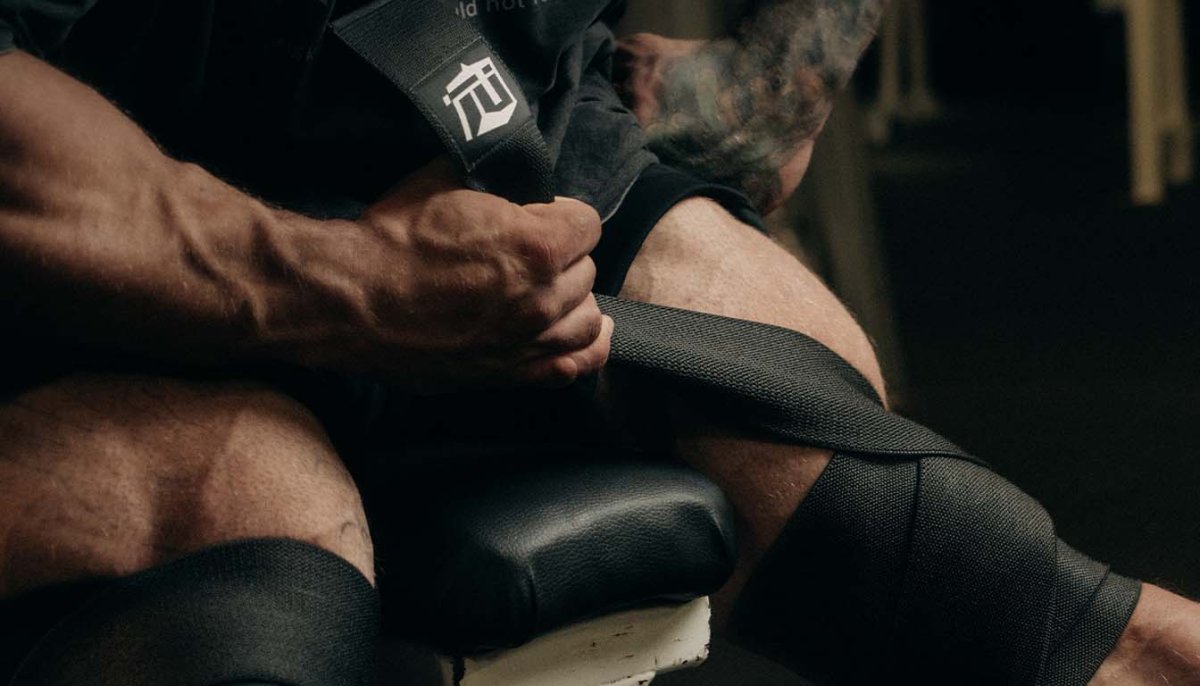
Are you actually hitting a physical plateau, or is your equipment failing to match your output? Many lifters reach a stage where the weight on the bar exceeds what their connective tissue feels comfortable supporting. Using professional weight lifting knee wraps addresses that sharp twinge during a heavy eccentric phase or the nagging fear of injury that makes you hesitate during a maximal effort lift.
It's frustrating when your muscles have more to give but your joints demand caution. This guide provides the technical knowledge to protect your joints and increase your maximal lifting capacity safely. We'll show you how to use these tools to store elastic energy and drive through the sticking point of a heavy squat.
We'll examine the specific wrapping techniques used by elite athletes and break down the 2026 IPF regulations regarding equipment dimensions. As a UK-based specialist, Team Industry provides the equipment needed to support these high-tension loads. You'll learn how to select the right tension and length for your goals, ensuring you return to the platform with quiet confidence and a new personal record.
Key Takeaways
- Understand how storing elastic energy during the eccentric phase can safely boost your squat and leg press numbers.
- Learn how to select the right length and stiffness of weight lifting knee wraps to match your specific training volume and competition goals.
- Master the technical application process by starting below the knee to ensure consistent tension and eliminate joint instability under load.
- Identify the critical performance differences between wraps and sleeves to determine which tool is appropriate for your current lifting cycle.
Understanding the Mechanics: Why Lifters Use Knee Wraps
Weight lifting knee wraps are professional-grade elasticated bands designed for extreme compression during heavy lower-body movements. These aren't just accessories; they're tactical tools for lifters who understand the grit required for maximal effort. By wrapping the knee tightly, you create a rigid structure that supports the joint under hundreds of kilogrammes. Using supportive equipment in powerlifting is a standard practice for managing high-load sessions, and applying these wraps requires a pragmatic approach to ensure the tension is even and effective.
The primary benefit is the storage of elastic energy during the descent, or eccentric phase, of the lift. As you descend, the material stretches and accumulates potential energy that assists the drive upward. The rebound effect is the mechanical assistance provided by compressed elastic material as it attempts to return to its natural state. This mechanism significantly reduces the burden on your musculature at the most difficult part of the lift. Crucially, they protect the patellar tendon by dampening sheer force and reducing joint displacement during high-load squats.
The Science of Elastic Energy in Strength Sports
At the "hole" or the bottom of a squat, the tension creates a powerful spring effect. This helps you accelerate through the transition from eccentric to concentric movement, effectively boosting your output. Beyond the physical boost, the compression increases proprioception. This is your nervous system's ability to track joint position accurately. When you feel that tightness, your brain registers increased stability, which builds the joint confidence essential for maintaining form under maximal loads. For lifters who demand this level of reliability, Weight Lifting Knee Wraps provide the durability needed for high-tension applications.
Knee Wraps vs. Knee Sleeves: Which Should You Choose?
Choosing between sleeves and wraps depends on your current training block and specific performance goals. Neoprene sleeves provide fixed compression and essential warmth for general training. Conversely, weight lifting knee wraps allow you to customise tension levels for maximal effort attempts. Research shows that wraps significantly alter the mechanical output and performance characteristics of a lift by storing elastic energy. If you're interested in how other equipment like Lifting Straps can support your training, our technical guide offers a full breakdown of those tools.
When to Reach for Knee Wraps
Reserve wraps for maximal effort squats, heavy leg presses, and strongman events. They're designed for the grit of low-rep, high-intensity sets where joint protection is the priority. This is the point where the mechanical advantage of weight lifting knee wraps becomes essential for safety. Transition to wraps once your training loads exceed 85% of your one-rep max. Avoid using them for high-volume accessory work. Over-reliance on wraps during light sets can limit the development of natural joint stability and connective tissue strength.
The Benefits of Neoprene Sleeves for Bodybuilding
Sleeves are the practical choice for hypertrophy-focused bodybuilding sessions. They maintain joint temperature during rest periods, which is vital for sustained blood flow and injury prevention during high-rep sets. If you need reliable protection for your standard lifting days, check the Team Industry Joint Support collection. These options provide the necessary compression without the time-consuming application process required for wraps. They're an approachable partner for lifters who need consistent support without the extreme rigidity of competition gear.
How to Wrap Your Knees: Techniques for Squats and Leg Press
Applying weight lifting knee wraps requires precision to ensure both safety and effectiveness. Unlike sleeves, the direction and tension of the wrap dictate the level of support you receive. Always start wrapping from just below the knee at the top of the calf and work upwards toward the thigh. This method anchors the wrap against the natural taper of the leg, preventing it from sliding down during heavy squats or leg presses. Proper anchoring is the foundation of a secure wrap.
Before you begin, sit with your leg fully extended and ensure the quad is relaxed. If the muscle is flexed during application, you won't achieve the necessary compression once you stand and begin the lift. Maintain consistent tension throughout the wrap to avoid 'hot spots' or slipping. A properly applied wrap should be tight enough to restrict movement when standing. This restriction is a clear signal that the material is ready to store and release elastic energy.
The Spiral Wrap for General Support
The spiral technique is the standard choice for bodybuilders and those using wraps for the first time. Start by making two full revolutions below the kneecap to create a secure anchor. Continue wrapping upwards in a circular motion, overlapping each layer by about half the width of the material. This creates a uniform layer of compression that provides consistent support across the entire joint. It is an approachable method for maintaining joint integrity during high-volume sessions.
The X-Pattern (Cross-over) for Maximal Stability
For maximal stability during heavy powerlifting, the X-pattern is superior. After anchoring below the knee, pull the wrap diagonally across the patella to the opposite side of the thigh. Loop it around the back and cross back over the front to form an 'X' over the kneecap. This targeted support reinforces the patellar tendon under extreme loads. To secure the finish, tuck the remaining material firmly under the top layer at the thigh. For athletes ready to push their limits, our Weight Lifting Knee Wraps are built to withstand these high-tension techniques.
Choosing the Right Knee Wraps for Your Strength Goals
Selecting the right weight lifting knee wraps depends on your specific training output. Flexible wraps are better for higher repetition work because they allow for slightly more range of motion while maintaining joint heat. For one-rep max attempts, you need stiff, heavy-duty material that provides maximum rebound. This stiffness creates a rigid cast that helps you drive out of the hole, though it requires more grit to break parallel during the descent.
In the UK, standard 2-metre wraps are sufficient for most federations, including those following IPF-style regulations. Longer 2.5-metre options offer more revolutions around the joint but require more time and effort to apply correctly. Ensure you choose a design with reliable fastening. High-quality velcro or 'tuck-in' designs provide the security needed to prevent the wrap from coming loose mid-set. You can browse professional-grade options in the Team Industry Strength Gear collection.
Durability and Maintenance of Elastic Gear
Treat your equipment with respect to ensure it lasts. Caring for your wraps prevents the elastic fibers from breaking down prematurely. Never leave wraps tightly rolled in your gym bag after a session. This traps sweat and keeps the material under constant tension, which kills the elastic response over time. Instead, air them out flat between sessions to maintain their structural integrity and hygiene. This pragmatic approach ensures your gear remains dependable for every heavy session.
Integrating Wraps into Your Training Programme
Don't wait until competition day to test your gear. Gradually introduce wraps into your prep cycle to get used to the 'cast' feeling. Start with a moderate wrap on your final warm-up sets to gauge your depth and timing. For total core and joint stability, combine your wraps with a Team Industry Lifting Belt. This combination provides a dependable foundation for any strength athlete looking to push beyond their current plateau safely.
Secure Your Next Personal Best
Mastering the technical application of weight lifting knee wraps is a pragmatic step for any athlete pushing toward maximal loads. By choosing the correct material stiffness and maintaining consistent tension from the calf upward, you protect your patellar tendons while accessing significant elastic energy. Stability builds confidence. These tools transform the mechanics of your squat, providing the support required to break through long-standing plateaus.
Team Industry provides professional-grade strength equipment designed for the grit of the UK powerlifting and strongman scene. Our gear is constructed from durable heavy-duty elastic and remains a dependable partner for lifters who demand reliability. Don't let joint discomfort dictate your limits. Invest in equipment that matches your work ethic.
Shop Team Industry Weight Lifting Knee Wraps and take control of your performance today. We're committed to your operational excellence on the platform.
Frequently Asked Questions
Are knee wraps better than knee sleeves for heavy squats?
Knee wraps are superior for maximal force production because they store elastic energy to assist the upward drive. Sleeves provide warmth and compression but don't offer the same mechanical advantage. If your goal is a new personal record on a heavy squat, weight lifting knee wraps are the professional choice. However, for general volume and hypertrophy sets, sleeves remain more practical and less time-consuming for most athletes.
How tight should I wrap my knees for weight lifting?
Your wraps should be tight enough to restrict your range of motion when standing upright. While they shouldn't cut off circulation entirely, a properly applied wrap feels uncomfortable until you begin the descent of the lift. Maintain high tension throughout the application to ensure the material doesn't slip under load. If you can walk comfortably between sets, the wraps are likely too loose for maximal performance.
Can I use knee wraps for every leg workout?
You shouldn't use wraps for every session. Reserve them for intensities above 85% of your one-rep max to avoid becoming overly dependent on the equipment. Using them for low-intensity accessory work can hinder the development of natural joint stability and connective tissue strength. A pragmatic approach involves using sleeves for volume days and transitioning to weight lifting knee wraps for your heaviest competition-style sets during your peak phase.
Do knee wraps prevent injuries like ACL tears?
Knee wraps provide significant support to the patellar tendon by reducing sheer force during high-load movements. While they increase joint stability and proprioception, they don't guarantee protection against complex injuries like ACL tears. These injuries often result from poor mechanics or sudden lateral shifts under load. Focus on maintaining strict form and using wraps as a tactical layer of protection rather than a substitute for proper lifting technique.
Are knee wraps allowed in powerlifting competitions?
Wraps are permitted in equipped powerlifting categories but are generally banned in classic or raw divisions. Under current IPF regulations as of 2026, wraps must not exceed 2.5 metres in length and 8 cm in width. Always verify the specific rulebook of your federation before competing. Competitive lifters should practice with their chosen wraps during their prep cycle to ensure they meet all technical standards on the platform.
Share:
Tactical Gym Backpacks: The Ultimate Guide for Lifters
Tactical Gym Backpacks: Guide for Strength Athletes (2026)