

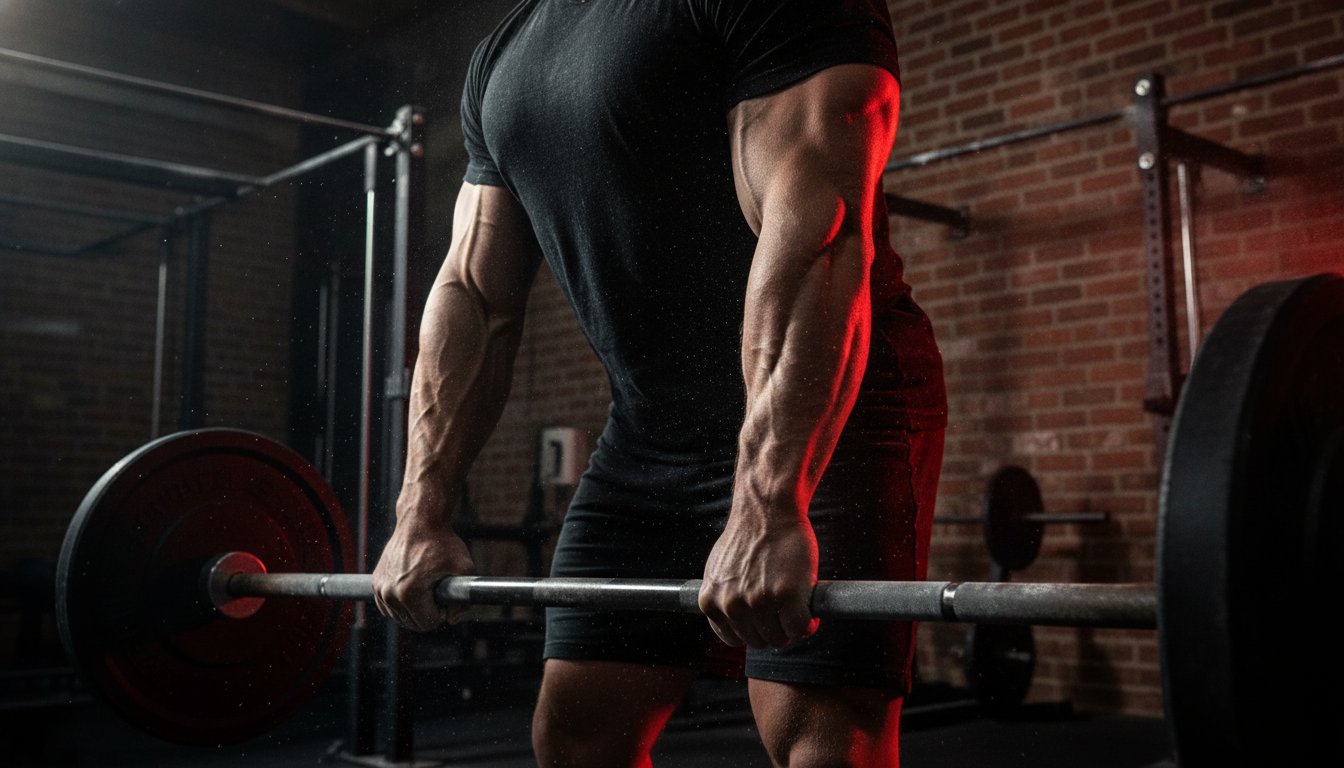
What if the only thing standing between you and a podium finish is the friction between your palm and an axle bar? It is a common frustration for athletes to feel their legs and back ready for another 20 meters while their hands simply quit. If you want to move heavy implements without them slipping, mastering how to improve grip strength for strongman is just as critical as your log press or deadlift.
You don't have to let your hands be the weak link in your chain. This guide provides the specific training protocols you need to build a bone-crushing support grip and a massive axle deadlift. We will explore how to use tools like Team Industry UK Liquid Chalk to manage friction and when to strategically implement Team Industry UK Weight Lifting Straps during your heaviest training sets. You'll learn a practical, step-by-step approach to making your hands and wrists injury-proof for the 2026 season.
Key Takeaways
- Identify your specific weaknesses by distinguishing between support grip for carries and the crush grip needed for finger power.
- Learn how to improve grip strength for strongman using double overhand axle holds to build maximum friction without relying on a mixed grip.
- Avoid the "Strap Trap" and learn when to deploy Figure 8 Lifting Straps to ensure your hands don't fail on competition day.
- Implement the "Less is More" rule by scheduling 2-3 sessions per week at the end of your main lifts to protect your recovery.
The Three Pillars of Strongman Grip Strength
Strongman requires a unique hybrid of raw power and endurance. While powerlifters often rely on a single max effort or straps, and bodybuilders focus on isolation, a strongman must maintain Grip strength across varied implements and durations. Understanding the three pillars is the first step in learning how to improve grip strength for strongman effectively.
These pillars include support grip, which is your ability to hold heavy loads like farmer's handles; crush grip, the closing power of your hand; and extension strength, the often ignored resistance of the hand's opening muscles. Balancing these ensures you don't develop the muscular imbalances that lead to chronic elbow pain.
To better understand the mechanics of hand power, watch this helpful video:
Why Support Grip is Your Competition Priority
Support grip is the foundation of the sport. Most competitions feature at least one carry event, such as the Farmer's Walk or Frame Carry. These aren't just tests of leg strength; they're tests of hand endurance. If you can't hold the implement for the full 60 seconds, your speed doesn't matter. Static holds are the most practical way to build this bone-crushing finger strength.
The Axle Bar Challenge
The 50mm axle bar is a standard strongman tool that presents a unique mechanical disadvantage. Unlike a standard 28mm Olympic bar, you cannot fully wrap your fingers around an axle. This forces your forearms to work harder, triggering massive motor unit recruitment. Training raw on an axle bar is a superior method for anyone researching how to improve grip strength for strongman because it mimics the thick handles found on many competition implements. When the weight exceeds your raw capacity during heavy training blocks, using Figure 8 Lifting Straps allows you to continue training the primary movers without your hands becoming the limiting factor.
Top 5 Exercises to Build a Competition-Ready Grip
Building on the pillars of grip, you need specific movements that challenge your hands in high-tension environments. You don't need a gym full of specialized handles to see results. Implementing these five exercises is the most efficient way to learn how to improve grip strength for strongman without overcomplicating your routine.
Double Overhand Axle Deadlift Holds are a primary tool for developing raw friction. Avoid using a mixed grip during these sets. Force your hands to manage the mechanical disadvantage of the thick bar. Applying liquid chalk ensures you aren't slipping due to sweat, allowing you to focus entirely on the squeeze. Many elite athletes improve grip strength by integrating these holds into their weekly accessory blocks.
- Timed Farmers Carries: These are the gold standard for functional support grip. Aim for 30 to 45 second holds with 60 percent of your max competition weight to build specific endurance.
- Plate Pinches: Hold two or more smooth-sided plates together using only your fingers and thumb. This targets the thumb, which acts as the critical anchor for your entire grip.
- Barbell Finger Curls: Let the bar roll down to your fingertips before curling it back into your palm. This directly increases crushing power for implements like stones and grippers.
If your hands become the limiting factor during heavy back training, use Industry Classic Lifting Straps to ensure your primary muscle groups still get the required stimulus.
Implementing Static Holds for Maximum Density
Use "Over-Warmups" to sneak extra grip work into your session. Before your main work sets, hold your last warm-up weight for 10 to 15 seconds at the top of the lift. Use a power rack to safely train heavy static holds with minimal range of motion. This allows you to handle loads significantly higher than your max deadlift, prepping your nervous system for the weight of a frame or heavy yoke.
The Power of the Fat Grip
Thick-grip adapters allow for passive training during pull-ups or rows without adding extra time to your workout. Thick-grip training increases neural drive to the hands by forcing a more intense contraction of the forearm muscles.

Strategic Gear: When to Use Straps vs. Raw Grip
Strategic use of equipment is a hallmark of elite performance. Many novices fall into the 'Strap Trap' by wearing gear for every warm-up set. This habit prevents the development of foundational hand power. If your goal is learning how to improve grip strength for strongman, you must prioritize raw lifting for sub-maximal loads. According to the NSCA's guide to grip strength development, varying your training methods and implements is key to building functional capacity across different types of hand tension.
Don't overlook the role of joint stability in your training. High-quality Wrist Wraps support the small bones of the wrist during heavy overhead presses. This stability indirectly aids your grip by allowing the muscles of the forearm to focus on the implement rather than stabilizing the joint. Using the right tools at the right time ensures you maximize your output without creating a dependency that fails you on competition day.
The Tactical Use of Figure 8 Straps
When the weight on the bar exceeds 70% to 80% of your max, switching to Figure 8 Lifting Straps is a logical choice. These straps are specifically designed for the diameter of an axle bar. They allow you to focus on the hinge and hip drive without the bar rolling out of your hands. Train raw during your early sets to maintain your baseline strength, then apply straps for your top-end work to protect your central nervous system from excessive fatigue.
Friction Management with Liquid Chalk
Sweat is the enemy of a secure hold. Using Liquid Chalk provides a consistent friction layer that block chalk often lacks. It fills the small valleys of your palm, creating a more uniform surface area. Most commercial gyms prefer liquid options because they don't leave a dusty residue on the floor or equipment. Apply a thin base layer and let it dry completely before your heavy carries or deadlifts.
If you are ready to upgrade your competition setup, explore our full range of Industry Strength Gear to find the right tools for your next meet.
Programming Grip Training into Your Strongman Split
Effective programming is the final piece of the puzzle when learning how to improve grip strength for strongman. Unlike smaller muscle groups that recover quickly, the nervous system demands respect. Overtraining the hands is a common mistake that leads to stalled progress on your main lifts. You must treat grip work with the same calculated approach you use for your squat or overhead press.
Adhering to the "Less is More" rule is safer than chasing daily volume. Limit your direct grip training to 2 or 3 sessions per week. Integrate this work at the end of your pulling sessions. This strategy ensures your hands aren't pre-fatigued before you attempt a heavy deadlift or row. It keeps your primary lifts safe while still providing the high-intensity stimulus needed for hand power.
Recovery requires a proactive approach. Heavy carries and thick bar work place immense stress on the connective tissues of the elbow. Many strength athletes use Heavy Duty Knee Sleeves to provide compression and warmth during these heavy sessions. Supplement this with active recovery like extensor bands or rice bucket work to prevent the muscular imbalances that often lead to tendonitis.
A Sample Weekly Grip Protocol
Consistency is more important than variety. Follow a structured protocol that complements your existing split:
- Day A (Heavy Pull): Perform deadlift holds and plate pinches after your main sets.
- Day B (Event Day): Focus on Farmers Walks without straps and axle cleans to build specific endurance.
- Day C (Recovery): Use light band extensions and hand massage to flush the tissues.
Monitoring CNS Fatigue
Recognizing grip burnout is essential for long-term health. If you notice a sudden drop in your ability to hold sub-maximal loads, your central nervous system likely hasn't recovered from your last heavy session. Hand-grip dynamometer scores serve as a reliable proxy for your overall systemic recovery and readiness to train. If your morning grip score is 10 percent lower than your baseline, consider a deload day to protect your progress.
Build a Grip That Never Quits
Success on the competition floor often comes down to the smallest contact points. By moving beyond general exercises and focusing on the specific demands of support and crush power, you ensure your hands remain an asset rather than a liability. Mastering how to improve grip strength for strongman is a journey of consistency that turns a failing carry into a winning run. It requires a pragmatic approach to both high-intensity sessions and the recovery needed to protect your nervous system from burnout.
When you are ready to push toward your next personal best, rely on gear that understands the reality of heavy lifting. Secure your grip with Team Industry UK professional-grade Figure 8 Straps and Liquid Chalk. Our heavy-duty materials are designed for 300kg+ loads and are trusted by UK Strongman competitors who demand no-nonsense equipment built for the grit of the sport. These tools provide the reliability you need when the weight on the axle bar matches your maximum effort.
Take these protocols into your next training cycle and watch your confidence on the handles grow. Your hands are the primary interface between your power and the implement. Train them with the purpose they deserve and stay ready for the 2026 season.
Frequently Asked Questions
Can I use lifting straps in a Strongman competition?
Yes, lifting straps are permitted in many 2026 strongman deadlift events, but rules vary by federation. For example, the 2026 Official Strongman Games European Championships Qualifier allows straps for deadlifts. However, the Static Monsters Worldwide event prohibits straps for the log lift. Always review your specific athlete handbook. If straps are allowed, using Figure 8 Lifting Straps can help you manage maximum loads during training and competition.
How long does it take to significantly improve grip strength?
You will typically see initial neural improvements in your grip within 4 to 6 weeks. Significant structural changes, such as increased tendon thickness and bone density in the hands, generally require 6 to 12 months of dedicated training. This timeline depends on your starting point and how consistently you apply progressive overload. Focus on steady, incremental gains rather than rushing into maximal loads that could cause injury.
Are hand grippers actually useful for Strongman events?
Hand grippers are effective for developing crushing power, but they aren't the most sport-specific tool for strongman. They primarily target the fingers and palm in a closing motion. Most strongman events require a support grip, which involves holding a heavy implement for time. Use grippers as a supplemental accessory to build general hand health. Prioritize carries and thick bar holds if you want to know how to improve grip strength for strongman effectively.
Why does my grip fail on an Axle bar but not a standard barbell?
An axle bar has a 50mm diameter, which is much thicker than a standard 28mm Olympic bar. This thickness prevents your thumb and fingers from overlapping, removing the "lock" you get with a standard grip. This open-hand position requires significantly more forearm activation to maintain friction. Training on an axle forces your body to adapt to this mechanical disadvantage, which is a core component of how to improve grip strength for strongman.
How do I prevent my skin from tearing during heavy carries?
Regular skin maintenance and proper friction management are the best ways to prevent tears. File down large calluses so they remain flush with your skin. This prevents the implement from "catching" and pulling the callus away from the healthy tissue. Use Liquid Chalk to keep your hands dry. It provides a consistent grip surface that reduces the sliding and pinching that leads to painful skin rips during heavy carries.
Share:
What to Pack in a Gym Bag for Powerlifting: The Ultimate 2026 Checklist
Team Industry vs Cerberus: The Flagship Wrist Wraps