

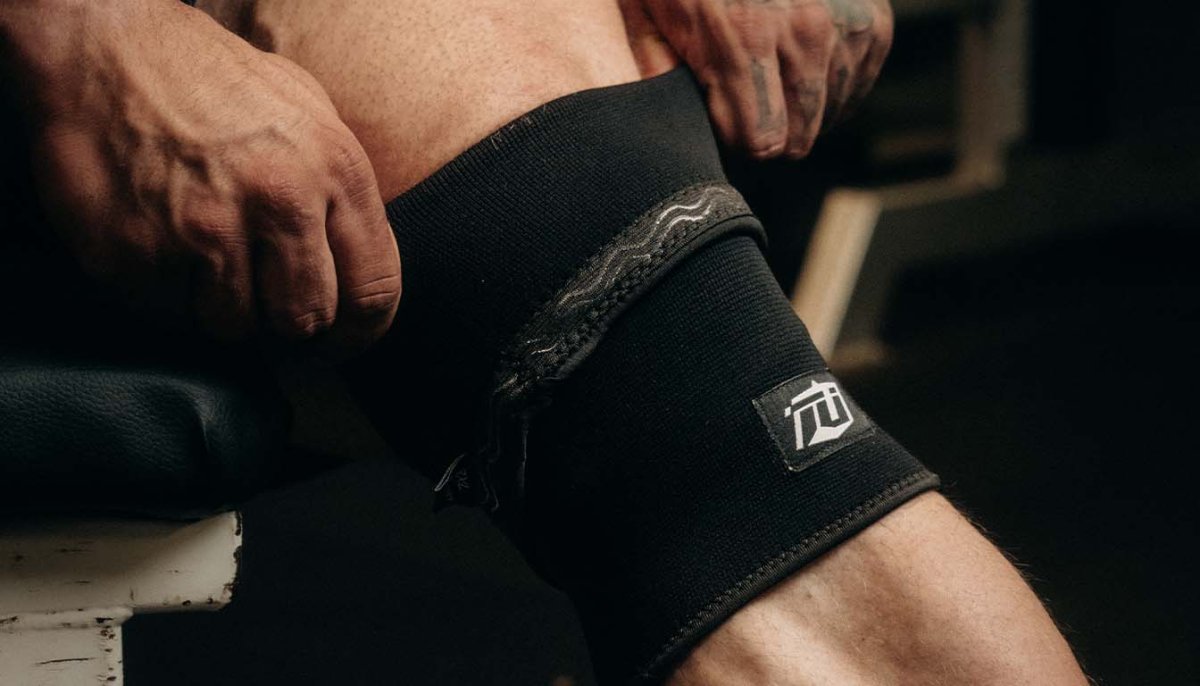
What if the only thing holding you back from a new squat PB isn't your leg strength, but a lack of confidence in your joint stability? You've likely felt that split-second hesitation at the bottom of a heavy set, worrying about knee pain or whether your gear will stay in place. It's a common frustration for serious lifters who demand more from their equipment than standard gym accessories can provide. Investing in heavy duty knee sleeves is a tactical decision for anyone moving significant weight. These sleeves, like the professional-grade options from Team Industry, offer the mechanical assistance and thermal support required for elite-level strength and safety.
We understand the grit required to train through high-load scenarios. This guide will show you how professional-grade sleeves protect your joints and boost your output during those critical moments in the hole. You'll learn how to navigate the technical differences between training and competition fits, ensuring your gear never slides down mid-set. We also provide practical maintenance tips to keep your equipment functional and fresh. By the end, you'll have the clarity needed to select gear that matches your dedication to the iron.
Key Takeaways
- Understand how high-compression materials create a mechanical advantage to assist your movement at the bottom of a heavy squat.
- Compare the technical benefits of 7mm neoprene against double-ply sleeves to find the best material for your specific strength goals.
- Follow a precise two-step measuring process to ensure your heavy duty knee sleeves provide a professional fit that won't slide.
- Learn to integrate joint support with a Weight Lifting Belt for total stability during high-load training sessions.
Why Heavy Duty Knee Sleeves are Essential for Serious Strength Athletes
Heavy duty knee sleeves aren't standard gym accessories; they're high-compression tools engineered specifically for maximal loads. While basic fitness sleeves offer mild warmth for cardio or light sets, professional-grade gear uses dense 7mm materials to create a physical "rebound" effect. As you descend into the bottom of a squat, the sleeve material compresses and stores elastic energy. At the lowest point of the lift, this stiffness provides a distinct mechanical advantage, helping you drive out of the hole with greater force and confidence.
Maintaining joint temperature is equally critical. Heat improves the viscosity of synovial fluid, which lubricates the joint and reduces internal friction. This thermal benefit is essential for Serious Strength Athletes who require consistent protection against wear and tear during high-intensity training cycles.
The Science of Compression and Joint Stability
Compression enhances proprioception, your body's awareness of joint position. This increased sensory input allows for more precise movement and balance when handling heavy weights. These heavy duty knee sleeves also provide lateral stability for the patella. By ensuring the kneecap tracks correctly, you mitigate the shearing forces that often lead to chronic tendon issues.
Performance vs. Protection: Why You Need Both
Professional sleeves bridge the gap between safety and hitting new PBs by providing structural support that doesn't compromise your natural range of motion. In strongman and powerlifting, heavy duty gear is the industry standard. It offers the rugged durability required to handle extreme tonnage while keeping the lifter's joints secure during every repetition.
Neoprene vs. Double Ply: Which Heavy Duty Sleeve is Right for You?
Selecting the right material depends on your specific strength goals. 7mm Neoprene is the industry standard for powerlifting and general heavy training. It offers a balanced mix of compression, warmth, and flexibility that suits raw lifting standards. In contrast, double-ply sleeves, typically made from rugged polyester and rubber blends, provide maximal "pop" out of the hole. While neoprene is resilient and retains its shape well over time, double-ply options are prized for their extreme stiffness during maximal attempts.
If you plan to compete in sanctioned powerlifting events, check the approved list for your federation. As of 2026, the IPF requires sleeves to be no thicker than 7mm and no longer than 30cm. Most double-ply sleeves don't meet these specific criteria, making them better suited for strongman or non-sanctioned training environments where raw power is the only rule.
Choosing Based on Your Primary Discipline
Powerlifters should generally stick with 7mm neoprene for its versatility and federation compliance. Strongman athletes often benefit from the extra stiffness of double ply, especially when moving odd objects or performing high-frequency squatting events. If you're consistently hitting heavy loads, you can find professional-grade heavy duty knee sleeves at Team Industry that bridge this gap effectively.
Stiffness Levels: Training vs. Competition
There's a trade-off between comfort and support. For high-rep volume sets, a standard 7mm sleeve provides sufficient warmth and stability. However, for 1RM attempts, you might opt for an "Extra Stiff" fit. Determine your need based on your current strength level; if your joints feel unstable as the weight exceeds 85% of your max, a stiffer sleeve is a practical investment for both performance and safety.
How to Measure and Size Your Knee Sleeves for a Professional Fit
Achieving a professional fit requires more than just guessing your size based on height or weight. To get the most out of your heavy duty knee sleeves, start by measuring the circumference of your knee joint with a straight, locked leg. Next, measure the thickest part of your calf. This second measurement is vital; if your calves are significantly larger than your knees, you'll struggle to get the sleeves into position even if the knee measurement is technically correct.
Once you have your numbers, decide between a "Standard Fit" for daily training or a "Competition Fit" for maximal support. Sizing down provides extra compression but makes the application process more difficult. Use the "Fold and Pull" technique: turn the sleeve inside out, pull it up to your mid-calf, and then flip the top section over your knee joint. This method saves your thumbs and ensures the material sits flat against the skin.
The Sizing Down Debate: Is Tighter Always Better?
While maximal compression aids performance, it shouldn't come at the cost of safety. If you experience tingling, numbness, or sharp skin pinching, your sleeves are likely too small. These signs indicate restricted blood flow, which can distract you during a heavy set. Aim for a fit that feels very snug but allows you to complete your warm-up without losing sensation in your feet.
Maintenance: How to Stop the "Sleeve Stink"
Neoprene is a porous material that traps bacteria. To prevent the infamous "sleeve stink," always air-dry your gear inside out immediately after your session. When it's time for a deep clean, hand wash them in cold water with a mild detergent. Avoid machine washing or tumble drying, as high heat destroys neoprene elasticity and ruins the structural integrity of your investment. Find the right fit for your next session by browsing our heavy duty knee sleeves today.
Maximising Your Squat with Team Industry Heavy Duty Gear
Team Industry specialises in professional-grade strength equipment designed for the reality of the platform. Our Heavy Duty Knee Sleeves are a cornerstone of our range, built specifically for high-load scenarios where standard gear fails. These sleeves don't work in isolation; they are part of a tactical system. Pairing them with a Weight Lifting Belt provides a complete support structure. While the sleeves stabilise the knee joint, the belt allows for maximal intra-abdominal pressure to secure the spine. This synergy is essential for maintaining technical proficiency during a max-effort squat.
Once the primary heavy sets are finished, your training shouldn't stop. Using Lifting Straps for accessory movements like Romanian deadlifts or rows ensures that grip fatigue doesn't limit your volume. We remain deeply committed to the UK strength community, regularly supporting regional events and athletes who embody the grit of the sport.
Building Your Professional Strength Kit
Coordinating your joint support with other professional accessories creates a cohesive training setup that minimises distractions. If you have questions about the "competition fit" versus "training fit" discussed earlier, visit our Wormley shop. Trying on gear in person is the most reliable way to find your perfect size and feel the material's stiffness firsthand before you hit the platform.
The Team Industry Advantage
We understand powerlifting and strongman because we are part of the culture. Choosing our heavy duty knee sleeves ensures you receive equipment that survives years of intense use. Our gear is built for durability and performance, not just aesthetics. It's time to take your training seriously. Stop leaving kilos on the platform and invest in equipment that matches your dedication.
Take Your Strength Training to the Next Level
Utilising heavy duty knee sleeves is a strategic move for any athlete focused on long-term joint health and maximal performance. You now understand how high-compression gear provides the mechanical rebound needed to drive out of the hole during heavy squats. By applying the precise measuring techniques and maintenance habits discussed, you ensure your equipment remains a reliable asset in your training kit. Professional-grade gear isn't just about protection; it's about the confidence to push your limits safely.
Team Industry provides professional-grade gear specifically engineered for the rigours of powerlifting and strongman. We are a brand trusted by the UK strength community, offering nationwide shipping on all our strength accessories to support lifters across the country. Upgrade your support with Team Industry Heavy Duty Knee Sleeves and stop leaving kilos on the platform. Your next personal best is within reach. Train hard, stay protected, and let's get to work.
Frequently Asked Questions
How long do heavy duty knee sleeves usually last?
Professional-grade heavy duty knee sleeves typically last between one and two years with regular, high-intensity training. Their lifespan depends heavily on your maintenance routine and how often you squat. To extend their durability, always air-dry them after use and avoid machine washing. If you notice the neoprene thinning or the stitching beginning to fray, it is time to replace them to maintain consistent joint support and safety.
Can I wear knee sleeves for my entire workout or just heavy sets?
You should generally wear your sleeves for your primary heavy sets rather than your entire workout. While keeping the joints warm is beneficial, wearing high-compression gear for extended periods can restrict blood flow and lead to discomfort. If you've opted for a tight competition fit, we recommend sliding them down to your ankles between sets to allow for better circulation and to prevent skin irritation during long sessions.
What is the difference between knee sleeves and knee wraps?
Knee sleeves provide constant compression and warmth, making them the standard for raw powerlifting and strongman. In contrast, knee wraps are long elastic strips that you wrap tightly around the joint before a set. Wraps offer a significant mechanical rebound effect, allowing for much heavier loads, but they are typically reserved for equipped lifting divisions rather than daily training or raw competition where sleeves are the preferred choice.
Do knee sleeves help with existing knee injuries or just prevention?
Heavy duty knee sleeves are designed for joint protection and injury prevention rather than treating existing medical conditions. They provide stability and warmth, which can help manage minor aches by increasing blood flow to the area. However, if you have a serious ligament tear or structural damage, a sleeve won't fix the underlying issue. Always consult a medical professional for injury diagnosis before relying on supportive gear.
Is it normal for knee sleeves to be very difficult to put on at first?
It's completely normal for new, high-compression sleeves to be difficult to put on, especially if you've sized down for a competition fit. Neoprene is naturally grippy against the skin, which can make the initial application feel like a struggle. Using the fold and pull technique mentioned earlier makes this process much easier. Over time, the material will slightly conform to your leg shape while still maintaining its essential stiffness.
Share:
The Best Gym Routine for Bigger Arms: A Complete Guide
Ultimate Guide to Oversized Gym T-Shirts for Lifters