


Did you know that the median bench press for a 180 lb male in 2026 is 221 lbs? If your numbers have stalled below that mark despite your best efforts, you aren't alone. It's frustrating to put in the work only to face stagnant lifts or nagging shoulder discomfort every time you load the bar. You've likely tried various routines, but you're still searching for a reliable method for how to increase bench press strength without compromising your joints.
We understand that serious lifting requires a professional approach to both technique and equipment. This guide provides a clear technical checklist for every rep and a strategy for long-term progressive overload that respects your recovery. You'll learn which accessory lifts actually matter and how to use gear like Wrist Wraps or a 10mm Lever Belt to stay stable under heavy loads. From mastering technical cues to refining your programming, we're here to help you smash through your current plateaus and build a stronger, more efficient bench press.
Key Takeaways
- Establish a stable lifting base by driving your heels into the floor and maintaining upper back tightness through scapula retraction.
- Learn how to increase bench press strength by moving from basic linear progression to periodised blocks that manage fatigue and improve recovery.
- Identify and eliminate sticking points with specific accessory movements like the Close-Grip Bench Press to enhance your lockout power.
- Utilise professional-grade equipment like Wrist Wraps to ensure the bar stays stacked over your forearms for maximum force production.
- Increase your training frequency to two or three sessions per week to build technical skill and volume without overtaxing your central nervous system.
Mastering the Technical Foundations of a Heavy Bench Press
A heavy bench starts from the ground up. Most people treat the Bench press as a chest exercise, but professionals know it is a full-body lift. If you want to learn how to increase bench press strength, you must first build a rock-solid foundation. Start by pulling your feet back toward the bench and driving your heels firmly into the floor. This position allows you to use leg drive. Leg drive is the transfer of force from the floor through the torso to the bar.
Once your lower body is set, focus on your upper back. Create upper back tightness by retracting and depressing your scapula, essentially pinning your shoulder blades together and down into the bench. This creates a stable platform for the lift. Implement a slight lumbar arch to protect your shoulder joints and reduce the total range of motion. Unlike a flat-back position, this arch keeps your chest high and your shoulders in a mechanically safer position.
To see these technical cues in action, watch this helpful video:
The Grip and Bar Path Optimisation
Your grip width should depend on your limb length and specific strengths. A wider grip reduces the range of motion but puts more stress on the pectorals, while a narrower grip relies more on the triceps. When you press, avoid a straight vertical line. Use a J-curve bar path, where the bar moves slightly toward your face as it leaves the chest. Pushing straight up is mechanically disadvantageous because it increases the moment arm between the bar and your shoulder joint.
Creating Full-Body Tension
Stability is the key to force production. Before you unrack the bar, imagine breaking the bar by trying to bend the ends toward your feet. This cue engages your lats and stabilises the shoulder joint. Take a deep diaphragmatic breath to brace your core before you begin the descent. This internal pressure provides the structural support needed to handle maximal loads safely. For additional stability during these heavy sets, many athletes find that using Wrist Wraps helps maintain a neutral wrist position, which is an essential step in understanding how to increase bench press strength over the long term.
Programming for Consistent Progressive Overload
Linear progression eventually hits a wall for every serious lifter. While adding weight every session works for beginners, intermediate and advanced athletes must transition to periodised blocks. This structured approach helps manage Central Nervous System (CNS) fatigue by waving intensity and volume over several weeks. If you want to master how to increase bench press strength, you need to think in terms of months, not just your next workout.
Frequency plays a vital role in this process. Benching two or three times per week typically outperforms the traditional once-a-week "chest day." Spreading your sets across multiple days allows you to stay fresher, which ensures every rep is performed with high technical standards. Progressive overload can involve increased reps or decreased rest, not just more weight. You should also utilise the Rate of Perceived Exertion (RPE) scale to adjust your daily loads based on how you feel. Understanding this balance is the most reliable way to learn how to increase bench press strength over a long lifting career.
The Power of Sub-Maximal Training
Technical mastery is built through repetition, not by grinding out failed reps. Training consistently at 75 to 85 percent of your one-rep max allows you to build strength while maintaining perfect form. To accumulate enough volume for growth, implement back-off sets after your primary heavy work. Dropping the weight by 10 or 15 percent for additional sets lets you practice the movement without compromising your technical integrity.
Managing Recovery and Fatigue
Hard training requires disciplined recovery. Keep a close eye on indicators of overtraining, such as persistent joint aches or a noticeable drop in bar speed during warm-ups. A deload week every four to six weeks is a non-negotiable part of a professional programme. This period allows your structural tissues and nervous system to repair, setting you up for the next block of progress. Maintaining stability throughout these cycles is easier with the right support, so consider using a Lever Belt to help maintain intra-abdominal pressure during your heaviest sessions.
Beyond rest and gear, your nutrition is the foundation of your recovery. For athletes who want to keep their diet exciting without sacrificing quality, the Tacoverse blog offers a look at bold, protein-rich options that can fuel your journey toward a stronger bench press.

Targeting Weak Points with Strategic Accessory Lifts
Identifying where your lift fails is the first step in learning how to increase bench press strength with precision. If you stall two inches off your chest, your training needs differ significantly from someone who fails at the final lockout. Professional lifting is about troubleshooting these specific mechanical gaps rather than just adding more volume to your primary sets. By selecting accessories that mirror your sticking points, you ensure every rep in your programme serves a purpose.
A stable bench requires a thick, strong upper back to act as a platform. Heavy barbell rows and face pulls are essential for building the rear deltoid stability needed to keep your scapula pinned during heavy attempts. To build explosive power from the bottom, implement Pause Benches. By holding the bar motionless on your chest for a full two-second count, you eliminate the stretch reflex. This forces your muscles to generate maximum force from a dead stop, which is a proven method for how to increase bench press strength.
Fixing the 'Off the Chest' Struggle
If you struggle to move the bar off your chest, your pectorals and lats likely need more development. The initial drive phase relies on these muscles to generate momentum. Spoto Presses are an excellent tool here. By stopping the bar an inch above your chest and holding it before pressing, you build tremendous tension in the bottom range. Wide-grip variations can also help by placing more demand on the chest, though you should ensure your shoulders remain stable throughout the movement.
Overcoming Lockout Plateaus
The final third of the bench press is dominated by the triceps. When you can't finish the lift, your triceps are usually the weak link. Close-Grip Bench Press is the most effective accessory for improving lockout power. Additionally, weighted dips and board presses allow you to handle heavier loads in a restricted range of motion, overloading the triceps specifically. To maintain joint integrity during these high-intensity accessory sessions, equip yourself with professional Wrist Wraps to keep your wrists supported and properly aligned under the bar.
Leveraging Professional Gear for Maximum Force Production
Technique and programming are your foundations, but professional-grade equipment provides the structural support needed to handle maximal loads. High-quality stiff wrist wraps ensure the barbell remains perfectly stacked over your forearms. This alignment eliminates energy leaks at the wrist joint, allowing for a more direct power transfer from your chest and triceps into the bar. Professional gear is a tool for safety and stability, allowing the lifter to focus entirely on force.
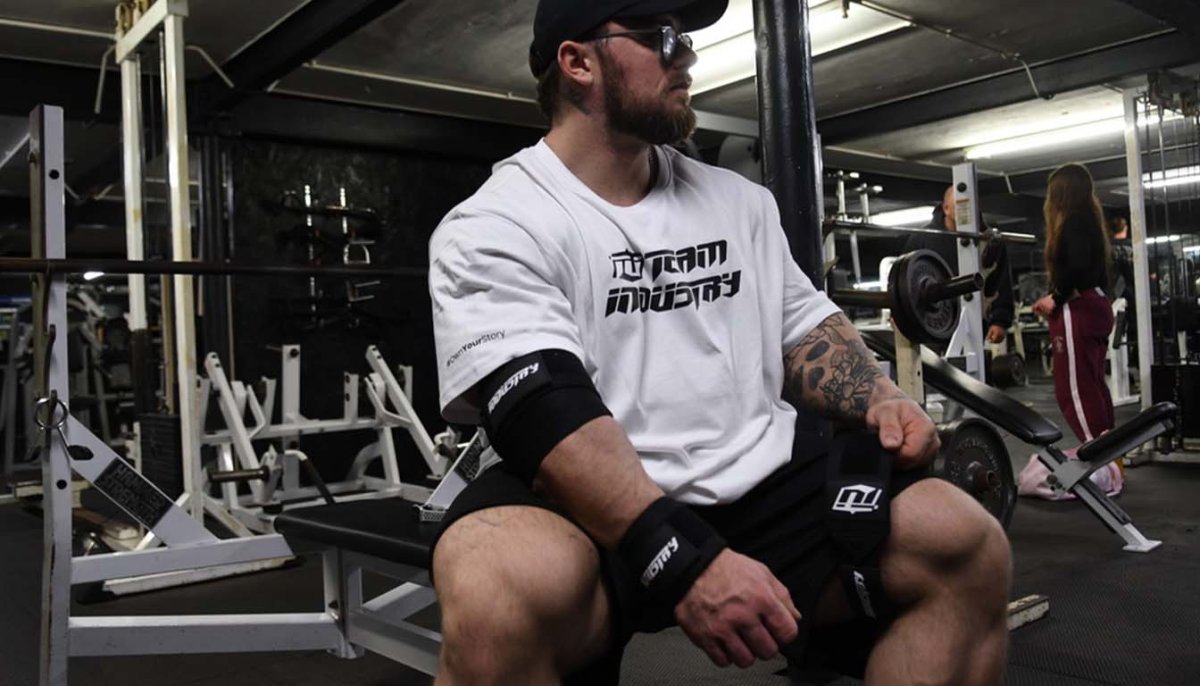
Stability extends beyond the wrists. Wearing a lifting belt during heavy bench sessions provides a physical cue to brace your core, which increases intra-abdominal pressure and reinforces your lumbar arch. Even your clothing choices impact your performance. Oversized Industry Tees are designed with extra room in the shoulders and torso, providing the unrestricted range of motion required to set a tight, high arch without the fabric pulling or bunching. These tools work together to create a secure environment for your heaviest attempts.
Wrist Wraps: The Bench Press Essential
Heavy loads often force the wrist into extension, or "cocking back." This position places immense strain on the small bones of the wrist and can lead to chronic elbow pain over time. By using wraps, you create a rigid cast that keeps the joint neutral and secure. For those attempting heavy singles or competition-standard reps, we suggest Industry Blackout Wrist Wraps for maximum support and long-term durability.
The Role of Elbow Sleeves and Grip Aids
During high-volume training blocks, tendons can become inflamed and sensitive. Utilising joint support such as elbow sleeves helps keep the tissues warm and improves blood flow to the area. Don't overlook the importance of your grip either. A light coating of liquid chalk prevents the bar from rotating or slipping in your palms, ensuring your hands stay exactly where you placed them during the unrack. Mastering these small equipment details is a vital part of the process when learning how to increase bench press strength safely and consistently.
Build a Professional Standard Bench Press
Mastering a heavy lift requires more than just effort; it demands a calculated approach to every rep and training block. By refining technical foundations like leg drive and scapula retraction, you create the stability needed for maximum force. Integrating periodised programming and targeting specific sticking points with accessories will ensure your progress remains sustainable throughout 2026. Understanding how to increase bench press strength is a continuous process of technical refinement and disciplined recovery.
The right equipment acts as the final piece of the puzzle. Team Industry UK gear is designed by lifters, for lifters, and is trusted by UK Strongman and Powerlifting athletes to perform under the heaviest loads. Whether you need a professional-grade 13mm lever belt or stiff wrist wraps to keep your joints secure, our range provides the reliability you need to break your current plateaus. You've done the work in the gym; now ensure your gear supports your ambitions.
Upgrade your strength gear with the Team Industry UK professional range and start building a more powerful, stable press today. Your next personal best is waiting.
Frequently Asked Questions
How many times a week should I bench press to increase strength?
Bench pressing two to three times per week is the most effective frequency for most lifters. This schedule allows you to accumulate enough volume to build muscle while giving your central nervous system time to recover between sessions. You can use one day for heavy sets and another for technique or speed work. Spreading the load ensures you aren't too fatigued to maintain proper form on every rep.
Is it better to bench with a wide or narrow grip for strength?
A moderate to wide grip is generally better for moving maximal weight because it reduces the distance the bar travels. However, your optimal width depends on your arm length and chest size. A narrower grip relies more on your triceps and is an excellent variation for building lockout power. Finding your ideal grip is a key part of learning how to increase bench press strength without straining your shoulders.
Do I need to arch my back when benching for max power?
A slight arch is a professional requirement for stability and joint protection. It pins your shoulder blades into the bench and creates a decline angle that allows you to use your lower pectoral fibres more effectively. This position also shortens the range of motion, which is essential for handling heavier loads. Ensure your glutes stay in contact with the bench to remain compliant with standard competition rules.
Can accessory lifts like overhead press help my bench press?
The overhead press is a valuable accessory for building shoulder stability and tricep strength. Stronger anterior deltoids help you stabilise the bar during the eccentric phase and provide a stronger start off the chest. While it shouldn't replace your primary bench work, it's a reliable secondary lift. Using a Team Industry UK Lifting Belt during heavy overhead sets can help you maintain core tension and protect your spine.
When should I start using wrist wraps for benching?
You should start using Wrist Wraps when the load becomes heavy enough to compromise your wrist alignment. Most athletes introduce them during working sets that exceed 70 percent of their one rep max. They provide the external support needed to keep the bar stacked over your forearms. This is a practical step for anyone focused on how to increase bench press strength while preventing chronic joint discomfort.

Share:
How to Use Smelling Salts for Lifting: A Professional Strength Guide
Best Bodybuilding Apparel for Mass Gain: The Ultimate 2026 Guide