
Research indicates that wearing a lifting belt can increase intra-abdominal pressure by 30 to 40 percent during a heavy lift. This isn't just about feeling tighter; it's a mechanical shift that helps you move more weight safely. If you've been wondering about the benefits of squatting with a belt, it's likely because you've hit a plateau or feel discomfort in your lower back during high-intensity sets. Many lifters struggle with the transition from raw training to using specialized gear, often worrying that a belt might become a crutch for a weak core.
In reality, a belt acts as a rigid wall for your abs to push against, amplifying your existing strength rather than replacing it. We understand the grit required to push through heavy sessions and the importance of equipment you can rely on. This article will show you how a belt stabilizes the spine and can increase your squat capacity by 5 to 15 percent. We'll preview the technical differences in belt thickness and explain exactly when to integrate this tool into your routine to maximize both power and operational safety.
Key Takeaways
- Learn how to create a rigid wall for your core to push against, which significantly increases your internal stability during heavy sets.
- Understand how the benefits of squatting with a belt extend to faster bar speeds and improved muscle recruitment in your lower body.
- Use the "one finger" rule to balance maximum support with proper breathing.
- Choose between the quick-release security of a Team Industry Lifting Belt and the high-adjustability of traditional prong systems.
The Mechanics of Intra-Abdominal Pressure (IAP)
To understand the benefits of squatting with a belt, you first need to recognize that the belt isn't a passive back brace. Instead, it serves as a rigid wall for your abdominal muscles to push against. When you perform the Valsalva maneuver, taking a deep breath into your belly and holding it, your core expands. Without a belt, your torso relies entirely on muscular tension to maintain its shape. With a Team Industry Lifting Belt, that expansion meets immediate resistance, which spikes your intra-abdominal pressure (IAP) by 30 to 40 percent.
This pressure creates what biomechanists often call a "fluid ball" within the abdominal cavity. This internal pressure supports the spine from the inside out, similar to how an inflated tire maintains its shape under the weight of a car. A common misconception is that this support makes your core "lazy" or weak. However, electromyography studies show that wearing a Weightlifting belt actually increases muscle activation in the rectus abdominis and obliques as they work harder to press against the leather or lever.
To better understand this concept, watch this helpful video:
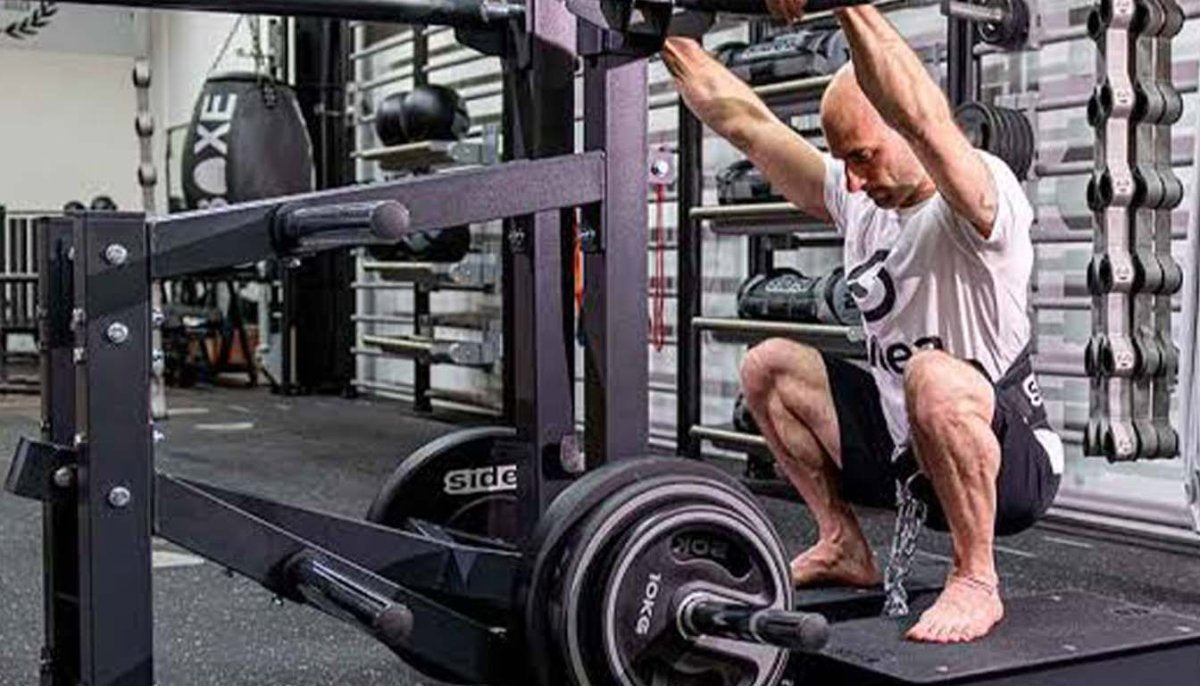
It's vital to distinguish between using a belt for a barbell squat and the "belt squat" exercise shown above. While the belt squat machine removes axial loading from the spine by hanging the weight from the hips, using a belt during a barbell squat manages that load by reinforcing your natural bracing mechanics. One provides a mechanical bypass for the spine; the other provides a mechanical advantage for your core.
How IAP Protects the Lumbar Spine
The primary safety benefit of high IAP is the reduction of spinal compression during the descent and drive. When you squat, the weight of the barbell creates shear forces that can pull your vertebrae out of alignment. The "fluid ball" created by the belt acts as a counter-force, distributing the load more evenly across the torso. This stabilizing effect prevents the lower back from rounding under heavy loads, ensuring you maintain a neutral spine through the entire range of motion.
Performance Benefits: Why You Lift More with a Belt
While the safety aspects of intra-abdominal pressure are foundational, most lifters are primarily interested in the measurable performance gains. Research indicates that a lifting belt can help an individual squat 5 to 15 percent more weight. This increase isn't just about the belt holding you together; it's about the efficiency of force transfer. By creating a more rigid torso, you ensure that the power generated by your legs moves the bar directly upward instead of being lost through a flexing spine.
One of the most significant benefits of squatting with a belt is the increase in bar speed. Studies show that belts improve the velocity of heavy reps, particularly during the concentric phase. When you move the weight faster through the "sticking point," you reduce the time your muscles are under peak tension, which often allows for an extra rep or two that you wouldn't have managed raw. This leads to higher muscle recruitment in the quadriceps and hamstrings, as the increased stability allows these prime movers to contract with maximum intensity.
There is also a psychological component to consider. The belt provides immediate tactile feedback. When you feel the rigid material against your abdominals, it serves as a physical cue to stay tight and maintain your brace. This confidence allows you to focus entirely on the execution of the lift. Over time, being able to train at higher intensities for more total volume is what eventually breaks long-standing plateaus. If you're looking to upgrade your setup, exploring professionally engineered weight lifting belts can provide the edge needed for your next personal best.
The Carryover to Strongman and Powerlifting
Team Industry lifting belts are designed for the rigors of competitive strength sports where every millimeter of support matters. The choice between a 10mm and a 13mm thickness is a tactical one. A 10mm belt often provides enough support for most lifters while remaining flexible enough for various squat stances. In contrast, a 13mm belt offers the maximum stiffness permitted under current IPF regulations, which is ideal for those moving extreme loads who require the highest level of stability possible.
How to Use a Squat Belt for Maximum Effectiveness
Proper positioning is the first step to unlocking the benefits of squatting with a belt. Most lifters find the best results by placing the belt just above the hip bones, covering the navel. However, your stance and bar position matter. If you squat with a low bar position, you might prefer the belt slightly higher to avoid it digging into your thighs at the bottom of the rep. Experiment during your warm-up sets to find the spot that allows for a full range of motion without pinching or restricting your movement.
Once positioned, apply the "One Finger" rule. You should be able to slide one finger between your relaxed stomach and the belt. This gap is essential. It provides the space necessary for your torso to expand during the bracing sequence. Follow this specific cueing order: take a deep diaphragmatic breath to fill your belly, expand your core 360 degrees, and push your abdominals hard against the leather. Only once you feel that rigid, circumferential tension should you begin your descent. This sequence ensures you aren't just wearing the belt, but actually using it to drive internal pressure.
Use the belt strategically rather than as a permanent fixture. We recommend integrating it when your loads reach 70 to 80 percent of your one-rep max (1RM) or when you reach a high relative intensity. Training raw for lighter sets ensures you develop foundational core stability while the belt provides the extra security needed for high-load efforts. To find a dependable partner for your heavy sessions, browse our range of Team Industry weight lifting belts.
Common Bracing Mistakes to Avoid
Beginners often pull their stomach away from the belt, a mistake known as "sucking in". This is the opposite of what you want. You must push out to create the internal support ball mentioned earlier. Similarly, avoid over-tightening. Cranking the belt to the last possible hole might feel secure, but it prevents you from taking a full breath. If you can't expand your lungs and midsection, your intra-abdominal pressure will actually drop, leaving your spine less protected than it would be with a slightly looser fit.
Choosing the Right Belt: Lever vs. Prong
Selecting your hardware is a pragmatic decision based on your specific training workflow. To fully realize the benefits of squatting with a belt, you must choose a mechanism that supports your lifting environment. Lever Belts are the preferred choice for many powerlifters because they offer consistent security. Once you set the lever, you lock in the exact same tightness every time. This mechanism also provides a quick-release feature for immediate relief between heavy sets, allowing for better recovery during rest periods.
Prong belts offer a different type of utility. They are highly adjustable, making them ideal if your bodyweight fluctuates or if you wear different layers of clothing, such as an Industry Oversized Tee in the winter and a thin stringer in the summer. Regardless of the fastening system, professional-grade leather is superior to nylon for heavy squatting. Leather provides a non-compressible surface that maintains its integrity under extreme loads. For those ready to invest in durable equipment, exploring the full range of Team Industry Strength Gear ensures you have a tool that matches the grit of your training.
When to Choose a 13mm Lever Belt
The thickness of your belt dictates its level of rigidity. A 13mm Lever Belt is designed for maximum stiffness. It is the thickest option allowed under current IPF regulations and is built for those moving the heaviest possible loads where zero belt flex is required. This level of support is perfect for dedicated powerlifting sessions where spinal stability is the absolute priority.
If your training involves more movement or higher repetitions, a 10mm Lever Belt might be the better fit. It offers a balance of significant support and enough versatility for strongman events or high-intensity squat sessions. This thickness breaks in faster and conforms to the body more easily while still providing the necessary resistance for effective intra-abdominal pressure. Choosing the right gear is about matching the equipment to the operational demands of your sport and ensuring your safety at every weight.
Optimize Your Squat Performance
Mastering the mechanics of intra-abdominal pressure transforms a lifting belt from a simple accessory into a vital piece of strength infrastructure. By providing a rigid surface for your core to engage with, you create the internal stability necessary to move heavier loads with greater velocity. We've explored how the benefits of squatting with a belt lead to measurable gains in bar speed and total volume, provided you follow a disciplined bracing sequence and select the correct hardware for your specific discipline.
Choosing between a 10mm or 13mm thickness depends on your training demands, but the focus remains on operational safety and reliability. Our heavy-duty lever and prong designs are trusted by UK strength athletes to withstand the grit of elite-level training. Don't let your progress stall due to a lack of proper support. Upgrade your squat with a professional Team Industry Lifting Belt and experience the stability required for your next personal best. We're committed to your operational excellence in the gym. Keep pushing your limits.
Frequently Asked Questions
Is it cheating to squat with a belt?
No, using a belt is not cheating; it is a standard tool used by strength athletes to maximize their performance. One of the key benefits of squatting with a belt is that it provides a rigid surface for your core to brace against, which improves force transfer. It doesn't lift the weight for you. Instead, it allows you to safely access a higher percentage of your power during maximal efforts.
Does wearing a lifting belt weaken your core?
Wearing a belt does not weaken your core; in fact, it often increases muscle activation. Because you are pushing your midsection hard against the rigid material of a Team Industry Lifting Belt, your abdominals must work intensely to create pressure. To maintain a well-rounded foundation, we suggest training without a belt for your lighter warm-up sets and specific core accessory work.
How tight should a lifting belt be for squats?
Your belt should be tight enough to provide a solid wall for bracing but loose enough to allow for a full, deep breath. A major factor in the benefits of squatting with a belt is the spike in intra-abdominal pressure, which requires your midsection to expand. If the belt is too tight, you cannot draw in enough air to create that internal support. Use the "one finger" rule to ensure you have space to fill.
Can a belt prevent back injuries during squats?
A belt helps reduce the risk of injury by increasing spinal stability and preventing the lower back from rounding under heavy loads. It reinforces your bracing mechanics by helping create internal pressure that supports the lumbar spine from the inside out. While it offers significant protective benefits, it is not a magic fix for poor technique. You must still prioritize proper form and progressive loading to stay safe.
Should beginners wear a lifting belt?
Beginners should consider using a belt once they have mastered the basic squat pattern and are moving weights that challenge their stability. We recommend learning how to brace raw first to develop a natural feel for core tension. Once you reach approximately 70 to 80 percent of your maximal capacity, a Team Industry Lifting Belt becomes a valuable tool for safely managing higher intensities.
Share:
Best Lifting Accessories for Women: A Strength-First Guide for 2026
What is Hyrox? The Ultimate Guide to Fitness Racing