

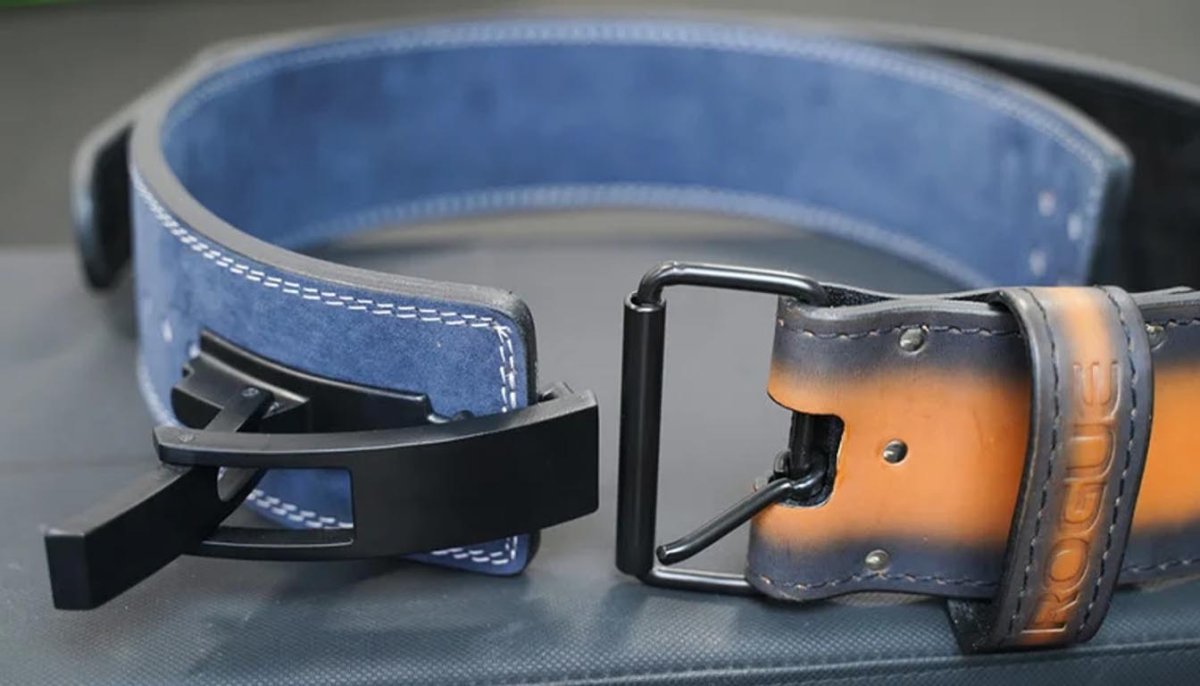
Your choice of support can be the difference between a smooth personal best and a dangerous equipment failure mid-set. You've likely felt the frustration of a belt that pinches your skin or a lever that pops open under the pressure of a heavy deadlift. It's even worse when you're struggling to get a prong belt tight enough without a partner's help during a high-intensity session. When comparing a lever belt vs prong belt, the debate isn't just about style; it's about whether you value absolute consistency or adaptable versatility.
We understand that serious lifting requires gear that functions as hard as you do. While a lever belt can be fastened in just 2 to 3 seconds for immediate tension, a traditional prong belt offers the flexibility to adjust your fit between different exercises or body weight fluctuations. This guide will help you discover the critical differences between these designs so you can invest in the right support for your squats, deadlifts, and strongman events. We'll break down the technical specs of 10mm and 13mm options to ensure you achieve maximum intra-abdominal pressure with gear designed to last a decade. Whether you're a competitive powerlifter or a dedicated garage gym athlete, choosing the right tool is the first step toward operational excellence in your training.
Key Takeaways
- Understand the mechanical anatomy of both designs, from pre-set tension levers to the traditional single and double-prong buckle systems.
- Evaluate the lever belt vs prong belt debate by weighing the benefits of rapid-release speed against the need for on-the-fly adjustability.
- Learn manual break-in techniques to soften heavy-duty leather and manage the initial stiffness of professional-grade 13mm support.
- Select the right equipment for your discipline, such as a Team Industry Lever Belt for powerlifting or a prong belt for strongman versatility.
- Discover how to account for bodyweight fluctuations and training layers to maintain maximum intra-abdominal pressure during heavy sets.
The Fundamentals: How Lever and Prong Belts Differ
Understanding the lever belt vs prong belt distinction starts with the mechanics of bracing. A Weightlifting belt serves a specific operational purpose. It provides a rigid surface for your abdominal muscles to push against, facilitating the Valsalva manoeuvre. This process creates significant intra-abdominal pressure, which stabilizes your spine during heavy compound movements. Most professional-grade belts utilize 10mm or 13mm leather. A 10mm belt offers a calculated balance of support and flexibility, while a 13mm option provides maximum rigidity for elite-level loads. The goal remains the same: creating a stable environment for your central nervous system to move weight safely.
To better understand the mechanical differences between these two styles, watch this helpful video comparison:
Mechanical Advantage: The Lever Pivot
The core difference in the lever belt vs prong belt debate lies in the closure mechanism. A lever belt utilizes a heavy-duty metal latch that functions as a pivot point. Once you've set your desired tightness with a screwdriver, the lever allows you to cinch the belt to a precise level of tension every time. This provides a level of compression that's often impossible to reach with a manual pull. It's the primary reason why many competitive powerlifters view the lever as the gold standard for max-effort attempts. The quick-release nature also means you can instantly drop the tension the moment your set ends, allowing for better recovery between heavy efforts.
The Simplicity of the Traditional Prong
Prong belts rely on a traditional buckle system, available in single or double-prong configurations. While they lack the rapid "flick" of a lever, they offer unmatched mechanical simplicity. There are no screws to lose and no specialized hardware that might fail under extreme stress. If you're looking for a dependable Team Industry Lifting Belt that you can throw in your bag and forget about, the prong is a reliable partner. It's a straightforward tool for lifters who prioritize durability and ease of maintenance over high-speed transitions. The design has remained a staple for decades because it works without the need for technical adjustments.
Performance Analysis: Security, Adjustability, and Speed
Speed between sets is where the operational efficiency of your gear becomes apparent. A lever belt allows you to engage or release your support in approximately 2 to 3 seconds with a single flick. In contrast, a prong belt often requires a manual struggle, especially when you're fatigued or using a thick 13mm leather strap. This time saved isn't just about convenience; it's about managing your heart rate and recovery during high-intensity sessions. When choosing the right lifting belt, consider how much effort you want to expend simply getting your equipment ready for the next lift.
The "Bloat Factor" is a reality for every serious lifter. Your waist circumference changes based on your hydration, recent meals, or even the time of day. While lever belts provide identical tension for every set, they lack on-the-fly adjustability. If you're a strongman athlete transitioning from a static max deadlift to a moving yoke walk, you might need a different level of tightness to maintain mobility. The prong belt excels here, allowing for instant hole changes without tools. For those who prioritize this versatility, a Team Industry Lifting Belt with a prong closure offers the necessary adaptability for multi-event training.
The Adjustability Trade-off
Adjusting a lever belt requires a screwdriver and a few minutes of downtime. This becomes a factor when you change your training attire. Swapping a stringer for one of our Industry Oversized Tees can add enough bulk to make your pre-set lever position feel restrictive. If your body weight fluctuates by more than a few kilograms throughout a training cycle, the lever belt vs prong belt decision often leans toward the prong for its hassle-free nature. It allows you to find the perfect notch for your current condition in seconds.
Security Under Load
Security is paramount when moving heavy loads. High-quality hardware prevents the dreaded "lever pop," where a buckle releases under extreme intra-abdominal pressure. We focus on heavy-duty buckle mechanisms to ensure stability during max-effort attempts. While some lifters gravitate toward double-prong belts for perceived security, they're often unnecessary and more difficult to align than a single-prong design. A well-constructed single-prong buckle provides all the safety required while remaining much easier to tighten and release under pressure.
Durability and Maintenance: Breaking in Your Leather Belt
High-quality leather requires a dedicated break-in period. This is especially true for professional-grade 13mm options. You should expect some initial bruising around the ribs or hips as the material conforms to your torso. This isn't a defect; it's the reality of using a heavy-duty support tool. Whether you are weighing up a lever belt vs prong belt, the thickness of the leather determines the initial rigidity. A new belt should feel like a piece of armor, but with the right care, it will eventually feel like a natural extension of your body.
You can speed up this process by manually manipulating the leather. Roll the belt tightly in one direction, then the other. Repeat this several times a week. This breaks the internal fibers without compromising the structural integrity of the support. Avoid using oils or conditioners unless specifically recommended, as these can sometimes over-soften the leather and reduce its bracing capacity. Our goal is a belt that is supple enough to wrap around you but rigid enough to stop any spinal flexion under load.
From Stiff to Seamless
Conditioning your new Team Industry Lifting Belt ensures it reaches peak performance quickly. Follow these steps for an efficient break-in:
- Roll the belt into a tight circle and secure it with a strap for several hours.
- Manually flex the leather at the points where it wraps around your sides.
- Use the belt during your warm-up sets to allow body heat to help mold the material.
You'll know it's fully broken in when the leather feels supple enough to cinch without a struggle but remains rigid enough to provide a solid wall for bracing. If you're ready for maximum stability, invest in a heavy-duty lever belt today.
Hardware maintenance is non-negotiable for long-term safety. For lever designs, check the screws every few weeks to ensure they haven't vibrated loose during heavy sessions. For prong styles, inspect the hinge and the buckle for any signs of metal fatigue. Storage also plays a role in durability. Never leave a sweat-soaked belt in a damp gym bag. This environment encourages mold and can lead to premature cracking. Wipe the leather down after use and let it air dry in a well-ventilated area to ensure your gear maintains its operational excellence for years to come.
The Verdict: Choosing the Right Belt for Your Discipline
The lever belt vs prong belt decision ultimately depends on your specific operational needs in the gym. For those specializing in powerlifting, the lever belt is the undisputed king. It provides a repeatable, high-compression bracing surface that doesn't change from set to set, which is vital for building technical consistency. However, if your training includes strongman events, the prong belt offers the versatility required for moving events. You can loosen the fit for a yoke walk or sandbag medley and then tighten it for a max-effort deadlift without needing a screwdriver between sets.
General strength athletes should balance the convenience of the lever with the practicality of the prong. If you're a lifter who fluctuates in weight or trains in various layers of clothing, the prong belt is a pragmatic, cost-effective choice. Before you commit to a purchase, run through this final checklist:
- Do I need to adjust my belt tightness between different exercises in a single session?
- Is speed and ease of release between heavy sets my top priority?
- Does my waist measurement stay consistent throughout my training block?
- Am I competing in a federation with specific thickness regulations?
Why Team Industry UK is the Choice for Serious Lifters
We've built our reputation on providing gear that stands up to the reality of heavy labor. For competitive powerlifters, our 13mm Lever Belt provides the maximum support allowed under standard competition rules. It's designed for those who demand absolute stability when the weights get heavy. As a community-driven brand, Team Industry UK is committed to supporting the regional lifting community with equipment that lasts. If you're still undecided on the lever belt vs prong belt debate, we encourage you to visit our Wormley shop. You can handle both styles in person and find the exact fit that supports your specific strength goals.
Secure Your Support for the Next Heavy Session
Selecting the right equipment is a calculated investment in your safety and performance. Whether you prioritize the rapid-release consistency of a lever or the on-the-fly adjustability of a traditional prong, your gear must meet the standards of your specific discipline. The lever belt vs prong belt decision comes down to your training environment and whether you need to accommodate bodyweight fluctuations or complex loading medleys. Remember that professional-grade 13mm leather requires a dedicated break-in period to reach its peak operational state.
At Team Industry UK, we provide professional-grade 10mm and 13mm leather options designed by strength enthusiasts for the local lifting community. Our heavy-duty lever mechanisms are built to withstand the pressure of max-effort squats and deadlifts. We're proud to be trusted by the UK strongman and powerlifting community for our commitment to quality and durability. Don't settle for equipment that fails under load; choose the stability that professional athletes rely on.
Shop the full range of Team Industry Weight Lifting Belts and find the support you need to push your limits. We look forward to seeing your progress on the platform.
Frequently Asked Questions
Is a 13mm belt better than a 10mm belt for beginners?
A 10mm belt is typically the better choice for beginners because it offers a practical balance of rigidity and flexibility. It's much easier to break in and conforms to your torso faster than a 13mm alternative. While the 13mm thickness provides maximum support for elite loads, it can be unnecessarily restrictive and uncomfortable for those still learning the fundamentals of bracing and intra-abdominal pressure.
Can I use a lever belt for strongman moving events?
You can use a lever belt for moving events, but it isn't always the most efficient tool for the job. Moving events like the yoke walk or loading medleys often require a slightly looser fit to allow for better breathing and mobility compared to a static squat. Because a lever has a fixed setting, you'll lack the ability to make the quick, on-the-fly adjustments that a prong belt provides between different events.
How do I know what size lifting belt to buy?
Measure your waist circumference at the level of your navel while bracing slightly; don't rely on your standard trouser size. Belt sizing is based on the actual measurement over your training attire, such as a stringer or a hoodie. If your measurement falls between two sizes, consider your current training phase. If you're planning a weight gain phase, choose the larger size to ensure you have enough room for adjustment.
Are lever belts legal in powerlifting competitions?
Lever belts are legal in most major federations, including British Powerlifting and the IPF, as long as they meet specific technical requirements. The belt must not exceed 13mm in thickness or 10cm in width. When evaluating a lever belt vs prong belt for competitive use, always check your federation's approved brand list. Most modern lever designs from reputable manufacturers are fully compliant with international powerlifting standards.
What happens if the lever on my belt breaks during a lift?
If a lever mechanism fails under load, the belt will immediately lose tension and spring open. This is why we utilize professional-grade hardware in every Team Industry Lifting Belt to ensure reliability during max-effort attempts. You can prevent most hardware issues by performing a quick maintenance check every few weeks. Ensure the screws are tightened securely and inspect the metal for any signs of stress or fatigue before your session.


Share:
How to Wash Gym Clothes to Remove Smell: The Ultimate Lifter’s Guide
Wrist Wraps for Bench Press: How to Maximise Stability and Pressing Power