

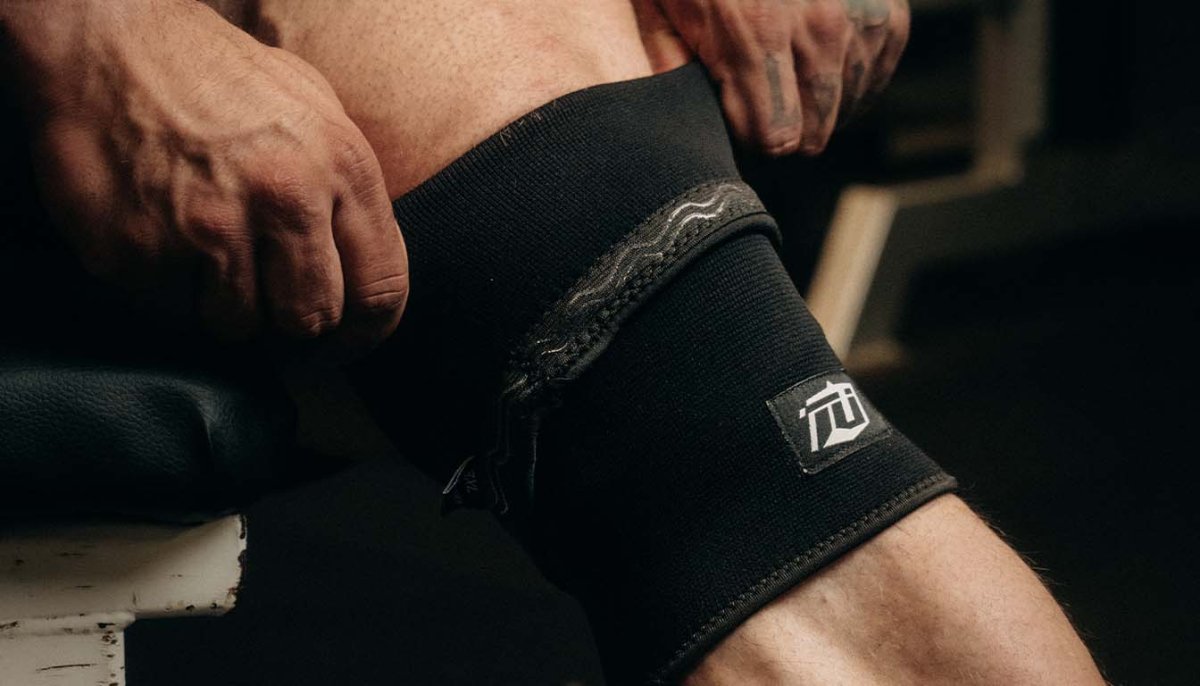
Why are you still relying on standard gym sleeves when your squat numbers have moved into professional territory? If you've felt that unsettling lack of stability in the "hole" of a heavy lift, you know that standard neoprene often fails under high tension. You need equipment that matches the grit of your training sessions. High-quality heavy duty knee sleeves are designed to handle the extreme pressure of maximal loads without tearing or losing their elasticity. They aren't just about comfort; they're about providing the compression and mechanical rebound necessary to move more weight safely.
We understand the frustration of gear that wears out too quickly or shifts during a set. This guide will show you how professional-grade support protects your joints while offering the stability required for consistent strength gains. We'll examine the technical construction of 7mm sleeves, discuss current federation standards for 2026, and provide practical advice on choosing the perfect fit for your specific lifting style. From improving proprioceptive feedback to maximizing your output, you'll learn everything needed to upgrade your kit with confidence.
Key Takeaways
- Learn how high-grade 7mm neoprene provides the mechanical rebound and joint compression required for safe, maximal strength gains.
- Master the measurement process for your knee and calf to accurately select between a comfortable training fit and a high-tension competition fit.
- Identify the performance differences between standard fitness sleeves and professional [heavy duty knee sleeves](https://teamindustry.co.uk/) designed for heavy loads.
- Explore how to integrate your knee support with other essential gear like a [Team Industry Lifting Belt](https://teamindustry.co.uk/collections/weight-lifting-belts) to maximize stability.
The Biomechanics of Heavy Duty Knee Sleeves: Beyond Joint Warmth
Heavy duty knee sleeves are professional-grade supports, typically 7mm thick, engineered for athletes managing maximal loads. While standard sleeves provide basic warmth, these tools offer specific mechanical benefits essential for powerlifting and strongman training. High-level compression increases local blood flow and manages post-workout inflammation, allowing for more consistent training volumes.
Beyond physical support, these sleeves enhance proprioceptive feedback. This is the sensory information that allows your brain to "feel" the precise position of your knee joint during a deep squat. Understanding the biomechanics of knee protection helps lifters realize that this feedback leads to better technical execution and increased confidence under a heavy barbell.
The material resistance also creates a "rebound" effect at the bottom of a lift. As the neoprene compresses, it stores kinetic energy that assists you during the initial drive out of the hole. For those serious about their joint support, this mechanical advantage is a primary reason to switch from general fitness gear to heavy-duty options.
Neoprene Density and Elasticity
High-density neoprene is superior to standard retail-grade materials because it doesn't lose its structural integrity under extreme pressure. Standard sleeves often flatten out when the weight gets heavy. Professional equipment relies on reinforced stitching to prevent blowouts during maximal effort sets, ensuring the sleeve provides the same level of tension through every rep of a high-volume block.
The Role of Joint Occlusion
Mild compression supports the patellar tendon by providing external stability under high tension. In the context of strength training, joint occlusion is the application of external pressure to a joint to stabilize connective tissue and enhance muscle recruitment patterns. This focused pressure helps keep the joint tracking correctly while you're pushing your limits.
Compression vs. Support: Choosing the Right Level for Your Lift
Selecting the right sleeve thickness depends on your primary training goals. Standard 5mm sleeves are suitable for general bodybuilding or fitness where mobility is the priority. However, heavy duty knee sleeves, typically 7mm thick, are the industry standard for powerlifting and strongman. These provide the stiffness required to stabilize the joint under extreme loads. While some worry that 7mm neoprene is too restrictive, many athletes find that once broken in, they offer the perfect balance of support and flexibility for heavy sets.
Scientific research on knee sleeves and squat performance suggests that while sleeves don't significantly change peak power, they do improve the lifter's perception of stability. This psychological confidence, paired with the physical "cast" effect of the material, allows for more aggressive training sessions. For those ready to upgrade, heavy duty knee sleeves provide the necessary edge. You can find high-spec options by browsing professional strength equipment to ensure your kit matches your output.
Heavy Duty Sleeves for Powerlifting
In powerlifting, the goal is often maximal stiffness. A 7mm sleeve acts almost like a cast, keeping the knee tracking correctly during a 1-rep max attempt. Most federations, including the IPF, set a 7mm thickness limit for a reason; it's the point where mechanical advantage is most pronounced without crossing into the territory of knee wraps. This level of support is essential when attempting to move weight that pushes your physical limits.
Dynamic Support for Strongman and Bodybuilding
Strongman athletes require gear that supports the joint during moving events like the Yoke or Farmers Walk. Heavy duty sleeves provide compression that manages joint fatigue during high-volume leg days. This stability is vital when the body is under tension for extended durations, helping you maintain form when fatigue sets in. Whether you're hitting a heavy triple or a set of twenty, the right support keeps your joints resilient.
Sizing and Tension: How to Find Your Optimal Fit
Finding the right size for heavy duty knee sleeves requires more than a quick glance at a general chart. Because these sleeves use high-density neoprene, they don't stretch as easily as standard retail versions. You must measure the circumference of your knee joint while locked out, the widest part of your calf, and the lower portion of your quadriceps to ensure a secure fit that doesn't slip during a set.
The Measurement Framework
To get an accurate reading, use a flexible tailor's tape. Measure directly over the kneecap while your leg is straight. Next, measure the thickest part of your calf. For heavy duty sleeves, the calf measurement is often more critical than the knee for ensuring the sleeve can be pulled into position. If your calves are significantly larger than your knees, you may need to size up to avoid the sleeve getting stuck mid-shin.
Signs of a Poor Fit
A sleeve that is too loose will bunch behind the knee, losing the compression benefits and mechanical rebound required for heavy lifting. Conversely, a "Competition Fit" involves sizing down for maximal tension. While this provides a significant advantage, it can cause numbness or restricted blood flow if worn for more than a single set. For daily training, a "Standard Fit" that balances compression with comfort is usually more productive. You can find the right size for your goals by browsing our Joint Support collection.
To put on tight sleeves, use the fold-over method. Fold the top and bottom halves outward, pull the sleeve to the correct height, and then flip the ends back over your leg. Maintenance is equally important for durability. Always hand wash your heavy duty knee sleeves in cold water and air dry them. Never use a tumble dryer; high heat destroys the neoprene's elasticity and compromises the reinforced stitching. For professional results, explore our range and order your heavy duty knee sleeves today.
Maximising Performance with Team Industry Professional Gear
Team Industry is built on the reality of the platform. Our heavy duty knee sleeves represent the logical progression for athletes who have outgrown standard retail gear. We don't rely on hyperbolic marketing; instead, we focus on high-spec materials that withstand high-volume training blocks. By choosing professional equipment, you're investing in your long-term lifting longevity and ensuring your joints remain stable under maximal loads.
Performance isn't about a single piece of equipment. It's about a coordinated system. Pairing your sleeves with Weight Lifting Belts creates a solid foundation for your compound lifts. While the sleeves manage joint positioning and rebound, the belt secures your midline. This combination allows for more efficient force transfer throughout the entire movement.
Built for the Grit of Strength Sports
We understand the grit required in the labor-intensive world of strength sports. Our range features a grounded aesthetic and a no-nonsense design that prioritises function. Every product is tested by athletes in real-world heavy sessions across the UK. This testing ensures the gear doesn't fail when the weight gets heavy. Our active involvement in UK strength federations and event sponsorship signals our commitment to maintaining high operational standards within the community.
Completing Your Support System
To protect the entire kinetic chain, consider pairing your lower-body support with Industry Wrist Wraps. This ensures stability from your grip through to your stance, especially during heavy overhead work or strongman events. Professional gear is a commitment to operational excellence in the gym. It's time to ensure your equipment is as reliable as your work ethic. Upgrade your support gear at Team Industry UK and experience the difference that lifter-led design makes to your performance.
Invest in Your Lifting Longevity
Choosing the right support gear is a calculated decision that directly impacts your performance on the platform. High-grade 7mm neoprene provides the joint occlusion and mechanical rebound necessary to stabilize your squat while managing inflammation during high-volume training blocks. By understanding the difference between a standard training fit and a high-tension competition fit, you can tailor your equipment to meet the specific demands of your programme. Heavy duty knee sleeves aren't just an accessory; they're a vital component of a reliable support system designed for the rigours of powerlifting and strongman.
Team Industry remains committed to the UK strength community by delivering professional-grade equipment that stands up to the grit of real-world sessions. Our gear is built by lifters who understand that reliability is non-negotiable when the weight gets heavy. It's time to equip yourself with the same standards you apply to your training. Shop Team Industry Heavy Duty Knee Sleeves and Strength Gear to upgrade your kit today. Stay focused, stay stable, and keep pushing toward your next personal best.
Frequently Asked Questions
Do heavy duty knee sleeves actually help you squat more weight?
Yes, professional sleeves provide a physical rebound effect at the bottom of a squat, which assists in driving the weight back up. The 7mm neoprene compresses during the descent, storing kinetic energy that releases as you ascend. While they don't replace strength, the increased joint stability and proprioceptive feedback often allow lifters to handle heavier loads with greater confidence and technical precision during maximal effort sets on the platform.
How often should I wear knee sleeves during my training sessions?
You should wear your sleeves during heavy working sets and the final stages of your warm-up. It's best to perform lighter sets without them to maintain natural joint temperature and movement patterns. Reserve your heavy duty knee sleeves for when the load reaches approximately 70% of your maximum. This approach ensures you benefit from the compression when it's most needed while avoiding over-reliance on supportive gear during lighter volume work.
What is the difference between knee sleeves and knee wraps?
Knee sleeves are slip-on neoprene supports designed for constant compression and warmth throughout a session. In contrast, Weight Lifting Knee Wraps are long elastic bands that you wrap tightly around the joint before a single set and remove immediately after. Wraps provide significantly more mechanical assistance but are less practical for high-volume training. You can explore various support options in our Joint Support collection to find the right gear.
Can I use heavy duty knee sleeves if I have a previous knee injury?
You can use sleeves to provide warmth and mild compression, which often helps manage discomfort during training. However, it's vital to consult a medical professional before using any supportive gear for injury management. While heavy duty knee sleeves offer excellent stability and joint occlusion, they are performance tools rather than medical devices. They assist in keeping the joint tracking correctly, but they won't fix underlying structural issues or replace proper rehabilitation.
How do I stop my knee sleeves from smelling after heavy workouts?
Prevent odors by removing your sleeves from your gym bag immediately after training. Turn them inside out to air dry in a well-ventilated area. For deeper cleaning, hand wash them in cold water using a mild detergent or a specialized neoprene cleaner. Avoid using a washing machine or tumble dryer, as high heat and agitation damage the material. Regular maintenance preserves the elasticity of the neoprene and extends the lifespan of your gear.

Share:
Knee Sleeves vs. Knee Wraps: Which Support is Best for Your Strength Training?
Tactical Gym Backpacks: Guide for Strength Athletes