

Neither fastening system is better for every lifter. Whether lever belts are better than prong belts depends on how you want to adjust the fit between lifts. A lever belt is quick to fasten once set, while a prong belt is easier to adjust without tools. The key difference is how well each adjustment method suits your training.
Fit and support matter when choosing a belt, but so does convenience between exercises. This guide explains how lever and prong fasteners work, how to change their settings, and what to expect when switching lifts. You’ll see how repeatable fit, ease of release and adjustment flexibility can help you choose a style that suits your routine. Weigh these practical trade-offs rather than judging the buckle by appearance alone.
Key Takeaways
- Choose a lever belt for a repeatable setting; changing its fit usually means repositioning the buckle with a screwdriver.
- Choose a prong belt when you want tool-free adjustment through its fastening holes.
- Consider how often you’ll change tightness between exercises, since prong belts are quicker to adjust between sets.
- Compare fastening, fit and release preferences to find the style that suits your training routine.
Are prong belts easier to adjust?
Usually, yes. A prong belt fastens through adjustment holes with one or two metal prongs, and you can change its setting without tools. For example, move to a neighbouring hole if you want a looser fit. A lever belt provides a more repeatable setting, but changing the fit means unscrewing and repositioning the lever with a screwdriver.
To adjust a lever belt, remove the screws, move the lever to another mounting position, then secure it again. Once set, flip the lever closed to fasten the belt and lift it to release. This takes preparation, but makes the same setting easy to reproduce between sessions. A prong belt is more flexible for small fit changes, though you’ll need to remember which hole gives you your preferred tension.
Lever belts can be quicker to put on and take off once adjusted. The lever releases quickly, while a prong belt needs to be unbuckled. If you want to change tightness between exercises, prongs are generally more convenient because you can switch holes without tools.
| Option | Adjustment method | Best fit for |
|---|---|---|
| Lever | Screwdriver to reposition buckle | Repeatable settings |
| Prong | Move prong between holes | Quick, tool-free changes |
Neither fastening type is automatically more durable or reliable. Some lifters have used the same style of prong belt for 20 years; reliability also depends on consistent use and care. Lever buckles are larger and heavier, and their fixed setting can be inconvenient when you need a different fit.
For powerlifting, lever belts are available in 10mm and 13mm thicknesses; prong belts are also available in 10mm. A 13mm belt may suit an advanced lifter who has used 10mm for several years and lifts 2-3 times their body weight. Belt width should suit your torso and lifting position. Competition rules vary by federation, so check its equipment requirements before choosing either style.
There’s no single UK price for either type: cost varies by belt and its construction. Compare the options in the weight lifting belts range without assuming one fastening style is always better.
Changing tightness between exercises
A belt setting that feels secure for squats may feel restrictive for another lift. With a prong belt, release the prong, move it to another hole, then fasten it again. This tool-free adjustment suits sessions where you prefer different tightness for different exercises. Fit still depends on your brace and position, so choose a setting that lets you establish both comfortably.
A lever belt closes at its preset position. To change that position, unscrew the lever, move it and secure it again. This is less convenient between exercises than moving a prong to another hole. A lever’s repeatable setting can be useful when you want the same fit for a consistent block of work, but it offers less flexibility for quick changes.
Consider your workout order before choosing. If you wear a belt for squats and then want a looser fit for another movement, a prong belt lets you alter the tension without tools. If you prefer one established setting throughout your main lifts, a lever belt can make fastening and releasing efficient once adjusted. A lifter may put on and take off a belt 10 or 15 times during a workout, so the fastening method can affect how practical each transition feels.
- Prong belt: release the fastener, select another hole and secure it again when the next exercise needs a different fit.
- Lever belt: release the lever between lifts, then use its preset position; repositioning the buckle takes more work.
If your session involves frequent changes, prioritise easy adjustment between sets. If you use one consistent belt setting, prioritise repeatability. Neither system replaces sound bracing: keep the belt secure for your chosen lift without letting the buckle dictate your movement. Set the belt for the exercise, and make any changes before starting the next working set.
Lever and prong fastening systems
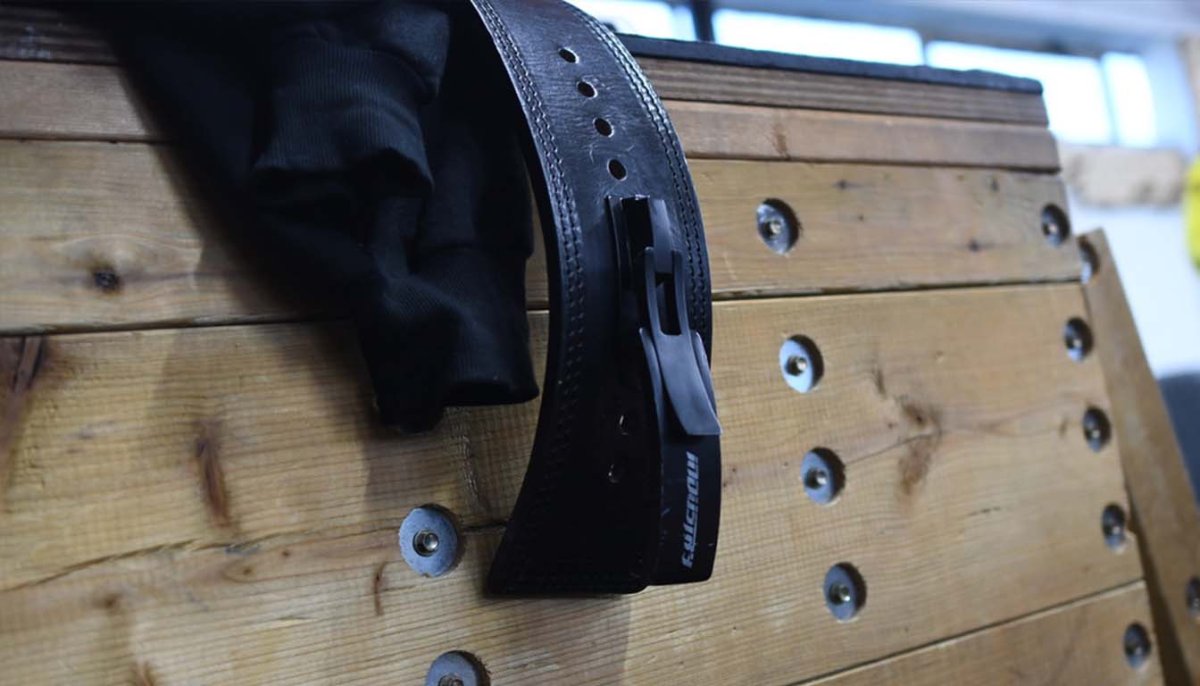
A lever belt has a hinged metal buckle attached to the belt. Set it to your preferred size, then pull the lever closed to fasten it. Lift the lever to release it. The quick opening can be useful between heavy sets, while the buckle’s larger, heavier profile may feel more noticeable than a prong fastener.
A prong belt closes by passing one or two metal prongs through holes in the belt. A single-prong model has one fastening point; a double-prong model has two. The choice usually comes down to personal preference rather than performance. With either type, line up the prongs with the holes before tightening so the belt sits evenly around your waist.
Both fastening systems are used in powerlifting gyms and can suit general strength training. Beginners and experienced lifters use both, so experience alone doesn’t determine which buckle is right for you. The useful distinction is how you want to fasten, release and adjust your belt during a session. A lever releases quickly once set; a prong fastener requires you to unbuckle it and select a hole.
Olympic lifting brings another consideration: lifters may use a tapered leather prong belt or a non-leather belt with quick fastening. The movement and preferred belt shape can influence which fastening system feels right. For powerlifting or general training, consider how each buckle feels during your setup, brace and lift. A heavier lever buckle may suit someone who prioritises repeatable closure, while a prong offers a familiar, direct fastening system.
- Choose a lever if quick release and consistent closure matter most.
- Choose a prong if you prefer a straightforward buckle and hole-based adjustment.
Neither system is automatically better for every lifter. Match the fastener to your lifting style, preferred fit and how often you change your setup.
How Lever and Prong Belts Differ in Fit and Support
Both fastening styles can provide a stable surface to brace against during a lift. The buckle type alone doesn’t determine support; fit and positioning matter too. A belt that sits comfortably around your torso lets you brace against it without forcing you to change your lifting position.
A lever belt can provide a consistent fit from one session to the next. Once you’ve set the lever position, closing it returns the belt to that setting. This repeatability can help if you want the same feel for each squat session. The trade-off is less flexibility when you want to change the tightness.
A prong belt lets you select a different hole, so you can adapt the fit more readily to your preference. For example, you might choose one setting for a comfortable brace and another for a firmer feel. The practical benefit is adjustable fit, not a different level of support from the prong itself.
Assess the fit with the movements you train. Position the belt where it feels secure, brace against it, and check that you can maintain your usual setup. If the buckle presses uncomfortably or the belt shifts during a squat, adjust its position or tightness before adding load. Repeat the check for deadlifts, since your preferred belt position may differ between lifts.
- Prioritise repeatability: a lever belt keeps its chosen setting consistent between sessions.
- Prioritise fit changes: a prong belt lets you select another hole as needed.
- Assess support: check comfort and belt position during your own brace and lifting setup.
Neither style guarantees a better fit for every torso or lift. Choose by how securely and comfortably the belt supports your brace in practice. Explore the weight lifting belt options to compare belt styles for your training.
Team Industry: Team Industry Lifting Belt
The Team Industry Lifting Belt gives you a practical next step if you’re ready to choose a belt for strength training. Use the comparison above to decide which fastening style suits your routine, then explore the Team Industry Lifting Belt alongside your fit and training needs.
If you value quick release and a repeatable setting, consider whether a lever belt suits your training. If you regularly change tightness between exercises, factor that into your choice. The right belt is the one that fits your preferred setup and supports your bracing during lifts.
Contact Team Industry if you’d like to discuss your belt choice.
Make your next belt choice with confidence
Let your training routine guide your equipment choice. Consider the sessions you want the belt to support, the fit you prefer and whether your needs change across different lifts. There’s no universal answer to whether lever belts are better than prong belts; choose the one that works with your lifting habits.
Before deciding, picture using the belt through a complete session, from your first working set to your final exercise. This simple mental run-through can clarify which fastening style is practical for you, rather than merely appealing on paper. Choose deliberately, then focus on building a setup you can use consistently.
If you’d like to discuss your equipment choice, contact Team Industry with your questions. Take the next step when you’re ready, and keep your training moving forward.
Frequently Asked Questions
What Is A Lever Belt?
A lever belt is a lifting belt secured with a hinged lever buckle. Close the lever to fasten it and lift it to release the belt. The buckle’s position sets the fit, making this style suitable for lifters who prefer a consistent setting. For example, if you use the same belt tension for your squat sessions, the lever makes that setting easy to reproduce.
What Is A Prong Belt?
A prong belt fastens by passing one or two metal prongs through holes along the belt. This design gives you several fixed positions rather than a lever-mounted setting. If your usual hole feels too tight on a particular day, you can choose another position. Single-prong and double-prong versions are both available; which feels preferable is a matter of personal choice.
Lever vs Prong Lifting Belts: Which Is Better?
Whether lever belts are better than prong belts depends on what you value during training. A lever suits lifters who want a familiar setting and quick release. A prong suits those who want to adjust the fit without tools. Consider your usual session: if you keep one belt tension across your main lifts, a lever may suit your routine; if you change it often, a prong may be more practical.
Which Belt Can You Get Tighter?
Neither belt type is automatically tighter. The result depends on the fit you choose and how the belt sits on your torso. A prong belt’s holes provide set adjustment positions, while a lever belt’s fit depends on where its buckle is mounted. If a setting feels too loose or restrictive, reassess the belt’s position and closure rather than assuming one fastening style offers more support.
Are lever belts or prong belts better for powerlifting?
Both styles are used in powerlifting, so the better option depends on your preferred setup and competition plans. If you’re training for a federation event, its equipment rules determine whether your chosen belt is permitted. Review those requirements before buying, then choose a fastening style that suits your training sessions. A belt that works well for general strength training isn’t automatically approved for every competition.
Which is easier to tighten and adjust, a lever belt or a prong belt?
A prong belt is easier to adjust without tools because you can move the fastener between holes. A lever belt can be quicker to close and release once you’ve set its buckle position. The distinction is simple: changing a lever’s setting means repositioning the buckle, while changing a prong belt’s tightness means selecting another hole. Your routine determines which adjustment matters more.

Share:
Knee Sleeves for Lifting: Compare Support, Fit and Grip
Knee Sleeves for Lifting: Compare Support, Fit and Grip