

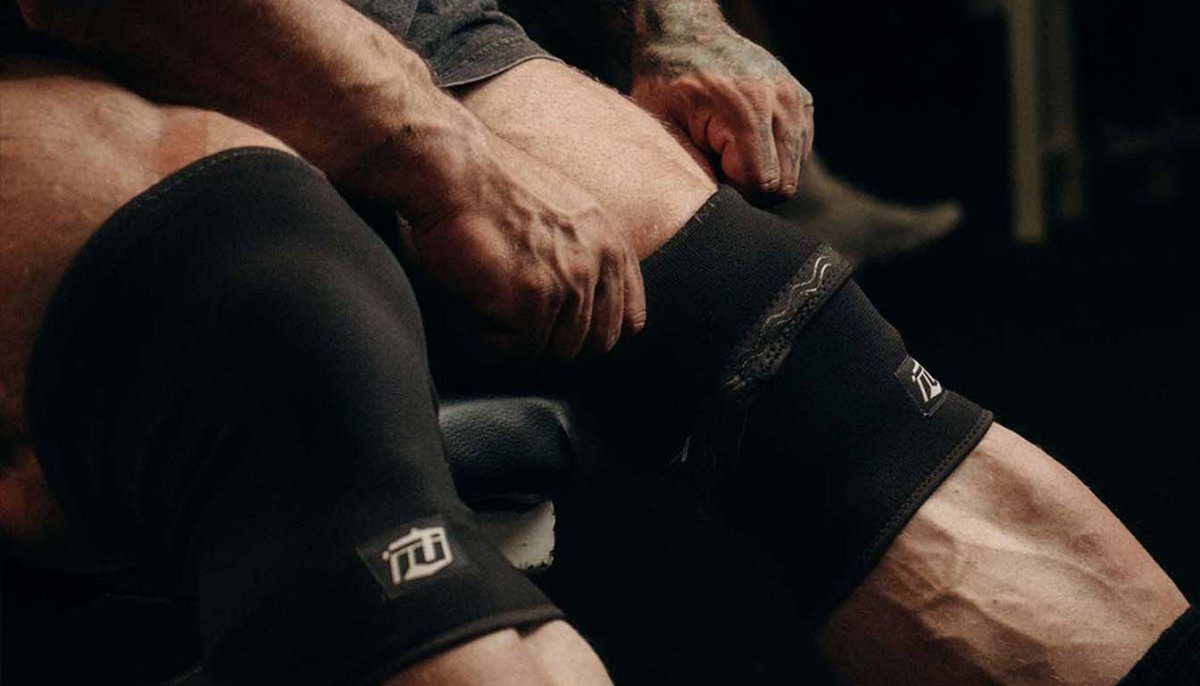
If you're waiting for your knees to click before you take joint support seriously, you've already missed the window for peak performance. Most lifters accept nagging joint pain as an inevitable tax for heavy squats. You've likely felt that sharp ache at the bottom of a rep or struggled with gear that slides down mid-set. Relying on inferior equipment often leads to confusion over sizing and the eventual failure of your joints. This is why transitioning to heavy duty knee sleeves is a tactical necessity for anyone lifting near their limit.
Investing in professional-grade support changes the math of your training. These tools provide the mechanical assistance and thermal compression required to move serious weight while protecting your long-term health. In this guide, we'll show you how to navigate the confusion of competition sizing, choose between different thickness levels, and ensure your gear provides maximum stability in the hole. You'll learn exactly how to select the right equipment to hit new personal bests with total reliability.
Key Takeaways
- Identify whether 7mm neoprene or double-ply material suits your training goals, whether you're competing in powerlifting or training for strongman events.
- Leverage the mechanical rebound effect provided by heavy duty knee sleeves to increase your stability and power when driving out of the hole.
- Apply precise measurement techniques for your knee joint and calf to achieve a professional fit that balances compression with reliable positioning.
- Integrate your joint support with other essential equipment like lifting belts to maximize total-body stability during high-load scenarios.
Why Heavy Duty Knee Sleeves are Essential for Serious Strength Athletes
Heavy duty knee sleeves are high-compression tools engineered specifically for maximal loads. While standard fitness sleeves offer light support for general movement, professional gear uses dense material to stabilize the knee joint under extreme pressure. This structural reinforcement is critical when you're moving weights that test your physical limits.
One primary benefit is the "rebound" effect. Stiff materials resist deformation as you descend into the "hole" of a squat. As the sleeve compresses, it stores elastic energy that assists you during the initial drive upward. This provides a tangible mechanical advantage that helps you maintain speed and power through the most difficult part of the lift.
Temperature management also plays a vital role in joint health. The dense neoprene or ply material traps heat, which improves the viscosity of synovial fluid. This natural lubricant protects the joint surfaces from friction. By keeping your knees warm between sets, you reduce the risk of injury and ensure your joints feel ready for the next heavy attempt.
The Science of Compression and Joint Stability
Effective compression does more than just squeeze the muscle. It significantly improves proprioception, or your body's awareness of joint position in space. This mental-physical connection helps you maintain better tracking and form under load. Modern compression garment technology also helps limit lateral movement of the patella. By keeping the kneecap aligned, you prevent the sheer forces that often lead to chronic pain.
Performance vs. Protection: Why You Need Both
Professional-grade sleeves bridge the gap between safety and hitting new PBs by providing structural reinforcement that gives you the confidence to push your limits. In disciplines like strongman and powerlifting, using heavy duty knee sleeves is the baseline standard for operational excellence. It's about ensuring your equipment is as reliable as your training.
Neoprene vs. Double Ply: Which Heavy Duty Sleeve is Right for You?
Choosing between neoprene and double ply depends on your specific training goals and competitive requirements. 7mm neoprene is the recognized industry standard for powerlifting. It provides a reliable balance of compression and warmth while maintaining the flexibility needed for various squat styles. For those focused on raw powerlifting competitions, checking for federation compliance is vital since most organizations limit sleeve thickness to 7mm.
Double ply sleeves use polyester and rubber blends to create a much stiffer support system. This material doesn't provide the same heat retention as neoprene but offers a significant "pop" out of the bottom. Academic research on knee mechanics during squats suggests that external supports can alter force distribution and joint stability. Double ply is often the preferred choice for strongman athletes who need maximal mechanical assistance during high-load events where stiffness is more valuable than heat.
Choosing Based on Your Primary Discipline
Powerlifters should prioritize 7mm neoprene for its versatility and regulatory compliance. It's the most pragmatic choice for those following a classic strength program. If you're a strongman athlete or a recreational lifter chasing a new 1RM without federation restrictions, the rugged nature of double ply offers superior durability under repeated heavy strain. These sleeves won't tear or degrade as quickly when subjected to the grit of an outdoor training session.
Stiffness Levels: Training vs. Competition
There's a clear trade-off between comfort and stiffness. Standard sleeves work well for high-rep volume, but "Extra Stiff" variants are designed specifically for maximal attempts. If you're consistently squatting near your limit, you'll likely benefit from the added rigidity of professional-grade heavy duty knee sleeves. They ensure your joints remain stable when the weight gets heavy. You can find specialized options in our Industry strength gear collection to match your current lifting intensity.
How to Measure and Size Your Knee Sleeves for a Professional Fit
Achieving a professional fit for heavy duty knee sleeves requires accurate data. Start by measuring the circumference of your knee joint with a straight leg. Next, measure the thickest part of your calf. This second step is vital because if your calves are significantly larger than your knees, you'll struggle to pull the material into place. Use these measurements against the sizing chart to find your baseline.
You must then choose between a "Standard Fit" and a "Competition Fit." A standard fit follows the chart exactly, providing reliable support for daily training. Sizing down for a competition fit offers maximal compression and rebound, but it makes the sleeves much harder to apply. To manage this, use the "Fold and Pull" technique. Fold the top and bottom of the sleeve outward, slide it up your leg, and then flip the edges back over your knee once it's in position.
The Sizing Down Debate: Is Tighter Always Better?
While tighter sleeves offer more "pop" out of the hole, they carry risks. Excessive compression can restrict blood flow or cause skin irritation. Use this checklist to determine if your sleeves are too tight:
- Your feet or lower legs feel tingly or numb during a set.
- The skin behind your knee is severely pinched or bruised.
- You can't complete a full squat due to material bunching.
Maintenance: How to Stop the "Sleeve Stink"
Neoprene naturally traps sweat and bacteria, leading to the infamous "sleeve stink." To prevent this, air-dry your gear after every session; don't leave them in a gym bag. For deep cleaning, hand wash only with mild detergent. Avoid machine washing or drying, as high heat degrades neoprene elasticity and ruins the professional fit. Proper care ensures your equipment remains dependable for years of heavy lifting. Ready to upgrade? Check out our full range of Industry strength gear to find your perfect pair.
Maximising Your Squat with Team Industry Heavy Duty Gear
Team Industry Heavy Duty Knee Sleeves serve as a cornerstone for any serious lifting setup. While these sleeves provide essential joint protection, their effectiveness increases when integrated into a complete equipment system. Combining high-compression support with a professional Weight Lifting Belt creates a dual-stability effect. The belt manages intra-abdominal pressure to protect your spine, while the sleeves stabilize your base. This combination ensures your body remains a rigid, efficient unit during maximal effort squats.
Once you complete your primary heavy sets, transition your focus to high-volume accessories. Using Lifting Straps during Romanian deadlifts or rows allows your posterior chain to work to failure without your grip becoming a limiting factor. This holistic approach to gear ensures that every aspect of your training session is optimized for growth and safety. Choosing heavy duty knee sleeves is the first step toward a more resilient training career.
Building Your Professional Strength Kit
Coordinating your joint support with other accessories ensures consistent performance across all movements. For lifters located near Surrey, we encourage you to visit our Wormley shop. Trying on gear in person is the most reliable way to find your perfect size and feel the difference in material density before you commit to a purchase. Our staff can provide direct feedback on fit and stiffness levels based on your specific lifting style.
The Team Industry Advantage
Our equipment is built by specialists who understand the grit of strongman and powerlifting. We don't just sell gear; we invest in the UK strength community by supporting local athlete events and regional competitions. This direct involvement ensures our products meet the actual demands of the platform. Invest in equipment that matches your dedication. Stop leaving kilos on the platform and upgrade to gear that supports your progress.
Invest in Your Strength Career
Selecting professional-grade joint support is a strategic decision that affects both your immediate performance and your long-term health. You now understand the mechanical rebound provided by high-density materials and the importance of precise sizing for a professional fit. Whether you choose versatile 7mm neoprene or the rugged stiffness of double ply, your gear must match the reality of your training intensity. Maintenance through air-drying and hand washing remains the standard for preserving equipment elasticity and hygiene.
As a brand trusted by the UK strength community, we provide professional-grade gear designed specifically for powerlifting and strongman disciplines. We offer nationwide shipping on all strength accessories to ensure you have access to the best tools regardless of your location. Upgrade your support with Team Industry heavy duty knee sleeves to stabilize your base and push your limits with confidence. It's time to stop compromising on joint safety and start building a more resilient lifting career.
Frequently Asked Questions
How long do heavy duty knee sleeves usually last?
Heavy duty knee sleeves typically last between one and two years with regular use in a high-intensity strength program. Their actual lifespan depends on your training frequency and how well you manage hygiene. Neoprene will eventually lose some of its elastic memory after thousands of compression cycles. To maximize durability, always air-dry your gear and avoid leaving it in a damp gym bag where bacteria can degrade the material fibers.
Can I wear knee sleeves for my entire workout or just heavy sets?
You can wear knee sleeves for your entire workout, but most lifters prefer putting them on specifically for compound movements. Keeping them on during warm-ups helps maintain joint temperature and synovial fluid viscosity. However, if you're using a very tight competition fit, you should slide them down between heavy sets to allow for better blood circulation. This approach balances joint protection with operational comfort during long training sessions.
What is the difference between knee sleeves and knee wraps?
The main difference lies in the level of mechanical assistance and ease of use. Knee sleeves are pull-on tubes that provide consistent compression and warmth throughout a set. In contrast, Weight Lifting Knee Wraps are long strips of elastic material that you wrap tightly before a single maximal attempt. Wraps offer significantly more rebound but require much more time to apply and remove between every set.
Do knee sleeves help with existing knee injuries or just prevention?
Knee sleeves are primarily designed for injury prevention and performance support rather than medical rehabilitation. They provide compression that improves proprioception and keeps the joint warm, which can alleviate minor aches. If you have a serious existing injury, you should consult a medical professional before relying on heavy duty knee sleeves. They're tools for stabilizing healthy joints under maximal loads, not a replacement for clinical treatment or physical therapy.
Is it normal for knee sleeves to be very difficult to put on at first?
Yes, it's completely normal for high-compression sleeves to feel extremely tight during the first few uses. Professional-grade materials are designed to be stiff to provide maximum support. You'll likely need to use the fold and pull technique described earlier in this guide. Over time, the material will break in slightly and conform to your leg shape, but a secure, difficult-to-apply fit is usually a sign of effective joint stabilization.
Share:
Tactical Gym Backpacks: Guide for Strength Athletes (2026)
Bodybuilding Clothing: The Ultimate Guide to Performance and Fit